 Bellingham
 Custom Windows Built for Birchwood's Weather
Birchwood sits close enough to the water and the weather patterns that roll off Bellingham Bay that its homes take a different kind of beating than houses further inland in Whatcom County. Salt-laden air corrodes hardware and finishes faster than it does even twenty minutes east. Driving rain, pushed sideways by wind off the Sound, finds every gap in old flashing and worn-out weatherstripping. And the long, damp moss season here — stretching from fall through spring most years — keeps north-facing walls and window trim wet for weeks at a time. Windows in this neighborhood don't fail because of one bad storm. They fail slowly, from years of moisture finding its way in around frames that were never sealed quite right to begin with.
Custom windows aren't just about getting a nonstandard size to fit an odd opening, though that's part of it. It's about specifying the right frame material, glass package, and installation detail for a specific wall, on a specific side of a specific house, in a climate that punishes shortcuts. That's the work we do in Birchwood.
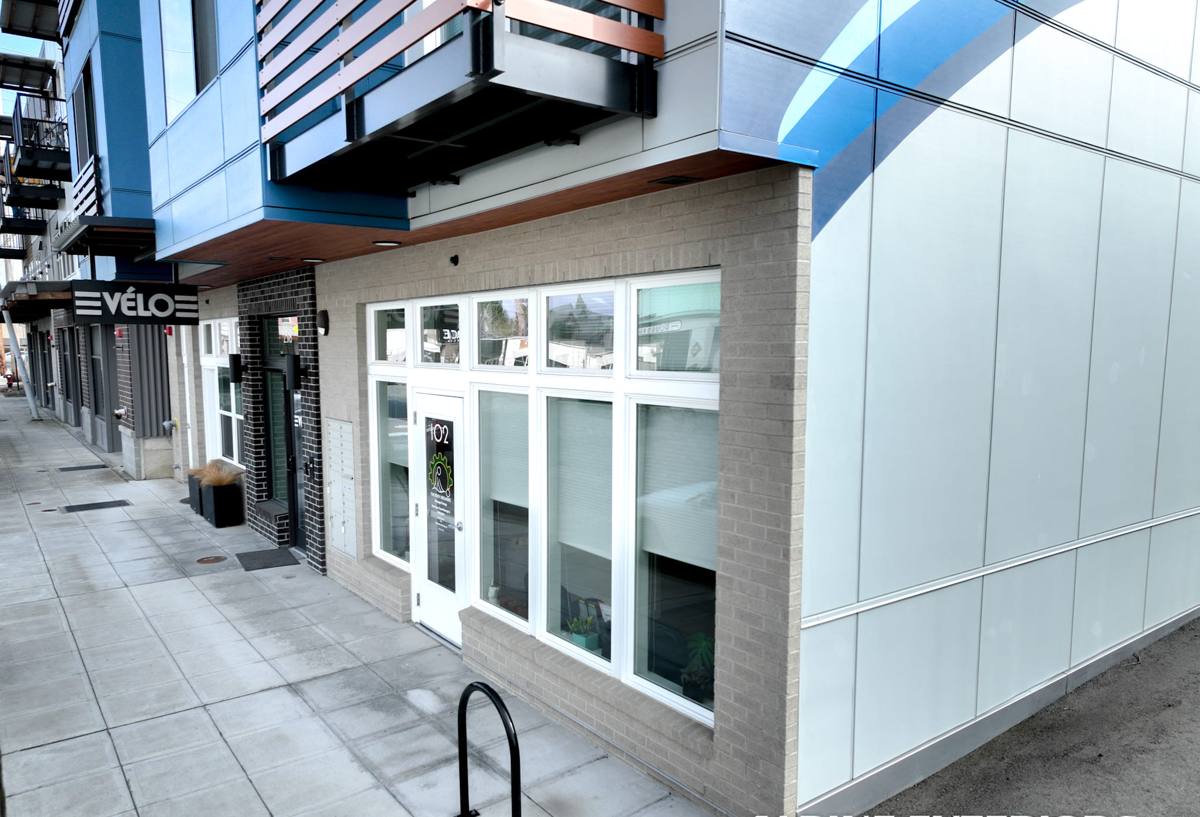
Signs a Birchwood Home Needs New or Custom Windows
Most homeowners don't think about their windows until something goes wrong. By the time you notice a problem, moisture has often already been working behind the scenes for a while. Common signs we see on service calls in this neighborhood include:
- Fogging or a permanent haze between panes — the seal on the insulated glass unit has failed
- Soft or discolored wood trim around the window, especially on the north or west-facing walls
- Windows that are hard to open, close, or lock, often from swelling or warped frames
- Visible gaps where caulking has cracked or pulled away from the siding
- Drafts you can feel with a hand near the frame on a windy day
- Condensation forming on the inside of the glass regularly, which can point to both window performance and interior humidity issues
- Moss or dark streaking building up on the sill or the siding just below the window
Any one of these can be a minor fix. Several at once, especially on an older home, usually means the windows and the flashing behind them are due for a real look.
What "Custom" Actually Means for This Job
Non-standard openings
Older Bellingham-area homes, additions, and remodels often have window openings that don't match today's standard manufacturer sizes. Custom windows are built or ordered to fit the actual rough opening rather than forcing the opening to fit a stock size, which usually means less filler material and a tighter, more weathertight result.
Retrofit versus full-frame replacement
A retrofit (or "pocket") replacement fits a new window inside the existing frame — faster and less invasive, but it only makes sense when the existing frame and the wall behind it are sound and dry. A full-frame replacement removes everything down to the rough opening, which is the right call whenever there's evidence of water damage, rot, or a frame that's out of square. We tell homeowners honestly which situation they're in rather than defaulting to the cheaper option when it isn't the right one.
Shape and style matching
Custom work also covers matching sightlines, grille patterns, and trim profiles across a home so replaced windows don't look like an obvious patch job next to originals that are staying in place.
Choosing Frame Material and Glass for a Marine Climate
Every frame material has trade-offs. In a neighborhood dealing with salt air and sustained damp periods, some of those trade-offs matter more than they would somewhere drier.
| Material | Strengths in this climate | Trade-offs |
|---|---|---|
| Vinyl | Won't rot or corrode, low maintenance, good value | Can expand/contract with temperature swings; quality varies a lot between manufacturers |
| Fiberglass | Very stable dimensionally, holds paint well, strong resistance to moisture over time | Higher upfront cost than vinyl |
| Wood (clad exterior) | Classic look, good insulator, works well for period-correct homes | Interior wood still needs upkeep; any breach in the exterior cladding invites moisture into the wood core |
| Aluminum | Strong, slim sightlines | Conducts cold and can corrode near salt air without a quality finish; generally not our first recommendation this close to the water |
On glass, an argon-filled, low-E double-pane unit is the baseline we recommend for this area — it cuts down on both heat loss and the condensation that contributes to mold and mildew around frames during the wetter months. Triple-pane can make sense on north- or west-facing walls that take the brunt of the weather, though it adds cost and weight that isn't always worth it on every elevation of a house.
Our Installation Process
The window itself is only part of what determines whether the job holds up. The installation detail is usually what separates a window that lasts fifteen years from one that lasts thirty-plus.
- Assessment: We inspect the existing frame, sill, and surrounding wall for moisture damage or rot before quoting retrofit versus full-frame replacement.
- Measurement and ordering: Exact rough-opening measurements are taken so the replacement fits properly rather than relying on shims to make up the difference.
- Removal: Old windows and, where needed, damaged framing or sheathing are removed and the opening is checked for square and level.
- Flashing and weather barrier work: New flashing tape and a proper drainage plane are installed so any water that gets behind the siding has a path back out, not into the wall cavity.
- Setting the window: The unit is shimmed, leveled, and fastened per manufacturer specification, not just "close enough."
- Sealing: Interior and exterior sealant is applied at the correct points — sealing everything solid, with no way for trapped moisture to escape, is a common mistake that causes rot down the line.
- Trim and finish: Exterior trim is reinstalled or replaced to match the home, and interior trim is finished to a clean, paint- or stain-ready state.
- Final check: Every window is operated, checked for square, and inspected for a tight seal before we call the job done.
Flashing, Moisture Barriers, and the Details That Actually Prevent Rot
Most window failures we get called out to repair in Birchwood aren't glass problems — they're water management problems. Driving rain off the Sound doesn't just hit a window head-on; it gets pushed up and sideways under trim and siding edges. If the flashing behind the window isn't lapped correctly, or if the weather-resistive barrier wasn't integrated with the window flange properly, water gets in and has nowhere to go. It sits against the framing, and over a wet Whatcom County winter, that's enough to start rot in a wall that looks perfectly fine from the outside.
This is the part of a window job that's invisible once the trim goes back on, which is exactly why it's worth asking a contractor to explain how they handle it before you hire them. A good window installed with poor flashing will still fail. An average window installed with correct flashing and drainage will usually outperform it.
Moss Season and Exterior Trim Around Your Windows
Whatcom County's moss season is long, and window trim and sills are prime real estate for it — they're horizontal or near-horizontal surfaces that stay shaded and damp for extended stretches, especially on north-facing walls. Moss and algae buildup isn't just cosmetic. Left alone, it holds moisture against wood trim and paint, accelerating exactly the kind of rot that leads to a bigger repair later. When we install or trim out windows, we pay attention to how water sheds off the sill and trim, and we're happy to point out early moss or algae buildup on existing trim during any visit, even if it's not the reason we're there.
What Custom Windows Typically Cost
Pricing depends heavily on size, material, glass package, and whether the job is a retrofit or full-frame replacement. These are broad ranges to help with planning, not a quote — every home is different.
| Factor | Impact on cost |
|---|---|
| Retrofit vs. full-frame | Full-frame typically costs more due to added labor, trim, and any framing repair |
| Frame material | Vinyl is generally the most affordable; fiberglass and wood-clad run higher |
| Glass package | Triple-pane and specialty coatings add cost per window |
| Number and size of openings | Larger or non-standard openings cost more to fabricate and install |
| Existing damage | Rot repair to framing or sheathing adds to the scope once the old window is out |
Whole-home projects for a typical Birchwood house often land in the mid-four to low-five figure range, but a single window or a small cluster of replacements can be a much smaller job. We give firm, itemized quotes after seeing the actual openings — not before.
What to Ask Before Hiring Anyone for Window Work
- Will you inspect for existing rot or moisture damage before quoting the job?
- What's your specific flashing and weather-barrier method, step by step?
- Are you licensed and insured to do this work in Washington?
- Do you recommend retrofit or full-frame replacement for my situation, and why?
- What warranty covers the installation itself, separate from the manufacturer's product warranty?
- Can you match trim and sightlines to windows that aren't being replaced?
- Will the same crew that quotes the job also install it?
Why Local Experience in Birchwood Matters
A crew that regularly works this part of Bellingham has already seen how this specific microclimate treats window installations over time — which elevations take the worst of the driving rain, which trim details hold up to a decade of moss season, and which shortcuts show up as callbacks two winters later. That's not something you can fully substitute with a generic install checklist. We've built our process around what actually holds up here, not around what's easiest to install on a dry day.
If your Birchwood home has windows that are drafty, fogged, hard to operate, or showing signs of moisture damage around the trim, we're glad to take a look. Reach out for a free, no-pressure estimate using the form below, and we'll walk the property with you and give you a straight answer on what your windows actually need.