 Bellingham
 Roofing in Blaine's Coastal Climate
Blaine sits right on the water in the far northwest corner of Whatcom County, close enough to the Strait of Georgia and Semiahmoo Bay that salt-laden air is part of daily life. That air, combined with driving rain off the water and a long, damp moss season that can run from fall through spring, puts more stress on a roof here than it does on a home twenty miles inland. Asphalt shingles can absolutely handle this climate, but only when the products, fasteners, and installation details are chosen with coastal exposure in mind. A roof that's a fine choice in a drier part of the county can underperform in Blaine if it's installed the same way.
We work on homes throughout Whatcom County, and Blaine roofs get a specific set of considerations from us: corrosion-resistant fasteners and flashing, ventilation that accounts for persistent moisture, and shingle products rated for wind and algae resistance. None of that is exotic or expensive to get right at install time — it's just easy to skip if a crew isn't used to building for this stretch of coastline.
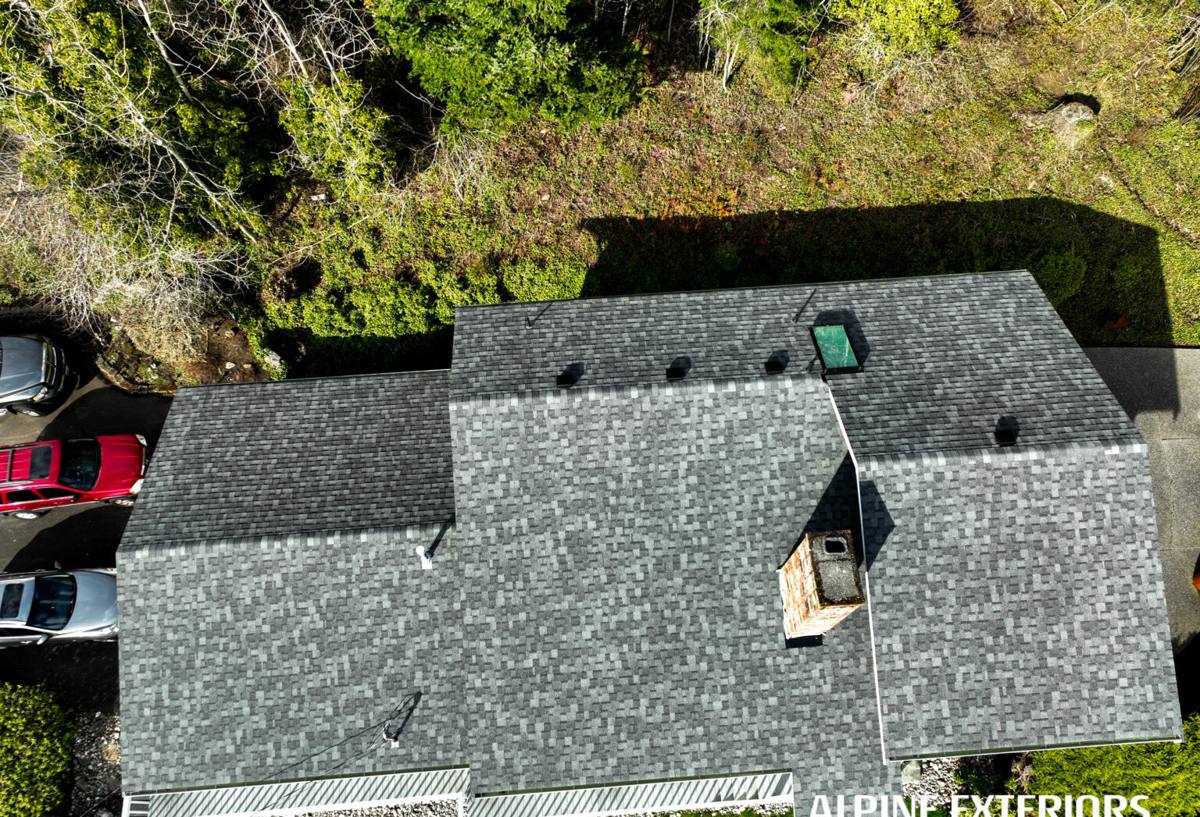
What Salt Air and Driving Rain Actually Do to a Roof
Corrosion at the Fasteners and Flashing
Salt in the air accelerates corrosion on any exposed metal — nail heads, flashing, drip edge, vent stacks. Standard electro-galvanized fasteners can start showing rust streaks and losing holding strength years before they would inland. Once a fastener corrodes and loosens, the shingle above it is no longer sealed the way it was designed to be, and that's often where the first leak shows up.
Wind-Driven Rain and Wall/Roof Transitions
Rain off the water in Blaine rarely falls straight down. Wind pushes it sideways into eaves, valleys, and the places where a roof meets a wall or chimney — exactly the spots where flashing does the real work. A shingle roof with weak flashing details can look fine from the ground for years while water is quietly working its way behind the metal.
Moisture Load on Sheathing and Ventilation
A long moss season means long stretches where the roof surface simply doesn't fully dry out between rain events. That sustained dampness works against roof sheathing and underlayment if the attic isn't ventilated well enough to let moisture escape from underneath. Over time, poor ventilation shows up as premature shingle aging, curling, or soft sheathing — problems that have nothing to do with the shingles themselves and everything to do with what's happening below them.
Moss and Algae: The Slow, Steady Threat
Moss doesn't destroy a roof overnight, but it's patient. Spores land in shaded, north-facing, or tree-covered sections of a Blaine roof and take hold in the granule surface. As moss grows, it holds moisture against the shingle almost permanently and can lift shingle edges as roots work into the seams, breaking the shingle's seal and giving wind and water an entry point. Algae staining is a separate, mostly cosmetic issue — dark streaking from airborne algae — but it thrives in the same damp, coastal conditions.
The fix isn't constant scraping or pressure washing, which can strip granules and shorten shingle life on its own. It's a combination of the right shingle product, adequate airflow, and a light maintenance routine:
- Choose shingles with algae-resistant granules (usually copper- or zinc-infused) for anything on a shaded or north-facing slope
- Keep gutters and valleys clear so water and debris don't sit against the shingle surface
- Trim back tree limbs that shade the roof or drop needles and leaves onto it
- Have moss growth removed gently — soft washing or hand removal, never aggressive pressure washing
- Schedule a roof check every couple of years even if nothing looks obviously wrong
Signs a Blaine Roof Needs a Closer Look
Most asphalt shingle roofs don't fail suddenly — they show warning signs first, and coastal weather tends to bring those signs on earlier than a drier climate would. Worth having a professional look if you notice granules collecting in gutters, shingles that are curling or cupping at the edges, dark streaking that keeps coming back after cleaning, soft or spongy spots when walking the attic floor above the roof, or daylight visible around flashing at chimneys and vent penetrations. None of these mean the whole roof needs replacing — often it's a repair, but only an inspection tells you which.
What Goes Into a Correct Installation Here
An asphalt shingle roof is a system, not just a layer of shingles nailed to plywood. In a marine climate like Blaine's, every layer of that system matters more than it would somewhere drier.
Underlayment
A synthetic underlayment with strong water resistance, combined with self-adhered ice-and-water membrane at eaves, valleys, and roof-to-wall transitions, gives the roof a real second line of defense if wind-driven rain gets past the shingles.
Flashing
Flashing at chimneys, skylights, sidewalls, and valleys should be corrosion-resistant metal, properly lapped with the underlayment and shingles so water is always directed out and down, never trapped behind a joint.
Fasteners
We use corrosion-resistant nails appropriate for coastal exposure, and we make sure every shingle is fastened per the manufacturer's pattern — not just enough to hold it down, but placed correctly so the shingle's wind rating and warranty actually apply.
Ventilation
Balanced intake and exhaust ventilation lets the attic breathe, which keeps moisture from building up under the roof deck during Blaine's extended damp stretches. This is one of the most overlooked parts of a roofing job and one of the most consequential over a ten- or twenty-year span.
Our Process for a Blaine Roofing Project
Every job starts with an honest look at what's actually there, not a sales pitch. Here's how a typical project runs:
- Inspection and assessment — we check the shingles, decking, flashing, and ventilation, and tell you plainly whether you're looking at a repair or a full replacement
- Written estimate — clear scope of work, materials, and pricing, no vague allowances
- Material selection — we walk through shingle options suited to coastal exposure, including algae-resistant and higher wind-rated products where the roof's exposure calls for it
- Tear-off and deck check — old roofing removed, decking inspected and any damaged sheathing replaced before anything new goes down
- Underlayment and flashing — ice-and-water membrane at vulnerable areas, new corrosion-resistant flashing throughout
- Shingle installation — installed to manufacturer specification for proper sealing and wind performance
- Ventilation check — intake and exhaust confirmed adequate for the attic space
- Final walkthrough — we go over the finished roof with you before calling the job done
Shingle and Material Options
Not every home needs the top-tier product, and we'd rather tell you that upfront than upsell you. The table below is a general guide to how common asphalt shingle tiers stack up for a coastal Whatcom County home — actual pricing depends on roof size, pitch, tear-off scope, and current material costs, which is why we always give a firm number after a real inspection.
| Shingle Type | Typical Lifespan | Coastal Considerations |
|---|---|---|
| 3-tab shingles | 15–20 years | Budget-friendly; lower wind rating, worth reinforced fastening in exposed spots |
| Architectural (laminate) | 25–30 years | Better wind resistance and thicker profile; the common choice for exposed Blaine roofs |
| Premium/designer architectural | 30+ years | Highest wind ratings and often best algae-resistant granule warranties |
Whichever tier fits your budget, we recommend algae-resistant granules on any Blaine home with shaded roof sections, and a wind rating suited to open, water-exposed lots.
Repair vs. Replacement
A localized leak, a handful of storm-damaged shingles, or flashing that's failed at one penetration is usually a repair, not a reason to replace the whole roof. We'll always recommend a repair when a repair is the honest answer. Full replacement generally makes sense when the shingles are widely curling or losing granules across the roof, when the decking has moisture damage in multiple areas, or when the roof is old enough that patching one section just means you're back out here fixing the next section in a year or two. Either way, the inspection comes first — we don't quote a replacement without showing you why.
Why a Crew That Already Works Blaine Matters
A roofing crew that regularly works this part of Whatcom County has already seen how salt air ages fasteners, which slopes in this area tend to grow moss fastest, and how wind off the water behaves at eaves and valleys. That's not a marketing point — it's the difference between a roof that's built to a generic spec and one that's built for the conditions it's actually going to face for the next two or three decades. We're a local Bellingham-based crew, and Blaine is part of the territory we know.
If your roof is showing wear, due for a replacement, or you just want an honest opinion on what shape it's in, we're glad to take a look. Use the form below to request a free, no-pressure estimate for your Blaine home.