 Bellingham
 Building a Deck That Holds Up in Columbia's Climate
Homes in the Columbia neighborhood sit close enough to Bellingham Bay that salt-laden air is a constant factor in how outdoor structures age. Add Whatcom County's driving rain, the shoulder seasons of near-constant drizzle, and a moss season that can stretch from October through April under tree cover, and you have a climate that is genuinely hard on decks. A deck built without that reality in mind will look fine for a year or two and then start showing problems: cupped boards, soft spots at the ledger, green film on every horizontal surface, and fasteners that bleed rust through the finish.
None of that is inevitable. It comes down to material choices, structural details, and drainage decisions made before the first board goes down. We build and repair decks throughout Bellingham, and the jobs we get called back to fix are almost always the ones where a shortcut was taken on flashing, fastener grade, or ventilation underneath the frame.
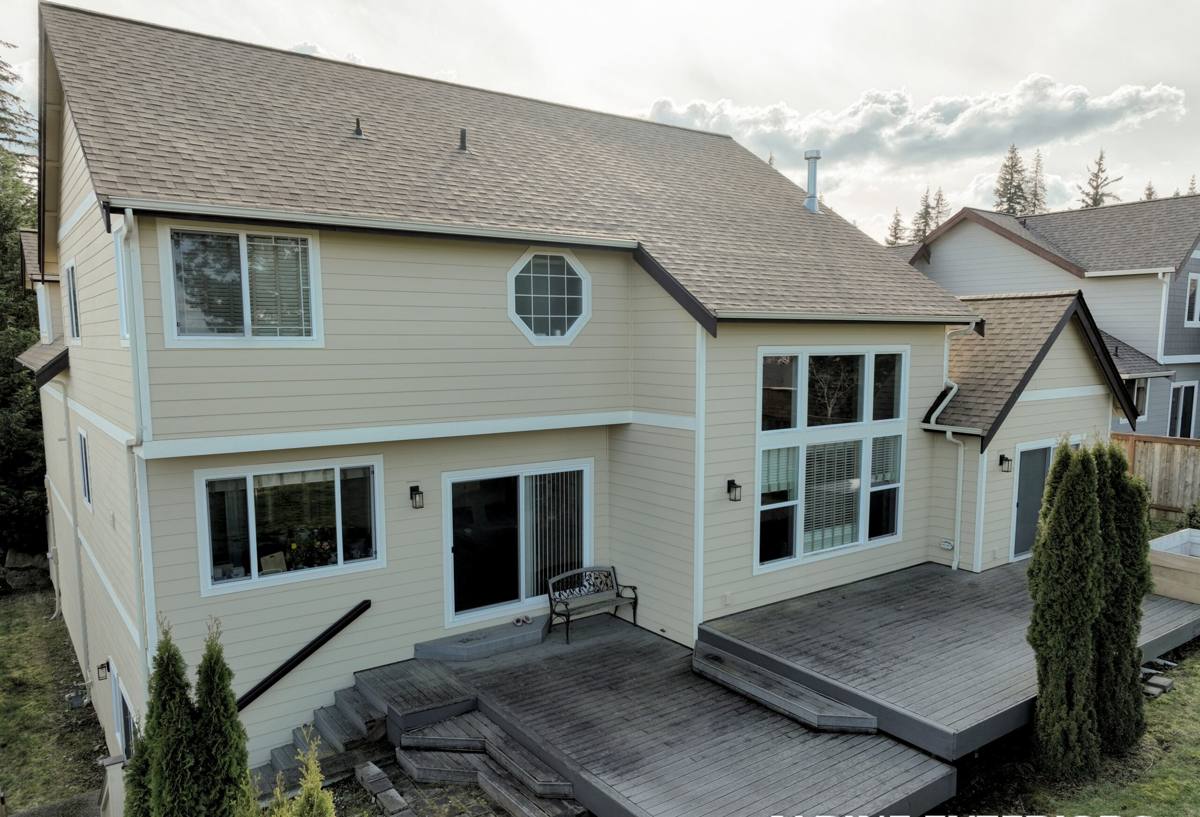
What Correct Deck Construction Actually Involves
Footings and Framing
Whatcom County's clay-heavy soils hold water longer than sandy soils elsewhere in the state, which means footing depth and drainage around posts matter more here than in a drier climate. Footings need to sit below frost depth and clear of standing water, and the framing lumber above them needs to be rated for ground contact where it's close to grade. We also give the substructure real airflow — decks built tight against a slope or crawlspace with no cross-ventilation are where we see the earliest rot, because moisture has nowhere to go.
Ledger Attachment and Flashing
The ledger board — where the deck attaches to the house — is the single most common failure point on decks in this climate. Driving rain gets pushed sideways against the wall by wind off the water, and if the flashing behind the ledger isn't installed correctly, water tracks straight into the house framing. A correct ledger detail includes proper flashing integrated with the home's existing water-resistive barrier, not just caulk and hope. This is also the detail that's hardest to inspect once the deck boards are down, which is exactly why it needs to be done right the first time.
Fasteners and Hardware
Salt air accelerates corrosion on standard fasteners faster than most homeowners expect. We use stainless steel or coated hardware rated for coastal exposure — hangers, screws, and structural connectors — because a deck is only as strong as its weakest fastener, and a rusted-through hanger is a safety issue, not just a cosmetic one.
Choosing the Right Decking Material
There's no single "best" decking material — the right choice depends on how much upkeep you want to take on and how the deck sits relative to shade and moisture. Here's how the common options compare for a Bellingham-area setting:
| Material | Upfront Cost | Maintenance | How It Handles Moss & Damp Shade |
|---|---|---|---|
| Pressure-treated wood | Lowest | Annual cleaning and re-staining/sealing | Needs regular attention or moss and mildew take hold quickly |
| Cedar | Moderate | Regular oiling to maintain color and resist moisture | Naturally moisture-resistant but still needs upkeep in shaded, damp spots |
| Capped composite | Higher | Occasional washing, no staining or sealing | Good resistance, though algae/moss can still form on the surface film in constant shade |
| PVC / cellular decking | Highest | Lowest — washing only | Best moisture resistance of the group; won't absorb water or rot |
We install all of these and will talk through the honest trade-offs for your specific site — a deck under a stand of trees or on the shaded side of the house behaves very differently than one that gets afternoon sun, regardless of material.
What Affects the Cost of a Custom Deck
Every deck quote is different, but the factors that move the price are consistent. Knowing them ahead of time makes it easier to plan a budget and compare estimates apples-to-apples.
| Factor | Why It Matters |
|---|---|
| Height above grade | Taller decks need more substantial framing, guardrails, and often stairs |
| Ground slope and soil | Steep or wet sites need deeper or additional footings |
| Decking material | Wood, composite, and PVC span a wide cost range, as shown above |
| Railing style | Cable, glass, and custom metal railings cost more than standard baluster rail |
| Access for equipment | Tight side yards or steep driveways can add labor time |
| Permit and inspection scope | Larger or taller decks require more inspection steps, which affects timeline and cost |
Our Process, Start to Finish
- On-site walkthrough: We look at the existing structure (if there is one), the slope, drainage, sun exposure, and how the deck will connect to the house.
- Design and material selection: We talk through layout, decking material, and railing style based on how you'll actually use the space and how much upkeep you want going forward.
- Permit handling: We prepare and submit what's needed for the City of Bellingham or Whatcom County, depending on where the property falls, and schedule inspections at the right points in the build.
- Demolition and site prep: Old decking, damaged framing, and any rotted ledger material get removed and the site is prepped for new footings or framing repair.
- Structural build: Footings, framing, ledger flashing, and fastening are done to code, with attention to the drainage and ventilation details that matter most in this climate.
- Decking, railing, and stairs: Final surface material goes down, along with railings and stairs built to current code for height and baluster spacing.
- Final walkthrough: We go over the finished deck with you, including what maintenance (if any) the material you chose will need.
Railings, Stairs, and Local Code
Guardrail height, baluster spacing, and stair rise-and-run are all set by building code, and inspectors in Whatcom County check these details closely — for good reason, since railings and stairs are where injuries happen when they're built wrong. We build to current code as a baseline, not a minimum to argue about. If your existing deck predates current code (common on older homes in established neighborhoods like Columbia), a repair or rebuild is often the right moment to bring railings and stairs up to current standard, even if it isn't strictly required for the scope of work.
Keeping a Columbia Deck Ahead of the Moss Season
Whatever material you choose, a few habits make a real difference in how a deck holds up through a wet Bellingham winter:
- Sweep leaves and needles off the deck regularly in fall — trapped organic debris is what feeds moss and holds moisture against the boards.
- Keep gutters and downspouts clear so roof runoff isn't dumping directly onto or under the deck.
- Check the ledger board area each fall for any gaps, cracking, or discoloration in the flashing or caulk line.
- Wash the deck surface at least once a year — pressure washing wood decks carefully to avoid gouging the grain, or a gentler wash for composite and PVC.
- Trim back overhanging branches where possible to cut down on shade and debris buildup.
- Check under-deck ventilation isn't blocked by stored items, planters, or built-up debris.
Problems We Commonly Find on Older Decks in This Neighborhood
When we get called out to look at an existing deck in the Columbia area, a handful of issues show up again and again: soft or spongy decking near the house from a failed ledger flashing detail, rusted-through hardware from years of salt air exposure, moss buildup thick enough to hold moisture against the boards year-round, and railings that were never brought up to current code during a past repair. Most of these are fixable without a full rebuild if they're caught before the framing underneath is compromised — which is part of why we recommend a yearly look at the ledger and fastener condition, even on a deck that looks fine from a distance.
Why Hire a Crew That Already Works Columbia
A deck built for a dry inland climate and one built for a neighborhood exposed to Bellingham Bay's salt air and rain shouldn't be built the same way, even if they look identical from the yard. Working regularly in this specific area means we already know which fastener grades hold up, which ledger and flashing details actually keep water out under driving rain, and how much airflow a substructure needs to avoid becoming a moss farm by year three. That's knowledge that comes from repairing the decks that were built without it, not just building new ones.
If you're planning a new deck or need an honest look at one that's showing its age, we're happy to come out and take a look. Estimates are free and there's no pressure — you'll get a straight answer about what your specific site needs, whether that's a small repair, a full rebuild, or something in between. Use the form below to get started.