 Bellingham
 Custom Decks Built for Silver Beach's Waterfront Climate
Silver Beach is one of those Bellingham neighborhoods where the outdoors is the whole point of the house. Big trees, water nearby, and a deck that actually gets used most of the year if it's built right. The problem is that "built right" here means something different than it does in a dry inland climate. Whatcom County sees a steady mix of salt air, driving rain off the water, and long stretches of gray, damp weather that keeps every horizontal surface wet for days at a time. A deck that would hold up fine in Spokane or Boise can start showing real problems within a few years out here — soft spots, rust streaks, slick moss, fasteners that back out or bleed orange into the wood.
We build and repair custom decks for homeowners throughout Bellingham and Whatcom County, and Silver Beach jobs have their own personality: tighter lots close to the water, mature landscaping that shades and dampens the deck surface, and homeowners who want something that looks good but don't want to spend every spring re-doing maintenance a previous contractor should have designed away in the first place.
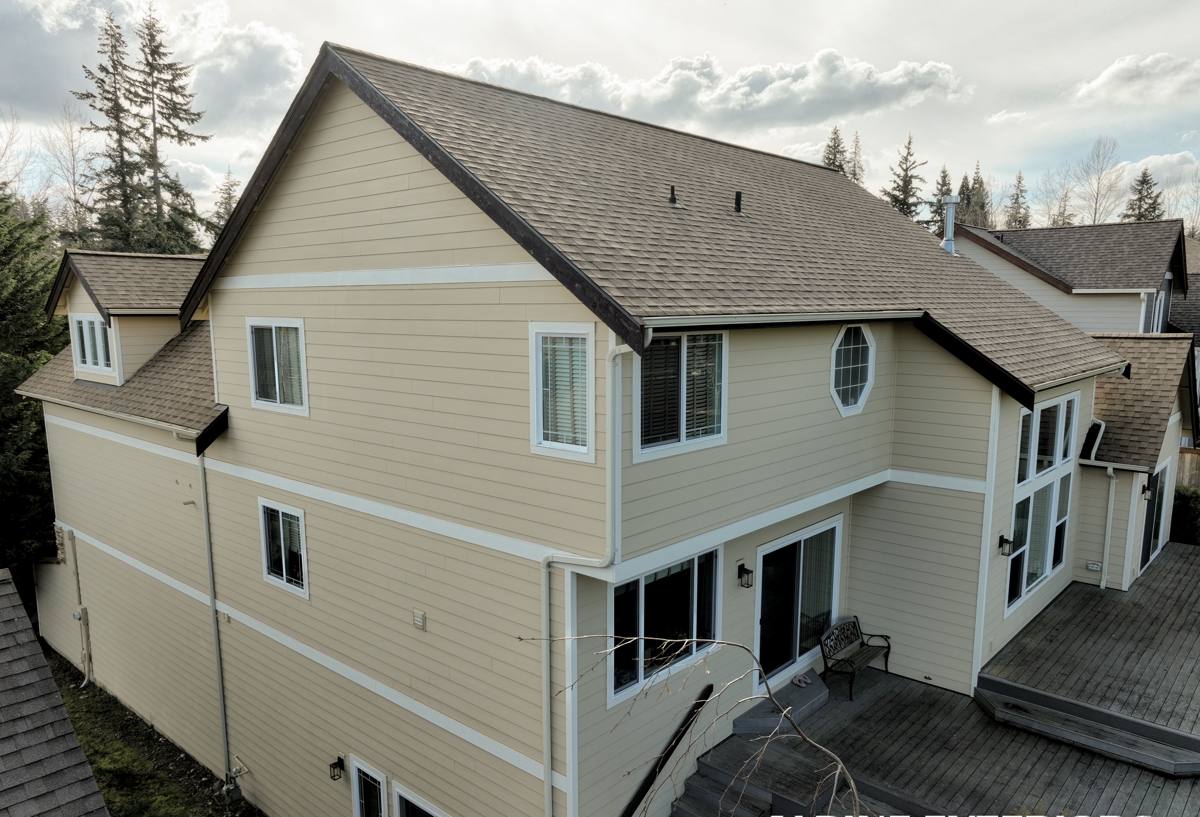
What a Silver Beach Deck Actually Has to Deal With
Before we talk materials or design, it's worth being clear about what's actually working against a deck in this neighborhood, because it drives every decision that follows.
Salt-laden air
Bellingham sits close enough to open water that salt-carrying air moves through neighborhoods like Silver Beach regularly, especially with onshore wind. Salt air accelerates corrosion on anything metal — screws, joist hangers, railing brackets, structural bolts — far faster than it does inland. It also dulls and degrades certain finishes over time, which is why product selection matters more here than in a dry climate zone.
Driving rain
Rain here rarely falls straight down. Wind-driven rain gets pushed sideways under railings, into ledger connections, and behind fascia boards if those areas weren't flashed and sealed correctly. A deck that sheds water fine on a calm day can still be taking on water at every joint during a typical Whatcom County storm.
A long moss and algae season
Shade from mature trees, combined with months of damp weather, gives moss and algae a long runway to establish on any decking surface that doesn't drain and dry quickly. Once moss gets a foothold in wood grain or composite grooves, it holds moisture against the surface and turns a walkable deck into a slip hazard, especially on stairs.
Ground moisture and slope
Many lots in this part of Bellingham have some grade to them, and soil near the water table stays damp longer into the season. That affects how footings are sized and placed, and how much ventilation the space under the deck needs to keep framing from sitting in damp air all winter.
Decking Material: What Actually Performs Here
There's no single "best" decking material — there's a best material for this climate, this budget, and how much upkeep you actually want to do. Here's how the common options stack up for a Silver Beach property specifically.
| Material | How it handles our climate | Maintenance | Typical lifespan here |
|---|---|---|---|
| Pressure-treated fir/hem-fir | Affordable, but prone to cupping and checking with repeated wet-dry cycling; needs a quality finish to resist moss | Annual cleaning, refinish every 2-3 years | 10-15 years |
| Western red cedar | Naturally rot- and insect-resistant, ages gracefully, but softer surface holds moss if not cleaned | Cleaning and oil/stain every 1-2 years | 15-20+ years with upkeep |
| Composite decking | Consistent performance in wet climates, resists rot, but can still grow surface algae in deep shade if not rinsed occasionally | Periodic rinsing, no staining or sealing | 25-30 year manufacturer warranties, common |
| Tropical hardwood (ipe and similar) | Extremely dense and durable, sheds water well, but heavy, expensive, and unforgiving of poor installation | Oiling to maintain color, or allow to gray naturally | 30+ years |
For most Silver Beach homeowners, we lean toward composite or cedar depending on budget and how much hands-on maintenance they actually want to do. Pressure-treated lumber is fine for framing but, in our experience, is a poor long-term choice for a decking surface in a shaded, damp neighborhood — it's simply not designed to be the finish material in a climate like ours, and the maintenance burden shows up fast.
Framing and Fasteners: Where Coastal Decks Actually Fail
Almost every deck failure we get called out to inspect in this part of Whatcom County traces back to the substructure, not the visible decking boards. The surface is what homeowners see, but the framing and hardware determine whether the deck is actually safe.
Ledger attachment and flashing
Where the deck attaches to the house is the single most important connection on the entire structure, and it's also the one most exposed to wind-driven rain working its way behind the board. We flash this connection properly and use structural fasteners rated for the load — not just deck screws — because a ledger that pulls away from the house is a collapse risk, not a cosmetic issue.
Corrosion-resistant hardware
Given the salt air common to this part of Bellingham, standard galvanized hardware isn't always enough for long-term performance, especially on exposed connections. We use fasteners and joist hangers rated for the exposure the specific deck will actually see, matched to the decking material — mixing incompatible metals against certain treated lumber or composite chemistries can accelerate corrosion instead of preventing it.
Ventilation and ground clearance
Framing that sits too close to damp ground, or in a pocket with no airflow, stays wet longer after every rain and is where we most often find rot when we open up an older deck for a rebuild. Correct footing height, joist spacing, and under-deck airflow are cheap to get right during construction and expensive to fix later.
Railings and Stairs Built for a Damp, Shaded Site
Railings take a lot of abuse from moisture because they're the first thing rain hits and the slowest thing to dry, especially on a shaded lot. We build railing systems with hardware and post connections matched to the decking material, and we pay particular attention to baluster spacing and stair geometry meeting current code — not because it's a formality, but because stairs are where slip-and-fall risk is highest once moss or algae gets started. On a shaded Silver Beach lot, we'll often talk through options like textured or grooved decking on stair treads specifically, since that's the area that stays damp longest and gets the most direct foot traffic.
Our Process for a Silver Beach Deck Project
- Site visit and assessment. We walk the property, check sun and shade exposure, drainage, existing structure if there is one, and talk through how you actually plan to use the space.
- Design and material selection. We help you weigh decking material, railing style, and layout against your budget and how much maintenance you want going forward — no upselling toward a product just because it has a higher margin.
- Permitting. Deck projects in Bellingham and unincorporated Whatcom County typically require a permit once the structure exceeds a certain height or size, and waterfront-adjacent lots can carry additional setback or shoreline considerations. We handle this step so nothing gets flagged later.
- Demo and framing. Old structure removed if applicable, footings set to proper depth and load rating, framing built with corrosion-appropriate hardware throughout.
- Decking, railing, and finish work. Surface material installed to manufacturer spec, railings set, all fasteners and flashing detailed for the climate, not just the drawing.
- Final walkthrough. We go over the finished deck with you, including what maintenance it actually needs and on what schedule, before we consider the job done.
Maintaining a Deck Through Whatcom County's Moss Season
Even a well-built deck needs some seasonal attention in this climate — the difference is that a correctly built one needs far less of it, and what it does need is straightforward.
- Sweep leaves and debris off the deck regularly in fall — trapped organic matter is what feeds moss and algae growth
- Rinse or lightly scrub decking surfaces at least once during the wet season, especially in shaded areas or under overhangs
- Check that gaps between boards stay clear so water can actually drain through rather than pooling
- Inspect railing posts and stair connections annually for movement, rust bleed, or soft wood
- Re-stain or re-oil wood decking on the schedule the product actually calls for — skipping a cycle in a wet climate compounds fast
- Keep an eye on the area under the deck for standing water or blocked airflow after major storms
None of this is complicated, but it only works if the deck was built to drain and dry properly in the first place. A lot of the maintenance headaches we get called about are really design or installation problems showing up years later.
Permits and Local Considerations in Silver Beach
Because Silver Beach sits near the water in a residential part of Bellingham, deck projects here can involve more than a standard building permit — depending on the specific lot, there may be setback requirements, height restrictions, or shoreline-related review to account for. Requirements vary by exact location and lot characteristics, so we confirm what applies to your property with the City of Bellingham or Whatcom County before design work locks in, rather than guessing and risking a redo.
Why It Matters to Hire a Crew That Already Works This Neighborhood
A deck built to a generic national spec sheet will pass inspection almost anywhere. Whether it actually holds up in a shaded, damp, salt-air-exposed neighborhood like Silver Beach for the next twenty years is a different question. We build decks throughout Bellingham and Whatcom County, and the material choices, hardware selection, flashing details, and drainage planning described above are the direct result of seeing what fails here and why — not a checklist copied from a different climate. That local pattern recognition is the actual value of hiring a contractor who already knows this area, rather than relearning it on your project.
If you're planning a new deck or need an honest opinion on whether an existing one is worth repairing or replacing, we're happy to take a look. Reach out for a free, no-pressure estimate using the form below, and we'll walk the site with you and talk through what actually makes sense for your home.