 Bellingham
 Building Decks for Sunnyland's Older, Tree-Shaded Lots
Sunnyland is one of Bellingham's established, walkable neighborhoods — a mix of older bungalows, mid-century homes, and newer infill, most sitting on mature, tree-covered lots. That combination is great for shade and privacy, but it's tough on outdoor structures. A deck in Sunnyland deals with more shade, more standing moisture, and more organic debris than a deck built out on an open lot in a newer subdivision. If you're planning a new deck, or replacing one that's showing its age, the design and material choices matter more here than they would in a drier climate.
We build decks throughout Bellingham and Whatcom County, and Sunnyland's tree cover and older housing stock are things we plan around from the first conversation — not problems we discover halfway through the job.
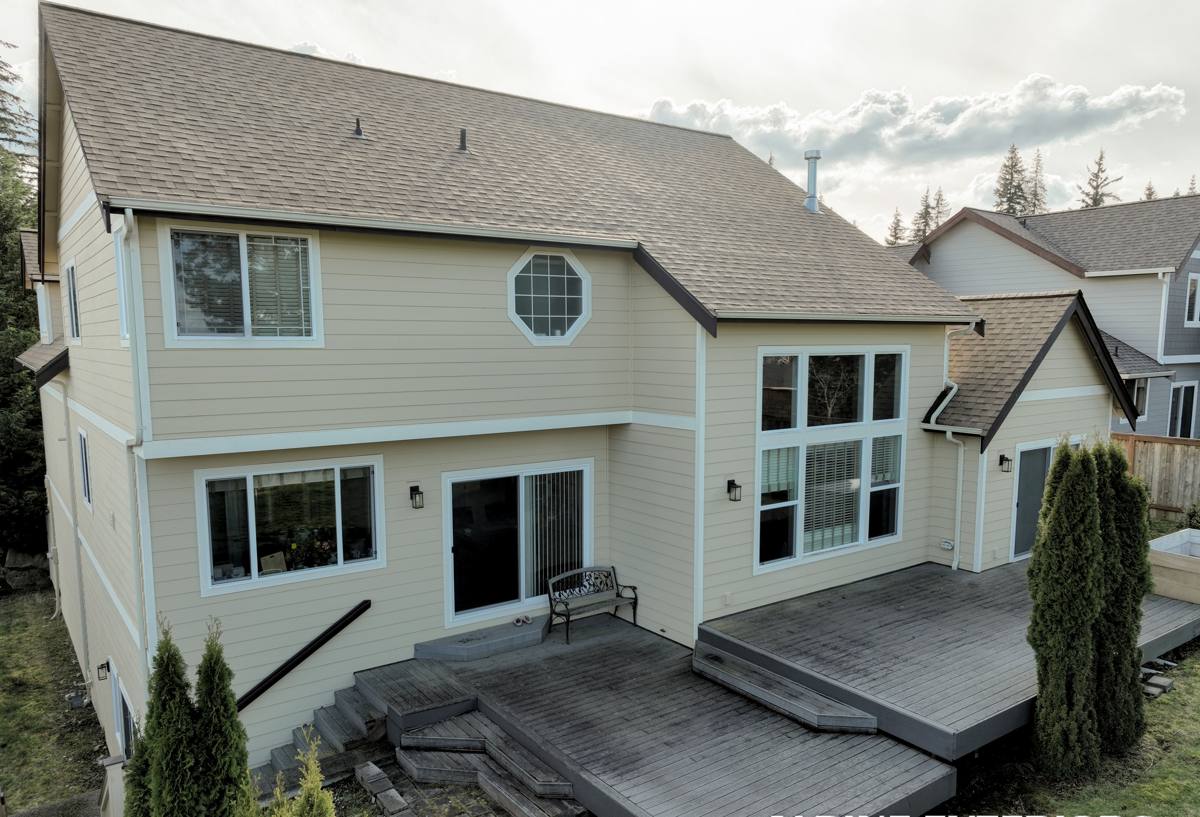
What Bellingham's Climate Does to a Deck
Whatcom County sits between Bellingham Bay and the foothills, which means decks here absorb three things at once: salt-laden marine air, long stretches of driving rain, and a moss and algae season that can run from fall well into spring. None of these are dramatic on their own, but combined, and repeated year after year, they're what separates a deck that lasts two decades from one that needs major repair in five or six years.
Salt Air and Metal Fasteners
Bellingham Bay puts a low but steady level of salt into the air across much of the city, Sunnyland included. Salt air accelerates corrosion in fasteners, brackets, and hardware. Standard galvanized screws and joist hangers can start rusting and staining the wood around them well before the structure itself is due for replacement. This is why fastener grade is a real decision, not an afterthought.
Driving Rain and Trapped Moisture
Bellingham doesn't just get rain — it gets wind-driven rain that finds its way under flashing, into end grain, and behind ledger boards that weren't detailed correctly. On a tree-covered Sunnyland lot, that moisture also has less sun and wind exposure to dry it back out between storms. Wood that stays damp for days at a time is wood that rots from the inside, often invisibly, until a board fails.
Moss, Algae, and Shade
Shaded, moisture-holding surfaces are exactly what moss and algae need to establish. Beyond looking bad, a mossy deck surface is a slip hazard, and moss roots hold moisture directly against the decking material, which shortens the life of wood in particular. Deck orientation, gap spacing, and material choice all affect how much moss becomes a maintenance chore versus a background nuisance.
What a Correctly Built Deck Actually Involves
A deck that holds up in this climate isn't about using more material — it's about getting a handful of details right that are easy to skip if a crew is moving fast or unfamiliar with local conditions.
Footings and Framing
Footings need to be sized and set below frost depth and rated for the soil conditions on the specific lot — older Sunnyland properties can have inconsistent fill or root-disturbed soil from mature trees, so we don't assume a standard footing spec will work without checking. Framing lumber should be a rot-resistant, rated species, and every cut end and drilled hole gets sealed, since factory treatment doesn't reach the wood once it's been cut on site.
Ledger Board Flashing
The ledger board — where the deck attaches to the house — is the single most common source of hidden rot on any deck, anywhere. It needs proper flashing that directs water away from the house structure, not just a bead of caulk. This detail is invisible once the deck is finished, which is exactly why it has to be done right the first time.
Joist Protection and Drainage
Joist tape or an equivalent moisture barrier over the top of each joist keeps water from sitting in fastener holes and wicking into the wood. Decking gaps and substructure airflow matter too — a deck that can't shed water and dry out between rain events will grow moss and rot faster no matter what material sits on top.
Railings and Stairs
Guardrail height, baluster spacing, and stair geometry are all governed by code, and inspectors in Whatcom County check them. Beyond code compliance, railing connections take real structural load, so they get the same fastener and flashing attention as the rest of the frame.
Decking Material Options for Sunnyland Homes
There's no single "best" decking material — the right choice depends on how much sun the deck gets, how much upkeep you want to do, and your budget. Here's how the common options actually perform under Bellingham conditions:
| Material | Moss/Algae Resistance | Maintenance | Typical Lifespan Here |
|---|---|---|---|
| Pressure-treated fir/pine | Low — needs regular cleaning and sealing | Annual cleaning, re-sealing every 1-2 years | 10-15 years with upkeep |
| Cedar | Moderate — natural oils help, but still needs care in shade | Cleaning and oiling every 1-2 years | 15-20 years with upkeep |
| Capped composite | High — sheds moisture, resists staining | Occasional washing, no sealing | 25-30+ years |
| PVC decking | High — fully synthetic, low water absorption | Occasional washing | 25-30+ years |
On a shaded, tree-covered Sunnyland lot, we lean toward recommending capped composite or PVC for surfaces that get little direct sun, simply because wood in constant shade needs more maintenance than most homeowners are realistic about keeping up with. That said, plenty of Sunnyland decks are wood, and we build those correctly too — it just means being upfront about the sealing schedule that comes with the choice.
Our Deck Building Process
- On-site assessment — we look at sun exposure, tree cover, drainage, soil, and how the deck will tie into the house before recommending anything.
- Design and material discussion — layout, railing style, and decking material, with honest trade-offs for each option given the lot's conditions.
- Permitting — we handle the Whatcom County or City of Bellingham permit application and inspections tied to the project.
- Footings and framing — properly sized footings, treated framing lumber, sealed cuts, and correct ledger flashing.
- Decking, railing, and stairs — installed to code with attention to fastener spacing and drainage.
- Final walkthrough — we go over the finished deck and, for wood decks, what a realistic maintenance schedule looks like.
Permits and Sunnyland-Specific Considerations
Most new decks and many deck replacements in Bellingham require a building permit, and decks attached to the house or built above a certain height typically need engineering and inspection sign-off. We handle that process rather than leaving it to the homeowner. On established Sunnyland lots specifically, a few things come up more often than elsewhere in the city: mature tree roots that affect footing placement, older homes with siding or framing that needs careful, non-damaging ledger attachment, and lots with enough grade change that stair and railing layout takes extra planning. None of this is unusual for us — it's the normal scope of work in this part of town.
Maintenance Checklist for Bellingham-Area Decks
Whatever material you choose, a little seasonal attention goes a long way in this climate. A basic checklist we give homeowners:
- Sweep leaves and debris off the deck regularly, especially in fall — trapped organic matter is what feeds moss growth
- Rinse or wash the surface at least once or twice a year to remove algae film before it takes hold
- Check railings and stair connections annually for looseness
- For wood decks, inspect the sealant/finish each spring and reapply before the wood starts absorbing water again
- Keep an eye on the ledger board area and any spot where the deck meets the house siding — this is where hidden moisture problems start
- Trim back overhanging branches where practical to improve sun and airflow across the deck surface
Why Hire a Crew That Already Works in Sunnyland
A deck built to a generic spec sheet can still fail early if it isn't adapted to the actual lot — the shade pattern, the drainage, the age of the house it's attached to. Crews that work regularly in Sunnyland and similar Bellingham neighborhoods aren't guessing about how much moss pressure a north-facing deck under mature trees will see, or how older homes here are typically framed at the point where a ledger board needs to attach. That local familiarity shows up less in the sales pitch and more in the parts of the job nobody sees once it's finished — the flashing, the fastener grade, the footing depth — which are exactly the details that determine whether a deck is still solid in fifteen years.
If you're planning a new deck or need to replace one that's past its prime, we're happy to take a look and give you a straightforward, no-pressure estimate — just fill out the form below.