 Bellingham
 Deck Repair for Edgemoor Homes
Edgemoor sits close enough to Bellingham Bay that its decks live a different life than decks a few miles inland. Salt-laden air off the water, long stretches of driving rain through the fall and winter, and the deep, humid shade thrown by the neighborhood's mature evergreens all push wood, fasteners, and finishes harder than they'd be pushed in a drier part of Whatcom County. A deck that looks fine from the porch door can still be losing structural integrity where it matters most — at the ledger board, the post bases, and the framing you can't see without getting underneath it.
We repair decks in Edgemoor regularly, and the failures we find tend to follow a pattern shaped by this specific microclimate. This page walks through what that pattern looks like, what a correct repair actually involves, and how we approach the work so it holds up through another decade of Bellingham winters.
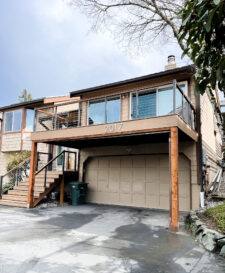
Why Edgemoor Decks Wear the Way They Do
Three environmental factors do most of the damage here, and they compound each other.
Salt Air
Proximity to the bay means airborne salt settles on metal fasteners, flashing, and hardware year-round. Salt accelerates corrosion in anything less than fully rated stainless or hot-dip galvanized hardware, and corroded fasteners are one of the most common reasons a deck that "looks solid" turns out to have loose railings or a failing ledger connection.
Driving Rain
Bellingham's rain rarely falls straight down — wind off the water pushes it sideways, which means it gets up under railing caps, into end-grain cuts, and behind trim boards that would stay dry in a calmer climate. Wood doesn't need standing water to rot; it just needs repeated wetting and slow drying, which is exactly what wind-driven rain against a shaded deck produces.
Long Moss Season
Shade from surrounding trees plus consistent moisture is a near-perfect setup for moss and algae growth on deck boards, stair treads, and railings. Beyond the slip hazard, moss holds moisture against the wood surface far longer than bare boards would, which speeds up decay in the boards themselves and in the joists underneath if drainage is poor.
Common Deck Problems We Find in Edgemoor
Ledger Board and Rim Joist Rot
The ledger board — where the deck attaches to the house — is the single most safety-critical connection on most decks, and it's also one of the most exposed to trapped moisture if flashing was skipped or installed incorrectly. We check this first on every inspection, because a compromised ledger is a structural issue, not a cosmetic one.
Corroded or Failing Fasteners
Salt-air corrosion on screws, joist hangers, and bolts shows up as rust streaking on the wood surface, loose railings, or hardware that's visibly pitted. Once corrosion starts, it doesn't stop on its own — the fastener needs to be replaced with hardware rated for the exposure.
Post Base and Railing Rot
Post bottoms sitting in or near standing water, and railing posts with end grain exposed to driving rain, are two of the most common rot locations we find. Both are repairable if caught before the rot spreads into the main structural members.
Slick, Moss-Covered Surfaces
This is partly a maintenance issue and partly a design issue — decks with poor airflow underneath or heavy shade overhead will grow moss faster than cleaning alone can keep up with. Sometimes the real fix is improving drainage or trimming back vegetation, not just scrubbing the boards.
Cupped, Split, or Soft Decking Boards
Repeated wet-dry cycling causes wood decking to cup and split over time. Soft spots underfoot usually mean the board itself has started to rot from repeated moisture exposure, especially near board ends or around fastener heads.
Repair vs. Replace: How We Decide
Not every deck problem calls for a full rebuild, and not every deck is worth patching. We look at where the damage is, how far it's spread, and what it would cost to keep repairing piecemeal versus doing the work once.
| Factor | Favors Repair | Favors Replacement |
|---|---|---|
| Location of damage | Isolated boards, railings, or stair treads | Ledger board, main beams, or multiple structural posts |
| Age of deck | Under 15 years, built to current code | Older deck, unknown or outdated construction |
| Extent of rot | Surface-level, caught early | Soft or crumbling wood in structural members |
| Fastener condition | Localized corrosion | Widespread rust across hardware |
| Cost over time | One targeted fix addresses the issue | Pattern of repeat repairs in the same areas |
When we can honestly recommend a repair, we do — a well-executed repair on a structurally sound deck is good money spent. When the framing itself is compromised, we'll say so plainly rather than patching around a problem that's going to resurface.
What a Correct Deck Repair Involves
A repair that actually lasts through Bellingham's wet season starts with an inspection, not a quote based on what's visible from the top.
- Full inspection, including underneath. We check the ledger connection, flashing, joists, post bases, and hardware condition, not just the decking surface.
- Moisture and rot mapping. We probe suspect areas to find the actual boundary of rot damage, since decay often extends further than the visible discoloration suggests.
- Correct hardware selection. Given the salt air in Edgemoor, we use stainless steel or properly rated hot-dip galvanized fasteners and connectors, not standard exterior-grade hardware that will corrode again within a few years.
- Flashing repair where needed. If the ledger board issue traces back to missing or failed flashing, we fix the flashing as part of the repair — replacing the wood without addressing the water source just delays the next failure.
- Matching structural members correctly. Replacement joists, posts, and beams are sized and rated to match or exceed the original structural requirements, not just cut to fit.
- Drainage and airflow check. Where moss and slow-drying surfaces are part of the problem, we look at whether grading, gaps between boards, or nearby vegetation are contributing, and flag it even if it's outside the scope of the repair itself.
How We Work in Edgemoor
We start with a walk-through and an honest assessment — what's failing, what's still sound, and what it will take to fix it correctly. You get a clear, itemized estimate before any work starts, with the reasoning behind it, not just a number. During the work, we protect landscaping and access points, and we clean up thoroughly at the end of each day since most Edgemoor properties are close enough to neighbors that a messy job site is its own kind of problem.
Because we work in this neighborhood regularly, we already know what to expect from a deck built near the bay: where the flashing tends to fail, which fastener grades hold up and which don't, and how much drainage and airflow actually matter in a shaded, humid yard. That familiarity shortens the diagnostic phase and helps us avoid surprises mid-project.
Materials That Hold Up Near the Bay
Material choice matters more here than in a drier, inland part of Whatcom County. We'll talk through the tradeoffs honestly rather than pushing whatever's easiest to install.
| Material | Strengths in This Climate | Tradeoffs |
|---|---|---|
| Pressure-treated framing lumber | Rot-resistant core structure, cost-effective | Still needs proper flashing and fastener grade to perform as intended |
| Cedar decking | Natural rot resistance, classic look | Needs regular finish maintenance to keep that resistance working for you |
| Composite decking | Low maintenance, resists moss staining better than bare wood | Higher upfront cost; substructure still needs to be wood or engineered framing done right |
| Stainless/hot-dip galvanized hardware | Stands up to salt air corrosion | Costs more than standard exterior hardware, but it's not optional this close to the water |
Maintenance Checklist for Edgemoor Homeowners
Between repairs, a few habits go a long way toward slowing down the wear this climate causes:
- Sweep leaves and debris off decking regularly, especially in fall — trapped organic matter holds moisture and speeds up moss growth
- Clean moss and algae off boards and stairs before it builds up into a slip hazard, using a method appropriate to your decking material
- Check railings and stair treads for looseness a couple times a year — it's often the first sign of fastener corrosion
- Keep gutters and downspouts near the deck clear so water isn't dumping directly onto or under it
- Look underneath the deck once a year for soft wood, rust streaking, or standing water near post bases
- Re-apply finish on cedar or wood decking on the schedule the product calls for — don't wait until it's visibly failing
- Trim back overhanging branches where practical to reduce shade and improve airflow across the deck surface
Why Hire a Crew That Already Works This Neighborhood
Deck repair looks straightforward until the ledger board turns out to be rotted behind sound-looking siding, or the hardware someone used five years ago wasn't rated for salt exposure and needs to come out too. A crew that already works in Edgemoor and similar Bellingham neighborhoods close to the water has seen these patterns before and knows to check for them up front, instead of discovering them halfway through the job. That saves time, avoids change-order surprises, and means the repair is designed for the conditions your deck actually faces — not generic conditions from somewhere drier.
If your deck has soft spots, loose railings, rust streaks near the fasteners, or just isn't holding up the way it used to, we're happy to take a look. We offer free, no-pressure estimates — use the form below to get started.