 Bellingham
 Building Decks for Edgemoor's Particular Conditions
Edgemoor sits close enough to Bellingham Bay that salt-laden air, wind-driven rain, and shaded, moisture-holding lots are part of daily life for the homes here. A deck built to a generic spec sheet — the kind you'd use for a dry inland lot in eastern Whatcom County — will not hold up the same way in Edgemoor. The fasteners corrode faster near the water. The north- and east-facing sections of many lots stay damp long after a storm has passed. Mature tree cover means moss, algae, and organic buildup start earlier in the season and never fully stop. None of this is exotic information, but it does mean the deck needs to be specified differently from day one, not patched later.
We build and repair decks throughout Bellingham, but Edgemoor jobs get planned with the bay in mind: fastener grade, ventilation under the structure, flashing details at the house, and a finish schedule that matches how much shade and salt exposure that particular lot actually gets.
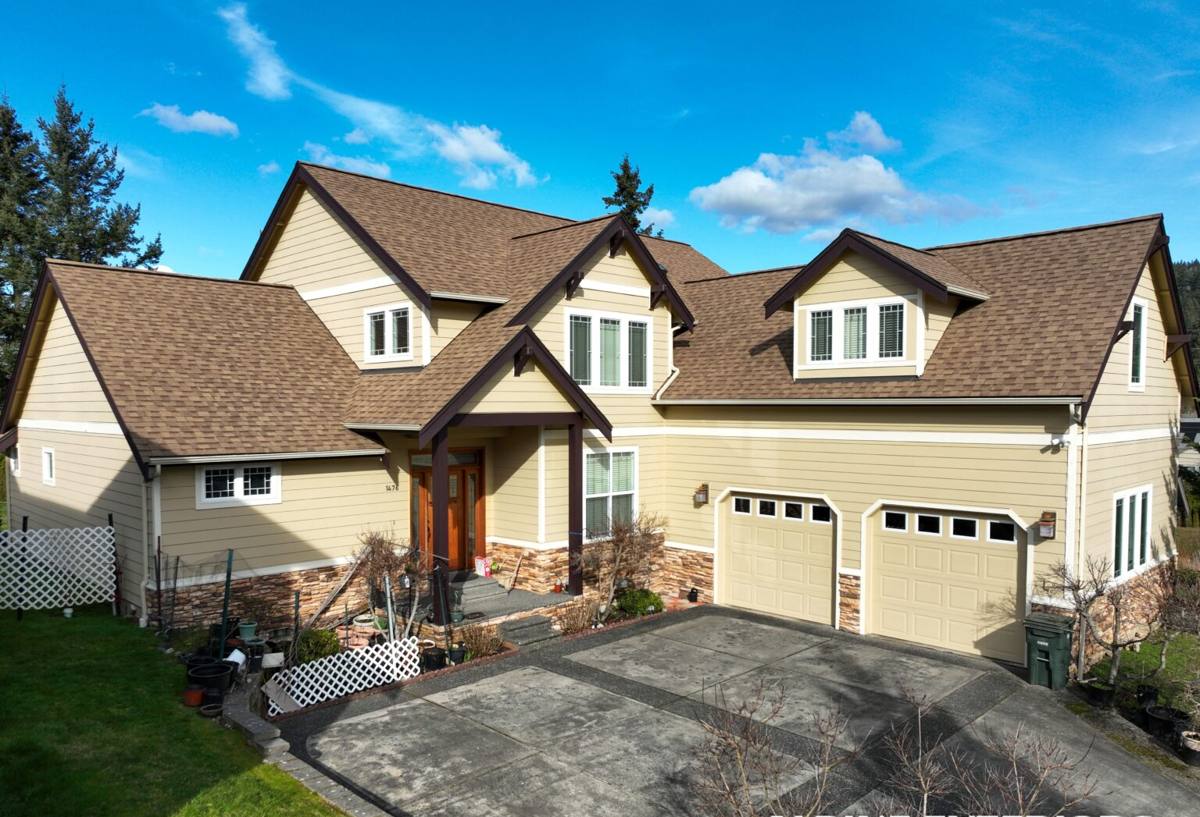
What "Custom" Actually Means Here
"Custom deck" gets used loosely in this trade. For us it means the deck is designed around three things specific to the lot: the grade and view lines, the drainage path water will actually take once the deck is in place, and how the structure ties into the house without creating a moisture trap. On sloped or bluff-adjacent lots, which are common in this part of Bellingham, that often means engineered footings rather than simple post-and-pier work, and it may mean a multi-level design that follows the terrain instead of fighting it with a single massive elevated platform.
Custom also means the railing, stair, and decking material choices are matched to how the homeowner actually uses the space — a low-maintenance surface for a rental or vacation property, a higher-end hardwood or capped composite for a primary residence where appearance matters year-round, or a simple, durable cedar rebuild for someone who wants something that looks right in an established neighborhood without over-building it.
Design Questions We Actually Ask
Before we draw anything, we walk the site and talk through practical questions: Which direction does the prevailing rain come from on this lot? Where does the sun hit in summer versus winter? Is there an existing moss or algae problem on the siding or walkways nearby that tells us something about the microclimate? Does the slope call for a retaining element or extra footing depth? These answers shape material choice and framing details more than any style preference does.
Decking Material Comparison for Salt-Air, High-Moisture Lots
There is no single "best" decking material — each one trades off differently against moisture, salt exposure, moss growth, and upkeep. Here's how the common options compare for an Edgemoor-type lot specifically:
| Material | Salt-air / moisture behavior | Moss & algae resistance | Maintenance | Typical cost position |
|---|---|---|---|---|
| Cedar (traditional) | Naturally rot-resistant but softens over decades near salt air | Needs periodic cleaning; moss will take hold in shaded sections | Refinish every 2–3 years | Moderate |
| Pressure-treated fir/pine | Good with proper sealing; fasteners are the weak point near salt air | Same moss risk as cedar if shaded | Seal/stain every 1–2 years | Lowest |
| Capped composite | Excellent — non-porous, doesn't absorb moisture | Still gets surface algae/moss film in deep shade; needs washing, not sealing | Occasional cleaning, no sealing/staining | Higher upfront, low ongoing |
| Tropical hardwood (e.g., ipe-type) | Very good moisture and rot resistance | Low, but surface can still get slick with algae film | Oil treatment for color retention; structurally low-maintenance | Highest |
For most Edgemoor homes we end up recommending either a well-detailed cedar deck (if the homeowner is comfortable with a maintenance rhythm) or a capped composite system (if the priority is minimizing upkeep in a shaded, damp yard). The framing underneath matters as much as the surface material regardless of which decking is chosen.
Framing and Hardware: Where Salt Air Actually Does the Damage
Most deck failures we get called out to inspect in this area aren't decking-board problems — they're fastener and ledger problems. Standard hot-dip galvanized hardware can corrode faster than expected within a few hundred yards of the bay, especially where the deck sits low and gets salt-laden fog settling on it overnight. We spec stainless steel or heavy-duty coated fasteners and structural connectors for anything within that salt-exposure zone, and we detail the ledger-to-house flashing so wind-driven rain can't work its way behind the band board — one of the most common hidden rot points on older Bellingham decks we've opened up during repairs.
Ventilation and Drainage Under the Deck
A deck built low to grade on a shaded, damp Edgemoor lot needs airflow underneath it or the framing stays wet long after the surface has dried. We build in gapping and, where the design allows, ventilation at the skirting so moisture can escape rather than sit against the joists. On sloped lots, we also route surface water away from the footings rather than letting it pool against them — a detail that's easy to skip and expensive to fix later.
Moss, Algae, and the Long Wet Season
Whatcom County's moss season runs long, and a deck in a shaded, moisture-holding Edgemoor yard will grow it faster than one in full sun a few miles inland. Moss itself isn't just cosmetic — it holds moisture against the decking surface and becomes a slip hazard on stairs and low-traffic corners. We orient decking boards and design drainage gaps to shed water quickly, and we'll talk through a realistic cleaning schedule with the homeowner rather than oversell a "maintenance-free" product that still needs an annual wash in this climate. No decking material is truly maintenance-free in a coastal, tree-shaded Pacific Northwest yard — the honest differences are in how often and how much upkeep each one needs.
Permitting and Site Realities in Bellingham
Elevated decks, guardrail height, and structural attachment to the house typically require a permit through the City of Bellingham, and lots near the bluff or shoreline can carry additional review depending on setback and slope. We handle the permit submission and inspection scheduling as part of the job so the homeowner isn't navigating that process solo. On lots with restrictive access — narrow side yards, steep drops to the water side, mature landscaping we need to work around — job planning and material staging take more coordination than a flat, open inland lot, and that's factored into scheduling up front rather than discovered mid-project.
Our Process From First Call to Final Walkthrough
- Site visit and assessment — we look at slope, sun/shade pattern, existing structure condition (for rebuilds), and access constraints.
- Design and material selection — layout options, decking and railing material comparison specific to the lot's exposure, and a written scope.
- Permitting — we prepare and submit what the City of Bellingham requires and schedule inspections around the build timeline.
- Demolition (for rebuilds) — old decking and, if needed, framing removed and hauled off; we inspect ledger and framing condition once the old surface is off.
- Framing — footings, ledger flashing, joists, and hardware installed to the salt-air and drainage spec for that lot.
- Decking, railing, and stairs — installed per the selected material's manufacturer requirements (fastening pattern, gapping, expansion allowance).
- Final walkthrough — we go over care and maintenance expectations specific to the material chosen and the lot's exposure.
Deck Maintenance Checklist for Edgemoor Homeowners
- Sweep debris and standing leaves off the surface regularly through fall — trapped organic matter accelerates moss growth and staining.
- Wash the deck surface at least once a year with a deck-safe cleaner; pressure washing (if used) should be done at low pressure and by someone familiar with the material to avoid surface damage.
- Check and clear drainage gaps between boards and at the skirting so water isn't pooling underneath.
- Inspect stair and railing hardware annually for corrosion, especially on decks close to the water.
- Re-seal or re-stain wood decking on the schedule appropriate to the product — don't wait until graying and cracking are visible.
- Trim back overhanging vegetation where practical to reduce shade-driven moss and speed drying after rain.
Why a Crew That Already Works Edgemoor Matters
A contractor who's only worked dry, open inland lots will tend to default to standard fastener grades, standard flashing details, and standard drainage assumptions — because that's what's worked fine elsewhere. On an Edgemoor lot, those defaults are exactly where problems start. Working this neighborhood regularly means we already know to upgrade hardware near the water, plan for the moss season in material selection, and account for slope and access when quoting a timeline — rather than learning those lessons on the homeowner's project. It also means we're familiar with how the City of Bellingham handles permitting for shoreline-adjacent and sloped lots, which keeps the schedule realistic instead of stalled on paperwork surprises.
Cost Factors Worth Understanding Before You Get a Quote
Deck pricing varies a lot based on size, material, and site difficulty, and we won't quote a number without seeing the lot. What we can tell you honestly is what tends to move the price: decking material choice is usually the single biggest swing, followed by structural complexity (multi-level designs, engineered footings on slopes, and difficult access all add labor time), then railing style and any custom features like built-in seating or lighting. Salt-air hardware upgrades add a modest amount to material cost but are not optional in our book for anything within regular exposure to bay air — the alternative is premature corrosion and a shorter deck lifespan than the homeowner was quoted for.
If you're planning a new deck or need an honest look at an aging one in Edgemoor, we're glad to come take a look. The estimate is free, there's no pressure, and you'll get a straight answer about what your specific lot needs — use the form below to get started.