 Bellingham
 Edgemoor's Siding Problem Isn't Like Everyone Else's
Edgemoor sits up on the bluff along Bellingham Bay, and that position is exactly what makes it a beautiful place to live and a genuinely hard place to keep siding intact. Homes here catch wind and moisture straight off the water, sit under heavy tree cover on the inland side, and go months at a time without enough direct sun to fully dry out. That combination — salt-laden air, driving rain that hits sideways instead of straight down, and a moss season that can run from October through May — is harder on exterior cladding than what a house a few miles inland deals with.
We're not describing a hypothetical. It's the normal operating environment for siding in this part of Whatcom County, and it's why a siding replacement in Edgemoor needs to be approached differently than a routine re-side on a sheltered lot. This page covers what that means in practice: what the climate actually does to siding here, what a correct replacement job involves, how our process works, and why it matters to hire a crew that already understands this specific stretch of Bellingham.
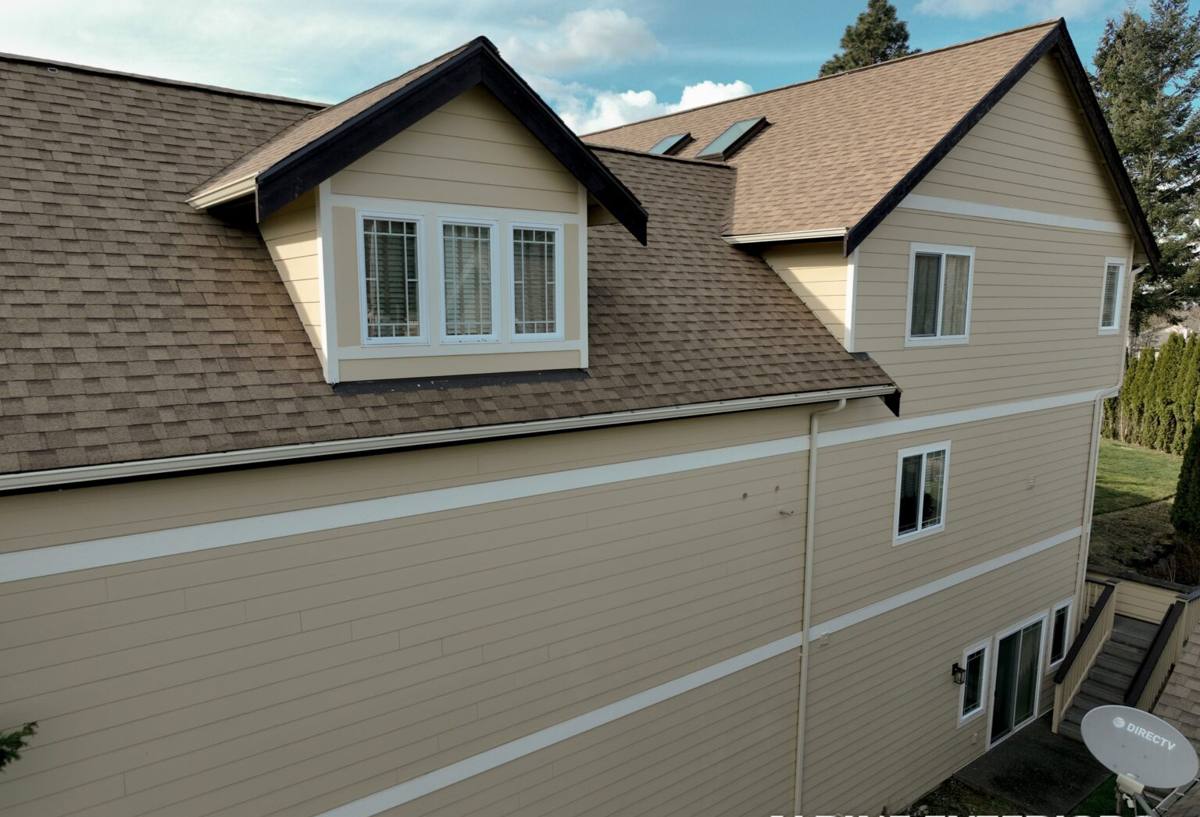
What Salt Air, Driving Rain, and Moss Actually Do to Siding
Salt Air
Proximity to Bellingham Bay means airborne salt is a constant, low-level presence on exterior surfaces. Salt is hygroscopic — it pulls moisture out of the air and holds it against whatever surface it lands on. On siding, that means longer periods of surface dampness even on days that look dry, which accelerates paint failure, promotes mildew growth, and speeds up corrosion on any exposed fasteners or metal trim that isn't rated for coastal exposure.
Driving Rain
Bellingham's rain doesn't fall straight down — winter storms push it sideways, and Edgemoor's elevated, exposed lots get more of that wind-driven rain than sheltered neighborhoods do. Wind-driven rain doesn't just wet the surface of siding; it gets forced up under laps, into joints, and behind trim if the water-resistive barrier, flashing, and lap spacing underneath aren't done correctly. Most siding failures we find aren't failures of the siding material itself — they're failures of what's behind it.
Moss and Mildew
Shade, moisture, and mild temperatures are exactly what moss and mildew need to thrive, and Edgemoor's mix of mature tree canopy and bay-driven humidity provides both for most of the year. Moss holds water against a surface far longer than open air would, and on siding materials that can absorb or swell with moisture, that's a slow, steady path to rot and paint failure — even when nothing looks obviously wrong from the ground.
Why We Only Install James Hardie in Edgemoor
We don't install vinyl, LP SmartSide, Cemplank, Allura, primed spruce, or cedar. That's not a marketing position — it's a standard we hold because of what we've seen happen to those materials in exactly this kind of coastal, wet, low-sun environment, and because James Hardie's fiber cement products are engineered specifically to handle it.
- Non-combustible material — fiber cement doesn't feed a fire the way wood-based or vinyl products can, which matters for both safety and, on many policies, insurance considerations.
- Moisture-resistant by composition — fiber cement doesn't absorb and swell with water the way wood-based composite siding can, so it holds its shape and paint bond through repeated wet-dry cycles.
- Climate-engineered HZ product lines — Hardie's HZ5 formulation is specifically built for wetter, harsher climates like ours, rather than a one-size-fits-all product.
- ColorPlus factory finish — a baked-on finish applied under controlled conditions holds color and resists fading and chipping far better than field-applied paint, which matters when a house doesn't get much direct sun to help paint cure and dry.
- Strong, transferable warranty — backed by a manufacturer with decades of fiber cement manufacturing behind it, and transferable if the home sells.
To be fair to the alternatives: vinyl is inexpensive and low-maintenance in mild, dry climates, and cedar has genuine aesthetic appeal that some homeowners specifically want. But vinyl can warp and become brittle with UV and temperature swings, and its seams give wind-driven rain more places to work into; cedar and primed spruce need a real ongoing paint and sealant maintenance schedule to survive sustained moisture exposure, and that maintenance is easy to fall behind on. In an environment that's actively working against a house's siding nine or ten months of the year, we'd rather put a material on the wall that doesn't depend on a perfect maintenance schedule to hold up.
What a Correct Siding Replacement Actually Involves
Siding replacement is not just removing old boards and nailing up new ones. On an Edgemoor home, the work behind the siding matters at least as much as the siding itself, because that's what determines whether the wall assembly stays dry.
1. Full Tear-Off and Sheathing Inspection
We remove the existing siding down to the sheathing rather than installing over it. That's the only way to find hidden rot, soft spots, or prior water damage before it's sealed behind a new wall — and on a bluff-exposed home, catching that now instead of in five years is the difference between a siding job and a structural repair.
2. Water-Resistive Barrier and Flashing
A new, correctly lapped water-resistive barrier goes on before any siding, with flashing detailed at every window, door, and penetration so wind-driven rain has a drainage path out instead of a path in. This is the single most common place we find corners cut on older installs, and it's the least visible part of the job — which is exactly why it matters that whoever does it takes it seriously.
3. Drainage Gap Where It's Needed
On exposed, moisture-heavy walls like the ones common in Edgemoor, a drainage gap (rainscreen) behind the siding gives any moisture that does get past the outer layer a way to drain and dry instead of sitting against the sheathing. It adds a step to the install, but on this kind of site it's worth doing right.
4. Correct Fastening and Lap Spacing
James Hardie specifies exact nailing patterns, lap dimensions, and clearances (from the ground, roofline, and other surfaces) for a reason — deviating from spec is one of the fastest ways to void the manufacturer warranty and create entry points for water. This is where installer experience with Hardie specifically, not just siding in general, shows.
5. Trim, Caulking, and Paint Touch-Up
Factory-finished ColorPlus boards need minimal field painting, but cut edges, trim, and fastener heads still need to be properly sealed and touched up to manufacturer spec to maintain the warranty and keep water out at every seam.
Our Process, Start to Finish
- On-site assessment — we walk the exterior, check for existing damage, moisture intrusion, and any trouble spots specific to the home's exposure and grade.
- Written estimate — clear scope, product selection, and pricing before anything is scheduled.
- Tear-off and sheathing check — old siding removed, sheathing inspected and repaired as needed.
- Weather barrier and flashing install — the moisture-management layer that does most of the long-term work.
- James Hardie installation — installed to manufacturer spec for fastening, spacing, and clearances.
- Trim, caulk, and final detailing — every seam and penetration sealed correctly.
- Walkthrough and cleanup — site cleared, and we walk the finished job with the homeowner before calling it done.
Signs an Edgemoor Home May Need Siding Replacement Now
- Paint that's peeling, bubbling, or failing faster than a normal repaint cycle would suggest
- Soft or spongy spots when you press on siding, especially near the bottom courses or under windows
- Visible warping, buckling, or gaps between boards
- Persistent moss or dark streaking that comes back soon after cleaning
- Cracking around nail heads or at butt joints
- Musty smell or visible staining on interior walls that back onto exterior siding
- Siding that's original to a home more than 20-25 years old, especially wood-based products
Any one of these on its own isn't necessarily an emergency, but on an exposed Edgemoor lot they tend to compound faster than they would elsewhere, so it's worth having them looked at sooner rather than later.
What Drives the Cost of a Siding Replacement Here
| Factor | Why It Matters in Edgemoor |
|---|---|
| Home size and elevation count | More wall area and multiple stories increase material and labor, and bluff-lot grading can add access complexity |
| Extent of hidden damage found at tear-off | Homes with a history of moisture exposure sometimes need sheathing repair before new siding goes on |
| Trim and architectural detail | Corner boards, window trim, and dormers all add labor time to install and flash correctly |
| Siding profile chosen | Lap width, shingle-style panels, and board-and-batten each have different material and labor costs |
| Access and site conditions | Sloped or tree-covered lots common on the bluff can affect scaffolding, staging, and site protection needs |
| Color and finish selection | ColorPlus factory colors versus field painting affects both cost and long-term maintenance |
We give a firm written estimate after walking the specific home — broad ranges without seeing the house aren't useful to you, and we'd rather be accurate than fast.
Living With New Siding Through Bellingham's Wet Season
Even the right material installed correctly still benefits from basic upkeep in this climate. Keeping gutters clear so water doesn't sheet down the wall face, trimming back vegetation that shades siding and keeps it damp, and rinsing off moss or mildew buildup before it takes hold all extend the life of the finish. James Hardie's factory finish and moisture-resistant composition dramatically reduce how much maintenance is actually required compared to wood-based sidings, but "low-maintenance" isn't "no-maintenance" anywhere on the Bellingham Bay waterfront.
Why It Matters to Hire a Crew That Already Works Edgemoor
Every neighborhood in Bellingham has its own exposure pattern, but Edgemoor's bluff-top and view-lot homes deal with a specific combination of wind, salt air, and shade that a crew unfamiliar with the area might not fully account for. Knowing how far to detail flashing on a wind-exposed elevation, when a drainage gap is worth the extra step, and how the local permitting process runs with the City of Bellingham and Whatcom County all come from doing this work here repeatedly — not from a general siding background alone. That local familiarity shows up in the details that don't get noticed until years later, which is exactly when they matter most.
If your Edgemoor home's siding is showing its age, or you just want an honest read on its condition, we're happy to come take a look and walk you through what we'd recommend. Reach out for a free, no-pressure estimate using the form below.