 Bellingham
 Fiber Cement Siding in Fairhaven: Matched to the Neighborhood's Exposure
Fairhaven sits close enough to Bellingham Bay that its homes deal with a different set of exterior stresses than houses further inland in Whatcom County. The siding on a Fairhaven home isn't just protecting against rain the way siding does everywhere — it's absorbing a near-constant drift of salt-laden air, taking rain that arrives at an angle instead of straight down, and drying out slowly under a tree canopy that keeps a lot of the neighborhood shaded for large parts of the year. Fiber cement siding was engineered to handle exactly that combination, which is why it's the only material we install here, and why we treat a Fairhaven fiber cement job differently than a standard siding replacement in a drier, more sheltered part of town.
This page focuses specifically on fiber cement siding work in Fairhaven: what the local conditions actually demand from a siding system, what a correct installation looks like, and how our process runs from first walkthrough to finished wall.
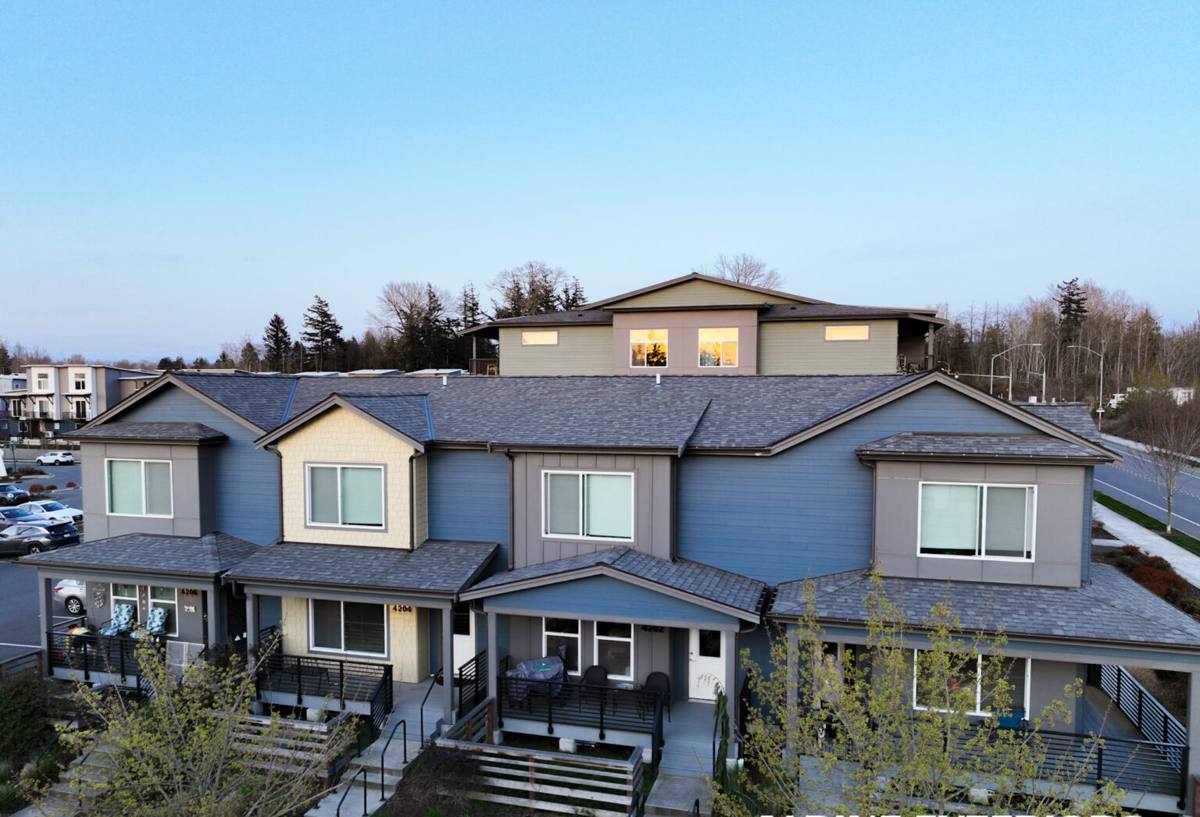
What Bellingham Bay's Climate Does to Siding, Specifically
Salt Air and Fastener Corrosion
Homes near the bay sit in a steady, low-grade bath of moisture-carrying, mildly corrosive air. It's not something you notice day to day, but over years it works on exposed fasteners, degrades lower-quality finishes, and can leave rust bleed streaking down a wall long before the siding itself fails structurally. Fiber cement's dense, cement-based composition doesn't corrode the way metal does, but the fasteners, flashing, and finish system around it still need to be chosen with that salt exposure in mind — which is part of why generic, one-size-fits-all siding specs fall short this close to the water.
Rain That Comes in Sideways
Fairhaven's proximity to open water means storms don't just drop rain, they push it. Wind-driven rain finds horizontal seams, trim joints, and any spot where a lap or panel edge isn't sealed to spec, and it finds them from angles a siding system designed for a calmer climate was never really pressure-tested against. This is one of the main reasons installation detail matters as much as material choice on this page — a great product installed with generic technique still leaks in a wind event.
Moss, Mildew, and Shaded Walls
Mild year-round temperatures, consistent dampness, and mature trees common throughout Fairhaven's older residential blocks add up to a moss and mildew season that runs most of the year on north-facing or shaded walls. Porous or moisture-absorbent siding gives that growth something to hold onto; a dense, non-porous fiber cement surface with a durable factory finish gives it far less to work with, and cleans up without the finish underneath breaking down.
Why James Hardie Fiber Cement Is Our Standard Here
We install James Hardie fiber cement siding exclusively, on every job, in every part of Whatcom County we work — including Fairhaven. That's not a marketing position, it's a professional call based on what actually holds up against this specific combination of salt air, wind-driven rain, and sustained shade and moisture.
HZ5 Formulation for Marine, High-Moisture Climates
James Hardie doesn't sell one universal siding formula nationwide. Products specified for our region fall under the HZ5 line, engineered for climates with heavy sustained moisture and freeze-thaw cycling rather than the drier formulations sold in the Southwest or inland climates. For a neighborhood sitting this close to Bellingham Bay, that engineering difference isn't cosmetic — it's the reason the material holds its dimensions and resists moisture intrusion where a generic spec would eventually show cracking or swelling at the edges.
ColorPlus Factory Finish
Rather than being painted on site, ColorPlus color is baked onto the board in a controlled factory process, through multiple coats, before it ever reaches a Fairhaven job site. That matters most in exactly this climate: field-applied paint has to fight salt residue, UV, and constant damp cycling from day one, while a factory-cured finish is already built to resist all three. It's also the reason Hardie siding here tends to hold its color years longer than a field-painted board.
Non-Combustible, Dimensionally Stable Core
Fiber cement's cement-and-cellulose core doesn't feed a fire the way wood-based siding can, and it doesn't swell, cup, or warp the way engineered wood does after repeated wet-season moisture cycles. On a shaded, slow-drying Fairhaven wall, that dimensional stability is what keeps seams tight and paint lines straight year after year instead of telegraphing movement through the finish.
A Warranty Backed by the Manufacturer
James Hardie backs its siding with a substantial, transferable warranty, provided the installation follows the manufacturer's fastening and clearance specifications. That warranty is only as good as the install underneath it, which is why we treat the installation details in the next section as seriously as the material choice itself.
What We Don't Install, and Why
We don't install LP SmartSide, vinyl siding, Cemplank, Allura, primed spruce, or cedar. Each of those is a legitimate product that plenty of contractors install competently elsewhere. Our call was specific to this climate: engineered wood is more sensitive to moisture at cut edges and fastener penetrations than fiber cement; vinyl can warp in direct sun and trap moisture behind the panel if flashing wasn't done with real care; cedar and primed spruce need an ongoing paint or seal cycle that tends to slip in a climate this consistently damp, which quietly shortens their real-world lifespan. Standing behind one system we understand completely serves Fairhaven homeowners better than offering a cheaper option with trade-offs we'd have to explain away later.
What a Correct Installation Involves
A James Hardie installation only performs the way it's engineered to if the details underneath the finished wall are done to spec. This is where a rushed job and a correct one diverge, even though both can look identical from the curb on install day.
- House wrap or weather-resistant barrier lapped and sealed as one continuous water-management layer, not just stapled up in sheets
- Correct fastener type, spacing, and penetration depth, matched to Hardie's published specifications rather than a generic siding pattern
- Proper clearance between the bottom of the siding and grade, decking, roofing, and any adjoining hard surface, so the board isn't sitting in standing water after a storm
- Butt joints and corners lapped, backed, and sealed correctly so wind-driven rain can't track behind a seam
- Flashing integrated at every window head, roofline intersection, and wall penetration, not caulk substituted for flashing
- Caulking used only where Hardie specifies it, not as a catch-all fix for gaps that should have been flashed or gapped correctly in the first place
None of these steps are unique to Fairhaven, but the consequences of skipping them show up faster here than in a drier, more sheltered part of Whatcom County, because wind-driven rain and sustained moisture give a shortcut less time to go unnoticed.
Choosing a Profile and Color for a Fairhaven Home
Fairhaven's mix of early-century homes and newer infill built into hillside lots gives homeowners real range in how a Hardie installation can look, without stepping outside the one material system we install.
- HardiePlank lap siding is the most common choice for full-elevation replacement, available in several exposure widths and textures that can echo an older home's existing lines
- HardieShingle gives a shingle-style look for homes where that's the architectural fit, without the moisture sensitivity of actual wood shingles
- Board and batten panel and trim works well as an accent on gables, dormers, or entry features, paired with lap siding on the main walls
On color, ColorPlus finishes hold up against salt air and UV better than field-applied paint, which matters on walls that catch direct sun off the water as well as ones that stay shaded and damp most of the year. Darker colors show shadow lines and architectural detail more; lighter colors read cleaner against Fairhaven's mature tree cover. We walk through these choices in person against the actual house rather than off a swatch alone.
Our Fiber Cement Installation Process
- On-site walkthrough: We assess the existing wall assembly, note trouble spots like shaded walls, wind exposure, and grade clearance, and talk through profile and color options specific to the house.
- Tear-off and substrate check: Removing the old siding is when hidden moisture damage in sheathing or framing gets found and addressed, rather than covered over with new material on top of an existing problem.
- Water management layer: House wrap, flashing, and any needed substrate repair go in as one integrated system before a single piece of Hardie siding is fastened.
- Installation to manufacturer spec: Fastening pattern, clearances, joint treatment, and flashing integration follow James Hardie's published requirements, not a generalized approach.
- Final walkthrough: We check seams, clearances, and finish work with you before calling the job done.
Fiber Cement Siding Cost Factors in Fairhaven
| Factor | What It Affects | Why It Matters in Fairhaven |
|---|---|---|
| Tear-off vs. install over existing siding | Labor scope and hidden-damage exposure | Tear-off is generally the right call this close to the bay, since it's the only way to catch moisture damage building behind older siding |
| Substrate and sheathing condition | Repair costs before new siding goes on | Years of trapped moisture behind failing siding on a shaded wall can go unnoticed until the old material comes off |
| Profile and trim detail | Material cost and install labor | Older Fairhaven homes often carry more trim and roofline intersections, each one a spot that needs flashing done correctly |
| Site access and slope | Staging, scaffolding, and setup time | Hillside lots common in the neighborhood can add setup time relative to a flat, easy-access site |
| Color and finish selection | Material cost and long-term finish life | A factory-cured ColorPlus finish costs more upfront than field paint but outlasts it against salt air and UV |
These are the factors that move a number up or down, not a substitute for a real quote — we price off an in-person walkthrough of the actual house, not square footage alone.
Maintenance and Long-Term Care
One of the practical advantages of Hardie fiber cement in a climate like Fairhaven's is what it doesn't demand from a homeowner. Realistic upkeep looks like an occasional rinse to clear salt residue and general grime, a visual check after a strong wind event for any loosened trim or shifted flashing, and keeping irrigation or dense landscaping from spraying directly against the base of the wall. There's no annual repaint cycle to chase and no wood fiber underneath for moss to take hold in the way it can on more porous materials. Touch-up paint is only needed where the surface is actually damaged, not as routine maintenance.
Why a Crew That Already Works Fairhaven Matters
A contractor who works this specific stretch of Whatcom County regularly has already seen how salt air, wind-driven rain, and a long moss season behave on real Fairhaven houses over a full year, not just how a product performs on a spec sheet. That experience shows up in small, practical decisions on install day: where extra flashing attention actually pays off, which wall orientations on a given lot stay damp longest, and which older homes are likely to need substrate repair once the tear-off starts. Before hiring anyone for fiber cement siding work here, it's worth confirming a few things directly:
- An active Washington state contractor license and current insurance
- Which siding brand and product line they install, and why they standardized on it
- How they handle hidden substrate damage discovered mid-tear-off, and how that gets priced
- Whether they follow James Hardie's published fastening, clearance, and flashing specifications, not a generic install pattern
- A written scope that names flashing and water-management details specifically, not just "new siding installed"
If your Fairhaven home needs new siding, a repair on an existing Hardie installation, or just a straight answer about what's going on behind an aging wall, we're glad to take a look. Reach out using the form below to schedule a free, no-pressure estimate.