 Bellingham
 Birch Bay's Waterfront Exposure Is a Different Test for Siding
Birch Bay sits directly on the water in northern Whatcom County, and that shoreline location changes what a home's exterior has to deal with compared to a house even a few miles inland toward Bellingham. Homes here take on salt-laden marine air off the water, wind-driven rain that comes in sideways rather than straight down, and a moss and algae season that runs longer than most homeowners expect in the Pacific Northwest. A siding material and installation that would be fine on a sheltered lot can start showing problems on a Birch Bay property within a few years if it isn't chosen and installed with this specific exposure in mind.
Salt Air and What It Does to Building Materials
Salt in the air isn't just a coastal cliché — it's a real accelerant for corrosion. Fasteners, flashing, and any exposed metal trim on a house near the water break down faster than the same materials would a few miles inland. Lower-grade finishes can also chalk, fade, or lose adhesion faster under sustained salt exposure. That means every material choice on a Birch Bay exterior, right down to the nails and screws, needs to be selected with corrosion resistance in mind rather than just picked for upfront cost.
Wind-Driven Rain, Not Just Rainfall Totals
Whatcom County's annual rainfall numbers don't tell the whole story for a waterfront property. Open exposure to wind off the water pushes rain sideways into wall assemblies, window and door flashing, and any gap or seam that isn't detailed correctly. A wall that would shed water fine in a calm, sheltered location can still take on moisture here because the water is arriving at an angle, not falling straight down onto a roof and away from the wall. Siding installation details that ignore this — like skipped flashing or gaps in a water-resistive barrier — tend to show up as problems faster on a home like this than they would elsewhere.
A Moss Season That Runs Most of the Year
Mild temperatures, marine humidity, and shade from mature trees add up to a long moss and algae season across this part of Whatcom County, and Birch Bay's proximity to the water only adds to the moisture load. North-facing and tree-shaded walls are usually the first to show green growth, and any siding material that's even slightly porous becomes a foothold for it over time. This is one of the more visible, ongoing maintenance issues Birch Bay homeowners deal with, and it's a real factor in choosing a siding material, not just a cosmetic afterthought.
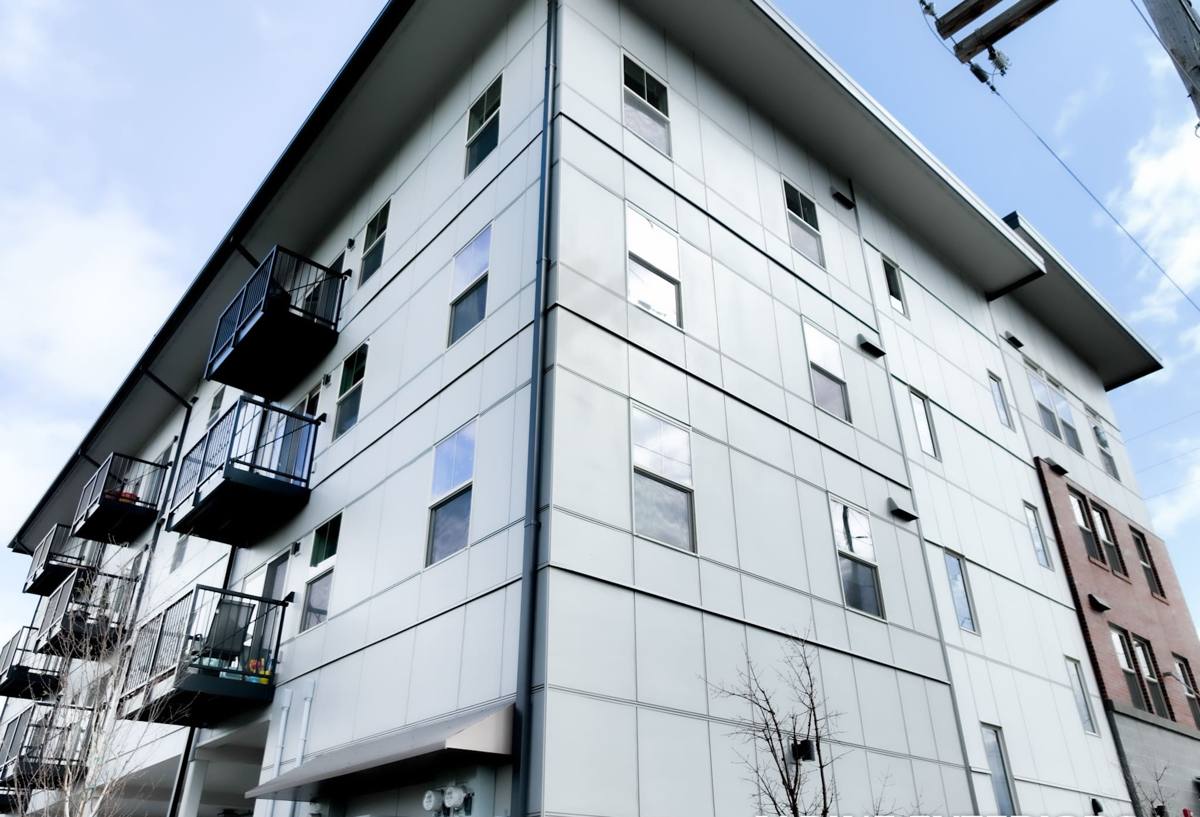
Why James Hardie Fiber Cement Is the Right Match for This Climate
We install James Hardie fiber cement siding exclusively — not LP SmartSide, not vinyl, not Cemplank, Allura, primed spruce, or cedar. That's a professional standard we've settled on, not a sales angle, and it comes directly from what a coastal, wet climate like Birch Bay's does to a house over time.
A Core That Doesn't Absorb and Swell
Fiber cement is dimensionally stable in a way that wood-based siding products simply aren't. It doesn't swell, cup, or warp the way engineered wood or solid wood siding can after repeated wetting and drying cycles through a wet Northwest winter. On a property that's directly exposed to marine moisture, that stability matters more than it would on a drier, more sheltered lot, because the material is being tested by moisture exposure almost year-round.
ColorPlus: A Factory Finish, Not a Field-Applied Paint Job
Hardie's ColorPlus finish is baked on under controlled factory conditions rather than brushed on at the job site. That process gives it better adhesion and more consistent coverage than field-applied paint, which translates into better resistance to fading, chalking, and moisture intrusion at the finish layer. In a climate with this much salt air and rain exposure, a finish that's holding up poorly after a few years isn't just a cosmetic issue — it's an early warning that moisture is starting to get past the surface.
HZ5: Engineered for This Climate Zone
Hardie manufactures its fiber cement in different HZ formulations for different climate zones, and HZ5 is built for regions that see heavy moisture exposure along with freeze-thaw cycling — a fair description of waterfront Whatcom County. Using the correct HZ line for this region, rather than a generic formulation meant for a hotter or drier climate, is part of what makes a Hardie installation perform the way it's designed to over the long run.
What a Correct James Hardie Installation Involves
Fiber cement only delivers on its durability if it goes on correctly. A quality product installed loosely, or with shortcuts on water management, will still develop problems in a climate like this one — the material is only as good as the installation behind it.
Weather-Resistive Barrier and Flashing Come First
Before any siding goes up, the wall needs a continuous weather-resistive barrier with properly lapped and sealed seams, plus flashing at every window, door, and roof-to-wall transition. This is the layer that actually keeps wind-driven rain out of the wall assembly if water gets past the siding itself, and on a waterfront lot it's not optional detailing — it's the difference between a wall that stays dry and one that slowly rots from the inside.
A Drainage Gap Behind the Panels
Where conditions call for it, we install a rainscreen or drainage gap behind the Hardie panels rather than fastening siding tight against the wall. That gap lets any moisture that does get behind the siding drain and dry out instead of sitting against the sheathing. On a home taking regular wind-driven rain off the water, that drainage plane is one of the details that separates a siding job that lasts decades from one that develops hidden moisture damage well before the siding itself wears out.
Fastener Choice Matters More on the Water
Because salt air accelerates corrosion, fastener selection isn't a minor spec on a Birch Bay job — it's a material decision. Using the wrong grade of fastener can mean streaking, staining, or loosening panels years before they should need attention. Hardie's own installation guidelines specify fastener type, length, and spacing, and following those specs closely matters even more in a corrosive coastal environment than it would inland.
Clearances, Joints, and Trim Details
Correct ground clearance, proper flashing above trim and window heads, and joints that are either factory-mitered or correctly caulked all affect how well a Hardie installation resists water intrusion over time. Skipping these details doesn't usually cause an immediate problem — it shows up two, five, or ten years later as staining, soft trim, or paint failure, by which point the fix is more involved than it would have been to do correctly the first time.
How Hardie Compares to Other Siding Materials in a Climate Like This
| Material | Behavior in Salt Air and Moisture | Moss and Algae Resistance | Typical Maintenance |
|---|---|---|---|
| James Hardie fiber cement | Dimensionally stable; doesn't swell or warp | Factory finish resists organic growth better than porous materials | Periodic gentle washing; low overall |
| Vinyl siding | Can distort or become brittle with age and wind exposure | Seams and laps can trap moisture and debris | Low upfront, but seams are a long-term weak point |
| LP SmartSide / engineered wood | Wood-based core is moisture-sensitive at cut edges and joints | Moderate; depends heavily on edge sealing and upkeep | Ongoing caulk and edge maintenance required |
| Cedar or primed wood siding | Absorbs and releases moisture readily in wet climates | Prone to moss and mildew without frequent treatment | High; regular refinishing needed |
Our Process for a Birch Bay Hardie Siding Project
- On-site assessment: We walk the exterior and look specifically at how the current siding, trim, and flashing have handled moisture and salt exposure over time, not just how the surface looks.
- Sheathing and structure check: Once old siding comes off, we inspect the sheathing underneath for any moisture damage that needs repair before new material goes on — this is often where a real problem gets found or ruled out.
- Weather-resistive barrier and flashing: We install a continuous barrier and properly lapped flashing at every penetration and transition before any Hardie panel goes up.
- Drainage detailing: Where the wall assembly calls for it, we build in a drainage gap so any moisture that gets behind the siding has somewhere to go.
- Installation to Hardie's spec: Correct fasteners, spacing, clearances, and joint treatment, following the manufacturer's published installation guidelines rather than shortcuts.
- Trim, caulk, and finish details: We finish out trim and joint sealing carefully, since these smaller details are often where water problems start on a coastal property.
- Final walkthrough: We go over the finished work with the homeowner and address anything that needs attention before calling the job complete.
What Typically Affects the Cost of a Hardie Install in Birch Bay
| Factor | Why It Matters Here |
|---|---|
| Home size and wall complexity | More square footage and more corners, gables, and trim detail mean more labor and material |
| Condition of the existing sheathing | Waterfront homes with a history of moisture intrusion sometimes need sheathing repair before new siding goes on |
| Water management upgrades | Adding proper flashing or a drainage gap where it's missing is worth the added cost on an exposed lot |
| Trim and color selection | Custom trim details and ColorPlus color choices can shift material cost |
| Site access | Waterfront lots, slopes, or limited access can affect staging and labor time |
Why a Crew That Already Works in Birch Bay Matters
A contractor who regularly works this stretch of Whatcom County coastline already knows how salt exposure, wind, and prolonged moisture behave differently here than they do a few miles inland. That shows up in practical decisions on the job — how far flashing gets lapped, which fastener grade gets specified, where a drainage gap gets added even if it's not strictly required by code. Those are the kinds of judgment calls that come from having actually dealt with the failure points this environment tends to produce, not from following a generic checklist written for a different climate. It also means fewer surprises during the project itself, since a crew familiar with the area already has a sense of what a given lot's exposure and wall orientation are likely to need.
What to Expect After Your New Siding Is Up
A correctly installed James Hardie system is genuinely low-maintenance, but "low-maintenance" doesn't mean "no maintenance," especially this close to the water. Salt residue and organic growth still need periodic attention, and it's worth knowing what to watch for so small issues get caught early.
- Rinse the exterior periodically to clear salt residue and airborne debris, especially on walls facing the water
- Inspect caulked joints and trim once a year for cracking or gaps, particularly after a hard winter
- Keep an eye on shaded or north-facing walls for early moss or algae growth and clean gently before it builds up
- Check that gutters and downspouts are directing water away from the wall base rather than splashing back onto lower siding courses
- Have flashing at windows, doors, and roof transitions checked periodically, since these are the areas most likely to show an early sign of a water problem
Questions Worth Asking Before You Hire
Not every contractor who advertises "Hardie siding" installs it the same way, and the difference shows up years later rather than on move-in day. A short list of questions can help you tell the difference upfront.
- Ask whether they install James Hardie exclusively or offer multiple siding brands, and why
- Ask specifically how they handle flashing and water management on waterfront or wind-exposed lots
- Confirm current Washington contractor licensing and active liability insurance
- Ask whether they'll pull the required local permit rather than skip it
- Get a clear, written scope of work — including fastener type, drainage detailing, and warranty coverage — before signing anything
If you're weighing options for new or replacement siding on a Birch Bay home, we're happy to walk the exterior with you and give an honest, specific read on what it needs. Reach out below for a free, no-pressure estimate.