 Bellingham
 Deck Building in Puget, Right for This Climate
Puget sits close enough to the water and the tree cover of Bellingham that a deck here works harder than a deck almost anywhere inland. Salt-laden air off the Sound, long stretches of driving rain, and a moss season that can run half the year all put steady pressure on fasteners, framing, and decking surfaces. A deck built without those conditions in mind will look fine for a season or two and then start showing problems — cupped boards, rust streaks, soft spots underfoot — well before it should. Building correctly for Puget from day one costs little extra up front and saves a lot of grief later.
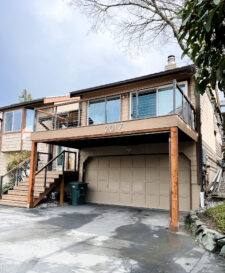
What This Location Does to a Deck Over Time
Three conditions define deck-building decisions in this part of Whatcom County, and they compound each other.
Salt Air
Even a few miles inland from the Sound, airborne salt accelerates corrosion on any metal that isn't rated for it. Standard hardware can start pitting and staining decking within a year or two. This is one of the most common reasons we get called out to older decks — not because the wood failed, but because the fasteners holding it together did.
Driving Rain
Bellingham doesn't just get rain, it gets rain pushed sideways by wind off the water, which finds its way into places a gentle vertical rain never would — under rail caps, behind ledger boards, into end-grain cuts that weren't sealed. Water that gets trapped instead of shed is what causes rot, not water that simply falls on a surface.
Moss and Shade
Tree cover and a long wet season mean moss and algae get a real foothold on any deck surface that doesn't drain and dry quickly. Beyond looking bad, moss holds moisture against the decking surface and turns stairs and low-traffic areas slick and genuinely dangerous underfoot.
Decking Material: What Actually Holds Up Here
There's no single "best" decking material — there's a best fit for a given budget, look, and how much upkeep a homeowner actually wants to do. Here's how the common options compare for a property like this one.
| Material | Moisture Behavior | Maintenance | Typical Lifespan Here |
|---|---|---|---|
| Pressure-treated pine | Absorbs water readily; needs sealed cuts and gaps for drying | Annual cleaning and re-sealing to prevent moss and cupping | 10–15 years with upkeep |
| Cedar | Naturally rot-resistant but still absorbs surface moisture | Periodic staining/sealing to hold color and resist moss | 15–20 years with upkeep |
| Capped composite | Sheds water at the surface, doesn't absorb or swell | Occasional rinse/scrub for moss film; no sealing | 25+ years, backed by manufacturer warranty |
| Uncapped composite (older style) | Can absorb moisture at the core over time | More prone to mold staining in shaded, wet spots | Variable — we're selective about which of these we still install |
We lean toward capped composite or well-detailed cedar for shaded, damp lots, and we're upfront when a homeowner is considering an older-style uncapped composite product — it can perform fine in full sun but struggles in the kind of shaded, wet exposure common around here. That's a maintenance and moisture-behavior tradeoff we'll walk through honestly, not a knock on any one brand.
Framing and Fasteners: What's Underneath Matters More Than What's On Top
A deck's surface is what people see, but the framing underneath determines whether it's still safe in fifteen years. For this climate, that means:
- Stainless steel or heavy hot-dip galvanized fasteners rated for coastal/marine exposure — not the standard-grade hardware that's fine two hundred miles inland
- Ledger board flashing that actually directs water away from the house rim joist, installed with the right lap order (not just caulked and hoped for)
- Joist tape or a comparable barrier on the tops of joists and beams, so end-grain and fastener penetrations aren't left to soak
- Post bases that hold wood posts off standing water instead of embedding them directly in or against concrete
- Correct joist spacing and beam sizing for the actual decking material chosen, since composite and wood have different span ratings
Cutting corners on any one of these doesn't fail immediately — it fails quietly, a few years out, in the form of soft framing you can't see until a board flexes or a rail feels loose.
Drainage and Airflow: The Difference Between a Deck That Dries and One That Doesn't
Moss and rot both need standing moisture to take hold, so the real fix isn't fighting them after the fact — it's building so water never has a reason to linger. That means proper board spacing for drainage, a slight slope away from the house on the frame itself, and enough clearance and ventilation underneath the deck that air can actually move through the joist bay after a storm. On lower decks close to grade, that clearance is often the single biggest factor in whether the structure stays dry or stays damp. We also pay attention to where downspouts and roof runoff land relative to the deck footprint — a deck built directly under a valley's runoff path will fight moisture problems no matter how well it's built.
Our Deck Building Process
The process is the same whether it's a full rebuild or new construction, and it's built around getting the structure right before anything decorative happens.
- On-site assessment — we look at grade, drainage paths, sun/shade exposure, and how the deck ties into the house before recommending materials.
- Design and material selection — we walk through decking, railing, and fastener options against the budget and how much maintenance the homeowner wants long-term.
- Permitting — we handle the permit application and inspection scheduling required for the scope of work.
- Demolition (if applicable) — old decking and framing are removed and the substructure is checked for hidden rot before we build on it.
- Framing — ledger flashing, joists, beams, and posts go in first, with marine-rated fasteners throughout.
- Decking and railing installation — surface material and railing go on to the manufacturer's or code's spacing and fastening specs.
- Final walkthrough — we go over the finished deck with the homeowner, including what maintenance it will need and when.
Permits and Code in Bellingham and Whatcom County
Most new decks and many deck rebuilds in the City of Bellingham and unincorporated Whatcom County require a building permit, particularly once the deck is attached to the house or reaches a certain height above grade. Requirements cover things like railing height and baluster spacing, ledger attachment method, footing depth (frost depth matters here even though winters are mild), and setback from property lines. We pull permits as part of the job rather than leaving that step to the homeowner, and we build to pass inspection the first time — a failed inspection on framing or ledger attachment costs everyone time.
Maintenance Checklist for a Puget-Area Deck
No decking material here is fully maintenance-free, but the right build cuts the work down significantly. A reasonable seasonal routine looks like this:
- Rinse or soft-wash the surface at least twice a year, more often under heavy tree cover, to keep moss and algae from getting established
- Clear leaves and debris from between boards and off ledger flashing before fall rains set in
- Check railing posts and stair stringers for looseness once a year — this often shows up before any visible wood damage does
- Inspect fasteners for rust bleed or staining, which signals hardware that isn't holding up to the salt air
- Re-seal or re-stain wood decking on the schedule the product calls for, not just when it starts looking gray
- Keep gutters and downspouts clear so roof runoff isn't draining onto or under the deck
Why a Crew That Already Works Puget Makes a Difference
Deck-building fundamentals don't change from town to town, but the details that determine whether a deck holds up do. A crew that already works this specific area knows which fastener grade actually holds up to the salt air here, how much slope and clearance the drainage really needs given the rainfall, and which decking products handle shaded, damp lots without turning into a moss magnet within a couple of years. That's the difference between a deck that needs real attention in five years and one that's still solid in twenty.
If you're planning a new deck or replacing one that's showing its age, we're happy to take a look and put together a straightforward, no-pressure estimate — just fill out the form below.