 Bellingham
 Window Installation Built for Puget's Marine Climate
The Puget area of Bellingham sits close enough to the water that homes here take on a different kind of weather stress than houses further inland in Whatcom County. Salt-laden air off the Sound works into metal hardware and painted trim. Wind-driven rain doesn't just fall straight down — it gets pushed sideways into wall assemblies and window openings. And the long gray stretch of fall through spring keeps siding, trim, and window sills damp long enough for moss and algae to take hold. None of that is dramatic on its own, but over years it adds up to soft sills, foggy glass, and windows that don't seal like they used to.
Window installation done right in this neighborhood isn't just about picking a new window and setting it in the hole. It's about understanding how water moves around a wall opening in a marine climate and building the installation so that water is shed, not trapped. That's the difference between a window that looks fine for two years and one that performs for the next twenty.
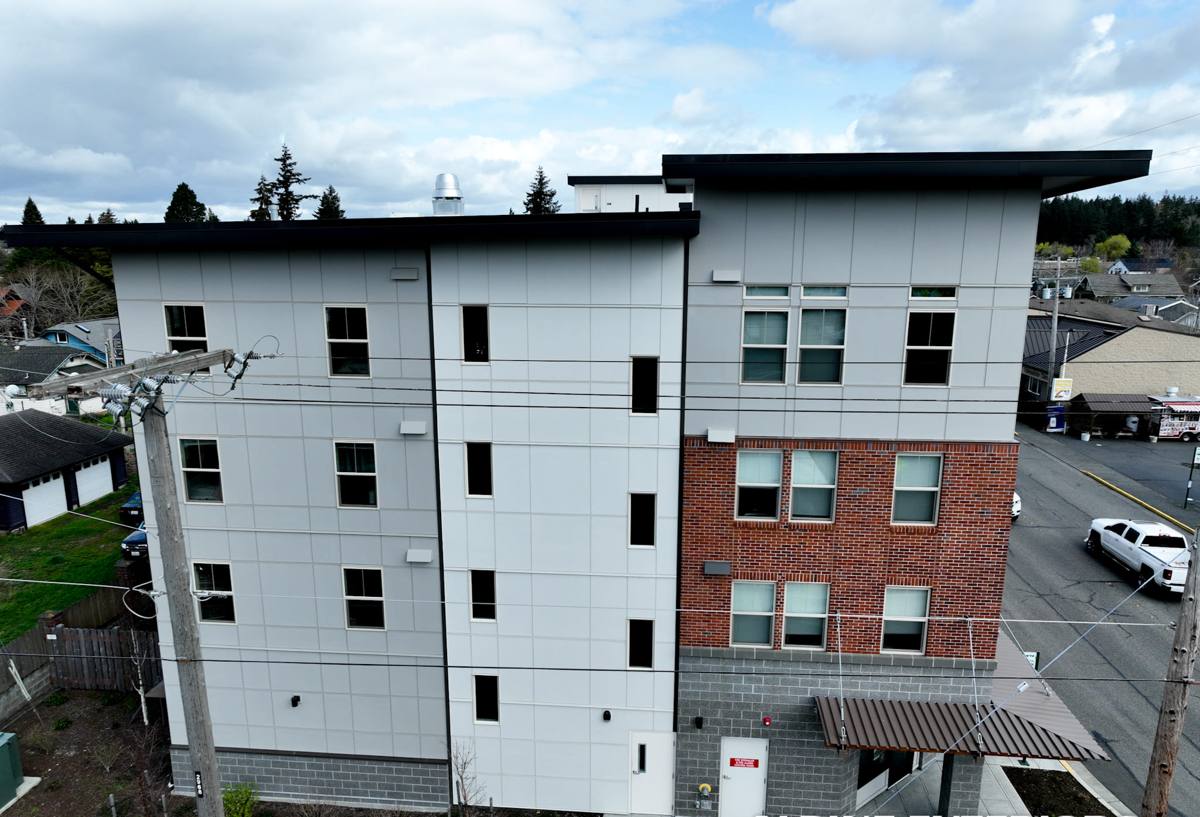
How This Climate Actually Wears Windows Down
Most homeowners in Puget don't notice window failure happening — it creeps in. Understanding the pattern helps you catch it before it turns into a bigger repair.
Common signs of a failing window in this area
- Fogging or a cloudy haze between panes — the seal on the insulated glass unit has failed and moisture has gotten inside
- Soft or discolored wood at the bottom corners of the sill or exterior trim
- Sashes that stick, drag, or won't latch fully — often from swollen wood or a racked frame
- A cold draft near the frame even with the window fully closed and locked
- Green or black staining on the sill, trim, or the wall just below the window, especially on north- and west-facing walls that get less sun to dry out
- Peeling interior paint or a musty smell near the window — usually a sign water has already gotten behind the trim
Any one of these on its own might just mean a caulking touch-up. Several together, especially on the same window, usually mean the original flashing or sealant has failed and water has been getting behind the frame for a while.
What a Correct Window Installation Actually Involves
A window is only as good as the opening it sits in. Swapping the sash or the whole unit without addressing the opening underneath just repeats whatever problem caused the failure in the first place. A proper installation includes:
Removal and inspection
The old window comes out carefully so we can see the condition of the framing, sheathing, and any existing flashing underneath. This is the point where hidden rot or past water damage shows up — better to find it now than to seal a new window over a problem.
Sill pan and flashing
A sloped sill pan directs any water that does get past the window to the outside instead of letting it pool at the bottom corners, which is the single most common failure point we see. Flashing tape integrates with the house's weather-resistant barrier in the correct shingle-lap order — top piece over the sides, sides over the sill pan — so water is always directed down and out, never trapped.
Shimming, insulation, and sealant
The window gets shimmed level and plumb, not just wedged into the opening. Low-expansion foam or batt insulation fills the gap without bowing the frame. On the exterior, backer rod and a quality sealant close the joint between window and siding — sized and tooled properly, not just smeared over a gap.
Trim and finish
Exterior trim gets back-primed on cut ends before installation, since end grain is where wood soaks up moisture fastest. Interior casing and stops are set once the window is confirmed square and operating smoothly.
Choosing a Window Material for This Environment
Not every window product handles salt air and constant damp the same way. We steer homeowners toward materials that hold up with reasonable upkeep rather than ones that look good on day one and become a maintenance project by year five.
| Material | Moisture & Salt Air Behavior | Maintenance | Typical Lifespan |
|---|---|---|---|
| Vinyl | Won't rot or corrode; seams and welds are the main long-term concern | Low — occasional cleaning | 20–30 years |
| Fiberglass | Excellent — dimensionally stable, resists swelling and doesn't corrode | Low | 30+ years |
| Wood-clad | Good if cladding and flashing details are correct; exposed wood interior needs protection from condensation | Moderate — watch interior finish and any exposed end grain | 20–30 years with upkeep |
| Bare wood | Attractive but demands the most upkeep in a wet, salt-air climate | High — regular repainting/sealing | Varies widely with maintenance |
We're honest with clients about this: a bare wood exterior window can look great, but in an area with this much sustained moisture and salt exposure, it asks a lot of the homeowner in upkeep. We'll install what you want, but we'll also tell you plainly what it takes to keep it looking right.
Our Window Installation Process
- Free on-site assessment. We look at your existing windows, the condition of the openings, and how exposed each wall is to wind and rain before recommending anything.
- Product selection. We walk through material, glazing, and grille options based on your home's exposure, budget, and how the windows will be used.
- Accurate measurement and ordering. Windows are ordered to the actual opening, not a standard size, since older Bellingham-area homes rarely have perfectly uniform openings.
- Prep and removal. Old units come out carefully, and we inspect the opening before anything new goes in.
- Installation. Sill pan, flashing, shimming, insulation, and sealant go in following the sequence above — no shortcuts on the parts that are invisible once trim goes back on.
- Finish work. Interior and exterior trim is completed, hardware is checked, and every window is opened, closed, and locked to confirm smooth operation.
- Walkthrough. We go over the finished work with you and answer any questions about care or warranty coverage.
What Affects the Cost of a Window Installation
Costs vary by home, and we'd rather give you an honest range on-site than a number that doesn't hold up. The main variables are:
| Factor | Why It Matters |
|---|---|
| Window size and count | Larger openings and more windows mean more material and labor |
| Material (vinyl, fiberglass, wood-clad) | Fiberglass and clad wood generally cost more upfront than vinyl but last longer with less upkeep |
| Glazing type | Double-pane vs. triple-pane, and low-E coatings, affect both price and comfort/energy performance |
| Condition of the opening | Hidden rot or past water damage found during removal adds repair work before the new window goes in |
| Access and floor level | Second-story or hard-to-reach windows take more time and equipment |
| Trim and exterior finish work | Matching existing trim profiles or repainting affects labor and materials |
We always separate "the window and installation" from "any repair work the opening needs" so you know exactly what you're paying for and why.
Why a Crew That Already Works in Puget Makes a Difference
Bellingham isn't one uniform climate — a home closer to the water deals with more direct salt exposure and wind-driven rain than one a mile inland, and shaded, tree-covered lots hold onto moss and damp longer than open ones. A crew that already works in this specific area has a feel for which walls on a given lot take the worst of the weather, which materials actually hold up here versus what looks good in a catalog, and how Whatcom County's building requirements apply to window replacement work. That local familiarity shows up in small decisions — where to add extra flashing, which sill detail to use on a west-facing wall — that a crew unfamiliar with the area might not think twice about.
Keeping New Windows Performing Long-Term
A correct installation is most of the battle, but a little seasonal upkeep goes a long way in this climate:
- Rinse salt residue and grime off exterior frames a couple of times a year, especially on windows facing open water or prevailing wind
- Clear moss, needles, and leaf debris from tracks, sills, and weep holes so water has somewhere to drain
- Check exterior caulking annually for cracking or gaps, particularly after a hard winter
- Operate every window a few times through the year, even ones you rarely open, so hardware and seals don't seize up
- Watch for condensation between panes — it's the earliest sign of a failing seal, and catching it early keeps the fix simple
If you're noticing drafts, fogged glass, or soft trim on windows in your Puget-area home, we're happy to take a look and give you a straightforward, no-pressure estimate — no obligation, just an honest read on what your windows need. The form below is the easiest way to get started.