 Bellingham
 Roof Repair Built for York's Older Housing Stock
York is one of Bellingham's established in-town neighborhoods, with a mix of early-to-mid-century homes and newer infill construction sitting close together on modest lots. That mix matters for roofing. A house built decades ago may have gone through several roof replacements, layers of patch work, and additions that changed the roofline in ways that create tricky valleys, low-slope transitions, and flashing details that don't always follow current best practice. When we go out on a repair call in York, we're rarely dealing with a simple, uniform roof plane. We're dealing with a roof that has history, and that history usually explains where the leak is coming from.
Newer homes in the same area aren't immune either. Even a roof installed within the last ten or fifteen years can develop problems at penetrations, skylights, and where roof meets siding, especially if the original installation cut corners on flashing or underlayment. Our job on a repair call is the same either way: find the actual source of the problem, not just the spot where water happens to be showing up inside the house, and fix it in a way that holds up to what Whatcom County weather does to a roof year after year.
What Bellingham's Climate Does to a Roof
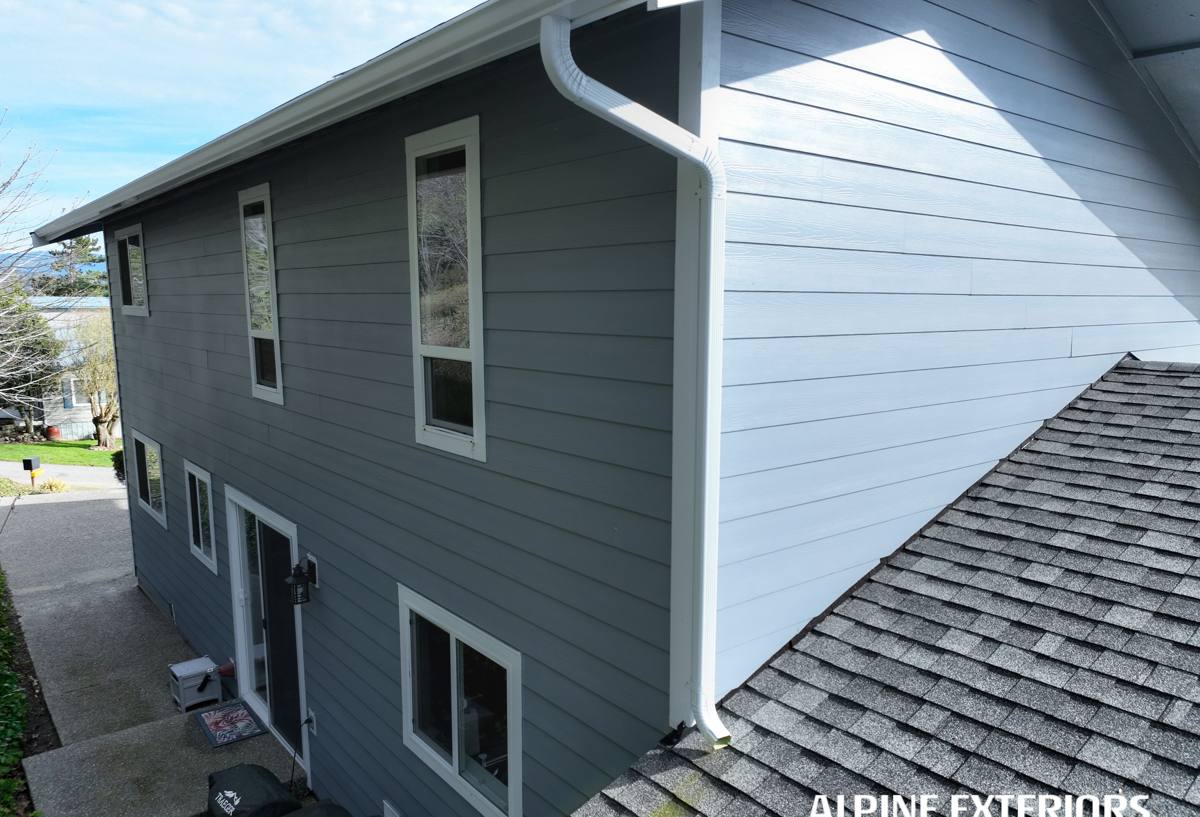
Bellingham sits close to the water, and that proximity shapes how roofs age here. Salt-laden air off the bay accelerates corrosion on exposed metal — nails, flashing, vent caps, and gutter hardware all take a beating faster than they would inland. Combine that with long stretches of driving rain that comes in sideways during winter storms, and you get wind-driven water intrusion at edges and laps that a roof in a drier climate would never have to deal with.
Then there's moss. Whatcom County's moss season runs long — shaded, north-facing, and heavily treed roof sections in York can stay damp for weeks at a time, which is exactly what moss and algae need to take hold. Moss doesn't just look bad. It holds moisture directly against the roofing material, works its way under shingle tabs and edges, and lifts materials just enough to let wind-driven rain find a path underneath. A roof that looks intact from the ground can have moss doing quiet damage for a full season before a leak ever shows up inside.
The Three Things We See Most Often
- Salt-air corrosion on nails, flashing, and metal vent boots that fail years before the roofing material around them does
- Wind-driven rain intrusion at ridge caps, rake edges, and anywhere the roof faces prevailing storm direction
- Moss and moss-related lifting on shaded slopes, especially north-facing sections and areas under overhanging trees
Signs a York Homeowner Shouldn't Ignore
Roof problems in this climate rarely announce themselves with a dramatic leak on day one. More often they show up as small, easy-to-dismiss signs that get worse over a wet season or two.
- A ceiling stain that appears after a heavy storm and then seems to dry up and disappear
- Granules collecting in gutters or at the base of downspouts
- Visible moss or dark streaking on shaded roof sections
- Shingles that look curled, cupped, or lifted at the edges
- Daylight visible around a vent pipe or chimney from inside the attic
- Musty smell in an upstairs closet or attic space during or after rainy stretches
Any one of these is worth a look. Because Bellingham gets so much cumulative rainfall over the course of a winter, a small entry point that would be a minor annoyance in a dry climate can turn into real water damage here simply because it has so many chances to be tested by weather.
How We Diagnose a Leak Before We Touch the Roof
The most common mistake in roof repair isn't bad workmanship — it's fixing the wrong spot. Water can travel along rafters, sheathing seams, or the back side of underlayment before it drips down somewhere inside the house, so the stain on the ceiling is often several feet from the actual entry point. We start every repair the same way:
- Interior inspection from the attic or crawlspace side where possible, tracing staining and moisture patterns back toward their source
- Exterior roof inspection covering flashing, valleys, penetrations, ridge, and edges — not just the area near the reported leak
- Assessment of surrounding materials (underlayment, sheathing, fascia) for water damage that extends beyond the visible symptom
- A written explanation of what we found and what it will take to fix it correctly, before any repair work starts
This matters because a roof that has been through multiple owners or additions, which describes a fair number of York homes, can have more than one issue happening at once. Skipping the diagnostic step and just patching the obvious spot is how homeowners end up paying for the same leak twice.
What a Correct Repair Actually Involves
Roof repair covers a wide range of scope, from a single flashing replacement to a full section tear-off and re-roof of a damaged area. The right approach depends on how much of the underlying structure has been affected and how old the surrounding roofing material is.
Flashing and Penetration Repairs
Flashing around chimneys, skylights, and pipe vents is one of the most common failure points in this climate because it's metal, it moves slightly with temperature changes, and it takes the brunt of wind-driven rain. A proper repair replaces failed flashing rather than caulking over it — caulk is a maintenance item, not a permanent fix, and it tends to fail faster in salt air than inland.
Localized Shingle or Section Replacement
When damage is contained to a section — storm damage, a failed valley, moss-related lifting on one slope — we replace that section with matching materials rather than the whole roof, as long as the underlying deck and underlayment in that area are sound. If they're not, we say so and explain why patching over compromised sheathing won't hold.
Moss Treatment and Prevention
Where moss has caused the damage, the repair isn't complete without addressing why moss took hold there in the first place — usually shade, poor airflow, or debris buildup. We remove moss without damaging the roofing surface underneath, and where it makes sense, install zinc or copper strips that discourage regrowth using rainwater runoff rather than repeated chemical treatment.
Comparing Repair Approaches
| Situation | Typical Fix | What to Watch For |
|---|---|---|
| Isolated flashing failure | Flashing replacement at the specific penetration | Avoid caulk-only fixes that fail within a season or two |
| Moss-damaged shaded slope | Moss removal, section shingle repair, zinc/copper strip installation | Underlying deck should be checked for rot before re-covering |
| Storm-damaged section | Tear-off and replacement of the affected section only | Matching existing material color and profile where possible |
| Widespread age-related wear | Full roof replacement may be more cost-effective than repeated repairs | Compare cumulative repair cost against replacement over time |
Roofing Materials and Why We're Selective About Them
Most York homes are roofed in asphalt composition shingles, and for good reason — they perform well in this climate when installed correctly, are widely available for matching repairs, and hold up to moisture cycling better than some alternatives when properly ventilated. We use quality architectural shingles for repair and replacement work because the extra durability and better wind resistance pay for themselves in a climate with this much sustained rain and periodic windstorms.
We're generally cautious about installing certain wood shake or low-grade cedar products in this specific climate. It's not that the material is inherently bad — it's that wood roofing requires diligent maintenance to manage moisture retention and moss growth in a coastal, high-rainfall environment, and that maintenance burden is a real cost homeowners should go in understanding. If a homeowner wants that look and understands the upkeep involved, we'll talk through it honestly rather than steer them away without explanation.
Attic Ventilation: The Repair Most People Miss
A surprising number of "roof leaks" are actually condensation problems caused by inadequate attic ventilation, not water intrusion from outside. When warm, moist air from inside the house gets trapped in an attic without enough intake and exhaust airflow, it condenses on the underside of the sheathing, especially during Bellingham's long, cool, damp winters. That condensation can soak insulation and stain ceilings in a way that looks identical to a roof leak from the inside.
Part of our diagnostic process includes checking soffit intake vents, ridge or roof vents, and whether insulation is blocking airflow at the eaves. If ventilation is the real issue, no amount of roof-surface repair will fix it — and we'll tell you that instead of replacing shingles that were never the problem.
Our Repair Process, Start to Finish
- Initial contact and scheduling — we ask what you're seeing and when, which helps us prioritize storm-related or active leaks
- On-site inspection — interior and exterior assessment as described above, done without pressure to commit to anything on the spot
- Written scope and estimate — what we found, what we recommend, and honest options if more than one approach is reasonable
- Repair work — scheduled around weather windows, since a lot of roof repair simply can't be done safely or effectively in active rain
- Final walkthrough — we show you what was done and what to watch for going forward
Because weather drives so much of the timing here, we build flexibility into scheduling. A repair that could wait a week in a dry climate sometimes needs to move up if a storm system is coming through, and we adjust accordingly.
Why Local Experience in York Specifically Matters
Roofing crews who work across Whatcom County regularly develop an eye for how houses in a given neighborhood tend to be built and how they tend to fail. In York, that means recognizing the roofline quirks that come from additions and remodels layered onto older footprints, knowing which shingle profiles and colors are common enough to source a close match for a partial repair, and understanding how tree cover and lot orientation in this part of Bellingham affect moss patterns from one property to the next.
It also means being realistic about access. Homes on smaller in-town lots sometimes have tighter setbacks and less room for equipment staging than newer subdivisions, and a crew that's worked the area knows how to plan for that instead of running into it on the day of the job.
Simple Maintenance That Extends Repair Life
A well-executed repair still needs basic upkeep to reach its full lifespan in this climate. A few habits go a long way:
- Keep gutters clear so water isn't backing up under the roof edge, especially during fall leaf drop
- Trim back tree limbs that shade roof sections and keep them damp longer than the rest of the roof
- Have moss addressed early, before it lifts shingles rather than after
- Schedule a roof check after any major windstorm, even if nothing looks obviously wrong from the ground
- Watch attic spaces for musty odors or visible moisture during the wettest months
If you're noticing a stain, missing granules, moss buildup, or anything else that doesn't look right on a York-area roof, we're happy to come take a look. We offer free, no-pressure estimates and will give you a straight answer about what's actually going on before any work begins.