 Bellingham
 Why Roofs in Puget Wear Differently Than Roofs Inland
Homes in Puget sit close enough to the water and to Bellingham Bay's weather patterns that the roof over your head is doing more work than a roof of the same age fifty miles inland. Salt-laden air, wind-driven rain off the water, and a moss season that can stretch for most of the year all combine to shorten the useful life of roofing materials that aren't chosen and installed with this specific exposure in mind. A roof that would last two decades in a drier part of Washington can start showing real trouble in Whatcom County well before that, especially if it was installed with inland assumptions about ventilation, underlayment, and fastener choice.
This page is about one thing: replacing a roof correctly on a Puget-area home, given the climate it actually has to survive. It's not a general overview of roofing — it's what we've learned installing and inspecting roofs in this specific pocket of Bellingham and the surrounding county.
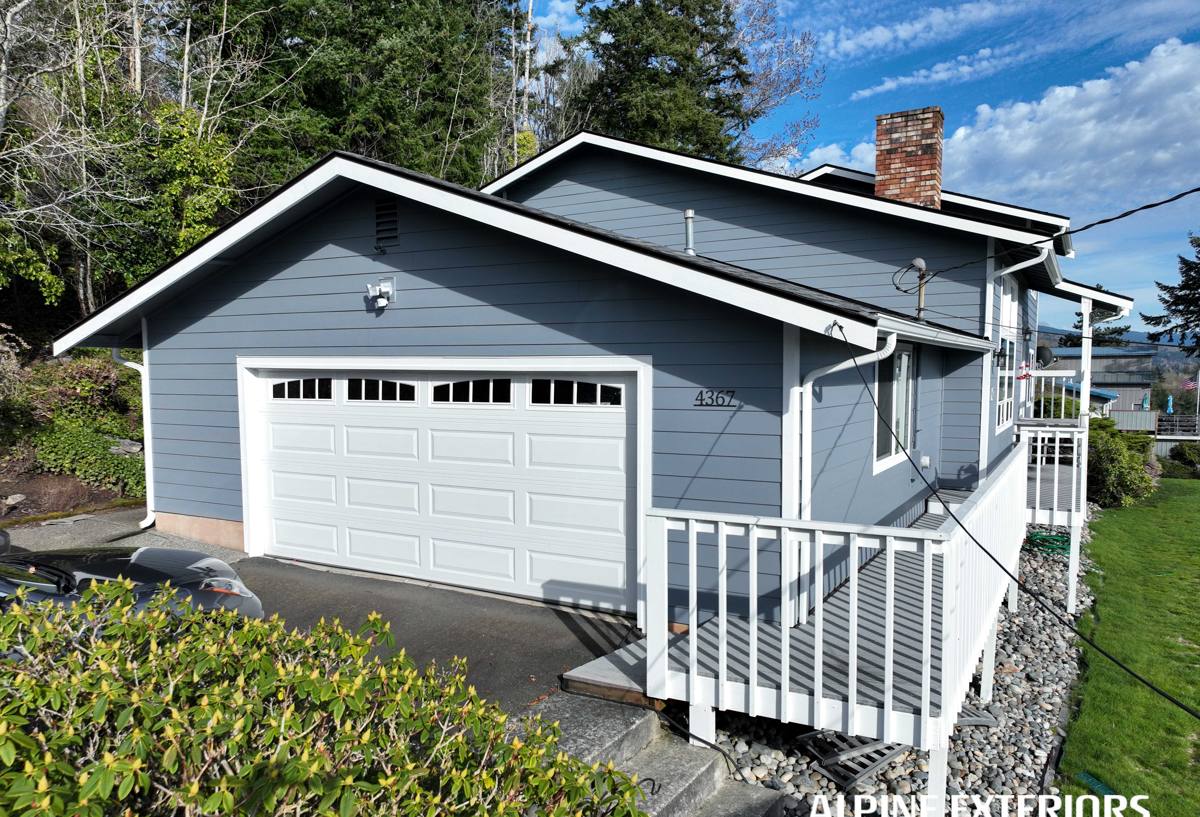
What Driving Rain and Salt Air Do to a Roof Over Time
Wind-driven moisture intrusion
Rain that falls straight down is easy for almost any roof to shed. Rain that comes in sideways during a windstorm off the water is a different problem. It gets pushed up and under shingle tabs, into valleys, around chimney flashing, and into any gap in the underlayment that a calm-weather roof might tolerate for years without issue. In Puget, that kind of weather isn't rare — it's a regular part of the fall and winter pattern, which is why underlayment coverage and flashing detail matter more here than they would in a drier climate.
Salt air and metal fatigue
Proximity to salt air accelerates corrosion on any exposed metal component of a roof system — nails, flashing, vent boots, and gutter hardware included. Standard electro-galvanized fasteners can start to show rust streaking and weakening well ahead of schedule in this environment. This is one of the most common causes of hidden leaks we find on older Puget roofs: not the shingles themselves failing, but the metal that holds everything together corroding quietly underneath.
Moss, Algae, and the Long Wet Season
Why moss is a structural issue, not a cosmetic one
Whatcom County's damp, shaded conditions make moss growth almost inevitable on north-facing slopes and anywhere tree cover blocks sun and airflow. Moss isn't just unattractive — its root structure works into the granule layer of shingles and lifts tabs at the edges, creating channels for water to travel underneath the roofing material instead of over it. Left long enough, moss growth can compromise a roof's water-shedding ability years before the shingles themselves would otherwise need replacing.
The maintenance-versus-replacement question
Not every mossy roof needs full replacement. Sometimes a soft wash, gutter clearing, and zinc or copper strip installation buys real time. But once moss has been present for multiple seasons without treatment, the underlying shingle mat and decking are often already compromised in ways that aren't visible from the ground. Part of an honest estimate is telling you which situation you're actually in.
Signs Your Puget Home Needs Replacement Rather Than Repair
A patch or partial repair makes sense when damage is isolated and the rest of the roof still has useful life left. Replacement becomes the honest recommendation when the damage is systemic — spread across multiple areas, or tied to the age and materials of the roof itself rather than a single storm event.
- Granule loss heavy enough that you can see bare, shiny patches on multiple shingles, not just one or two
- Moss or algae staining across large sections, especially north-facing slopes, that keeps returning after cleaning
- Curling, cupping, or cracked shingle tabs, particularly on slopes exposed to wind off the water
- Rusted or deteriorating flashing around chimneys, skylights, and roof-to-wall transitions
- Daylight visible through the attic decking, or damp insulation and staining on rafters
- A roof already at or past 20-25 years old with no major upgrades to underlayment or ventilation
- Repeated interior ceiling stains that reappear in the same spot after repairs
Choosing the Right Roofing System for This Climate
Every roofing material has trade-offs. In a salt-air, high-moisture, moss-prone environment like Puget, those trade-offs matter more than in a milder climate, and we walk every homeowner through them honestly rather than defaulting to whatever is easiest to install.
| Roofing Option | Moisture & Rain Performance | Moss Resistance | Salt Air Durability | Typical Lifespan |
|---|---|---|---|---|
| Architectural asphalt shingle (standard) | Good with proper underlayment | Moderate — needs periodic treatment | Fair — metal components need upgraded fasteners | 20-30 years |
| Impact-rated / algae-resistant asphalt shingle | Good to very good | Improved — copper-infused granules slow regrowth | Fair to good | 25-30 years |
| Standing seam metal | Excellent — sheds wind-driven rain well | Good — smooth surface discourages moss | Good with proper coating and stainless fasteners | 40-60 years |
| Synthetic/composite shake or slate | Very good | Good | Good | 40-50 years |
For most Puget homes, an upgraded architectural shingle with algae-resistant granules and a fully upgraded underlayment package is the practical, cost-effective choice. Standing seam metal is worth serious consideration on homes with heavy tree cover or particularly exposed water-facing slopes, where its shedding performance and moss resistance pay for themselves over the life of the roof.
What a Correct Roof Replacement Actually Involves Here
Full tear-off and decking inspection
We don't recommend roofing over an existing layer in this climate. A full tear-off is the only way to actually see the decking, which is where moisture damage from years of driving rain and moss tends to hide. Any soft, delaminated, or stained plywood gets replaced before anything new goes down — not patched over.
Underlayment built for wind-driven rain
Standard 15-pound felt is not enough for this exposure. We use synthetic underlayment across the full roof deck, with self-adhered ice-and-water shield membrane at eaves, valleys, and any roof-to-wall transition — the exact spots where wind-driven rain forces its way in first.
Flashing and fastener upgrades
Given how much salt air accelerates corrosion here, we use corrosion-resistant fasteners and properly formed metal flashing at every penetration, chimney, and valley rather than relying on cut shingle or sealant alone to do that job.
Ventilation that actually balances
Attic ventilation has to move as much air out at the ridge as it takes in at the eaves. Undersized or mismatched ventilation traps moisture in the attic, which in a climate this damp shows up as premature decking rot and mold — often long before the shingles themselves are the problem.
Our Process, Estimate to Cleanup
1. On-site inspection and honest scoping
We walk the roof, check the attic from inside where accessible, and identify whether repair or full replacement is the right call before ever quoting replacement pricing.
2. Written estimate with material options
You get a clear breakdown of material choices and what each trade-off means for your specific roof, not a single take-it-or-leave-it number.
3. Scheduling around Whatcom County weather
We plan tear-off days around forecast windows so your home isn't exposed to open decking during a rain system — a real consideration in this part of the county for a large chunk of the year.
4. Installation and daily site control
Decking, underlayment, flashing, and final roofing go down in sequence with the roof protected at the end of each work day until the job is complete.
5. Final walkthrough and cleanup
Magnetic sweep for stray fasteners, full debris removal, and a final walkthrough so you know exactly what was done and why.
Why a Crew That Already Works Puget Matters
Roofing crews that mostly work drier, inland areas sometimes underestimate what Whatcom County's coastal-influenced weather actually requires — lighter underlayment packages, standard fasteners, or ventilation specs that work fine elsewhere but come up short here. A crew that regularly works in and around Bellingham and the Puget area already knows which slopes on local homes take the worst of the wind-driven rain, how aggressive the moss season really gets on shaded lots, and which flashing details tend to fail first in this specific environment. That local pattern recognition is often the difference between a roof that performs for its full rated lifespan and one that develops hidden problems five or ten years in.
Protecting the Investment After Replacement
A correctly installed roof still benefits from basic seasonal attention, especially in a climate this wet. Simple habits go a long way toward getting the full lifespan out of a new roof system.
- Clear gutters and downspouts before the fall rains set in, so water isn't backing up under the roof edge
- Trim back overhanging branches to cut down on shade, debris, and moss-friendly conditions
- Do a visual check after major windstorms for lifted shingles or displaced flashing
- Address moss regrowth early with a gentle wash rather than letting it establish again
- Keep an eye on attic ventilation intake and exhaust vents to make sure they stay unobstructed
If you're weighing repair versus replacement on a Puget-area home, or just want an honest read on where your current roof stands, we're happy to take a look. The estimate is free, there's no pressure attached to it, and you can use the form below to get started.