 Bellingham
 Columbia's Weather Is Harder on Siding Than It Looks
Columbia sits inside one of the wetter, greyer stretches of Whatcom County, and homes here take a slower, quieter kind of beating than houses in drier climates. It isn't one big storm that causes trouble — it's the accumulation of a long wet season, salt-tinged air drifting in off Bellingham Bay, and shaded, damp yards where moss gets a foothold and never really leaves. Siding that isn't installed with this pattern in mind doesn't usually fail dramatically. It fails slowly, from behind, in ways homeowners don't notice until paint is peeling, trim is soft, or a wall assembly is holding moisture it should have shed years earlier.
Three things define what siding has to survive in Columbia:
- Salt-laden air that accelerates corrosion of fasteners, staples, and any metal flashing that isn't rated for coastal exposure.
- Driving, wind-pushed rain that doesn't just fall straight down — it gets forced sideways and upward under laps, around trim, and into gaps that would stay dry in a calmer climate.
- A long moss and lichen season on north-facing walls, under eaves, and anywhere sun and airflow are limited, which keeps siding surfaces damp for extended stretches.
None of this makes siding installation in Columbia impossible or exotic — it just means the margin for error is smaller than it is in a dry climate. Product choice, installation detail, and long-term maintenance all matter more here than they would somewhere with six dry months a year.
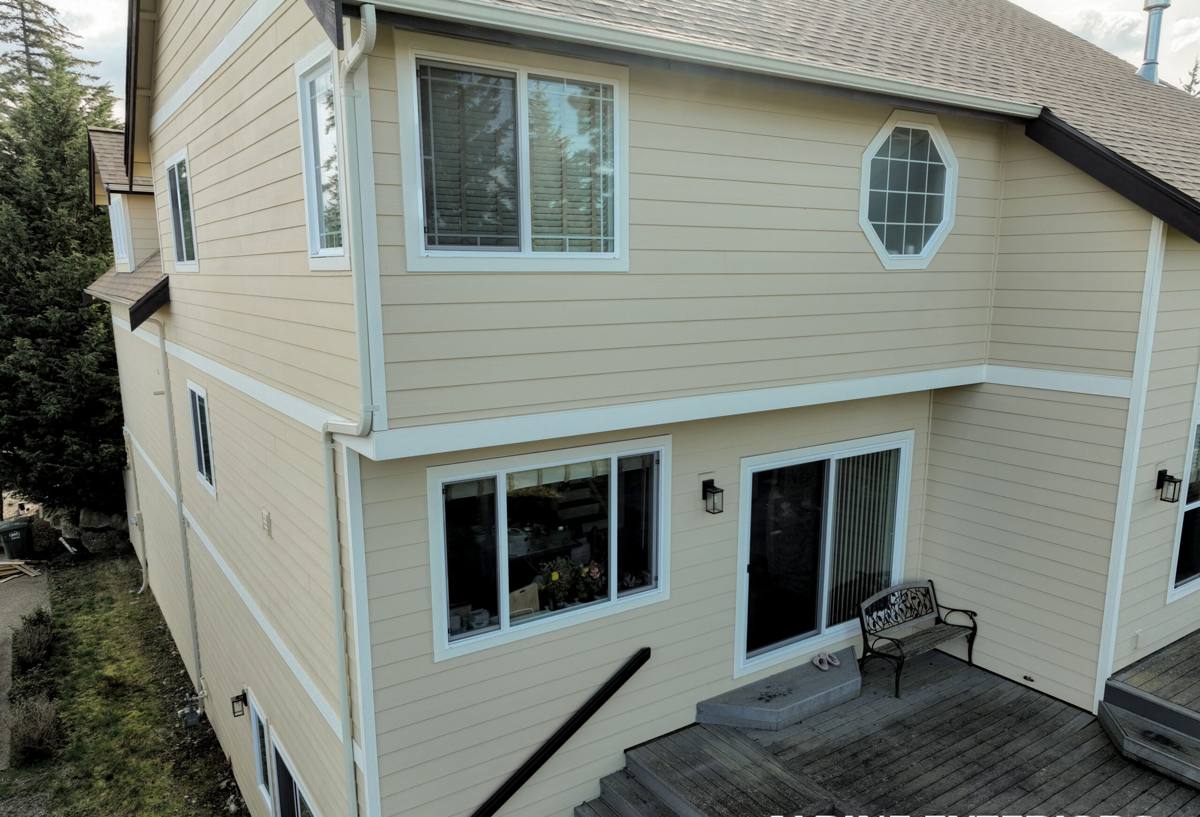
What Correct Siding Installation Actually Involves
Siding is a system, not a single layer. The visible boards are the last piece installed and the first thing anyone notices, but the parts nobody sees — the weather-resistive barrier, the flashing details, the fastening pattern, the gaps left at joints and penetrations — are what actually determine whether a wall stays dry for the next 30 years or starts trapping moisture in five.
Where installations go wrong on older and newer homes alike
We see the same handful of mistakes repeatedly on homes in and around Columbia, regardless of the age of the house:
- Siding face-nailed too tight or at the wrong angle, which restricts the board's ability to expand and contract and can crack the material over time.
- No gap left at butt joints and around windows and doors, so the assembly has nowhere to release moisture that gets in anyway.
- Flashing skipped or improvised at window heads, deck ledgers, and roof-to-wall transitions — the exact spots where driving rain finds its way in first.
- Siding installed tight to grade, a deck, or a roofline with no clearance, which keeps the bottom edge of the material perpetually damp.
- Fasteners that aren't corrosion-resistant, which bleed rust streaks and lose holding power faster in salt-influenced air.
Every one of these is avoidable. None of them requires exotic materials or unusual skill — they require a crew that follows manufacturer installation specs closely and doesn't treat siding as a cosmetic task that happens after the "real" building work is done.
Why We Only Install James Hardie Fiber Cement
We install James Hardie fiber cement siding exclusively. We don't install vinyl, LP SmartSide, Cemplank, Allura, or primed wood species like spruce or cedar, and that's a deliberate standard, not a lack of options.
Fiber cement is non-combustible, dimensionally stable across Whatcom County's wet-to-dry seasonal swings, and doesn't feed moss and mildew growth the way wood-based products can when they stay damp for weeks at a time. James Hardie backs its siding with a factory-applied ColorPlus finish baked on under controlled conditions, which holds color and resists the fading and chalking that field-applied paint struggles with on a marine-influenced coastline. Hardie also engineers regional HZ (HardieZone) product lines specifically for climates like ours, and the company stands behind the material with a strong transferable limited warranty.
Vinyl is inexpensive and low-maintenance in the sense that it doesn't need painting, but it can warp under sustained heat exposure, becomes brittle with age, and its seams and J-channels give wind-driven rain more places to find a way in. Engineered wood products and primed solid wood offer a warmer, more traditional look, but they're more sensitive to sustained moisture exposure — exactly the condition Columbia's climate creates for months at a stretch — and they generally demand a tighter recoating and maintenance schedule to hold up. We'd rather put a product on a home that's built for this specific climate than sell a homeowner on a product we know will ask more of them over time.
Choosing the Right Hardie Products for a Columbia Home
James Hardie offers several product lines, and the right one depends on the home's architecture as much as the climate. A traditional lap-sided house, a home with shingle-style accents, and a more modern build with clean panel lines all call for different Hardie products.
| Product | Best For | Look |
|---|---|---|
| HardiePlank lap siding | Traditional and craftsman-style homes, the most common choice in the area | Classic horizontal lap, multiple exposure widths and textures |
| HardiePanel vertical siding | Modern facades, gable accents, mixed-material designs | Clean vertical lines, often paired with battens |
| HardieShingle siding | Cottage and shingle-style homes, accent gables | Staggered or straight-edge shingle profile |
| HardieTrim boards | Corners, window and door casing, fascia | Crisp, paintable trim that matches the siding system |
Color is another decision worth slowing down for. ColorPlus finishes are baked on at the factory and come pre-matched with trim and caulk, which reduces the odds of visible touch-up lines later. For homes with more sun exposure, lighter colors show less heat-related wear over time; for shaded, moss-prone walls, a slightly deeper tone can help hide the gradual surface growth that shows up on any siding material in a wet climate, though it doesn't eliminate the need to clean it periodically.
Our Installation Process, Step by Step
Every installation follows the same sequence, whether the job is a full re-side or a targeted replacement on one elevation.
- On-site assessment. We look at the existing wall assembly, sheathing condition, moisture history, and any problem areas — north-facing walls with heavy moss, deck ledgers, window heads — before quoting anything.
- Tear-off and sheathing check. Old siding comes off and the sheathing underneath gets inspected. Any soft or water-damaged sheathing gets repaired before anything new goes on; siding over a compromised substrate just hides the problem.
- Weather-resistive barrier. A new house wrap or building paper goes on correctly lapped, shingle-style, so water is always directed outward and down, never inward.
- Flashing. Windows, doors, deck ledgers, and roof-to-wall transitions get properly flashed — the single most important step for keeping driving rain out of the wall assembly.
- Hardie installation. Boards go on per manufacturer spec: correct fastener type and spacing, proper gaps at joints, correct clearance from grade, decks, and roof surfaces.
- Trim, caulk, and touch-up. Trim is installed, joints are sealed with the right materials, and any factory-finish touch-up is done with matched ColorPlus product.
- Final walkthrough. We walk the finished job with the homeowner before calling it done.
What Siding Installation Costs in Columbia
Cost depends on the size and shape of the home, how much tear-off and sheathing repair is needed, and which Hardie products and trim details are chosen. We don't quote pricing without seeing the house, but these are the main factors that move the number up or down.
| Factor | Why It Matters |
|---|---|
| Home size and wall complexity | More corners, gables, and dormers mean more cutting, trim, and labor time |
| Condition of existing sheathing | Rot or water damage found during tear-off adds repair scope before new siding goes on |
| Product line and profile | HardieShingle and custom trim details take more labor than a straightforward lap-siding job |
| Height and access | Multi-story walls and tight lot access affect equipment and staging needs |
| Existing moisture or moss damage | Wall sections with a history of heavy moss or trapped moisture may need extra prep or ventilation work |
The most expensive mistake isn't paying a fair price for correct installation — it's paying less for a job that skips flashing or sheathing repair and having to redo it, plus repair the damage underneath, a few years later.
Why Local Installation Experience Matters in Columbia
Siding installation standards are the same on paper everywhere, but what a crew has actually learned from working Bellingham's climate shows up in the details: how they flash a window on a wall that catches sideways rain most of the winter, how much clearance they leave near grade on a lot with poor drainage, which north-facing details need extra attention because they'll stay shaded and damp for half the year. A crew that has worked Columbia and the surrounding Whatcom County neighborhoods has already seen how houses here age — where moss builds up first, which details tend to leak, which don't — and builds that knowledge into the install instead of learning it later at the homeowner's expense.
It also means faster, more accurate estimates. A contractor familiar with the housing stock in this part of Bellingham can walk a Columbia home and know quickly what's involved, rather than treating every job as a first encounter with the region's weather and building patterns.
Caring for New Siding After Installation
Correctly installed Hardie siding is low-maintenance, not no-maintenance. A little seasonal attention goes a long way in a climate like this one.
- Rinse siding annually, and more often on shaded or north-facing walls where moss and grime build up faster.
- Keep gutters clear so overflow isn't running down the face of the siding during heavy rain.
- Trim back plants and tree limbs that keep any wall section shaded and damp longer than necessary.
- Check caulking at trim joints and penetrations every year or two and touch up as needed.
- Have flashing at decks, windows, and roof lines inspected periodically, especially after major storms.
If you're weighing a siding project for a home in Columbia, we're happy to take a look and walk you through what your specific house needs — no pressure, no obligation. Use the form below to request a free estimate.