 Bellingham
 Barkley's Marine Climate Is Hard on Siding
Barkley sits within Bellingham's weather pattern off Bellingham Bay, and that pattern is not gentle on the outside of a house. Salt-tinged air moves inland off the water, wind-driven rain comes in sideways during fall and winter storms, and long stretches of overcast, damp weather mean exterior surfaces in Whatcom County rarely get a chance to fully dry out between rain events. Each of those conditions attacks siding in a different way.
Salt air accelerates corrosion in exposed fasteners and metal trim, and it works its way into any hairline crack in a paint film faster than it would in a drier inland climate. Driving rain does not just wet the face of the siding — during a real storm it gets pushed sideways and upward, testing every lap, seam, and penetration for a way in. And the long moss season common to this part of Washington gives algae and moss plenty of time to take hold on any siding that stays damp, particularly on north-facing walls or areas shaded by mature trees, which are common throughout the neighborhoods around Barkley.
None of this is unique to any one house. It is simply what siding on this stretch of Whatcom County has to be built to handle, year after year, and it is the starting point for how we think about every replacement job here.
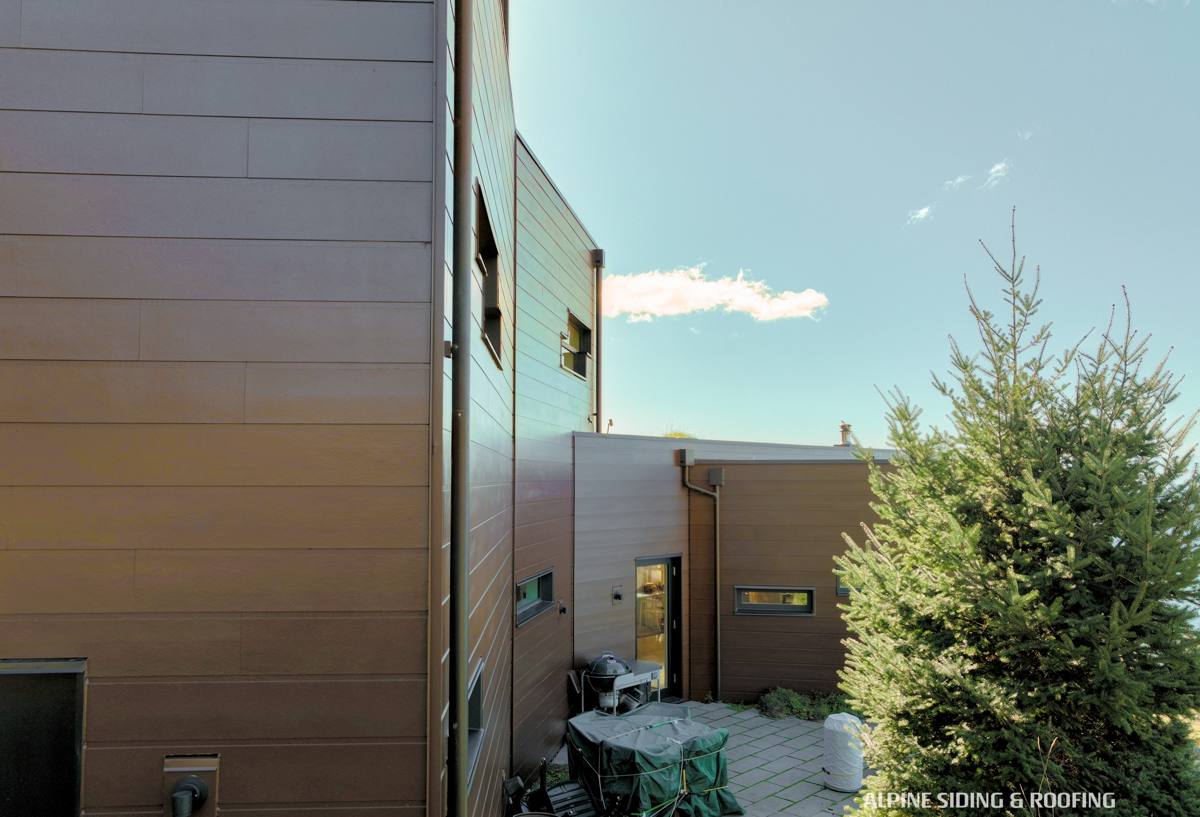
Signs a Barkley Home Needs Siding Replacement, Not Just Repair
Not every siding problem calls for a full tear-off. But there is a point where patching individual boards stops making sense and a full replacement becomes the more honest recommendation. Homeowners in and around Barkley usually see one or more of the following before that point:
- Soft or spongy spots when you press on the siding, which usually means moisture has already reached the sheathing behind it
- Paint or finish that fails again within a couple of years of repainting, no matter how carefully it was done
- Visible gaps opening up at seams, corners, or butt joints as boards move with moisture and temperature swings
- Warping, cupping, or buckling boards — especially common on older wood or engineered wood-based siding
- Moss or algae staining that comes back within a season of cleaning, suggesting the siding is holding moisture rather than shedding it
- Noticeably higher heating bills in a home whose siding and underlying wrap are original to construction
- Siding that is original to a home built more than two or three decades ago, particularly builder-grade wood or early composite products
If you are seeing two or three of these at once, that is usually a sign the water management system behind the siding — not just the visible face of it — has been compromised for a while.
Why We Only Install James Hardie Fiber Cement
We standardized on James Hardie fiber cement for every siding replacement we do, including in Barkley, and we do not install LP SmartSide, vinyl, Cemplank, Allura, primed spruce, or cedar. That is a deliberate professional standard, not a marketing line, and it is worth explaining honestly.
Wood-based and wood-strand products can perform well when maintained diligently, but they depend on an unbroken paint film and tight field caulking to keep moisture out — and in a climate with this much sustained dampness, any lapse in that maintenance shows up as swelling, delamination, or rot faster than homeowners expect. Vinyl siding is low-maintenance and inexpensive, but it is a thinner, more impact-sensitive material that can warp in direct heat and does not offer the same fire performance as fiber cement. Cedar and primed spruce look excellent when new, but they require an ongoing repainting and caulking schedule to hold up against driving rain and moss, which is a real, recurring cost over the life of the siding.
James Hardie fiber cement is non-combustible, dimensionally stable in wet-dry cycling, and comes from the factory with a baked-on ColorPlus finish that is far less dependent on field painting to perform. It carries a strong, transferable warranty when installed to Hardie's specifications. That combination is why it is the only product we put on a home — including our own recommendation on any general siding question a homeowner asks us.
Choosing the Right Hardie Product for a Barkley Home
James Hardie makes several distinct siding profiles, and matching the right one to a home matters as much as the material choice itself.
| Hardie Product | Best Fit | Local Consideration |
|---|---|---|
| HardiePlank lap siding | Traditional and craftsman-style homes | Most common choice; wide range of exposure widths and textures |
| HardieShingle | Accent gables, dormers, transitional-style homes | Works well paired with lap siding on mixed-style Barkley homes |
| HardiePanel | Modern or board-and-batten styling | Clean vertical lines; needs correct joint detailing for this rainfall |
| HardieTrim | Corners, fascia, window and door trim | Pairs with any of the above for a finished, weather-tight edge |
James Hardie also engineers its products by climate zone, and homes in this region fall into the HZ10 zone, formulated for high-moisture, high-humidity conditions like ours. We specify HZ10 product on every Barkley job for that reason — it is built for the exact combination of driving rain and prolonged dampness the neighborhood sees.
What a Correct Siding Replacement Involves
The siding itself is only part of the job. Most of what determines whether a replacement lasts twenty-plus years or fails early happens in the layers you cannot see once the project is finished.
Tear-Off and Sheathing Inspection
Every job starts with full removal of the old siding, not siding over it. That is the only way to actually inspect the sheathing underneath for hidden rot, soft spots, or prior water damage — problems that are common on older homes where siding has been quietly failing behind the finish coat.
Water-Resistive Barrier and Flashing
A new weather-resistive barrier goes over the sheathing, with flashing correctly integrated at every window, door, and roofline intersection. This is the layer that actually stops driving rain from reaching your framing — the siding itself is the second line of defense, not the first.
Drainage Gap
A drainage gap behind the siding lets any moisture that does get past the face of the boards drain and dry out instead of sitting against the sheathing. In a climate with this much sustained rainfall, that airspace is what keeps minor moisture intrusion from turning into rot over time.
Fastening and Joint Detail
Hardie siding has to be fastened and lapped to the manufacturer's specification to keep its warranty valid — correct nail placement, correct butt joint treatment, and correct clearance from grade, roofing, and other transitions. Skipping these details is one of the most common causes of early failure on fiber cement siding installed by crews unfamiliar with the product.
Trim, Caulking, and Finish
Trim and caulking are installed last, using products rated for the ColorPlus finish so the whole system moves and weathers together rather than one component failing ahead of the others.
Our Siding Replacement Process, Start to Finish
- On-site assessment. We walk the exterior with you, check for soft spots and moisture damage, and talk through what we're seeing before recommending replacement over repair.
- Written proposal. You get a clear scope of work — product line, profile, color, and what's included — with no vague allowances.
- Material order. We order HZ10-rated Hardie product specified for this climate zone, in the profile and ColorPlus finish you choose.
- Tear-off and sheathing repair. Old siding comes off, sheathing is inspected, and any damaged sections are repaired or replaced before anything new goes up.
- Water barrier, flashing, and drainage gap installation. This is the step that protects everything installed after it.
- Siding installation. Installed to James Hardie's fastening and clearance specifications to keep the manufacturer's warranty intact.
- Trim, caulking, and final walkthrough. We finish the details and walk the job with you before calling it complete.
Cost Factors for Siding Replacement in Barkley
Every home is different, so we don't quote pricing without seeing the house, but the factors that move a project up or down in cost are consistent:
| Factor | Why It Matters |
|---|---|
| Home size and number of stories | More surface area and access complexity (ladders, lifts, scaffolding) add labor time |
| Condition of existing sheathing | Hidden rot found during tear-off requires repair before new siding can go on |
| Siding profile chosen | Lap, shingle, and panel styles have different material and labor requirements |
| Trim complexity | Homes with more windows, dormers, and architectural detail take more trim work |
| Amount of tear-off | Full removal of old siding and disposal adds time versus a bare-sheathing new build |
Most full tear-off-and-replace projects on an average-size home land in a broad range that reflects these factors — which is exactly why we start with an in-person assessment rather than a phone-quoted number.
Why Local Experience in Barkley Matters
Barkley is a mixed neighborhood, with homes spanning different construction eras and a range of architectural styles, which means the right siding approach for one house on a given street can look different from the house next to it. A crew that already works in this area has seen how the local wind exposure and rain patterns tend to hit different elevations of a home, understands typical permitting expectations with the City of Bellingham, and is used to working around the kind of landscaping, tree cover, and lot layouts common here — all of which affect scheduling, staging, and how a job gets sequenced.
Just as important, a local crew is still around after the job is done. Fiber cement siding is a long-term investment, and a contractor with an established presence in Whatcom County is the one who answers the phone in year five if a question comes up, not just at the final walkthrough.
Maintaining Your New Hardie Siding
Fiber cement siding installed correctly is low-maintenance, but "low" doesn't mean "none." A short annual routine keeps it performing the way it's designed to in this climate:
- Rinse the exterior with a garden hose once or twice a year to clear salt residue, pollen, and early moss or algae growth before it takes hold
- Keep gutters and downspouts clear so water is directed away from siding and foundation rather than sheeting down the wall face
- Trim back tree branches and shrubs that keep siding shaded and damp, especially on north-facing walls
- Walk the exterior once a year and check caulking at trim joints, windows, and doors for cracking or separation
- Address any impact damage or chipped finish promptly rather than letting it sit exposed through a wet season
If you're seeing any of the warning signs described earlier, or your Barkley home's siding is simply reaching the age where a repaint no longer makes sense, we're happy to take a look and give you an honest read on where things stand. Reach out for a free, no-pressure estimate — there's a form right below to get started.