 Bellingham
 Silver Beach is one of Bellingham's older, more established neighborhoods, and it shows in the decks. Many homes here sit close to Lake Whatcom's shoreline or back up against mature tree cover on hillside lots, which means decks take a different kind of beating than you'd see on a wide-open, sun-exposed property. Add in the marine-influenced air that moves through the greater Bellingham area off Bellingham Bay and the Salish Sea, the region's long stretch of driving rain, and a moss season that can run eight months or more, and you've got a recipe for deck boards, ledgers, and fasteners that fail well before their time if they weren't built or maintained correctly to begin with.
This page covers what deck replacement actually looks like for a Silver Beach property — not a generic deck-building overview, but the specific things that matter for homes in this part of Whatcom County.
Why Decks Wear Out Faster in This Part of Bellingham
Wood and even engineered decking products are rated assuming reasonable airflow and periodic dry-out time. Silver Beach's tree canopy and lakeside humidity work against both. Shaded decking stays damp longer after every rain, which is exactly the condition moss, algae, and eventually rot need to take hold. Combine that with the region's overall wet season and the salt-laden air common to the Bellingham area, and untreated or poorly fastened wood corrodes hardware, cups, and splits faster than the same deck would in a drier inland climate.
None of this means a deck in Silver Beach can't last — it means the build has to account for local conditions from the start, not fight them after the fact.
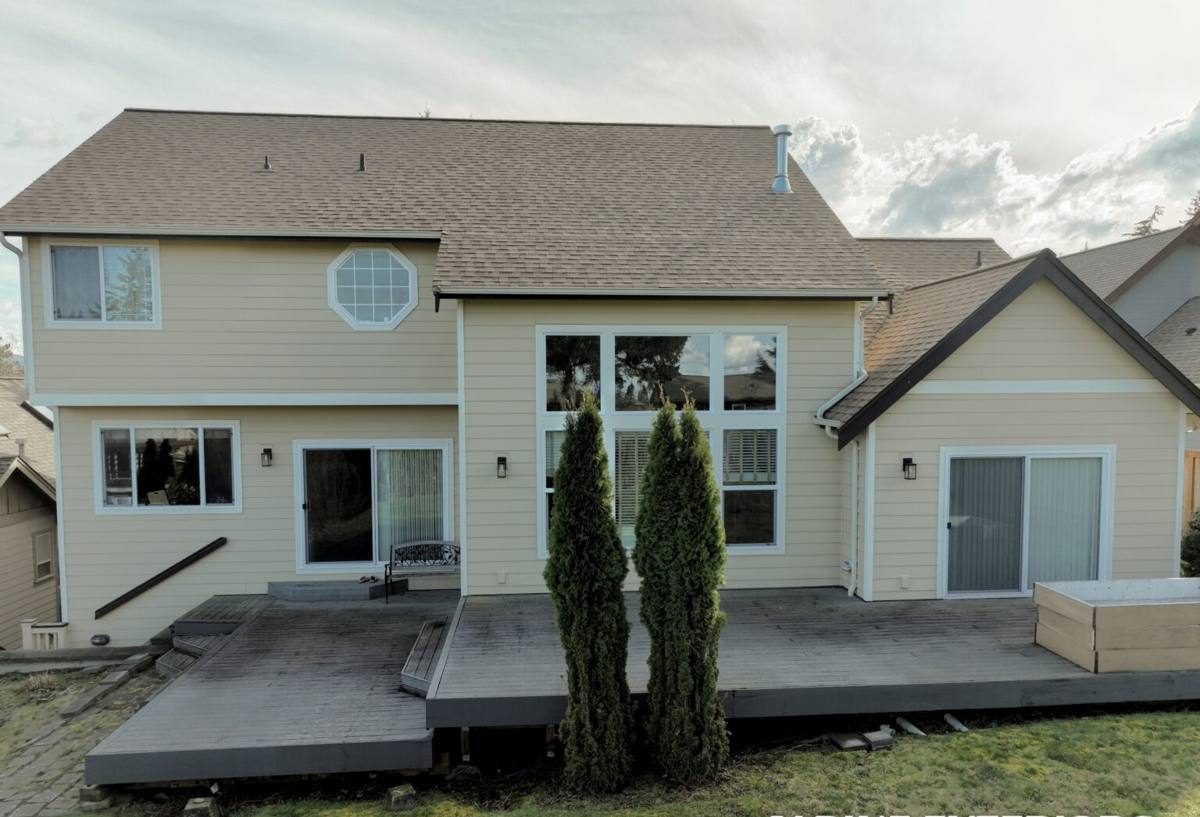
Signs Your Deck Needs Replacement, Not Just Repair
A lot of decks get patched for years past the point where patching still makes sense. Here's what tells us it's time to replace rather than repair:
- Soft, spongy, or springy spots in the decking or framing when you walk across it
- Rot at the ledger board where the deck attaches to the house — often hidden under the top board
- Rusted, bleeding, or failing fasteners and connectors
- Posts or footings that have shifted, heaved, or show visible rot at ground contact
- Persistent moss or algae growth that comes back within weeks of cleaning
- Railings that flex or feel loose under normal pressure — a safety issue, not a cosmetic one
- A structure more than 20-25 years old that's never had the substructure inspected
If what you're seeing is limited to a handful of surface boards and the frame underneath is sound, repair can be the right call. Once the framing, ledger, or footings are compromised, repair usually just delays a bigger problem — and adds cost you won't get back.
What a Correct Deck Replacement Actually Involves
Substructure and Framing
The part nobody sees is the part that matters most. Posts, beams, and joists need to be sized correctly for the deck's height, span, and load, and set on footings that go below frost depth and bear on solid ground — not on old, undersized footings left over from a decades-old build. In a shaded, moisture-heavy lot, we also pay close attention to ground clearance and airflow under the deck, since low, unventilated framing is where rot starts first.
Ledger Board and Flashing
The ledger — the board that bolts the deck to your house — is the single most common failure point on Pacific Northwest decks, because it sits directly against the building and catches whatever water runs down the siding. Correct flashing detail here, installed so water sheds away from the house rather than behind the ledger, is not optional. This is also where a lot of older, budget deck builds cut corners, and it's usually the first thing we check when a homeowner calls about a "soft spot" near the house.
Fasteners and Hardware
In a marine-air climate, standard fasteners corrode faster than most homeowners expect. We use corrosion-resistant, code-rated hardware throughout — joist hangers, structural screws, and connectors rated for treated lumber and exterior exposure — rather than whatever's cheapest at the box store.
Choosing the Right Decking Material for a Shaded, Wet Lot
There's no single "best" decking material — there's the right material for your budget, your maintenance appetite, and your lot's actual conditions. For a shaded, moisture-prone property like many in Silver Beach, moss and mildew resistance matters more than it would on an open, sunny deck.
| Material | Upfront Cost | Maintenance | How It Handles Shade & Moisture |
|---|---|---|---|
| Pressure-treated wood | Lowest | Annual cleaning, periodic sealing/staining | Prone to moss and graying in shade; needs consistent upkeep to avoid rot |
| Cedar | Moderate | Regular sealing to maintain appearance and rot resistance | Naturally rot-resistant but still needs upkeep in constant shade/damp |
| Capped composite | Higher | Occasional washing, no staining or sealing | Strong moisture and mildew resistance; holds up well under tree cover |
| Cellular PVC | Highest | Lowest — occasional washing only | Doesn't absorb moisture, so it's the most resistant option to moss and rot in constant shade |
We'll walk your specific lot with you — sun exposure, tree cover, proximity to the water — and give you a straight recommendation rather than pushing whatever has the best margin. If a client wants wood for the look and budget, we'll build it correctly and tell them honestly what the maintenance schedule needs to look like in this climate. If low maintenance matters more than upfront cost, composite or PVC is usually the better long-term value here.
Our Deck Replacement Process
- On-site assessment. We inspect the existing deck's framing, footings, and ledger connection — not just the visible boards — so you know exactly what's driving the problem.
- Honest scope and estimate. You get a clear breakdown of what needs full replacement versus what could be salvaged, and material options at different price points.
- Permitting. Whatcom County and the City of Bellingham have specific requirements for deck permits depending on size, height, and attachment to the structure — we handle that process rather than leaving it on you.
- Demolition and disposal. Old decking, framing, and hardware removed and hauled off cleanly.
- Rebuild. Correct footings, framing, ledger flashing, and fastener hardware installed to code, followed by decking, railing, and any stairs.
- Final walkthrough. We go over the finished deck with you, including what maintenance schedule fits the material you chose.
Permits and Code in Bellingham and Whatcom County
Deck work that involves structural changes, new footings, or attachment to the house typically requires a permit locally, and inspections check things like guardrail height, stair geometry, footing depth, and ledger attachment. Requirements can vary depending on your specific jurisdiction and whether your property falls under city or county authority, and lakeside or shoreline-adjacent lots can carry additional setback considerations. We pull and manage the permit as part of the job so you're not stuck deciphering code requirements yourself — and so the finished deck actually passes inspection the first time.
Keeping a New Deck Ahead of Moss and Moisture
A correctly built deck still needs some seasonal attention in a climate like this one, especially on shaded lots. A few habits go a long way:
- Sweep leaves and debris off the deck regularly through fall — trapped organic matter holds moisture and feeds moss
- Rinse or gently wash the surface once or twice a year, more often in heavily shaded spots
- Keep gutters and downspouts clear so runoff isn't draining directly onto or under the deck
- Trim back overhanging branches where possible to improve airflow and sun exposure
- For wood decks, stay on top of the sealing/staining schedule rather than waiting until it visibly needs it
Composite and PVC decking cut most of this down to occasional washing, which is a big part of why they've become the default recommendation for shaded, damp lots in this area.
Why Local Experience in Silver Beach Matters
A contractor who's worked on Silver Beach properties knows the difference between a deck problem caused by a bad build and one caused by the site itself — the shade patterns, the lake-adjacent humidity, the way certain lots hold moisture longer than others just a few blocks away. That's not something you get from a general deck-building checklist; it comes from having actually built and repaired decks in this specific pocket of Bellingham. It also means we're not learning the local permitting process or the neighborhood's typical lot conditions on your job — we already know what to look for before we start.
If your Silver Beach deck is showing soft spots, rusted hardware, persistent moss, or is simply old enough that you're not confident in the framing anymore, we're happy to take a look. Reach out for a free, no-pressure estimate using the form below, and we'll give you a straight assessment of what your deck actually needs.