 Bellingham
 Siding Replacement for Silver Beach Homes
Silver Beach sits among the tree-covered, lake-adjacent neighborhoods that make up Bellingham's residential character — homes tucked under mature conifers, with plenty of shade, moisture, and organic debris working against the exterior year-round. If your siding is original to the house or getting close to 20-25 years old, it's worth an honest look before you spend another wet season patching, painting, or watching moss creep up the north wall.
We replace siding for homeowners across Bellingham and Whatcom County, and Silver Beach comes with its own set of demands: heavy tree canopy that keeps siding damp longer after rain, a long moss season, and the general marine climate — driving rain and salt-laden air moving in off the Sound — that wears down anything not built for it. Siding replacement here isn't just a cosmetic upgrade. Done right, it's a moisture-management project first and a curb-appeal project second.
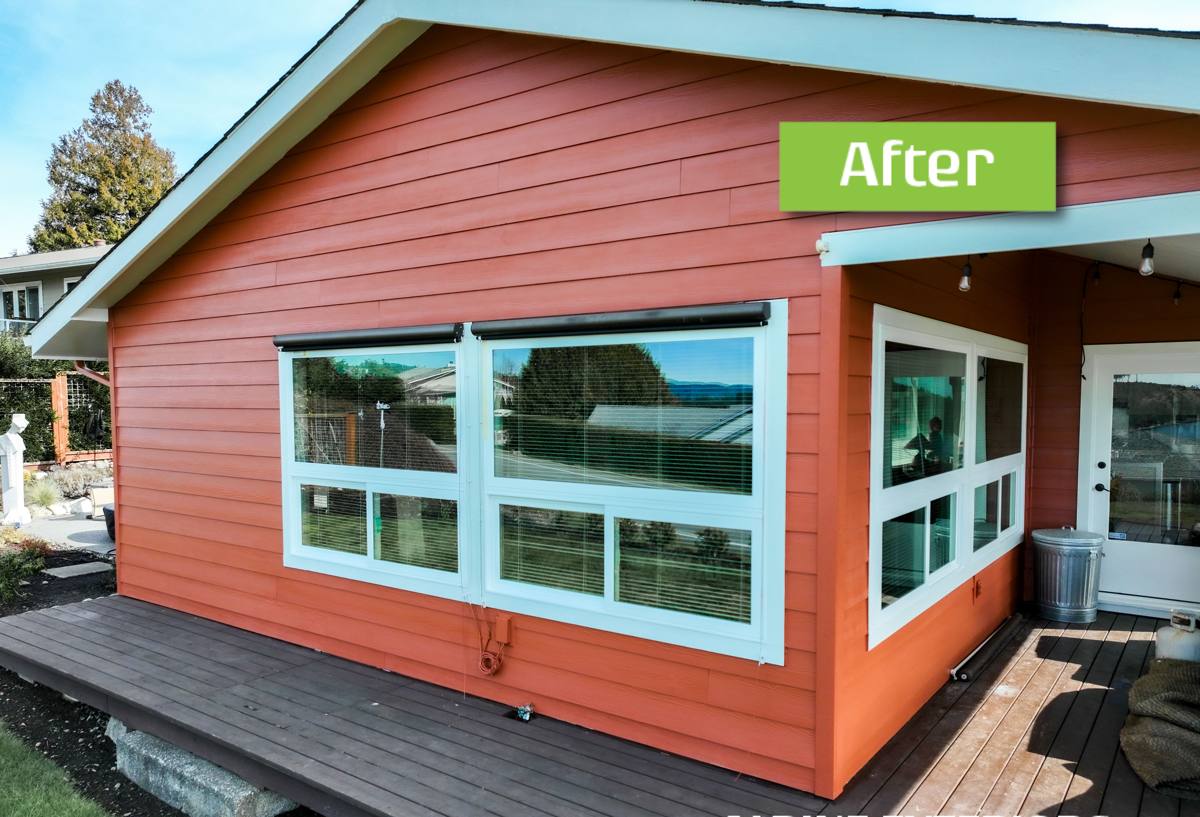
What Silver Beach's Climate Actually Does to Siding
Shade and moisture retention
Tree cover is one of the best things about living in this part of Bellingham, but it's hard on exterior materials. Shaded walls dry out slower after rain, which means siding, trim, and the wall assembly behind it stay damp longer than they would on a more exposed lot. Wood-based products — cedar, primed spruce, and even engineered wood siding — are the most vulnerable to this: prolonged moisture exposure is exactly what accelerates rot, edge swelling, and paint failure.
Moss and organic growth
Moss doesn't just grow on roofs. Given shade, moisture, and a rough or porous siding surface, it will colonize siding too — especially at butt joints, behind trim, and in any spot where water sits instead of shedding. Moss holds moisture against the surface even longer, which compounds the problem. It also means more pressure-washing and scraping over the life of the siding, and every pressure wash is a chance to drive water into seams that aren't sealed properly.
Driving rain and marine air
Bellingham's weather isn't just steady drizzle — wind-driven rain off the water pushes moisture sideways into wall assemblies, particularly on exposed gables and upper stories. Combined with the salt-tinged marine air common to Whatcom County's coastal-adjacent neighborhoods, this accelerates corrosion of exposed fasteners and wears down finishes that aren't engineered for a wet coastal climate. Over enough winters, it separates siding that was installed to a good standard from siding that was installed to a minimum standard.
Why We Install James Hardie — and Nothing Else
We are a Hardie-only siding contractor. We don't install vinyl, LP SmartSide, Cemplank, Allura, primed spruce, or cedar, and that's a deliberate standard, not a lack of options.
- Non-combustible fiber cement — Hardie siding won't ignite, warp, or melt, which matters in a region where wildfire smoke and ember exposure have become more of a seasonal concern.
- Built for wet climates — Hardie's HZ5 product line is engineered specifically for climates like ours: freeze-thaw cycles, sustained damp, and driving rain.
- ColorPlus factory finish — baked-on, not brushed-on, which holds color and resists the fading and chalking that field-applied paint suffers under years of UV and salt air.
- Doesn't feed moss and rot the way wood does — fiber cement is dimensionally stable and doesn't absorb water the way primed spruce or cedar can, so it won't swell, cup, or rot at the edges.
- Strong transferable warranty — backed by a manufacturer with decades of track record on the product, not a smaller regional player with a shorter history.
Vinyl and engineered wood products both have their place and their advocates, and we're not going to pretend they're worthless. Vinyl is inexpensive and easy to install; LP SmartSide performs reasonably well when detailed and maintained correctly. But vinyl can warp under enough sustained heat or impact and doesn't offer the fire performance of fiber cement, and engineered wood siding is still an organic substrate — if water gets past the finish, it can swell and deteriorate in a way fiber cement simply doesn't. In a neighborhood like Silver Beach, with shade-driven moisture retention and a long moss season working against the siding every year, we don't think those trade-offs are worth it. That's why every job we take on uses Hardie.
What a Correct Siding Replacement Actually Involves
Replacing siding is not a surface-level swap. The siding itself is only as good as what's behind it, and that's where most premature failures actually start.
Tear-off and inspection
Full removal of the old siding down to the sheathing, with a real inspection of what's underneath — sheathing condition, evidence of past moisture intrusion, window and door flashing, and any rot that needs to be cut out and replaced before anything new goes on. Skipping this step is the single most common shortcut in the industry, and it's the reason siding that "looks fine" can still be failing structurally.
Weather-resistive barrier and flashing
A correctly lapped weather-resistive barrier, proper window and door flashing integration, and rainscreen or drainage detailing where the assembly calls for it. In a wet, shaded climate like Silver Beach's, this layer is what actually keeps incidental moisture from becoming a rot problem — the siding is the first line of defense, not the only one.
Hardie installation to spec
Correct fastener type and placement, proper clearance from grade and roof lines, factory-cut and field-cut edges sealed per Hardie's published requirements, and joints and butt seams detailed to shed water rather than trap it. Hardie's warranty depends on installation to their specifications — a rushed or improvised install can void coverage even on a good product.
Trim, caulking, and finish details
Trim boards, corner details, and caulking at penetrations all matter as much as the field siding. This is also where ColorPlus touch-up products should be used rather than mismatched field paint, so the finish stays uniform for years rather than showing patch marks.
Our Process for Silver Beach Homeowners
- Walk-through and assessment — we look at your current siding, trim, and any visible moisture or moss issues, and talk through what's driving the wear on your specific house and lot.
- Written estimate — scope, Hardie product line and color, and a clear breakdown of what's included, with no vague allowances.
- Tear-off and sheathing inspection — old siding comes off, and we show you what we find before covering it back up.
- Repair and barrier work — any rot or damaged sheathing gets replaced, and the weather-resistive barrier and flashing go in correctly before siding starts.
- Hardie installation — installed to manufacturer spec, with attention to the joints and details that matter most in a wet, shaded climate.
- Final walk-through — we go over the finished job with you before calling it done.
Cost Factors to Understand Before You Budget
| Factor | Why It Matters in Silver Beach |
|---|---|
| Sheathing/rot repair scope | Shade-driven moisture retention means hidden rot is more common here than on drier, more exposed lots — repair scope is often discovered, not assumed, at tear-off. |
| Hardie product line | HZ5 boards, panel vs. lap siding, and trim choices all price differently; we'll recommend what fits the house and exposure, not the most expensive option. |
| Color and finish | ColorPlus factory finish costs more upfront than field paint but eliminates a repaint cycle for years — worth weighing against a primed-and-painted alternative. |
| Access and lot conditions | Tree cover, tight side yards, and sloped lots common in this part of Bellingham can affect staging, scaffolding, and disposal logistics. |
| Scope of trim/detail work | Full trim replacement alongside siding costs more than a straightforward field-siding swap but avoids a mismatched, half-finished look. |
Signs Your Silver Beach Home Needs Siding Replacement Now
- Moss or algae staining that returns within a season of pressure washing
- Soft spots, bubbling, or visible swelling at siding edges and butt joints
- Paint that's chalking, peeling, or needing repainting more often than every few years
- Visible gaps or separation at corners, trim, and window/door edges
- Musty smell or staining on interior walls that back up to exterior siding
- Warping, cupping, or a wavy appearance across a wall section
Why Hire a Crew That Already Works This Neighborhood
Silver Beach's mix of tree cover, shaded lots, and the broader Whatcom County marine climate isn't the same challenge as siding a more exposed, open lot elsewhere in the county. A crew that's replaced siding on similar homes in this area already knows to look harder at shaded north- and west-facing walls, to expect moss buildup at low-slope trim details, and to detail the weather-resistive barrier with the extra moisture exposure in mind. That's the difference between a siding job that looks good on install day and one that still looks good in ten years.
If your siding is showing its age or you just want an honest read on what shape it's really in, we're happy to take a look. Reach out for a free, no-pressure estimate — there's a form right below to get started.