 Bellingham
 Building Decks for South Hill's Hillside, Tree-Covered Lots
South Hill sits above the rest of Bellingham on sloped, often heavily wooded ground, and that setting shapes almost every decision that goes into a deck built here. Lots step down the hillside, mature evergreens shade large parts of many yards for much of the day, and the elevation puts homes close enough to Bellingham Bay that salt-laden air is a real factor in how fast metal corrodes and finishes fail. A deck built the same way you'd build one in a flat, open subdivision in a drier part of Washington will not hold up the same way on a shaded South Hill slope.
We've built and repaired decks across this part of Bellingham long enough to know which shortcuts show up as problems in three years instead of fifteen. This page covers what actually matters for a deck in this neighborhood: the climate stresses, the construction details that resist them, the material tradeoffs, and how we run a project from first look to final walkthrough.
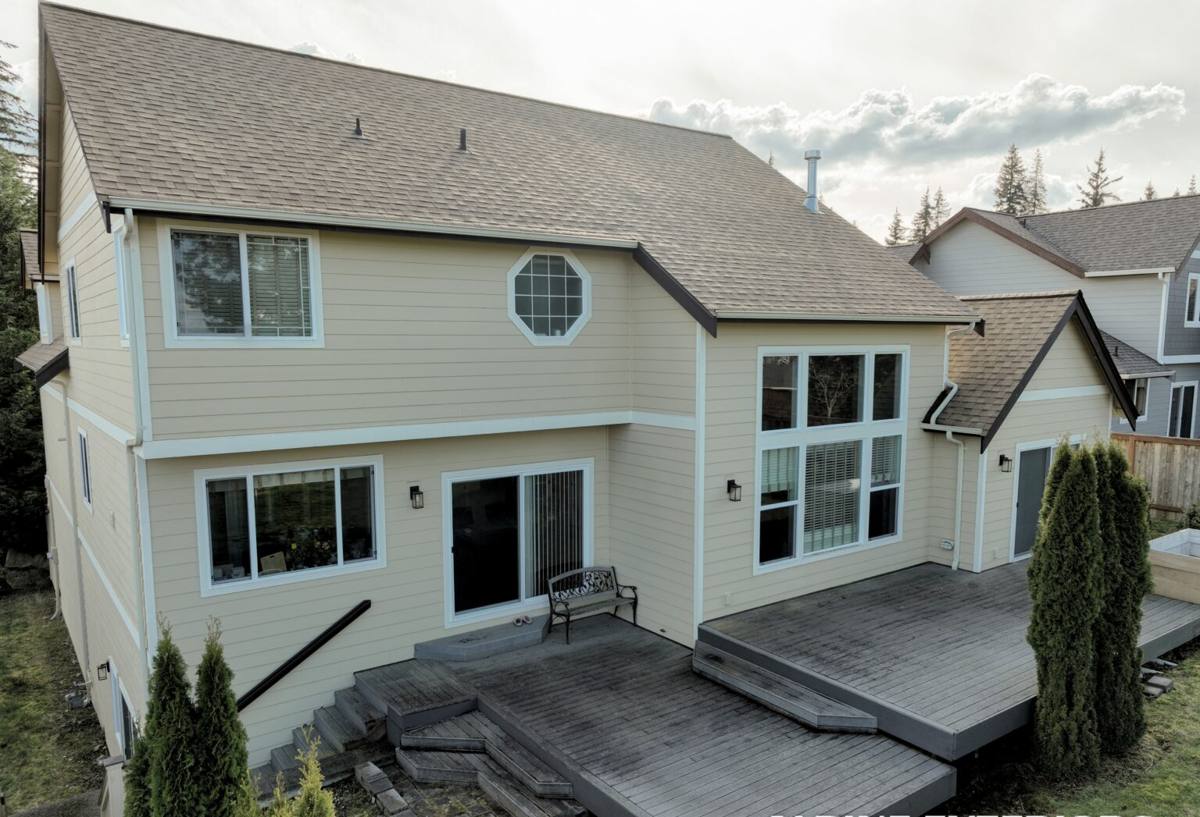
What South Hill's Climate Does to a Deck Over Time
Salt Air and Fasteners
Proximity to the bay means the air here carries more salt than it does further inland in Whatcom County. Salt accelerates corrosion in anything less than fully rated hardware — standard coated screws and joist hangers can start rusting and staining the wood around them well before the deck itself is due for replacement. It's a slow, quiet failure mode: the fasteners look fine for a while, then start bleeding rust streaks and losing holding strength right where the structure needs it most.
Moss, Shade, and Standing Water
Whatcom County's long wet season, combined with tree cover that keeps large sections of many South Hill yards in shade for much of the day, creates ideal conditions for moss and algae growth on horizontal wood and composite surfaces. Moss holds moisture against the decking, which speeds up rot in wood and can make boards dangerously slick underfoot. Needles, cones, and leaf litter from surrounding trees also collect in the gaps between boards and around framing, blocking the drainage a deck depends on to dry out between storms.
Slope and Soil
Hillside lots mean footings and posts often aren't sitting on flat, uniform ground. Soil on a slope can be a mix of fill, native clay, and rock, and drainage patterns are harder to predict than on level lots. Footings need to be sized and placed for the actual soil conditions on site, not just a standard layout, and post heights typically vary more than they would on flat ground — which affects how the substructure is braced.
What a Correctly Built Deck Requires Here
None of the climate factors above are unusual for a deck builder to deal with — but they only get addressed if the build accounts for them from the framing up. A deck that looks right on installation day but skips these details is the kind that needs structural repairs well ahead of schedule.
- Stainless steel or high-grade hot-dip galvanized fasteners and hardware, sized for coastal exposure rather than standard exterior coating
- Ledger board properly flashed and sealed where it meets the house, since a leaking ledger is the single most common cause of deck failure in wet climates
- Joist tape or a waterproof membrane over the top of framing lumber to keep standing water out of end grain and fastener holes
- Footings sized and depth-set for the actual soil and slope on the lot, not a generic minimum
- Board spacing that allows debris and water to pass through rather than collect
- Airflow beneath the deck so the structure can actually dry out between rains, not just after it stops raining
Any one of these done poorly can undercut the rest. A deck with premium decking boards on a poorly flashed ledger will still develop rot at the house connection; a deck with great framing but the wrong fasteners will still show rust stains within a few wet seasons.
Choosing the Right Decking Material for a Shaded, Damp Lot
There isn't one right decking material for every South Hill yard — it depends on how much sun and tree cover the specific deck location gets, how much upkeep the homeowner wants to do, and the look they're after. We walk through these tradeoffs honestly rather than steering everyone toward whatever is easiest for us to install.
| Material | Upfront Cost | Maintenance | Moss/Moisture Resistance | Typical Lifespan |
|---|---|---|---|---|
| Pressure-treated wood | Lower | Regular cleaning, periodic sealing/staining | Fair — needs upkeep to resist moss and rot in shaded spots | 15-20 years with maintenance |
| Cedar | Moderate | Regular cleaning, periodic sealing/staining | Naturally rot-resistant, but still holds moss in deep shade without upkeep | 15-25 years with maintenance |
| Composite decking | Higher | Occasional washing, no staining/sealing | Good — resists rot, but moss and algae can still grow on the surface in heavy shade and need washing off | 25-30+ years, manufacturer-dependent |
A common misconception is that composite decking is maintenance-free in a climate like this. It doesn't rot the way wood can, but in the deep shade found on many South Hill lots, algae and moss will still grow on the surface and need to be washed off periodically — the difference is that composite doesn't degrade structurally from that growth the way wood eventually can. For decks that get real sun for part of the day, wood remains a solid choice as long as the homeowner is realistic about the upkeep it takes to keep it that way.
Permits, Codes, and Footings for Sloped Lots
Most new decks and deck replacements in Bellingham require a building permit through the City, with requirements around footing depth, guardrail height, stair geometry, and ledger attachment spelled out in the adopted building code. On a sloped South Hill lot, the permit and inspection process also typically involves more scrutiny on footing placement and post heights, since the substructure has to be engineered for the actual grade rather than a flat-lot assumption. Skipping the permit on a deck attached to the house is a real liability risk — it can complicate a home sale later and, more importantly, means no third-party inspection ever confirmed the ledger and footings were done correctly.
We handle the permit application and coordinate inspections as part of the build, so homeowners aren't the ones chasing down paperwork or scheduling city inspectors.
Our Process for a South Hill Deck Build
Site Assessment
We start on-site, looking at the slope, soil, sun and shade pattern across the day, tree canopy overhead, and how water currently moves through the yard. This is also where we talk through how the deck will actually be used — entertaining, grilling, a quiet spot off a bedroom — since that shapes size, layout, and railing choices as much as the site does.
Design and Materials
We put together a plan with framing layout, footing locations, and material recommendations suited to the specific exposure of that deck — a shaded, north-facing deck gets different guidance than one that catches afternoon sun. Pricing is broken out clearly so homeowners can see where the cost is going.
Permitting and Build
Once the design is approved, we handle the City permit submission, then move into framing, ledger flashing, footings, and decking installation in sequence, with inspections at the required points. We don't cover framing with decking boards until the structural work has passed inspection.
Walkthrough
Before we consider the job finished, we walk the deck with the homeowner, cover basic care for the specific material installed, and answer questions about what normal wear looks like versus what should get a call back to us.
Maintaining Your Deck Through Bellingham's Moss Season
Good construction buys a deck a much longer life, but ongoing care still matters in a climate that stays wet for months at a stretch. None of this is complicated, but it's easy to let slide until moss or soft wood shows up.
- Sweep needles, leaves, and debris out of board gaps regularly, especially in fall and through the wet season
- Check that drainage under the deck isn't blocked by leaf buildup or landscaping changes
- Wash moss and algae off the surface before it has a chance to establish, rather than after it's thick
- Inspect fasteners and hardware once a year for rust staining, which signals it's time for a closer look
- Reseal or restain wood decking on the manufacturer or product's recommended schedule, not just when it looks faded
- Trim back overhanging branches that keep sections of the deck in constant shade and dampness
- Check the ledger flashing and the area where the deck meets the house for any signs of water intrusion
Why Hire a Crew That Already Works in South Hill
A deck builder who mostly works flat, open lots elsewhere in Whatcom County can still build a structurally sound deck — but they may not default to coastal-grade fasteners, may not have a feel for how a specific slope will drain, and may not think to flag how much shade a particular spot gets before recommending a decking material. Those aren't exotic problems; they're just specific to hillside, tree-covered, near-bay conditions like South Hill's. Working this neighborhood regularly means we're not guessing at how a given lot will behave through a wet Bellingham winter — we've already seen how similar lots hold up.
If you're planning a new deck or need to replace one that's showing its age, we're happy to come take a look and put together a straightforward, no-pressure estimate based on your specific lot and how you actually plan to use the space.