 Bellingham
 Why South Hill Decks Wear Out Faster Than You'd Expect
South Hill sits up above the rest of Bellingham, which means more exposure to wind-driven rain off Bellingham Bay and longer stretches of shade under mature tree canopy than you'll find on flatter, more open lots. That combination is hard on a deck. Salt-tinged marine air accelerates corrosion on fasteners and metal connectors, driving rain finds its way into every seam and joint that isn't properly flashed, and Whatcom County's long, damp moss season keeps deck surfaces wet for months at a time. A deck that would hold up fine in a drier inland climate can develop real problems here within a decade if it wasn't built or maintained with our conditions in mind.
We've worked on enough decks around this neighborhood to see the pattern repeat: homeowners notice a soft spot underfoot, a squeak that wasn't there before, or a green film that keeps coming back no matter how often they scrub it. Those are early warning signs, not cosmetic nuisances. Catching them early is the difference between a repair that costs a few hundred dollars and one that requires tearing out framing.
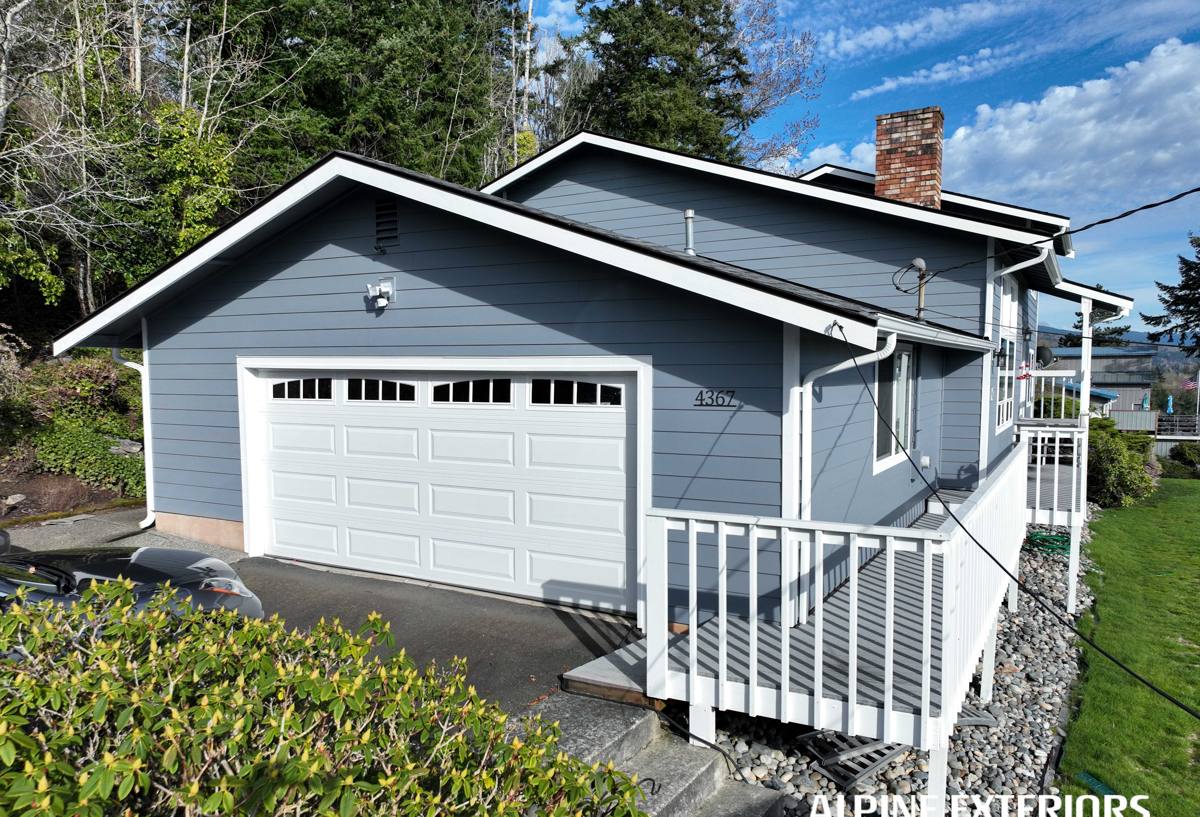
Common Deck Problems We See on South Hill Homes
Moss and Algae Buildup
Shaded decks under tree cover stay damp long after a storm passes. Moss and algae aren't just slippery and unattractive — they hold moisture against the wood surface, which speeds up decay in the decking boards themselves and can work its way into fastener holes.
Ledger Board and Flashing Failures
The ledger board — where the deck attaches to the house — is the single most important structural connection on most decks, and it's also the one most likely to fail quietly. Poor or missing flashing lets water run behind the ledger and into the rim joist or wall framing, causing rot you can't see until it's advanced.
Fastener and Hardware Corrosion
Salt air along the Whatcom County coastline accelerates corrosion on nails, screws, and joist hangers that weren't rated for this environment. Rust streaks bleeding out around fastener heads are a sign the hardware underneath is failing.
Joist and Beam Rot
Once moisture gets past the decking surface, joists and beams are next. Rot here compromises the structure itself, not just the walking surface, and it's often worse than it looks from above.
Loose or Non-Compliant Railings
Railings loosen over time as posts work in their connections, but on hillside lots like many in South Hill, a failing railing above a taller drop is a serious safety issue, not just an inconvenience.
Footing and Post Base Deterioration
Wood posts sitting in or near standing water, or footings that have shifted with wet ground over the years, can throw a deck out of level and stress every connection above them.
Repair or Replace? How We Actually Decide
Not every problem deck needs to come down. A lot of what looks like a lost cause is actually a contained repair once we get underneath the surface and check the framing. Here's how we generally sort it out:
| Condition | Usually Repairable | Usually Needs Replacement |
|---|---|---|
| Decking boards | Isolated soft or cupped boards, surface moss/algae staining | Widespread rot across most of the deck surface |
| Ledger board | Minor flashing gaps caught early, localized surface decay | Soft or crumbling wood behind the flashing, active water intrusion into the house rim joist |
| Framing (joists/beams) | One or two damaged members with sound framing around them | Rot spread through multiple joists, sagging or spongy framing across the deck |
| Railings and posts | Loose connections, single damaged baluster or post | Rotted post bases, railing system that no longer meets current height/spacing standards |
| Footings | Minor settling with structure still level and sound | Heaving, cracking, or footings undersized for current code |
Age matters too. A well-built deck in its first 10-15 years is usually a good repair candidate. Beyond that, especially with untreated or lower-grade original lumber, replacement often makes more financial sense than chasing repairs on a structure nearing the end of its service life.
What a Correct Deck Repair Actually Involves
A repair that just swaps out the obviously rotten board and calls it done tends to leave the underlying cause untouched. A proper repair starts with finding out why the damage happened in the first place.
Structural Inspection
We check the ledger connection, flashing, joists, beams, posts, and footings — not just the decking surface — using a moisture meter and probing suspect wood by hand. Surface damage is often a symptom; the real problem is frequently a few layers down.
Moisture Source Correction
If we don't fix whatever let water in — missing flashing, a low spot pooling water, a gutter dumping onto the deck — the same damage comes back regardless of how good the repair materials are.
Code-Relevant Items
Railing height, baluster spacing, guard requirements, and stair geometry all have current standards behind them. When we're already into a repair on a railing or stair section, we bring it up to current requirements rather than simply patching it back to its original, sometimes outdated, configuration.
Matching Materials to the Repair
Replacement lumber, fasteners, and hardware need to match or exceed the corrosion resistance of what's being replaced — patching a salt-air corrosion problem with the same grade of hardware that failed the first time just delays the next repair.
Our Deck Repair Process
- On-site assessment. We walk the full deck, probe for soft wood, check the ledger and flashing, and look underneath at the framing and footings.
- Written scope and estimate. You get a clear breakdown of what's failing, why, and what it will take to fix it — repair or replace, with reasoning either way.
- Structural repairs first. Framing, ledger, and footing issues get addressed before any surface or cosmetic work, since everything above depends on what's underneath being sound.
- Surface and railing work. Decking boards, railings, stairs, and any moss or algae treatment happen once the structure underneath is confirmed solid.
- Final walkthrough. We check the deck is level, railings are secure, and drainage is directing water away from the structure, not into it.
Materials We Use and Why
Material choice matters more here than in a drier climate, because whatever we use has to hold up to sustained dampness and periodic salt-laden air. We match materials to how exposed and shaded a given deck is rather than defaulting to one product for every job.
| Material | Where It Fits Best | Trade-Off to Know |
|---|---|---|
| Pressure-treated framing lumber | Structural members — joists, beams, posts | Needs proper flashing and fastener compatibility to perform as intended over time |
| Cedar decking | Homeowners wanting a natural look who are comfortable with periodic sealing/staining | Requires more regular maintenance in a shaded, damp environment than composite |
| Composite decking | Shaded or moss-prone decks where low maintenance is a priority | Higher upfront material cost; still needs periodic cleaning to prevent surface algae film |
| Stainless or coated fasteners/hardware | Any repair in a salt-air-exposed or persistently damp area | Costs more than standard galvanized, but is the right call anywhere corrosion caused the original failure |
We won't put standard fasteners back into a connection that failed from corrosion just to save a small amount on hardware — it's a false economy that just schedules the next repair.
Maintenance After Repair: Making It Last
A repaired deck still needs upkeep suited to our climate. A short seasonal routine goes a long way toward preventing the same issues from coming back:
- Clear leaves, needles, and debris from between boards and along the ledger line each fall, before the wet season sets in
- Rinse or scrub off moss and algae buildup at the first sign of it, rather than waiting until it's established
- Check that gutters and downspouts near the deck are directing water away, not onto the deck surface or framing below
- Look underneath once a year for new soft spots, rust streaks, or moisture staining, especially after a hard winter
- Reseal or restain wood decking on the schedule the product calls for — skipping a cycle in a shaded, damp spot catches up fast
- Test railings by hand periodically for looseness at the post connections
Why Hire a Crew That Already Works South Hill
Deck problems here are driven by a specific set of conditions — hillside exposure, tree-shaded moisture, salt-tinged marine air, and a moss season that runs longer than most homeowners expect. A crew that regularly works this neighborhood already knows what tends to fail first and where to look for damage that isn't visible from the top of the deck. That means a more accurate inspection, a repair scope that addresses the real cause instead of just the symptom, and fewer surprises once we open things up. We also know how these repairs need to sit alongside the rest of the exterior — siding, trim, flashing — so water doesn't just get redirected from the deck into another part of the house.
If you've noticed soft spots, persistent moss, loose railings, or you're just not sure how much life is left in your deck, we're happy to take a look. The estimate is free, there's no pressure, and you'll get a straight answer about whether you're looking at a repair or something bigger — just fill out the form below.