 Bellingham
 Siding Installation Built for South Hill's Weather, Not Just Its Curb Appeal
South Hill sits up above much of Bellingham, which means it catches wind and weather a little differently than homes closer to sea level. Between the salt-laden air coming off Bellingham Bay, long stretches of driving rain through fall and winter, and a moss season that seems to start earlier every year, the siding on a South Hill home works harder than most homeowners realize. A siding installation here isn't just a cosmetic upgrade — it's the primary barrier standing between your framing and a climate that stays damp for months at a time.
We install siding across Bellingham and Whatcom County, but we treat South Hill jobs with a specific set of expectations. Homes on this hill tend to see more wind-driven rain hitting walls at an angle, more shaded, moisture-holding surfaces under mature tree canopy, and more exposure to salt air than homes tucked into low, sheltered pockets of town. Getting a siding job right here means understanding those conditions before the first piece of material goes up.
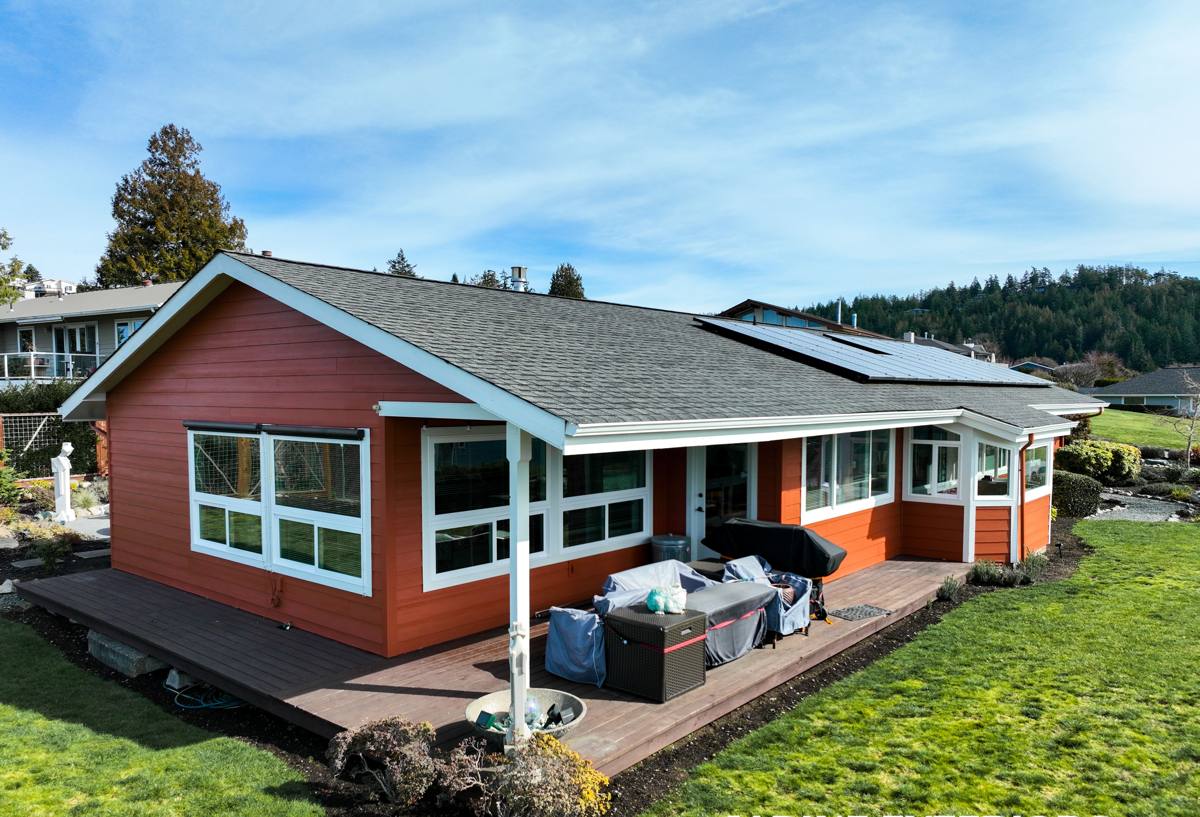
What South Hill's Climate Actually Does to Siding
Salt Air and Slow Corrosion
Proximity to the bay means airborne salt settles on exterior surfaces year-round. Salt air accelerates corrosion on fasteners, flashing, and any metal trim that isn't rated for coastal exposure. It also breaks down cheaper paint films faster than inland environments, which is why factory-applied, baked-on finishes matter more here than they do fifty miles east.
Driving Rain and Wall Assembly Stress
Bellingham gets a lot of rain, but South Hill's elevation and orientation mean much of it arrives sideways during winter storms. Wind-driven rain doesn't just wet the surface of siding — it tests every seam, joint, and piece of flashing behind it. A siding system with weak water management will eventually let moisture past the cladding and into the wall assembly, even if the surface material itself never fails.
Moss, Shade, and Extended Dry-Out Time
Mature trees are common on South Hill lots, and the shade they provide keeps north- and west-facing walls damp long after the rain stops. That extended dampness is exactly what moss and algae need to establish themselves. Moss on siding isn't just cosmetic — it holds moisture against the surface and, on materials that aren't dimensionally stable, can contribute to slow degradation over years.
Why Product Choice Matters More on South Hill Than It Does Elsewhere
We install James Hardie fiber cement siding exclusively. We don't install vinyl, LP SmartSide, Cemplank, Allura, primed spruce, or cedar, and on a site like South Hill, the reasons are especially concrete. Vinyl can warp and become brittle under repeated temperature swings and doesn't hold paint if a homeowner ever wants to change color. Wood products like cedar or primed spruce need consistent, attentive maintenance to resist rot in a climate that stays wet for months — miss a maintenance cycle in a shaded, moss-prone yard and the consequences show up fast. Engineered wood products carry their own moisture-management requirements that depend heavily on installation detail.
James Hardie fiber cement is non-combustible, dimensionally stable in wet-dry cycling, and finished at the factory with ColorPlus Technology — a baked-on finish that resists fading and holds up better to salt air than field-applied paint. It won't rot, and it gives moss and algae a much less hospitable surface to cling to compared to porous wood substrates. That combination is why it's the only product we put on homes, on South Hill or anywhere else in our service area.
James Hardie Product Lines We Use
| Product Line | Best Use | Why It Fits South Hill |
|---|---|---|
| HardiePlank lap siding | Primary wall cladding | Engineered for wet Pacific Northwest climates; strong water-shedding profile |
| HardieShingle | Accent gables, dormers | Adds texture without sacrificing moisture performance on shaded elevations |
| HardieTrim | Corners, window and door trim | Resists the swelling and cracking wood trim shows in damp shade |
| HardiePanel | Modern vertical siding | Clean look for contemporary South Hill homes with simplified detailing |
What a Correct Siding Installation Involves
The siding material is only part of the equation. Most siding failures we're called to inspect trace back to installation shortcuts, not the product itself. On South Hill, where wind-driven rain and prolonged dampness are routine, correct installation detail is what actually keeps water out.
Water-Resistive Barrier and Flashing
Every installation starts with a properly lapped water-resistive barrier and correctly integrated flashing at every window, door, and penetration. Flashing that's installed out of sequence — siding over flashing instead of flashing over siding, shingle-style — is one of the most common causes of hidden water intrusion, and it's invisible from the street.
Rainscreen Gap
We install with a rainscreen gap behind the siding wherever conditions call for it, which is most South Hill homes given the shade and rainfall this neighborhood sees. That gap lets any moisture that gets past the cladding drain and dry out instead of sitting against the wall sheathing.
Fastening and Clearances
James Hardie specifies exact fastener types, spacing, and penetration depth, along with minimum clearances from grade, roof lines, and decks. Skipping these specs voids the manufacturer's warranty and creates the exact moisture entry points that lead to problems years down the road.
Caulking and Joint Treatment
Butt joints, trim intersections, and penetrations need the right sealant applied correctly — not as a substitute for good flashing, but as a secondary line of defense. Over-reliance on caulk instead of proper flashing is a shortcut that fails within a few wet seasons.
Our Process on a South Hill Job
- On-site assessment: we look at sun exposure, tree cover, drainage patterns, and existing moisture damage before quoting anything.
- Tear-off and sheathing inspection: we check for rot or moisture damage behind the old siding before it's covered up again.
- Water-resistive barrier and flashing installation: done to manufacturer spec at every opening and penetration.
- Rainscreen and furring where called for: to manage the extended dampness common on shaded South Hill walls.
- James Hardie siding installation: fastened, spaced, and finished to manufacturer specification.
- Trim, caulking, and final detail work: the details that determine how the job performs in year five, not just how it looks on day one.
- Final walkthrough: we go over the finished work with you directly.
Signs Your South Hill Home Needs New Siding
- Persistent moss or algae growth that returns quickly after cleaning
- Soft spots, bubbling, or visible warping, especially on shaded north or west walls
- Paint that's peeling or chalking faster than it should, a sign the substrate underneath is failing
- Visible gaps or separation at seams and trim joints
- Rising energy bills that suggest the wall assembly is no longer performing as insulation
- Cracked or missing caulking around windows and doors
- Any musty smell or interior wall staining that could point to hidden moisture behind existing siding
Cost Factors Specific to South Hill Installations
| Factor | Why It Affects Cost |
|---|---|
| Tree cover and access | Mature landscaping on many South Hill lots can require extra care or clearance work around the home before staging equipment |
| Existing moisture damage | Sheathing repair, found once old siding comes off, is priced separately from the siding itself |
| Home elevation and complexity | Multi-story homes and steep-lot grading common on the hill affect scaffolding and labor time |
| Product line and trim detail | Mixing lap siding with shingle accents or panel sections changes material and labor costs |
| Rainscreen requirement | Shaded, moisture-prone walls often warrant a full rainscreen assembly, which adds a step to installation |
Why Hiring a Crew That Already Works South Hill Matters
A crew that's worked this neighborhood before already understands its microclimate — where the shade sits longest, which elevations take the worst of the driving rain, and how salt air behaves this far up from the water. That knowledge shapes decisions a generic installation crew might miss: where a rainscreen gap is worth the extra step, which trim details need reinforcing, and how to sequence flashing so it holds up through a full Whatcom County winter. We're a Bellingham-based crew, and South Hill is part of our regular service area — not a job we're learning on as we go.
We also stand behind James Hardie's transferable warranty, which matters if you ever sell the home. A documented, correctly installed fiber cement system is a selling point in a market where buyers are increasingly asking about siding condition and maintenance history.
Maintenance After Installation
James Hardie siding is low-maintenance compared to wood, but "low-maintenance" doesn't mean "no maintenance," especially in a climate like this one. A yearly rinse to clear moss spores before they take hold, a visual check of caulking and trim joints each fall before the rains set in, and prompt attention to any physical damage will keep the system performing for decades. None of this requires the repainting or sealing cycles that wood siding demands.
If you're seeing early signs of wear on your South Hill home, or you're planning ahead of the next wet season, we're happy to take a look and give you a straightforward, no-pressure estimate — no obligation, just an honest read on what your home actually needs.