 Bellingham
 Edgemoor Roofs Face a Different Kind of Wear
Edgemoor sits close to Bellingham Bay, and that proximity to open water shapes everything about how a roof ages here. Salt-laden air moves inland with the wind, settling on shingles, flashing, and fasteners in a way that homes further from the water simply don't experience. Add in the driving rain that comes through on winter storm systems and the long, damp moss season that stretches from fall through spring, and you've got a roof that's under more or less constant environmental pressure even in a year without a major windstorm.
None of that means Edgemoor roofs fail faster than they should. It means they need attention that accounts for the specific combination of wind exposure, moisture, and organic growth this part of Whatcom County produces. A roof repair approach that works fine in a drier, more sheltered neighborhood can miss the underlying causes of damage here.
What Storm Damage Looks Like on the Ground
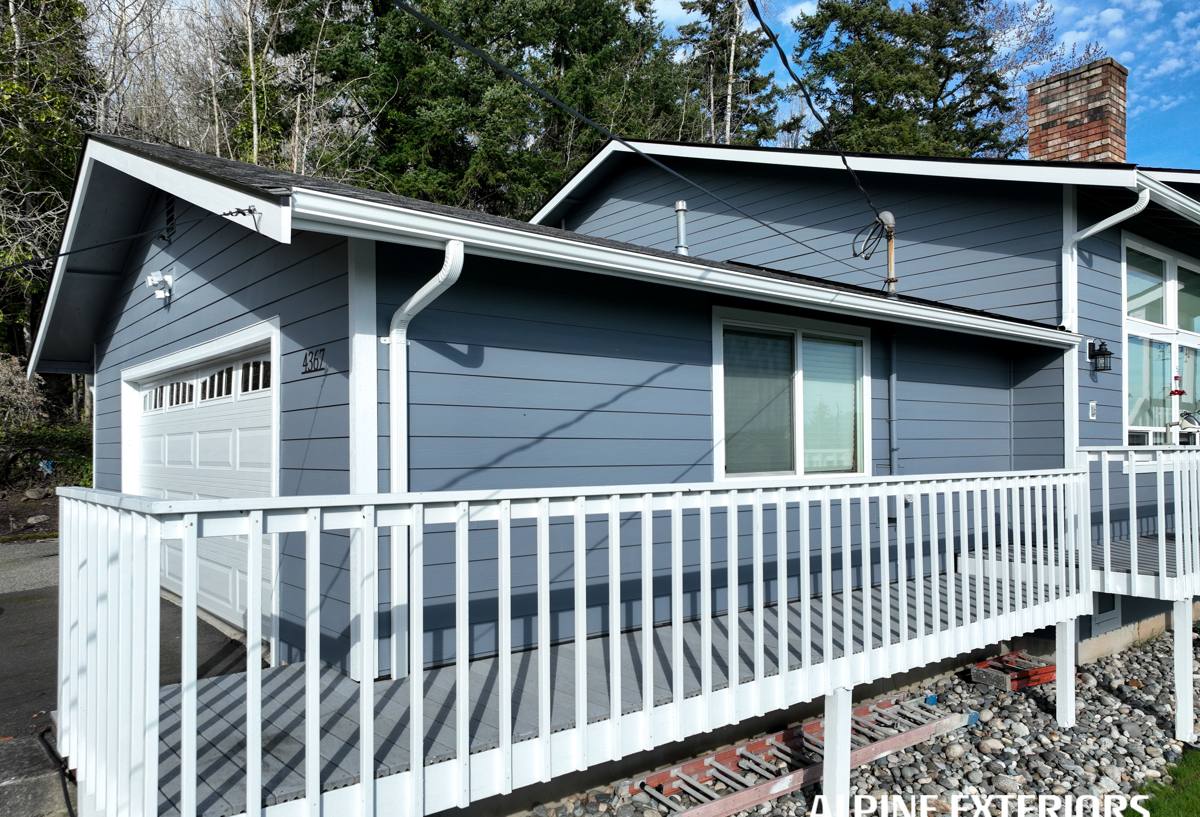
Storm damage isn't always a dramatic hole in the roof. On most Edgemoor homes we look at after a wind event, the damage is more subtle and more likely to be missed from the ground.
Wind-Related Damage
- Shingles lifted at the edges or corners, with sealant strips broken but the shingle not fully gone
- Creased or cracked shingles where wind flexed them without tearing them loose
- Granule loss showing up as bald patches or as grit collecting in gutters and downspouts
- Ridge cap shingles loosened or missing along the roof's high points, which take the brunt of gusts
- Flashing around chimneys, vents, and sidewalls bent, lifted, or pulled away from the surface it seals
Moisture and Debris Damage
- Moss and organic buildup wedged under shingle tabs, holding water against the roof deck
- Clogged valleys and gutters from wind-blown branches and needles, causing water to back up under the roofline
- Soft or discolored decking visible from the attic side, indicating water has already worked its way through
The tricky part is that wind and moisture damage compound each other. A shingle lifted slightly by wind doesn't necessarily leak the day of the storm — but it creates an entry point that moss and driving rain exploit over the following weeks. That's why a proper storm damage inspection in this area has to look for both the obvious and the not-yet-obvious.
The First 48 Hours After a Storm
What you do in the first day or two after a storm affects how much the eventual repair costs and whether the damage stays contained.
From the Ground, Safely
Walk the perimeter of the house and look up. Note any shingles in the yard, on the driveway, or caught in gutters — these tell you roughly where the roof lost material even before anyone gets up there. Check gutters and downspouts for granules, which is often the first visible sign of shingle damage even when nothing looks obviously wrong from below.
Inside the House
Check the attic or top-floor ceilings for new water stains, damp insulation, or a musty smell. Water doesn't always show up directly under the point of entry — it can travel along rafters or sheathing before it drips somewhere visible, so a stain in one corner doesn't rule out damage elsewhere on the roof.
Temporary Protection
If you can see daylight through the roof deck, or if there's active water intrusion, a tarp over the affected section until a proper repair can be scheduled prevents a contained problem from turning into a much larger one involving insulation, drywall, and framing. This is a short-term measure, not a fix — but it buys time to get the repair done correctly instead of rushed.
What a Correct Repair Actually Involves
A storm repair that's done right addresses the cause of the damage, not just the visible symptom. That distinction matters more in Edgemoor than in drier inland neighborhoods because moisture and salt exposure will find any shortcut in the work.
Full Inspection Before Any Repair
We check the whole roof plane, not just the spot that's visibly damaged. Wind damage rarely stays confined to one shingle — if one tab lifted, neighboring shingles on the same slope likely took similar stress even if they haven't failed yet. We also check the roof deck itself where damage has been present for a while, since sustained moisture exposure can soften plywood or OSB sheathing in ways that aren't visible until you're standing on it.
Matching Materials, Not Just Patching
Shingle color and profile change over the years, so an exact match to a roof that's five or ten years old isn't always possible. We aim for the closest reasonable match and place patched sections where they'll be least visually obvious, but we won't pretend a mismatched patch is invisible when it isn't. Where a full slope or the whole roof is affected, replacing shingles across the entire plane usually gives a better result than a visibly patched repair.
Flashing and Underlayment Get the Same Attention as Shingles
A lot of the leaks we trace back after a storm didn't start with the shingles at all — they started with flashing around a chimney, skylight, or sidewall that got bent or separated in the wind. Replacing shingles without addressing damaged flashing underneath just sets up the same leak to come back with the next storm. We also check the underlayment (the water-resistant barrier under the shingles) in any area we open up, since it's the roof's actual last line of defense if a shingle fails again down the road.
Moss and Organic Debris Removal
Because moss season runs long here, any repair on an Edgemoor roof includes clearing moss and debris from the repair area and the surrounding roof plane. Moss holds moisture against the shingle surface and roof deck, and leaving it in place around a fresh repair undermines the work before it's even finished curing.
Our Process, Start to Finish
| Step | What Happens |
|---|---|
| Inspection | Full roof walk, attic check where accessible, photo documentation of all damage found |
| Assessment | Honest breakdown of what's storm-related versus pre-existing wear, and repair versus replace options |
| Written estimate | Scope, materials, and cost laid out before any work starts — no verbal-only quotes |
| Repair work | Shingles, flashing, underlayment, and deck repaired as needed, with moss and debris cleared from the work area |
| Final walkthrough | Review of completed work and any maintenance recommendations specific to the home's exposure |
We don't skip the inspection step even on repairs that look straightforward from the ground. A missing shingle is easy to spot; the flashing seam or soft decking underneath it usually isn't, and that's where a repair either holds up or fails again next storm season.
Repair or Replace: How We Help You Decide
Not every storm-damaged roof needs a full replacement, and not every roof is a good candidate for another round of patching. The right call depends on a few factors we walk through with the homeowner directly.
| Factor | Favors Repair | Favors Replacement |
|---|---|---|
| Roof age | Under roughly half the shingle's rated lifespan | Nearing or past the manufacturer's expected service life |
| Extent of damage | Isolated to one section or slope | Spread across multiple slopes or the whole roof |
| Deck condition | Solid, dry sheathing under the damaged area | Soft, delaminated, or water-stained decking found during inspection |
| Prior repair history | First significant repair on this roof | Multiple past repairs to the same areas |
| Shingle availability | Close match to existing shingles still available | Discontinued shingle line, making patches visibly mismatched |
We'll tell you honestly when a repair is the sound choice — plenty are — and we'll tell you just as honestly when continuing to patch an aging roof is spending money without buying much additional life out of it.
Working With Insurance Claims
Storm damage repairs are often covered under homeowner's insurance, and the documentation from our inspection — photos, a written scope of damage, and a clear cost estimate — is the kind of paperwork adjusters need to process a claim. We're not a public adjuster and we don't negotiate your policy for you, but we provide the accurate, unembellished documentation of what the storm actually did, which is what a fair claim depends on.
Why Local Experience in Edgemoor Actually Matters
A roofing crew that regularly works in and around Edgemoor has already seen how this specific stretch of coastline treats a roof over time — where wind tends to catch a gable end, how quickly moss reestablishes on a north-facing slope near the water, and which flashing details hold up against salt air and which don't. That's not something you get from a general knowledge of roofing; it comes from repeat exposure to this particular combination of Bellingham Bay wind, Whatcom County rainfall, and coastal moisture.
It also means a faster, more accurate first assessment. We're not guessing at how the local climate factors into your damage — we're applying what we've already seen on roofs a few streets away.
Reducing Storm Damage Before the Next One Hits
A repaired roof is a good moment to also address the conditions that make storm damage worse in the first place.
- Clear moss and organic debris at least once a year, more often on shaded or north-facing slopes
- Keep gutters and downspouts clear so wind-driven rain has somewhere to go instead of backing up under shingles
- Trim back tree limbs that overhang the roof, since falling or wind-whipped branches are a common source of storm damage
- Have flashing around chimneys, vents, and skylights checked periodically, since these are the points most likely to fail before the shingles do
- Address minor shingle lifting or granule loss promptly rather than waiting for the next storm to make it worse
None of this eliminates storm risk, but it narrows the gap between a storm that causes a minor, cheap fix and one that turns into a major repair because small issues were left unaddressed.
Get an Honest Look at Your Roof
If a recent storm has you wondering whether your roof took damage, or you just want a clear-eyed assessment before moss season turns a small issue into a bigger one, we're glad to take a look. The estimate is free, there's no pressure to move forward, and you'll get a straightforward explanation of what we find — use the form below to get started.