 Bellingham
 Why Decks in Sunnyland Wear Out Faster Than You'd Expect
Sunnyland is one of Bellingham's older, established neighborhoods, and a lot of the decks we see here were built years ago under very different expectations for lumber quality and moisture management than what we build to today. Add in the local climate — near-constant damp air off Bellingham Bay, driving rain for much of the year, and a moss season that can stretch from fall through spring — and you get decks that look fine from a distance but are quietly failing underneath.
The pattern is almost always the same: water gets into a joint, a fastener, or a ledger connection, doesn't fully dry out between rains, and the wood starts to break down from the inside. Add moss holding moisture directly against boards and railings, and even decks that were built reasonably well can lose structural integrity years before the surface shows obvious damage. In Whatcom County's climate, deck replacement isn't about chasing a cosmetic upgrade — it's about catching structural wear before it becomes a safety problem.
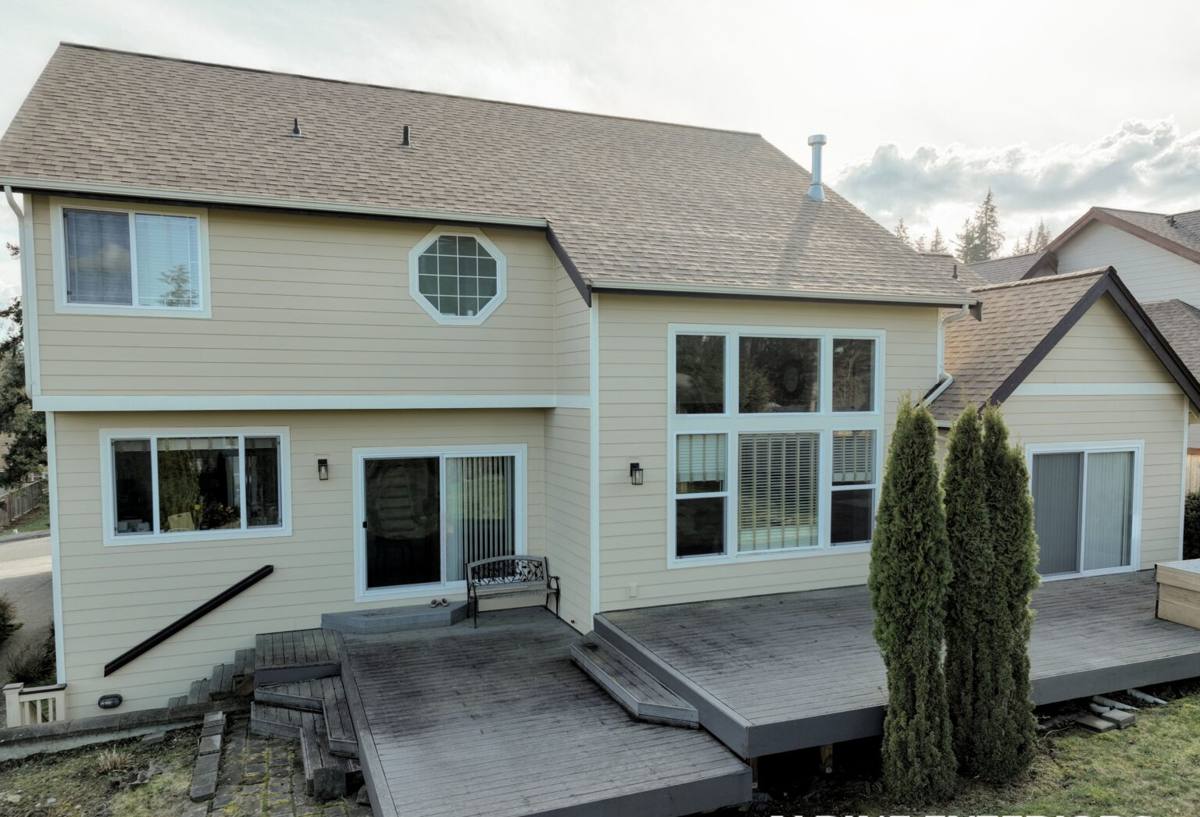
Signs a Sunnyland Deck Needs Replacement, Not Repair
Not every worn deck needs a full teardown. But there's a point where patching boards is just delaying the inevitable and spending money that won't hold up. Here's how we tell the difference on a site visit.
- Soft, spongy, or springy spots underfoot — usually a sign of rot in the joists below, not just the surface boards
- A ledger board (where the deck attaches to the house) that's discolored, soft, or pulling away from the siding
- Posts or footings that have shifted, settled unevenly, or show visible rot at the base
- Persistent moss or algae growth that comes back within weeks of cleaning, no matter how often it's washed
- Railings that flex or wobble when leaned on — a code and safety issue, not just cosmetic
- Fasteners that are rusted, bleeding stains into the wood, or backing out
- A deck more than 20-25 years old that has never had the framing inspected
If it's just surface graying or a handful of cracked boards on an otherwise sound frame, repair or resurfacing can make sense. Once the framing, ledger, or footings are compromised, replacement is the honest recommendation — repairs on a failing substructure just move the problem, they don't solve it.
What a Correct Deck Replacement Actually Involves
A deck replacement done right isn't just pulling old boards and screwing down new ones. In a climate like ours, the parts you don't see matter more than the parts you do.
The Ledger and Flashing
The ledger board connection to the house is the single most common failure point on decks in this region, because it's where water intrusion meets a structural connection. Proper flashing — installed so water sheds away from the house rather than behind the ledger — is non-negotiable. This is also the point where a deck rebuild can double as a chance to check for and correct any hidden moisture damage to the home's siding or sheathing behind the old ledger.
Framing and Footings
Joists, beams, and posts need to be sized correctly for the span and load, and footings need to sit below frost depth and bear on undisturbed soil. On older Sunnyland lots, we sometimes find footings that were undersized or poured shallow by the standards used decades ago. Replacement is the opportunity to bring that up to current code rather than building a new deck on an old, marginal foundation.
Fasteners and Hardware
This is where cutting corners causes the most long-term damage. Standard galvanized fasteners corrode faster than the wood around them in a wet coastal climate, staining boards and weakening connections. We use stainless steel or heavy hot-dip galvanized hardware rated for ground contact and treated lumber, along with structural connectors (joist hangers, post bases, hurricane ties) sized to code — not just toenailed framing.
Choosing Decking Material for Bellingham's Climate
There's no single "best" decking material — there's a best fit for your budget, maintenance appetite, and how much moss and moisture exposure the deck will see. Here's how the common options actually compare in a climate like ours.
| Material | Moisture & Moss Resistance | Maintenance | Typical Lifespan Here |
|---|---|---|---|
| Pressure-treated fir/hem-fir | Good if sealed regularly; prone to moss without upkeep | Annual cleaning, resealing every 2-3 years | 15-20 years |
| Cedar | Naturally rot- and insect-resistant; still needs sealing | Cleaning and oil/sealant every 1-2 years | 20-25 years |
| Composite decking | Excellent — doesn't absorb water, resists moss staining | Occasional washing, no sealing or staining | 25-30+ years |
| PVC/capped polymer | Best moisture performance; fully sealed surface | Lowest — soap and water as needed | 25-30+ years |
We'll walk you through the honest trade-offs for your situation. Wood costs less upfront and looks great when new, but it demands consistent maintenance in this climate or it will show wear fast. Composite and PVC cost more initially but largely eliminate the sealing, staining, and moss battle that wood decks face here — the framing underneath still needs the same careful, moisture-managed construction regardless of what decking surface you choose.
Railings, Steps, and the Details That Get Skipped
Railings and stairs take a beating in wet climates because they're constantly exposed and often built with lighter materials than the deck frame itself. A few things we pay close attention to on every replacement:
- Railing posts bolted through the rim joist with structural hardware, not just lag-screwed into the decking surface
- Baluster spacing and railing height that meet current residential code — older decks are frequently out of compliance
- Stair stringers sized for the actual rise and run, with proper support at the base rather than resting directly on soil
- Drainage gaps between boards wide enough to let water through, but not so wide they trap debris and hold moisture
Our Deck Replacement Process
We keep the process straightforward and communicate what we're finding as we go, especially once the old decking comes off and the framing is exposed.
- On-site assessment — We inspect the existing deck, ledger connection, and, where accessible, the framing below to identify what's driving replacement versus repair.
- Design and material selection — We talk through decking material, railing style, and layout, with straightforward pricing for each option so you can compare real trade-offs.
- Permitting — We handle the permit application and inspection scheduling required for the project.
- Demolition — Careful removal of the old structure, checking the ledger and adjacent siding for hidden moisture damage.
- Framing and flashing — New joists, beams, posts, footings as needed, and correctly flashed ledger connection.
- Decking, railings, and stairs — Installed per manufacturer spec for whatever material you've chosen.
- Final walkthrough — We go over the finished deck with you, including what maintenance (if any) it needs going forward.
Permits and Code in Bellingham and Whatcom County
Most deck replacements in Bellingham require a building permit, particularly when the framing, footings, or attachment to the house is being rebuilt rather than just the surface decking. Requirements can vary depending on deck height, size, and whether it's attached to the structure, so we confirm what applies to your specific project rather than assuming. Skipping the permit process on a structural rebuild isn't worth the risk — it can create real problems at resale and, more importantly, means no third-party inspection confirms the framing was built safely.
Maintaining Your New Deck Through Whatcom County Winters
Even the most moisture-resistant materials benefit from a little seasonal attention here. A simple annual routine goes a long way toward protecting your investment through our wet fall-to-spring stretch:
- Sweep or blow off leaves and debris regularly in the fall — trapped organic matter is what feeds moss and holds moisture against boards
- Rinse off moss and algae buildup before it gets a foothold, especially in shaded or low-airflow areas of the deck
- Check that gaps between boards stay clear so water drains through rather than pooling
- For wood decking, plan on cleaning and resealing on the schedule appropriate to the species — don't wait until graying or cracking shows up
- Walk the railings and stair connections once a year and flag any looseness before it becomes a safety issue
- Keep an eye on the area where the deck meets the house — that ledger connection is worth a look every year
Why Hiring a Crew That Already Works Sunnyland Matters
Deck framing and material choices that work fine in a drier climate can fail early here if they're not adapted to constant coastal moisture, driving rain, and a moss season that doesn't really end. A crew that regularly works in Sunnyland and the rest of Bellingham already knows which ledger flashing details actually hold up, which fasteners corrode too fast in this air, and where older neighborhood homes tend to have outdated framing or footings that need attention during a rebuild. That local experience shows up in the parts of the deck you'll never see once it's finished — which is exactly where it matters most.
If your deck is showing soft spots, persistent moss, a loose railing, or is simply old enough that you're not sure what's underneath it anymore, we're happy to take a look. We offer free, no-pressure estimates for deck replacement in Sunnyland and throughout Bellingham — use the form below to get started.