 Bellingham
 Why Birch Bay Roofs Take More Punishment Than Most
A roof in Birch Bay works harder than a roof ten miles inland. Homes here sit close to the water, which means salt-laden air is a constant presence against fasteners, flashing, and any exposed metal. Add in the driving, wind-blown rain that comes off the Strait during winter storms, and a moss season that runs long thanks to Whatcom County's damp, shaded, mild-temperature climate, and you have three separate stressors working on the same roof at once. None of these alone is unusual for Western Washington. Together, on a waterfront or near-waterfront lot, they shorten the margin for error considerably.
Salt air accelerates corrosion on unprotected metal — nail heads, drip edge, flashing, vent boots — faster than standard product warranties assume. Wind-driven rain doesn't just fall on a roof, it gets pushed sideways and upward under shingle tabs and around penetrations that would stay dry in a calmer inland setting. And moss doesn't just look bad; its root structure lifts shingle edges and holds moisture against the roof deck long after a storm has passed. A new roof installation in this area has to be specified and installed with all three in mind from day one, not treated as a standard build with a nicer view.
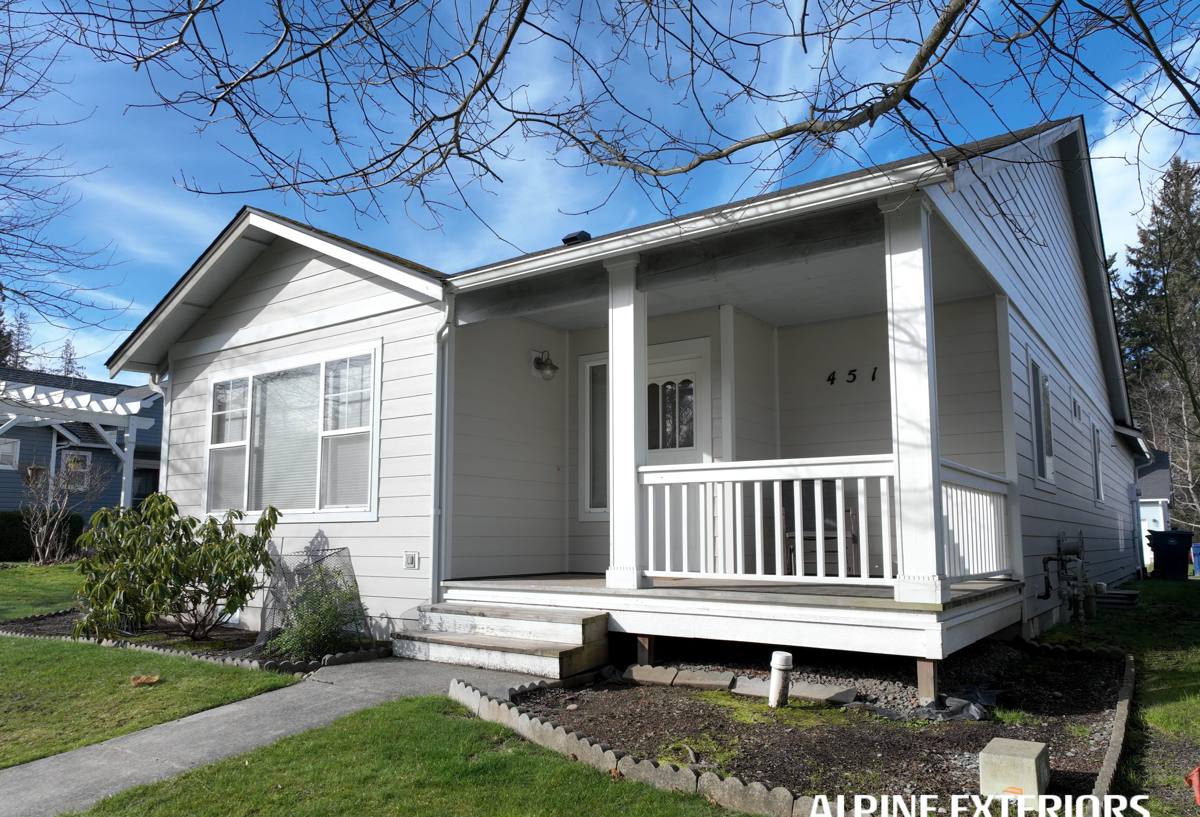
What Actually Goes Into a Correct New Roof Installation
"New roof" covers a lot of ground, and the difference between a roof that lasts and one that fails early almost always comes down to what happens underneath the shingles or panels, not the shingles themselves.
Tear-Off and Deck Inspection
A full tear-off to bare deck is the only way to actually see what's going on structurally. In a coastal, moisture-heavy area like Birch Bay, it's common to find soft or delaminated plywood around old vent boots, valleys, and eaves — spots where trapped moisture has been working on the wood for years, sometimes without any visible sign from inside the attic. Any damaged decking gets replaced before anything else goes down. Skipping this step to save time is one of the most common shortcuts that leads to a roof failing well before its expected lifespan.
Underlayment, Ice-and-Water Barrier, and Flashing
Given how much wind-driven rain this area sees, we treat the underlayment layer as more than a formality. A synthetic underlayment rated for high wind exposure, self-adhered ice-and-water membrane at eaves, valleys, and around penetrations, and properly lapped, corrosion-resistant flashing at every wall intersection, chimney, and skylight are non-negotiable on a Birch Bay roof. This is where water actually gets stopped when wind pushes rain uphill under the field material — the visible roofing is really the second line of defense, not the first.
Ventilation
A roof that can't breathe traps moisture in the attic, and trapped moisture feeds moss, rot, and mildew from the inside out. Balanced intake and exhaust ventilation — soffit vents working with a ridge vent or equivalent — keeps attic temperature and humidity closer to outdoor conditions, which reduces condensation on the underside of the deck and slows how fast moss and algae can establish themselves on the surface above.
Choosing a Roofing Material for a Coastal Whatcom County Home
There's no single "best" roofing material for Birch Bay — there's a best fit for a given home's exposure, budget, and how much upkeep the owner wants to take on. Here's how the common options compare against salt air, wind-driven rain, and moss:
| Material | Salt Air / Corrosion | Wind-Driven Rain | Moss Resistance | Typical Upkeep |
|---|---|---|---|---|
| Architectural asphalt shingle | Good with corrosion-resistant flashing and fasteners | Good when properly sealed and fastened | Moderate — benefits from algae-resistant granules | Periodic moss treatment and gutter clearing |
| Standing seam metal | Excellent with a marine-grade coated panel | Excellent — sheds wind-driven rain well | Good — hard surface sheds debris | Low; occasional fastener/seam check |
| Composite / synthetic shake | Good, depends on fastener spec | Good | Moderate to good depending on product | Low to moderate |
| Cedar shake | Fair — needs diligent maintenance near salt air | Fair — more seams and edges to seal | Poor without regular treatment | High; regular treatment and inspection |
For most Birch Bay homes we steer owners toward architectural asphalt with a coastal-rated flashing package, or standing seam metal for waterfront properties that want to minimize long-term maintenance. Cedar shake can still work, but we're upfront that it demands a level of ongoing care that a lot of owners underestimate once salt air and moss season are part of the equation — that's a maintenance conversation, not a knock on the material itself.
Our Process From First Call to Final Walkthrough
Inspection and Estimate
We start on the roof and in the attic, not just with a drive-by look from the ground. That means checking deck condition where accessible, current ventilation, flashing detail, and how the existing roof has actually held up against the site's specific wind and moisture exposure. The estimate reflects what we find, in writing, with the material and labor broken out so you know what you're paying for.
Scheduling Around Coastal Weather
Western Washington's wet season narrows the practical installation window, and a waterfront site narrows it further. We plan tear-off and dry-in around forecasted weather so a section of open deck is never left exposed overnight longer than necessary, and we sequence work to keep the home protected if conditions shift mid-project.
Installation Day(s)
Tear-off, deck repair as needed, underlayment and ice-and-water membrane, flashing, then field material — installed in that order, to spec, with fastening patterns matched to the wind exposure of the specific lot. Waterfront and open-exposure homes get closer nail/screw spacing and heavier-duty fasteners than a sheltered inland install would need.
Cleanup and Final Walkthrough
Magnetic sweep for stray fasteners, full site cleanup, and a walkthrough where we show you the completed work — ventilation, flashing points, and anything else worth understanding about how your new roof is built — before we consider the job done.
What Drives the Cost of a New Roof in Birch Bay
Every roof is priced on its own specifics, but the same handful of factors move the number up or down on nearly every job we quote in this area:
- Roof size and number of facets, valleys, and penetrations (more cuts and flashing points mean more labor)
- Pitch and accessibility — steeper or harder-to-stage roofs take longer and require more safety setup
- Number of existing layers to tear off and haul away
- Extent of deck repair once old material is removed
- Material choice — asphalt shingle, metal, and composite carry different material and labor costs
- Ventilation upgrades needed to bring an older attic system up to current standards
- Flashing and underlayment package — a coastal-rated spec costs more upfront than the minimum
Generally, a straightforward architectural shingle replacement on a modest single-story home sits at the lower end of the market range, while standing seam metal, steep or complex rooflines, and significant deck repair push the number higher. We'll always walk through where your quote lands and why before you sign anything.
Permits and Whatcom County Requirements
A full roof replacement typically requires a permit in Whatcom County, and inspection requirements can vary depending on the scope of work and whether the property is inside city limits or in the unincorporated area around Birch Bay. We handle the permitting process as part of the job rather than leaving it for the homeowner to sort out, and we build inspection timing into the schedule so it doesn't create unnecessary delays.
Why a Crew That Already Works Birch Bay Makes a Difference
A roofer who mainly works drier, more sheltered inland neighborhoods and only occasionally takes a coastal job tends to default to standard specs — because standard specs are what they're used to. A crew that regularly works Birch Bay and the surrounding Whatcom County coastline already knows to upgrade flashing and fastening for salt exposure without being asked, already plans around the area's weather windows, and already understands how moss establishes itself differently on a shaded, humid, near-water lot than it does further inland. That familiarity shows up in fewer callbacks and a roof that's actually built for the conditions it has to survive, not just the conditions a generic spec sheet assumes.
Keeping a New Roof Performing After Install
A correctly installed roof still benefits from basic upkeep, especially in a moss-prone, salt-air environment. Keeping gutters clear so water doesn't back up under the eaves, having moss growth treated before it gets established rather than after, and doing a visual check after major windstorms for lifted shingles or displaced flashing will do more for a roof's lifespan here than almost anything else an owner can control after installation.
If you're weighing a roof replacement on a Birch Bay property, we're happy to take a look and give you a straightforward, no-pressure estimate — use the form below to get started.