 Bellingham
 Why Birchwood Roofs Age Differently Than Roofs Inland
Birchwood sits close enough to Bellingham Bay and the surrounding wetlands that homes here deal with a specific combination of weather stress most roofing crews from outside the area don't think about until it's already caused a problem. Salt-tinged air moving off the water accelerates corrosion on exposed metal — fasteners, flashing, vent caps, gutter hardware — years before it would fail in a drier inland climate. Add Whatcom County's long, wet winters with sustained driving rain, and you've got water finding its way into every gap a roof system leaves open. Then there's moss season, which in this part of Washington isn't really a season at all — it's most of the year. Shade from mature trees, high humidity, and consistent moisture give moss and algae everything they need to take hold on north-facing slopes and anywhere debris collects.
None of this means Birchwood needs an exotic roofing system. It means the standard installation has to be done with more attention to the details that keep water out and moisture moving — underlayment choice, flashing at every transition, and ventilation that actually works instead of just meeting a minimum code requirement.
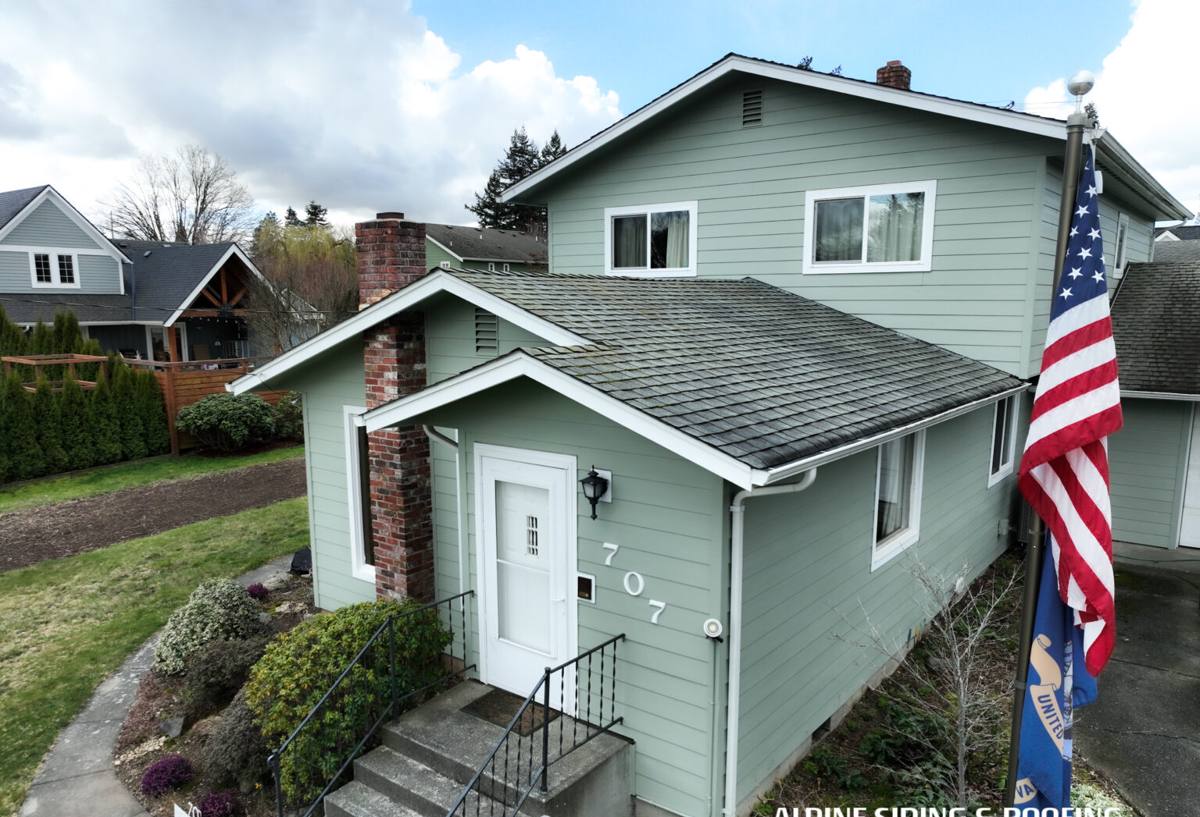
Signs a Birchwood Home Is Due for a New Roof
Most homeowners call us after noticing one of a handful of warning signs, not because they've been tracking their roof's age on a calendar. Here's what tends to show up first on homes in this area:
- Shingles that are cupping, curling at the edges, or losing granules into the gutters
- Dark streaking or thick moss growth on shaded slopes, especially north- and northeast-facing sections
- Soft or spongy decking felt underfoot in the attic, or daylight visible through the roof boards
- Rusted or corroded flashing around chimneys, skylights, and vent pipes
- Granule buildup at downspouts and consistently damp or musty attic air
- Ceiling stains that appear after heavy rain, even if they dry out between storms
A roof showing two or three of these signs at once usually isn't a candidate for another round of patch repairs — it's telling you the underlying system, not just the surface, has started to fail.
What a Correct Roof Installation Actually Involves
A new roof is more than laying down new shingles over what's there. Done right, it's a full system, and each layer has a specific job to do against Bellingham's rain and moisture load.
Tear-Off and Deck Inspection
We remove the existing roofing down to the decking so we can actually see what's underneath. Any wood that's soft, delaminated, or water-stained gets replaced before anything new goes down — covering damaged decking with new shingles just hides a problem that will resurface as a leak or a sag.
Underlayment and Moisture Protection
In a climate with as much sustained rainfall as Whatcom County sees, underlayment matters as much as the shingle itself. We use a synthetic underlayment as the primary water-resistive layer, with self-adhered ice-and-water membrane at vulnerable points — eaves, valleys, and around every roof penetration — where wind-driven rain is most likely to work its way underneath the shingle field.
Flashing at Every Transition
Chimneys, skylights, vent pipes, and any place a wall meets a roofline are where leaks actually start, far more often than the open field of shingles. Proper step flashing, counter-flashing, and pipe boots — installed correctly rather than just caulked over — are what keep driving rain from finding a way in around these transitions.
Ventilation That Works
Balanced intake and exhaust ventilation keeps attic moisture moving instead of condensing on the underside of the decking. In a humid coastal climate, poor ventilation shortens the life of a roof from the inside out and contributes to the kind of trapped moisture that feeds mold and rot, not just moss on the surface.
Comparing Roofing Materials for a Birchwood Home
Most homes in this neighborhood are good candidates for either architectural asphalt shingles or metal roofing. The right choice depends on your home's exposure, roof pitch, budget, and how much long-term maintenance you want to take on.
| Material | Typical Lifespan | Moss/Algae Resistance | Salt Air Durability | Relative Cost |
|---|---|---|---|---|
| Architectural Asphalt Shingle | 25–30 years | Moderate (better with algae-resistant granules) | Good with properly rated fasteners and flashing | Moderate |
| Standing Seam Metal | 40–50+ years | Strong — sheds moss and debris well | Very good with coastal-rated coatings and fasteners | Higher upfront |
| Cedar Shake | 20–30 years with upkeep | Requires regular treatment and cleaning | Sensitive to prolonged moisture exposure | Higher |
| 3-Tab Asphalt Shingle | 15–20 years | Lower — less resistant to moss buildup | Adequate, shorter service life overall | Lowest |
We don't push one material on every home. A steep, well-shaded roof under mature trees is a different situation than an open, wind-exposed roofline closer to the water, and we'll walk through what makes sense for your specific roof rather than a one-size answer.
Our Installation Process
- On-site assessment — we inspect the existing roof, decking, ventilation, and flashing details, and take measurements for an accurate estimate.
- Written proposal — a clear scope of work, material selection, and price, with no vague allowances or surprise add-ons hidden in the fine print.
- Permitting and scheduling — we handle the local permit process and plan the job around a stretch of weather that gives us a realistic dry window.
- Tear-off and deck repair — old roofing removed, decking inspected and repaired as needed before anything new is installed.
- Underlayment, flashing, and roofing installation — installed in the sequence that actually sheds water correctly, not just in whatever order is fastest.
- Cleanup and final walkthrough — magnetic sweep for nails, debris haul-away, and a walkthrough so you can see the finished work before we consider the job done.
Moss, Algae, and Salt Air: What Happens After Installation
A correctly installed roof still lives in Birchwood's climate, so it still needs some basic upkeep to reach its full lifespan. Keeping gutters and valleys clear of needles and leaf debris prevents standing water from sitting against the shingle edge. Trimming back overhanging branches reduces the shade and debris that feed moss growth on north-facing slopes. We also recommend periodic gentle roof cleaning — never high-pressure washing, which strips granules and shortens shingle life — to keep moss and algae from establishing a foothold in the first place. None of this is complicated, but it's the difference between a roof that reaches its full rated lifespan and one that starts showing problems a decade early.
Why Hiring a Crew That Already Works Birchwood Matters
A roofing crew that regularly works in this part of Whatcom County already knows things that take an outside contractor a callback or two to learn: which slopes in the neighborhood hold moss the longest, how local tree cover affects drainage and debris buildup, and what the City of Bellingham's permitting and inspection process actually requires before, during, and after a tear-off. That local familiarity shows up in fewer surprises during the job and a roof system that's specified correctly the first time — not one that gets "upgraded" with a callback six months later once a weak point shows itself in the rain.
Cost Factors to Understand Before You Get a Quote
Roofing quotes vary for real reasons, not just markup. Before comparing bids, it helps to know what actually drives the price on a project like this:
- Roof size and pitch — steeper roofs take longer and require more safety equipment and labor
- Number of layers currently on the roof and whether full tear-off is required
- Condition of the decking underneath — hidden rot adds material and labor once discovered
- Complexity of the roofline — valleys, dormers, chimneys, and skylights all add flashing work
- Material selection — architectural shingle, metal, or cedar each carry different material and labor costs
- Ventilation upgrades needed to bring an older attic system up to a functional standard
- Access and staging — trees, fencing, or tight lot lines that affect how equipment and materials move
Any honest quote should walk through these factors specifically for your roof, not just hand you a flat per-square number with no explanation behind it.
Get a Straight Answer on Your Birchwood Roof
If your roof is showing wear, growing moss faster than it used to, or you're just not sure whether repair or replacement makes more sense, we're glad to take a look and give you an honest read — no pressure, no inflated estimate to scare you into a decision. Fill out the form below for a free estimate on your Birchwood roof.