 Bellingham
 Roof Replacement Built for Birchwood's Coastal Climate
Birchwood is a residential neighborhood on Bellingham's north side, close enough to Bellingham Bay and the surrounding waterways that homes here take on a specific kind of weather punishment. It's not the driest exposure in Whatcom County, and it's not the windiest either — it's the combination that wears roofs down: salt-tinged air off the water, long stretches of driving rain, and shaded, tree-lined lots that keep roof surfaces damp well after a storm has passed. A roof that would hold up fine in a drier inland climate can fail early here if it wasn't built with this specific mix of conditions in mind.
When we replace a roof in Birchwood, we're not installing a generic system and hoping it holds up. We're building for salt exposure on metal components, for wind-driven rain that pushes water sideways and uphill under shingles, and for moss and moisture that never fully dry out on north-facing slopes. Below is what that actually means in practice — what wears out first, what a correct replacement includes, and how we run the job from estimate to final inspection.
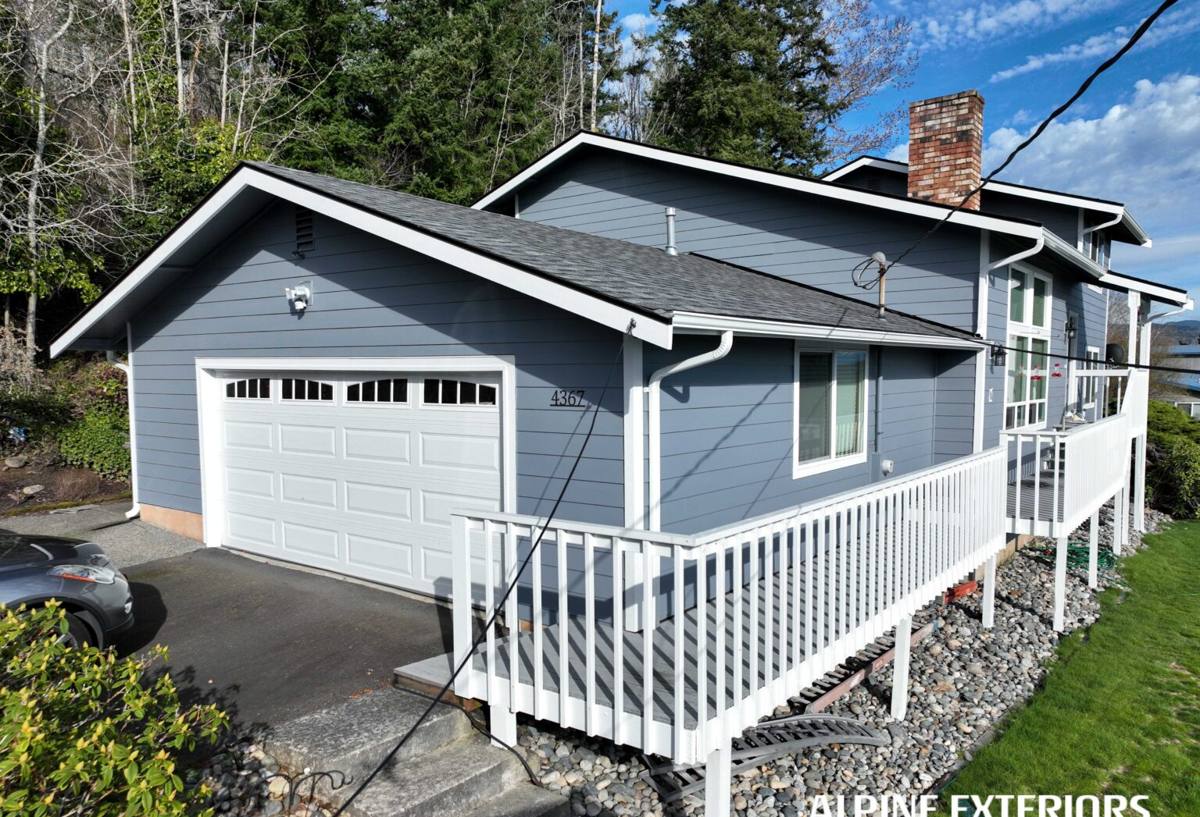
What Birchwood's Weather Does to a Roof
Salt Air and Metal Fasteners
Homes near Bellingham Bay get a steady, low-level dose of salt-laden air carried in on marine winds. It's not as aggressive as a beachfront property, but it's constant, and over years it accelerates corrosion on unprotected or poorly rated metal — nails, flashing, valley metal, and fasteners in particular. A roof built with standard-grade galvanized fasteners in a coastal-influenced neighborhood like Birchwood will often show rust streaking and fastener backout years before a comparable roof further inland. This is one of the most common early-failure points we find on older Birchwood roofs during inspections.
Driving Rain and Wind-Driven Water
Whatcom County storms frequently bring rain sideways, not straight down. On a roof with tight, correctly lapped shingles and properly sealed penetrations, that's not a problem. On a roof with aging or improperly installed underlayment, wind-driven rain finds its way under shingle tabs, around chimney flashing, and through nail penetrations that have lost their seal. It shows up as a slow leak — a stain on a ceiling, a damp smell in an attic — long after the water actually got in.
Moss, Shade, and Slow Roof Death
Birchwood's mature tree cover is part of what makes the neighborhood attractive, but it also means shaded roof slopes that hold moisture far longer than a sun-exposed roof would. Moss doesn't just sit on top of shingles looking bad — its root structure lifts shingle edges, holds water against the roof deck, and accelerates granule loss on asphalt shingles. Left long enough, moss growth can shorten a roof's usable life by years. Whatcom County's long wet season, roughly October through May, gives moss plenty of time to establish itself on shaded and north-facing sections.
Signs a Birchwood Roof Needs Replacing, Not Patching
Not every roof problem calls for a full replacement — but in a climate like this, certain signs mean patching is a short-term fix on a roof that's already past the point of reliable repair. We look for:
- Granule loss heavy enough that shingles look patchy or bald in high-traffic wind and rain areas
- Moss or algae covering more than isolated patches, especially on north-facing slopes
- Curling, cupping, or cracked shingles across multiple sections rather than one localized spot
- Rusted or corroded flashing, valley metal, or exposed fasteners
- Soft or spongy decking felt underfoot during a roof walk, indicating water has reached the sheathing
- Recurring leaks in the same area despite prior patch repairs
- A roof approaching or past the manufacturer's expected service life for its material and this exposure
- Daylight visible through the roof deck from inside the attic
One or two of these on their own might mean a targeted repair is enough. Several together, especially on a roof already 18-20+ years old, usually means the underlying materials are failing broadly, and a replacement will cost less over time than repeated repairs.
What a Correct Roof Replacement Involves
A roof is a system, not a single layer of shingles. Skipping or shortcutting any one component is where premature failures come from, and it's the most common shortfall we find when we tear off an older roof that was replaced by someone else. Here's what we consider non-negotiable on every Birchwood replacement:
| Component | What It Does | Why It Matters Here |
|---|---|---|
| Deck inspection & repair | Confirms the plywood or OSB sheathing underneath is sound before anything new goes on | Prolonged moisture from moss and slow leaks can rot decking that isn't visible until tear-off |
| Ice and water barrier | Self-adhering waterproof membrane at eaves, valleys, and penetrations | Backs up the roof at the exact points wind-driven rain is most likely to force its way under shingles |
| Synthetic underlayment | Water-resistant layer across the full roof deck | A second line of defense if wind or wear compromises the shingle layer above it |
| Balanced ventilation | Intake at the eaves, exhaust at the ridge | Keeps the attic dry and temperature-stable, which slows moss and mildew formation from underneath |
| Corrosion-resistant flashing & fasteners | Metal at valleys, chimneys, walls, and roof-to-roof transitions; coated fasteners | Directly addresses the salt-air corrosion that shortens the life of standard-grade metal near the bay |
| Proper shingle nailing pattern | Correct nail count and placement per manufacturer specification | Under-nailed or misplaced fasteners are a leading cause of wind lift and shingle blow-off in coastal storms |
Tear-Off and Deck Inspection
We remove the old roofing down to bare decking rather than layering over it. That lets us actually see the plywood or OSB underneath, replace any sections softened by long-term moisture, and confirm the deck is fastened and flat before new materials go down. Roofing over a compromised deck just hides a problem that will resurface.
Ventilation Isn't Optional
A roof can be installed perfectly on top and still fail early if the attic underneath is trapping heat and moisture. Balanced intake-and-exhaust ventilation keeps air moving through the attic space, which reduces condensation on the underside of the deck — a factor that matters more in a consistently damp climate like Bellingham's than in drier regions.
Flashing Details Are Where Roofs Actually Leak
Most roof leaks don't happen in the open field of shingles — they happen at transitions: chimneys, skylights, sidewalls, and valleys. We treat flashing detail work as the most important part of the install, not an afterthought, because that's where a rushed job shows up as a leak within a year or two.
Choosing Roofing Materials for a Whatcom County Coastal Neighborhood
There's no single "best" roofing material for every home — it depends on the home's structure, the homeowner's budget, and how much long-term maintenance they want to take on. Here's how the common options stack up for a neighborhood with Birchwood's specific exposure:
| Material | Typical Lifespan Here | Coastal & Moss Considerations |
|---|---|---|
| Architectural asphalt shingle | 20-30 years | Good value; needs quality underlayment and periodic moss treatment on shaded slopes |
| Standing seam metal | 40-50+ years | Sheds moss and moisture well; requires marine-grade or properly coated fasteners and flashing to resist salt corrosion |
| Cedar shake | 20-25 years with upkeep | Traditional look; higher maintenance burden in a consistently damp, shaded climate — moss and moisture retention are a real ongoing commitment |
| Synthetic composite shingle | 30-50 years | Resists moisture and moss better than natural wood; higher upfront cost than asphalt |
For most Birchwood homes, a quality architectural asphalt shingle with proper underlayment and ventilation is the practical middle ground — durable, well-suited to the climate, and reasonably priced. Homeowners planning to stay long-term or wanting to minimize future maintenance often look at metal or synthetic composite instead. We'll walk through the honest trade-offs for your specific roof rather than push whatever has the best margin.
Our Process for a Birchwood Roof Replacement
- On-site inspection. We walk the roof and attic, check for deck damage, moss coverage, flashing condition, and ventilation, and take measurements.
- Written estimate. A clear breakdown of materials, labor, and scope — no vague allowances that turn into surprise change orders.
- Material selection. We go over shingle, metal, or composite options based on your budget, the home's structure, and how much maintenance you want going forward.
- Scheduling around Whatcom County weather. We plan install windows with an eye on the forecast, since a roof mid-tear-off needs dry conditions to go in correctly.
- Tear-off and deck inspection. Full removal of old materials, with any damaged decking replaced before moving forward.
- Underlayment, flashing, and ventilation install. Every layer of the system goes in to specification, not just the visible shingle layer.
- Final walkthrough. We review the completed roof with you, including any warranty documentation for the materials installed.
Why a Crew That Already Works Birchwood Matters
A roofing crew that regularly works in Birchwood and the surrounding Bellingham neighborhoods already knows what to expect before the tear-off starts: which slopes are going to have moss buildup from shade exposure, where salt-air corrosion typically hits metal components first, and how the local mix of driving rain and wind shows up in flashing and valley failures. That familiarity shortens the inspection process, avoids underestimating material needs, and means the crew isn't guessing at what this specific climate does to a roof over time — they've already seen it on the house down the street.
It also matters for scheduling and permitting. Local crews know the practical realities of getting roofing work done in Whatcom County's wet season and plan installs accordingly, rather than treating every job like it's happening in a dry, predictable climate.
Cost Factors for Roof Replacement in Birchwood
Every roof is different, so we don't publish flat pricing — but the main variables that move a Birchwood roof replacement estimate up or down are consistent:
| Factor | Why It Affects Cost |
|---|---|
| Roof size and pitch | More square footage and steeper slopes mean more material and labor time |
| Existing layers of roofing | Removing multiple old layers takes more labor than a single-layer tear-off |
| Deck condition | Rotted or soft sheathing found during tear-off needs replacement before new roofing goes on |
| Material choice | Asphalt, metal, and composite materials carry different upfront costs and lifespans |
| Number of penetrations | Chimneys, skylights, and vents each require additional flashing work |
| Ventilation upgrades | Adding or correcting intake and exhaust ventilation adds labor but improves long-term performance |
The only way to get an accurate number is a physical inspection — we'll give you a real range on-site rather than a rough guess over the phone.
After the Roof Goes On: Keeping Moss and Moisture in Check
A correctly installed roof still benefits from basic upkeep in a climate like this. Keeping gutters clear so water isn't backing up under the eaves, trimming back tree limbs that shade and drop debris onto the roof surface, and having moss treated or gently removed before it establishes a foothold all extend the life of a new roof significantly. We can walk you through a simple maintenance schedule that fits your specific roof and lot when the job is finished.
If your Birchwood roof is showing its age, or you just want an honest read on how much life it has left, we're happy to take a look. Reach out for a free, no-pressure estimate — the form below gets you started.