 Bellingham
 Why Siding Repair Looks Different in Birchwood
Birchwood sits close enough to Bellingham Bay and the surrounding wetlands that homes here deal with a specific combination of stresses most inland neighborhoods don't: salt-laden air moving in off the water, long stretches of driving rain through fall and winter, and a moss season that can run six months or more in shaded, north-facing yards. None of these problems show up overnight. They work on siding slowly, and by the time a homeowner notices a soft spot, a stained panel, or paint that's bubbling near a seam, the damage underneath is usually further along than it looks from the ground.
That's the core difference between a generic siding repair and a repair done right for this part of Whatcom County. A patch that would hold up fine in a dry inland climate can fail here within a season or two if it doesn't account for how water actually moves through this environment. Good repair work in Birchwood starts with understanding that the siding isn't just cosmetic — it's the building's primary defense against a wet, salty, moss-friendly climate that doesn't let up for long.
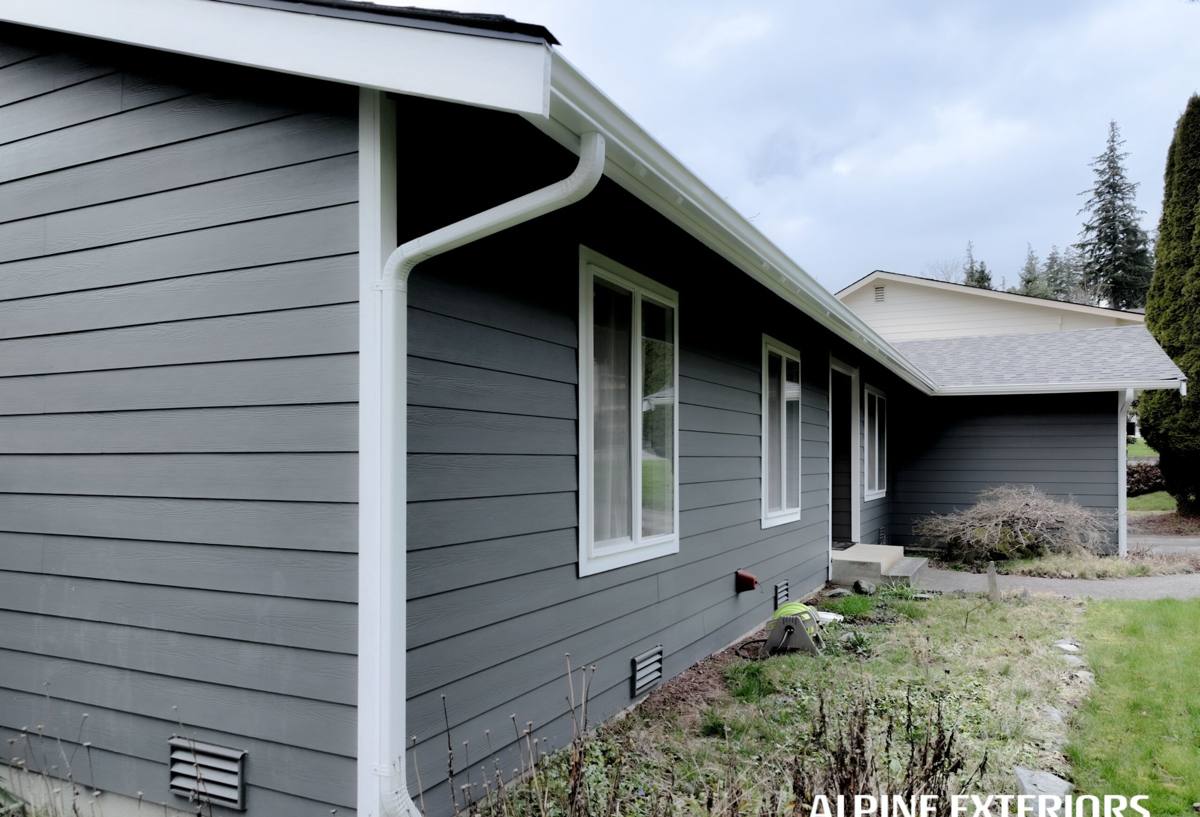
What the Regional Climate Does to Siding Over Time
Salt Air and Metal Fastener Corrosion
Proximity to the bay means airborne salt settles on exterior surfaces and, more importantly, on the fasteners and flashing behind them. Corroding nails and staples lose their grip on siding panels, which is why you sometimes see boards that have started to bow, gap, or pull away slightly at the edges even though the panel material itself looks fine. Once fasteners fail, water gets behind the siding and the real damage begins.
Driving Rain and Wind-Driven Moisture
Bellingham's rain doesn't just fall straight down — winter storms push it sideways, forcing water into seams, butt joints, and anywhere caulking has shrunk or cracked. Over years, this wind-driven moisture finds every weak point in a siding system: gaps around trim, under-flashed window heads, and corners where the original installation cut corners on sealant.
Moss, Algae, and Prolonged Dampness
Shaded exposures and roof lines that shed water onto lower wall sections stay damp far longer than they should, giving moss and algae a foothold. Moss holds moisture directly against the siding surface, which accelerates rot in wood-based products and can stain or degrade paint finishes on any material if left unaddressed. A short moss season is a minor cosmetic issue; a long one, like what Birchwood typically sees, becomes a moisture-management problem.
Common Repair Issues We See on Birchwood Homes
Every home is different, but a handful of problems show up repeatedly in this neighborhood. The table below breaks down what we typically find, what's usually causing it, and what a correct repair addresses.
| Issue | Typical Cause | What a Proper Repair Fixes |
|---|---|---|
| Soft or spongy panels near the ground | Splash-back moisture, poor grade slope, or failed caulking at the base | Removes and replaces damaged material, corrects the moisture path, reseals properly |
| Bubbling or peeling paint at seams | Water intrusion behind the panel, often from failed caulk or flashing | Identifies the entry point, repairs the substrate, restores the seal |
| Persistent moss or dark staining | Shaded, slow-drying wall sections with limited airflow | Cleans and treats the surface, addresses drainage or clearance issues causing it |
| Gapped or bowed boards | Corroded or failing fasteners losing grip on the panel | Re-fastens with corrosion-resistant hardware rated for coastal exposure |
| Cracked or chipped panel corners | Impact damage or freeze-thaw stress on compromised material | Replaces the section with matching material and finish |
What a Correct Repair Actually Involves
A siding repair that's done right is never just "patch the visible spot and move on." It starts with figuring out why the damage happened in the first place — because if the underlying cause isn't addressed, the same failure comes back in the same spot within a year or two. That means checking the house wrap or weather barrier behind the siding, inspecting flashing at windows, doors, and roof lines, and confirming that fasteners and clearances meet code before anything new goes back up.
It also means matching materials correctly. Fiber cement, in particular, needs to be repaired with fiber cement — mixing product types at a repair seam creates a mismatch in how the materials expand, contract, and weather over time, which shows up as visible lines or uneven aging within a few years.
Repair or Replace? What Actually Drives the Decision
Not every damaged section needs a full re-side, and not every issue can be solved with a patch. The honest answer usually comes down to how much of the wall is affected and what's happening underneath the surface.
| Factor | Leans Toward Repair | Leans Toward Replacement |
|---|---|---|
| Extent of damage | Isolated panels or a single wall section | Damage spread across multiple elevations |
| Underlying moisture | Localized, source identified and fixable | Widespread rot in sheathing or framing |
| Age of existing siding | Newer material, still within its expected service life | Original siding is decades old and failing broadly |
| Material match | Matching product still available | Discontinued color or profile, matching not realistic |
We'll always tell you honestly which side of that line your home falls on. A repair that's going to need redoing in three years isn't a good use of anyone's money, and we'd rather say so upfront than sell a patch that won't hold.
Our Repair Process
- On-site inspection. We look past the visible damage to check flashing, fasteners, and the moisture barrier behind the siding.
- Honest assessment. You get a clear explanation of what's causing the damage and whether repair or partial replacement makes more sense.
- Root-cause correction. Before any new siding goes up, we fix what let water in — that might mean re-flashing a window or correcting a drainage gap.
- Material-matched repair. We replace damaged sections with fiber cement matched in profile and finish, not a mismatched substitute.
- Proper sealing and fastening. Corrosion-resistant fasteners and correctly detailed sealant joints, built for this climate rather than a generic install.
- Final walkthrough. We show you the completed work and explain what, if anything, to keep an eye on going forward.
Why We Repair With James Hardie Fiber Cement
We install and repair exclusively with James Hardie fiber cement siding, and that standard applies to repairs just as much as full installations. Fiber cement doesn't rot, doesn't feed moss the way untreated wood can, and holds up to sustained coastal moisture far better than materials that rely on caulk and paint alone to stay watertight. Hardie's HZ5 product line is specifically engineered for wetter, harsher climates like ours, which matters when a repair needs to actually outlast the conditions that caused the original damage.
The ColorPlus factory finish is also a practical advantage for repair work. Because it's baked on at the factory rather than field-applied, a matched replacement panel weathers at the same rate as the surrounding siding — no visible seam where old paint and new paint age differently. That's a detail that matters more on a repair, where blending into existing siding is the whole point, than it does on a full re-side where everything starts fresh together.
We don't repair with vinyl, LP SmartSide, Cemplank, Allura, or bare wood siding, even when a homeowner already has one of those products on their home. If your existing siding is a different material, we'll tell you honestly what your realistic repair options are and where Hardie fits into that conversation — sometimes that means a targeted repair in the existing material, and sometimes it means recommending a broader conversation about replacement.
Why It Matters to Hire a Crew That Already Works This Neighborhood
Siding repair is detail work, and the details that matter in Birchwood aren't identical to the details that matter across town or in a different part of Whatcom County. A crew that regularly works this neighborhood already knows which exposures take the worst wind-driven rain, which shaded lots need extra attention to moss and drying time, and how salt air affects fastener choice over a 10- or 20-year horizon. That local pattern recognition shows up in fewer callbacks and repairs that actually hold.
It also means faster, more accurate estimates. When we've already seen the failure patterns common to this area, we can diagnose the cause of damage on-site rather than guessing, which keeps the repair scoped correctly the first time.
Simple Maintenance Steps That Extend a Repair's Life
A well-done repair still benefits from basic upkeep, especially in a climate like this one. A few habits go a long way:
- Rinse moss and algae off shaded siding sections once or twice a year before buildup sets in
- Keep gutters clear so overflow doesn't run down the wall surface repeatedly
- Trim back vegetation that keeps siding shaded and slow to dry
- Check caulk lines around windows and trim annually for cracking or gaps
- Walk the exterior after major windstorms to catch loosened panels or trim early
If you're noticing soft spots, staining, or gaps in your siding, we're happy to take a look and give you a straight answer about what's going on and what it would take to fix it right. Reach out for a free, no-pressure estimate using the form below.