 Bellingham
 Window Installation in Columbia — Built for This Neighborhood's Weather
Columbia is one of the older, established pockets of Bellingham, and homes here carry the same story as a lot of Whatcom County housing stock: original or aging windows that were fine for their era but were never built for the moisture load our climate delivers year after year. Salt air off the bay, long stretches of driving rain, and a moss season that seems to start earlier every year all work on a window's weakest points — the frame corners, the sill, and wherever caulk or flashing has started to give up. We install windows for homes in Columbia on a regular basis, and the failures we see are consistent enough that we can usually tell what's wrong before we finish the walk-around.
This page is specifically about window installation for Columbia homeowners — not a general overview of windows everywhere. If you're trying to figure out whether it's time to replace, what a correct installation actually involves, and why local experience matters more than most people assume, this is written for that.
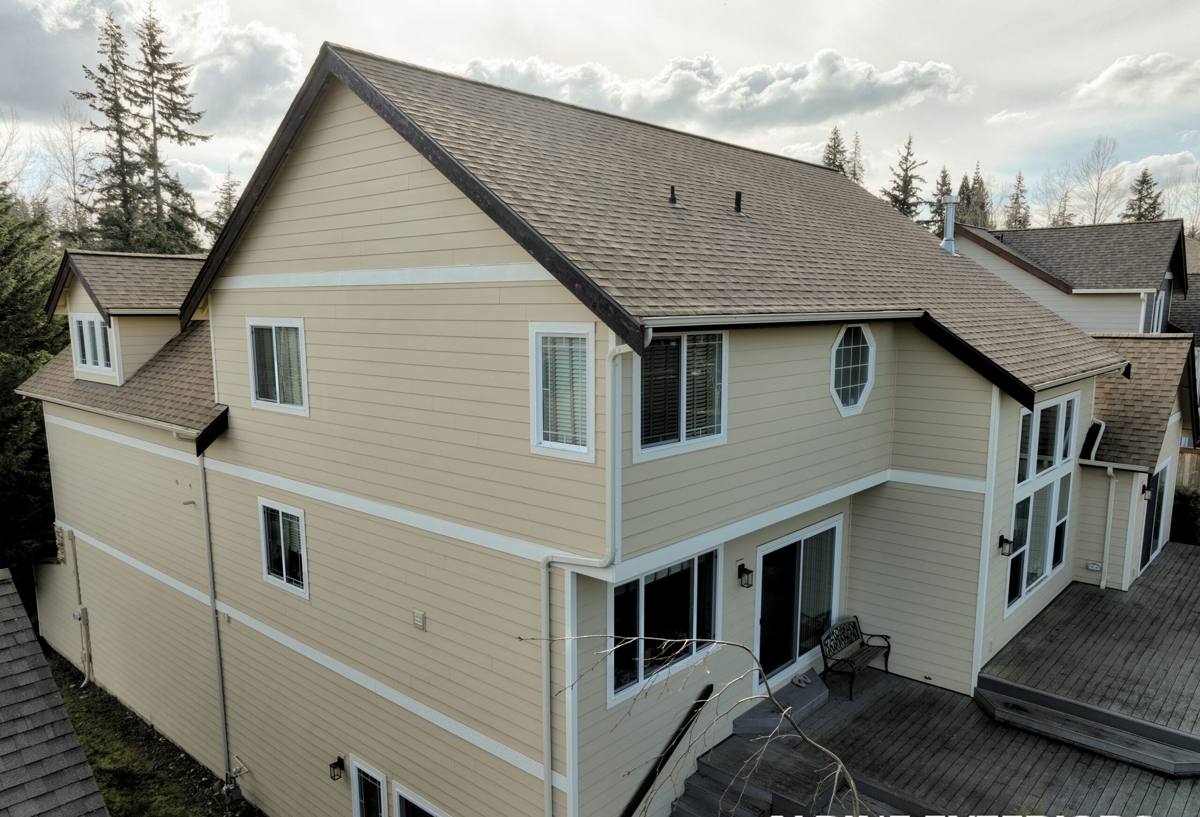
What Bellingham's Climate Does to Windows Over Time
Whatcom County sits in a spot where three things stack on top of each other: near-constant humidity, salt-laden air moving in off Bellingham Bay, and a wet season that can run from fall through spring with only short breaks. None of that is dramatic on any single day, but windows fail from cumulative exposure, not one big storm.
The three things we watch for
- Frame and sill rot — wood-framed and clad-wood windows take on moisture at the sill first, especially where old caulk has cracked or pulled away.
- Seal failure in double-pane units — you'll see this as fogging or a permanent haze between the panes. Once the seal is gone, no amount of cleaning fixes it.
- Moss and organic buildup in tracks and weep holes — this sounds minor but it blocks drainage paths, which means water sits against the frame instead of draining out, which accelerates everything above.
None of these show up overnight. They show up after several wet seasons of a window doing exactly what it was designed to do, just slowly losing ground to moisture it wasn't built to handle indefinitely.
Signs a Columbia Home Needs New Windows
Most homeowners come to us after noticing one or two of these, not because they went looking for problems:
- Visible fog or moisture trapped between panes
- Drafts you can feel near the frame, especially during wind-driven rain
- Wood that's soft, discolored, or spongy at the sill or lower corners
- Windows that are hard to open, close, or lock — frames shift as wood swells and dries repeatedly
- Visible gaps in caulk or trim that weren't there a few years ago
- Noticeably higher heating bills without another explanation
- Moss or dark staining building up in the tracks or on the sill
Any one of these on its own might not mean full replacement. Several together, or one that's clearly gotten worse over a season or two, usually does.
What a Correct Window Installation Actually Involves
Window installation gets treated like a simple swap — pull the old one, drop in the new one — and that's exactly how a lot of failures start. In a climate like ours, the installation details matter as much as the window itself.
Our process
- Assessment — we check the existing frame, sheathing, and sill for hidden rot or moisture damage before we quote anything. Sometimes what looks like a window problem is actually a framing problem.
- Product selection — we walk through options that fit the home's age, style, and your budget, being honest about trade-offs instead of just upselling the most expensive line.
- Removal — old units come out carefully to avoid damaging siding, trim, or sheathing that's staying in place.
- Flashing and moisture barrier work — this is the step that gets skipped by rushed installers and is the single biggest predictor of whether a window lasts 10 years or 30. Proper flashing tape and a correctly lapped moisture barrier route water away from the frame instead of behind it.
- Setting and shimming — the window has to be level, plumb, and square, with even reveal all around. An out-of-square window binds, seals poorly, and stresses the frame every time it's opened.
- Insulation and sealing — gaps get filled with low-expansion foam or backer rod and sealant, not just caulk smeared over the trim.
- Exterior trim and finish — trim gets reset or replaced and caulked at every joint that faces weather.
- Final check — every window gets tested for smooth operation and a tight seal before we call the job done.
Skip the flashing step, or rush the shimming, and you can install the best window on the market and still have a leak in five years. This is why we treat installation quality as equal to product quality, not secondary to it.
Window Types and How They Hold Up Locally
We install a range of window types and materials. Here's how the common options actually perform in Whatcom County conditions, in plain terms:
| Type/Material | How it performs here | Trade-offs |
|---|---|---|
| Vinyl | Handles moisture well, low maintenance, good value | Fewer color/finish options; can look less authentic on older homes |
| Fiberglass | Very stable in wet/humid swings, holds up long-term | Higher upfront cost than vinyl |
| Aluminum-clad wood | Good look for older or character homes, real wood interior | Needs correct flashing and sealing detail — installation quality matters more than with vinyl |
| Solid wood | Traditional look, repairable | Highest maintenance burden in our climate; requires regular repainting/sealing to avoid the rot issues described above |
| Double vs. triple pane | Triple pane adds insulation value and sound dampening | Higher cost; double pane is often adequate depending on the home's exposure |
We don't push one material as universally "best" — it depends on your home's age, exposure to weather (a wall facing prevailing wind and rain wears differently than a sheltered one), and how much maintenance you want to take on. We'll walk through this honestly during the estimate rather than steering you toward whatever has the highest margin.
Why a Crew That Already Works in Columbia Makes a Difference
Window installation quality comes down to details that don't show up in a brochure — how a crew handles flashing sequencing, how they treat an already-marginal sill, whether they take the time to check for hidden rot before closing everything up. A crew that regularly works Columbia and similar Bellingham neighborhoods has already seen the common failure patterns in homes of this age and construction type, which means fewer surprises mid-job and fewer callbacks after the first hard rain.
There's also a practical side: we're not driving in from out of the area, so scheduling, follow-up, and any warranty work are straightforward. If something needs a second look after the first wet season, we're a short trip away, not a phone number in another county.
What to Check Before You Hire Anyone
Whoever you choose for window work, this is worth confirming before you sign anything:
- They inspect the existing frame and sheathing before quoting, not just the window itself
- They can explain their flashing and moisture-barrier approach in plain language
- The quote breaks down product cost separate from labor
- They carry proper licensing and insurance for exterior work in Washington
- They're willing to talk through material trade-offs instead of pushing one option
- They give a realistic timeline, including weather-dependent scheduling
If a contractor can't answer basic questions about how they handle moisture barrier and flashing, that's worth pausing on — it's the step most responsible for whether a window installation lasts or fails early.
Cost Factors Worth Understanding Upfront
Every home and job is different, so we won't put a specific number here that wouldn't apply to your project — but the main factors that move the price are worth knowing before you start comparing quotes:
- Number of windows and their size — larger or specialty-shaped windows cost more per unit
- Material choice — vinyl, fiberglass, and clad-wood sit at different price points, as shown above
- Condition of the existing frame — hidden rot found during removal adds repair work before the new window goes in
- Access and second-story work — upper-level windows or tight access can add labor time
- Trim and finish work — matching existing trim profiles or repainting adds to the scope
We give you a real number after we've actually looked at the windows in question, not a rough estimate over the phone that changes once we're on site.
Get a Straight Answer on Your Windows
If you're in Columbia and dealing with drafts, fogged panes, or windows that just aren't holding up to another Bellingham winter, we're glad to come take a look. We'll give you an honest read on what's actually needed — sometimes that's full replacement, sometimes it's less than you'd expect — and a clear, no-pressure estimate based on what we find at your home.