 Bellingham
 Blaine sits right on Semiahmoo Bay and Drayton Harbor, close enough to the water that windows here take a different kind of beating than windows twenty miles inland. Salt-laden air corrodes hardware faster, wind-driven rain off the water finds gaps that would never leak in a sheltered location, and Whatcom County's long moss season keeps everything around the house damp for months at a time. Window installation in Blaine isn't just a product swap — it's a water-management job first and a product installation second.
What Blaine's Coastal Climate Does to Windows
Older aluminum-frame and single-pane windows in Blaine homes often show their age faster than similar windows elsewhere in Whatcom County. Salt air accelerates corrosion on hinges, cranks, and locking hardware, even on frames that otherwise look fine. Wind off the bay pushes rain sideways into wall assemblies, which means the flashing and sealant details around a window matter more here than in a climate with straight-down rain. And the region's extended wet season — moss growing on siding and trim well into late spring — keeps moisture in contact with window perimeters longer each year, which speeds up wood rot at sills and rough openings if the original install wasn't sealed correctly.
None of this means windows in Blaine need to be replaced more often on a fixed schedule. It means the installation details that get skipped in milder climates — proper sill pan flashing, corrosion-resistant fasteners, correctly lapped weather-resistant barrier — actually get tested here, sometimes within the first year or two.
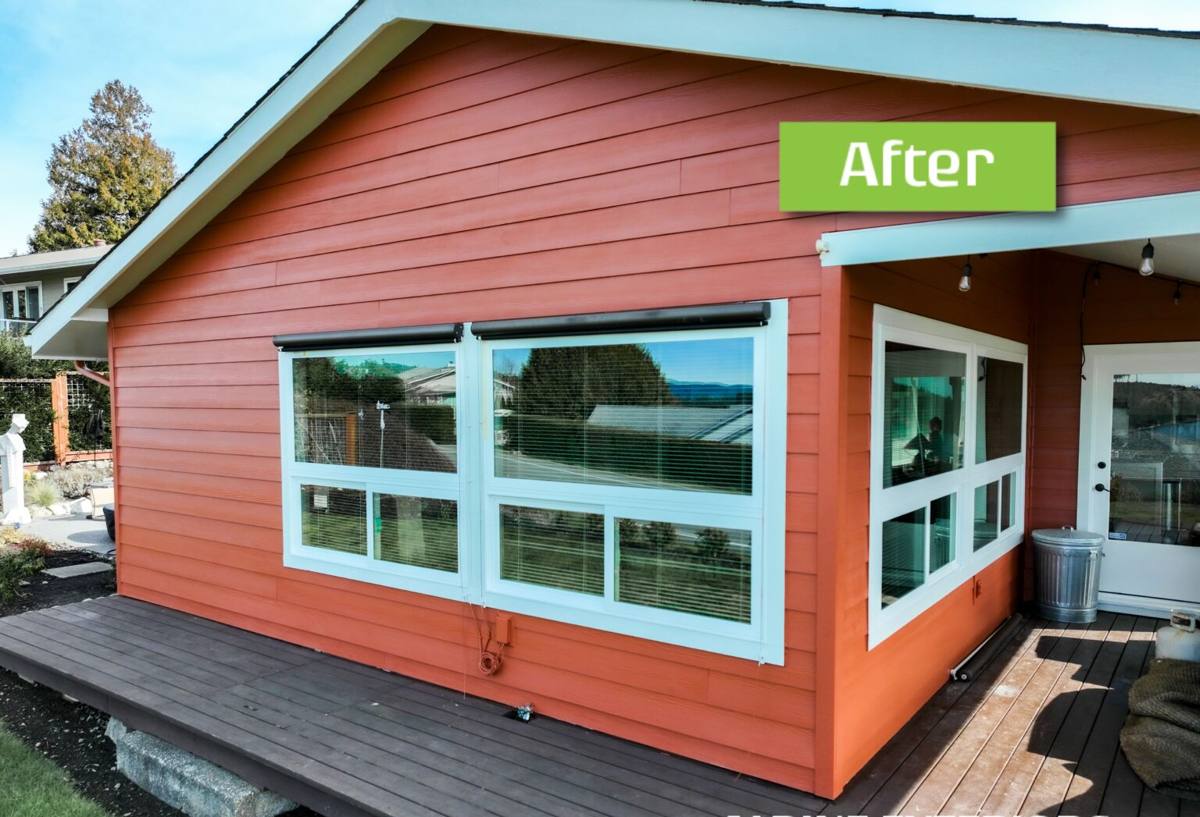
Signs Your Windows Are Losing the Battle
Most homeowners don't replace windows because they woke up and decided to. They replace them because the windows started telling them something. In Blaine, watch for:
- Fogging or a milky haze between the panes of a double-pane window — the seal has failed and the gas fill is gone
- Sashes that stick, drag, or won't stay up without a prop
- A draft you can feel with your hand near the frame on a windy day
- Soft or discolored wood at the sill or the bottom corners of the frame
- Locks, cranks, or hinges that are stiff, pitted, or visibly corroded
- Paint that keeps peeling or bubbling around the same window no matter how often it's repainted
- Condensation forming on the inside of the glass regularly during cold, wet weeks
Any one of these is worth a look. Several together usually mean the window — or the flashing behind it — has reached the end of its useful life.
Full-Frame Replacement vs. Insert Replacement
There are two honest ways to replace a window, and the right choice depends on the condition of what's already there, not on which one costs less.
| Approach | What it involves | Best suited for |
|---|---|---|
| Insert (pocket) replacement | New window unit installed inside the existing frame; original frame and exterior trim stay in place | Frames that are still structurally sound, dry, and square — a faster, less invasive option |
| Full-frame replacement | Old window and frame removed down to the rough opening; new flashing, sill pan, and frame installed from scratch | Frames with rot, water damage, or corrosion, or any home where the flashing needs to be corrected, not just covered |
In a coastal town like Blaine, we lean toward recommending full-frame replacement more often than we would inland, simply because so many older openings here have some degree of water damage or outdated flashing hidden behind the trim. Covering that up with an insert window can trap the problem instead of solving it. We'll tell you honestly which category your windows fall into before we recommend either option.
Choosing Materials and Glass for Salt Air and Driving Rain
Frame material matters more near the water. Vinyl frames handle moisture well and don't corrode, which makes them a solid, low-maintenance choice for most Blaine homes. Fiberglass frames cost more but resist expansion and contraction better across the region's damp, mild temperature swings, and hold up well over the long term. Wood-clad windows can look great, but the cladding has to be detailed correctly at every joint — any gap in a coastal environment gives moisture a path to the wood underneath, and that's a maintenance burden we're upfront about before anyone chooses that route.
Hardware is where salt air does the most damage, and it's the detail that gets overlooked most often. We use corrosion-resistant fasteners and hardware rated for coastal exposure rather than standard-grade parts, because the standard parts are what tend to seize up or rust within a few years this close to Semiahmoo Bay.
On glass, most Blaine homes do well with dual-pane, Low-E coated glass with an argon gas fill — it balances energy performance with the region's mild-but-wet climate. Homes with more direct wind exposure off the water, or homeowners who want the extra performance, sometimes step up to triple-pane. We'll walk through the tradeoffs based on which direction your windows face and how exposed the wall is.
The Flashing and Water-Management Details That Actually Matter
The window itself is rarely what fails first — the flashing around it is. In a climate with regular wind-driven rain, water gets pushed at the window from angles that a straight-down-rain installation detail was never built to handle. A correct installation includes:
- A sloped sill pan flashing that directs any water that gets past the window back outside, not into the wall cavity
- Weather-resistant barrier lapped correctly over the flanges, shingle-style, so water sheds downward and outward
- Head flashing above the window that ties into the barrier above it
- Sealant used only where it belongs — sealing the wrong spot can trap water inside the wall instead of keeping it out
This is the part of a window job that doesn't show up in a walkthrough and doesn't get noticed until it fails five or ten years later. It's also the part that separates a window installation that holds up on the coast from one that doesn't.
Our Installation Process
- Assessment. We inspect the existing windows, frames, and visible flashing, and measure each opening.
- Product selection. We go over frame material, glass package, and full-frame vs. insert based on what we found, with straight answers about cost and tradeoffs.
- Careful removal. The old window and any damaged trim or sill material come out, exposing the rough opening.
- Repair and flashing. Any soft wood or damaged sheathing is addressed before anything new goes in, and the sill pan and weather-resistant barrier are installed or corrected.
- Installation. The new window is set, shimmed level and square, and fastened with corrosion-resistant hardware.
- Insulation and sealing. The gap between the frame and rough opening is insulated, and sealant is applied only where it's supposed to go.
- Trim and cleanup. Interior and exterior trim is finished, and the site is cleaned up.
- Walkthrough. We open, close, and lock every new window with you before we call the job done.
Energy Performance and Condensation Control
Blaine's climate doesn't hit the temperature extremes some other parts of the country deal with, but the constant moisture creates its own energy and comfort issues. Poorly sealed old windows let in enough cold, damp air to make heating systems work harder through the long wet season, and single-pane or failed-seal windows are a common cause of interior condensation, which can lead to mold on sills and trim if it goes unaddressed. A properly installed, Low-E dual- or triple-pane window cuts down on both the draft and the condensation, which matters as much for comfort and moisture control in a marine climate as it does for the heating bill.
Permits and Local Considerations
Window replacement in Whatcom County and the City of Blaine can require a permit depending on the scope of the work, particularly for full-frame replacements that involve structural framing or a change in window size. Bedroom windows also have to meet egress requirements if they're being resized. We handle the permitting conversation as part of the job so you're not left figuring out local code requirements on your own.
Why a Crew That Already Works in Blaine Matters
A lot of window problems in this area come from the same handful of causes — corroded hardware from salt air, flashing that wasn't detailed for wind-driven rain, or moisture that sat behind trim through one too many wet seasons. A crew that works Blaine regularly recognizes these patterns quickly instead of treating every job as a first guess. That familiarity also means we know which details matter more on a home three blocks from the water than they would twenty minutes inland, and we bring the right materials and hardware to match.
If your windows are drafty, fogged, sticking, or just old enough that you're wondering, we're happy to take a look and give you a straight assessment — no pressure, no sales script. Reach out for a free estimate using the form below.