 Bellingham
 Deck Replacement in Cordata: What Local Homes Actually Need
Cordata sits in a part of Bellingham where wet weather isn't occasional — it's the baseline. Decks here spend most of the year damp, shaded in places by mature trees and landscaping, and exposed to the salt-tinged air that rolls in off the Salish Sea. A deck built without that reality in mind will look fine for a season or two and then start failing from the inside out: soft framing, lifting fasteners, boards that stay slick with moss well into spring. Replacing a deck in this neighborhood isn't just about swapping old boards for new ones — it's about building something that's actually matched to Whatcom County's climate.
This page is about one job, done right, in one area: full deck replacement for Cordata homeowners. Not a repair. Not a resurfacing. A real, code-correct rebuild.
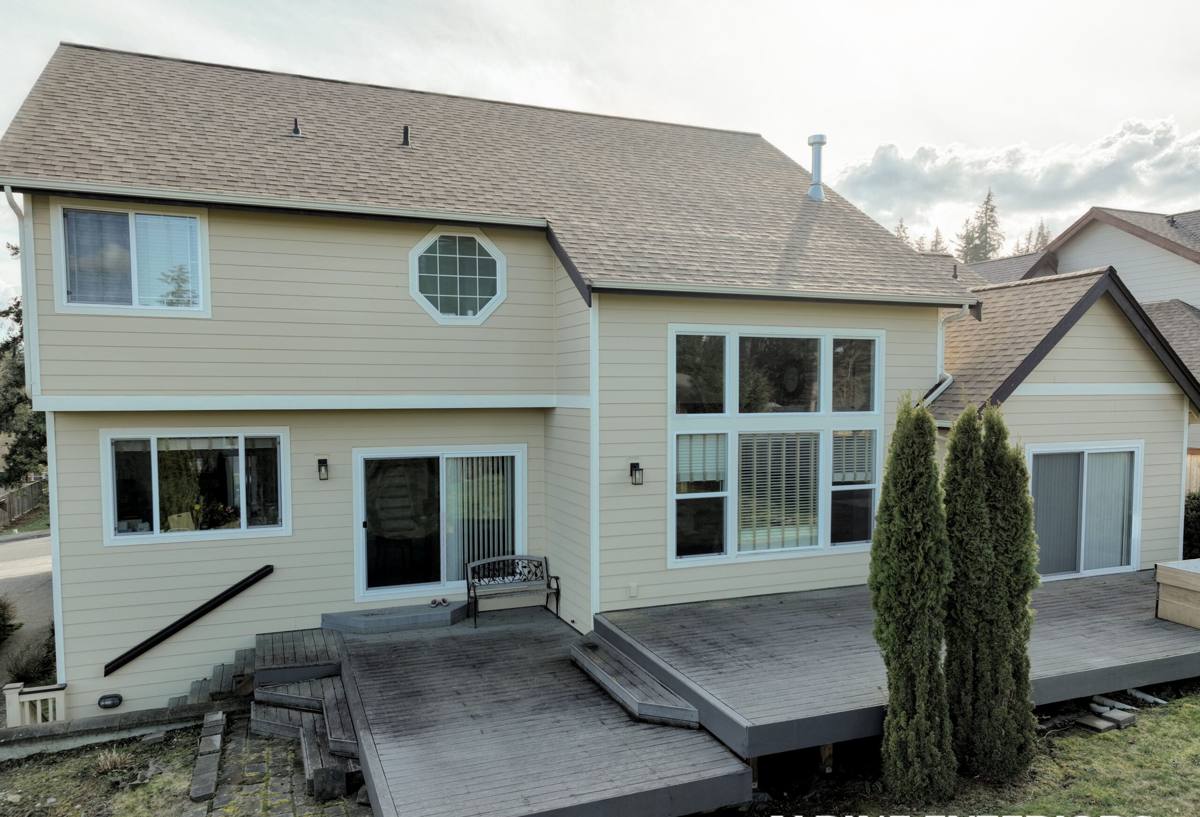
Why Decks Wear Out Faster Here Than the National Average
Most generic deck advice is written for drier climates, and it shows. In Cordata and the rest of Bellingham, three things work against a deck year-round:
Driving Rain
Rain here doesn't just fall straight down — wind off the water pushes it sideways into ledger boards, rim joists, and any horizontal surface that isn't properly flashed. Water finds the smallest gap in flashing or fastening and works it wider every winter.
Salt Air
Being close to Bellingham Bay means airborne salt is a real factor, even a few miles inland. Salt accelerates corrosion in fasteners, joist hangers, and any hardware that isn't rated for it. A deck built with standard interior-grade screws or uncoated hangers will show rust and weakening connections years before a properly specified deck will.
A Long Moss Season
Between shade from trees, consistent moisture, and mild temperatures, moss and algae get a long runway to establish themselves on horizontal wood surfaces — often from fall through late spring. Beyond making a deck slick and unsafe underfoot, trapped moss holds moisture against the board surface, which speeds up rot in untreated or poorly finished wood.
None of these factors are dealbreakers. They're just things a deck has to be designed and built to handle — which is the difference between a deck that lasts 10 years and one that lasts 25 or more.
Signs a Deck Needs Replacement, Not Just Repair
Homeowners often call us wanting a repair quote and end up learning the deck is past the point where patching makes sense. Here's how to tell the difference before we ever show up:
- Soft or spongy spots in decking boards, especially near the house or in shaded areas
- Rust staining around fasteners or visible corrosion on joist hangers and brackets
- A ledger board (where the deck attaches to the house) that's discolored, soft, or pulling away
- Persistent moss or dark staining that comes back within weeks of cleaning
- Railings that flex, wobble, or feel less solid than they did a few years ago
- Visible gaps opening up between structural members, or a deck that feels "bouncy" when you walk on it
- Any structural repair estimate that starts approaching half the cost of a full rebuild
If you're only seeing surface-level graying or minor board cupping, repair or refinishing may genuinely be enough — we'll tell you that straight if it's true. Replacement makes sense once the framing, ledger, or footings are compromised, since those are the parts that determine whether the deck is actually safe.
What a Correct Deck Replacement Involves
Framing and Structure
Everything above the framing is cosmetic compared to what's underneath. A proper replacement means pressure-treated framing sized correctly for the span and load, joists spaced to spec (tighter spacing matters more with composite decking than with wood), and footings that meet current frost-depth and bearing requirements for our area. We don't reuse old framing just because it's "still standing" — if it's part of the replacement scope, it gets inspected and, where needed, rebuilt.
Ledger Attachment and Flashing
This is the single most common failure point on older decks in wet climates, and it's also the part that's completely invisible once the deck is finished. Correct ledger flashing directs water away from the house rather than letting it wick into the rim joist. Given how much of the year Cordata sees rain, this detail alone is often the difference between a deck that holds up and one that quietly rots from the attachment point outward.
Fasteners and Hardware
Given the salt-air exposure in this part of Whatcom County, we use corrosion-resistant fasteners and connectors rated for treated lumber and coastal-adjacent conditions — not generic interior hardware. It costs a little more up front and saves years of hidden corrosion later.
Decking Material and Railings
Once the structure is right, the decking surface and railing system are chosen based on how you'll use the space, your maintenance appetite, and budget. We'll walk through real trade-offs rather than pushing whatever's easiest for us to install.
Comparing Decking Materials for a Wet Climate
There's no single "best" decking material — there's the right material for how you use the deck and how much upkeep you want to take on. Here's an honest comparison for our conditions:
| Material | Moisture Performance | Maintenance | Typical Lifespan |
|---|---|---|---|
| Pressure-Treated Wood | Good if sealed regularly; absorbs moisture if finish is neglected | Annual cleaning and re-sealing recommended | 15–20 years with upkeep |
| Cedar | Naturally moisture- and insect-resistant, but still needs finish maintenance | Periodic cleaning and refinishing | 15–25 years with upkeep |
| Capped Composite | Excellent — resists moisture absorption and moss staining better than wood | Occasional washing; no sealing or staining | 25–30+ years, manufacturer-dependent |
| PVC Decking | Fully synthetic, minimal moisture absorption | Lowest maintenance of the group | 25–30+ years, manufacturer-dependent |
In a climate with this much sustained moisture and moss pressure, composite and PVC products have a real practical advantage: they don't give algae and moss the same organic surface to grip, and they don't require yearly sealing to keep water out. Wood and cedar can absolutely still be the right call — especially if you want a specific look or lower upfront cost — but it comes with a real maintenance commitment. We'll be honest with you about which category fits your budget and how much deck upkeep you actually want to do.
Our Deck Replacement Process
- On-site assessment. We inspect the existing deck, ledger, framing, and footings to confirm what's driving the replacement and check for issues you can't see from the surface.
- Design and material selection. We go over layout, railing style, and decking material options based on your budget and how the space will be used.
- Permitting. Deck replacements typically require a permit, and requirements can vary depending on size, height, and your specific jurisdiction within Whatcom County. We handle that process rather than leaving it to you.
- Demolition and disposal. The old deck comes out, including any compromised framing or ledger material, and debris is hauled off site.
- Framing and flashing. New footings, framing, ledger attachment, and flashing go in to code, built for our rainfall and moisture conditions specifically.
- Decking, railings, and finish work. Final surface installation, railing system, and any stairs or fascia details are completed and inspected.
- Final walkthrough. We go over the finished deck with you, including basic care guidance for whatever material you chose.
Permits and Code Considerations
Most deck replacements of meaningful size trigger a permit requirement, and inspection points typically include footings, framing, and railing height and spacing. Depending on exactly where your Cordata property falls, permitting may run through the City of Bellingham or Whatcom County — the requirements aren't identical, and getting this wrong can mean a failed inspection or a deck that has to be partly redone. We confirm the correct jurisdiction and handle the permitting and inspection scheduling as part of the job, so you're not the one tracking down which office to call.
Maintenance That Actually Extends the Life of a New Deck
Whatever material you choose, a little regular attention goes a long way in this climate. We give every client a rundown specific to their material, but the basics apply across the board:
- Sweep off standing leaves and debris regularly, especially in shaded corners where moisture collects
- Clean moss and algae buildup before it has a chance to stain or get slick — don't wait until it's a safety issue
- Check that gaps between boards stay clear so water can drain instead of pooling
- Inspect railings and stair connections once or twice a year for any looseness
- If you chose wood or cedar, keep to a sealing schedule rather than waiting for visible graying
- Keep gutters and downspouts near the deck clear so runoff isn't dumping extra water onto or under it
None of this is complicated, but skipping it is exactly how a well-built deck ends up with problems years earlier than it should.
Why Hire a Crew That Already Works in Cordata
A deck built to a generic national spec sheet isn't necessarily built for Bellingham. Crews who work regularly in Cordata and the surrounding Whatcom County neighborhoods already know which fastener grades hold up against the salt air, how deep footings need to go for our frost conditions, and where flashing tends to fail on older homes in this area because we've seen it firsthand — not because we read it in a manual. That local pattern recognition is what keeps small details from turning into callbacks two winters later.
It also means straightforward communication about permitting, realistic timelines around our wetter months, and a crew that isn't learning the local conditions on your project.
Get a Straightforward Estimate
If your deck is showing soft spots, rust, structural give, or just isn't holding up the way it used to, we're happy to take a look and give you an honest read on whether it needs replacement or just repair. Use the form below to request a free, no-pressure estimate for deck replacement in Cordata.