 Bellingham
 Building Decks That Hold Up in Lynden
Lynden sits in a part of Whatcom County where the weather doesn't do anything in half measures. Winters bring long stretches of low-angle rain that never quite dries between storms, spring and fall carry damp marine air in off the Sound, and shaded corners of a yard can stay green with moss well into summer. A deck built here isn't just outdoor furniture — it's a structure that has to shed water, resist decay, and keep its footing solid in soil that rarely gets a chance to fully dry out.
We've built and repaired decks all over this region, and the failures we get called out to fix almost always trace back to the same root causes: the wrong material for the exposure, framing that trapped moisture instead of shedding it, or fasteners that weren't rated for a damp climate. A deck built with those details right from the start will outlast one that was built fast and cheap by a wide margin — often by a decade or more.
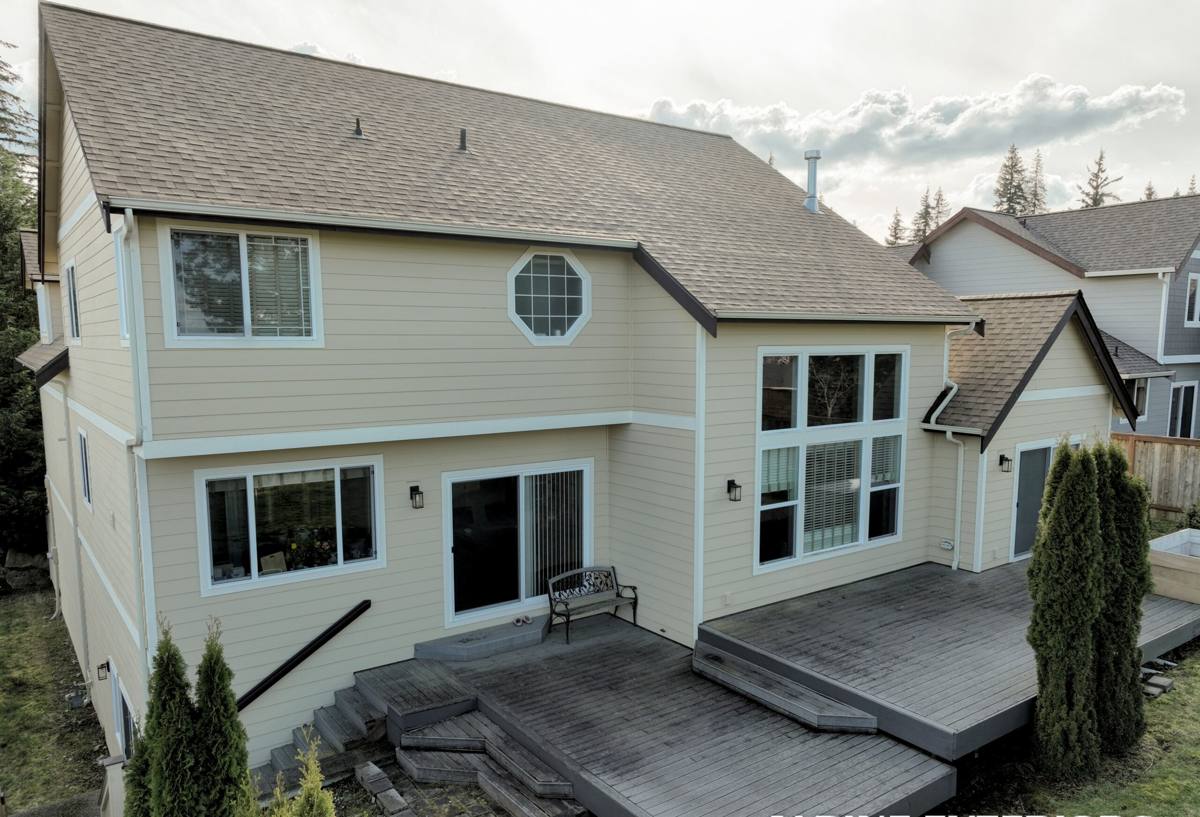
What Lynden's Climate Actually Does to a Deck
Three things do most of the damage to decks in this area, and they compound each other.
Driving Rain
Rain here rarely falls straight down. Wind off the water pushes it sideways, which means it gets under railings, behind fascia boards, and into any gap that wasn't properly flashed or caulked. Over years, that moisture works its way into end grain and fastener holes — the two weakest points on any wood deck.
Moss and Algae
Shaded, north-facing, or tree-covered decks in Lynden can stay damp for weeks at a time in the cooler months. That moisture, combined with organic debris from nearby trees, is exactly what moss and algae need to take hold. Beyond looking bad, a moss-covered deck surface gets slick and dangerous, and moss roots hold moisture directly against the board.
Salt-Laden Marine Air
Even away from the immediate waterfront, this part of Whatcom County gets regular marine air moving inland off Bellingham Bay and the Sound. That air carries a low level of salinity that accelerates corrosion on unprotected metal fasteners, hinges, and hardware — a detail a lot of budget deck builds skip entirely.
What a Correctly Built Deck Needs Here
Given that climate reality, a deck built for a Lynden property needs to do a few things well, regardless of style or size:
- Shed water away from the structure at every horizontal surface, not just the top decking boards
- Use fasteners and hardware rated for wet, coastal-adjacent exposure — not standard interior-grade hardware
- Keep ledger board attachment properly flashed where the deck meets the house, since this is the single most common point of hidden rot
- Allow airflow underneath the deck so framing can dry out between rain events instead of staying saturated
- Use a decking surface with either a proven track record in wet PNW climates or a maintenance plan the homeowner is realistic about keeping up with
Choosing the Right Decking Material
There's no single "correct" decking material — it depends on budget, how much upkeep the homeowner wants to do, and how exposed the deck is to shade, rain, and tree cover. Here's how the common options actually perform in a climate like ours.
| Material | Moisture Behavior | Maintenance | Typical Lifespan Here |
|---|---|---|---|
| Pressure-treated fir/pine | Resists rot when properly sealed; prone to checking and moss growth if neglected | Needs re-sealing every 1-2 years in this climate | 10-15 years with upkeep |
| Cedar | Naturally rot- and insect-resistant; still needs finish to prevent graying and moisture uptake | Re-stain every 2-3 years | 15-20 years with upkeep |
| Composite decking | Doesn't absorb water into the board itself; can still grow surface algae in shaded, damp spots | Periodic cleaning, no staining or sealing | 25-30+ years |
| PVC decking | Fully moisture-resistant, best resistance to mold and algae staining | Lowest maintenance of the group | 25-30+ years |
We don't push one material on every homeowner. A well-built cedar deck that gets sun and regular care can look better and last longer than a poorly installed composite deck. What we do insist on is matching the material to the site conditions — a heavily shaded deck under fir trees is a poor candidate for a low-maintenance wood species, and we'll say so honestly during the design conversation rather than sell whatever's easiest to install.
Where We Land on Wood Species
We're selective about which wood species we install for a simple reason: some lower-grade lumber sold as "deck boards" doesn't have the heartwood content or grain tightness to resist moisture the way a true cedar or properly treated fir does. We'd rather quote a slightly higher grade of lumber and have the deck still look good in year twelve than install the cheapest option and get a callback in year four.
Framing and Structure — the Part No One Sees
The decking boards get all the attention, but the framing underneath is what determines whether a deck is safe and long-lived. In a climate like Lynden's, a few structural details matter more than they would in a drier region.
Footings
Footings need to be set below frost depth and sized for the local soil conditions, which in parts of Whatcom County can include clay-heavy soil that holds water and shifts seasonally. Undersized or shallow footings are one of the more common issues we find on older decks we're asked to repair or replace.
Joist Spacing and Hardware
Joist spacing needs to match the decking material's span rating — composite and PVC boards often require tighter joist spacing than solid wood. Every joist hanger, screw, and bolt should be rated for ground contact or wet exposure; standard interior fasteners will corrode and stain the wood well before the structure itself would otherwise fail.
Ventilation Beneath the Deck
Low-clearance decks that don't allow airflow underneath trap moisture against the joists and beams year-round. Where grading or height allows, we build in enough clearance for air to move, and we'll flag it honestly if a low-to-grade design is going to shorten the deck's lifespan regardless of material choice.
Ledger Attachment and Drainage Details
If there's one detail that separates a deck that lasts twenty-five years from one that starts rotting at the house connection in year six, it's the ledger board. This is the board that attaches the deck directly to the home's rim joist, and it has to be flashed correctly — meaning water is directed out and away from the wall assembly, not funneled behind the siding.
We also pay attention to how water moves off the deck surface itself. Proper board spacing, correct fastener depth, and, where the design calls for it, an under-deck drainage system all reduce how much water sits on or in the structure after a storm rolls through. In a climate that sees rain in nearly every month of the year, this isn't a cosmetic upgrade — it's the difference between a deck that dries out between storms and one that never gets the chance to.
Our Process From Design to Finished Deck
- On-site assessment — we look at sun exposure, drainage patterns, tree cover, and how the deck will tie into the existing structure before recommending materials
- Design and material selection — an honest conversation about trade-offs between wood and composite/PVC based on your maintenance preferences and budget
- Permitting — Whatcom County and local jurisdictions require permits for most deck builds above a certain height or attached to the home; we handle that paperwork
- Framing and footings — built to span and load requirements, with fasteners and hardware rated for this climate
- Decking, railing, and finish work — installed with the drainage and ventilation details covered above
- Final walkthrough — we go over care and maintenance specific to the material you chose so there are no surprises down the road
Maintenance Checklist for Lynden Deck Owners
Whatever material you choose, a little seasonal attention goes a long way in this climate. A simple routine to follow:
- Sweep leaves and debris off the deck surface regularly through fall — trapped organic matter is what feeds moss and algae
- Rinse the deck surface a few times a year to clear pollen, dirt, and early moss growth before it takes hold
- Check railings, stairs, and ledger flashing once a year for loose fasteners or early signs of water staining
- Re-seal or re-stain wood decking on the schedule appropriate to the species — don't wait until the finish has fully worn off
- Trim back overhanging branches that keep sections of the deck shaded and damp longer than the rest
- Address any soft spots, discoloration, or fastener rust immediately rather than waiting for the next dry season
Why Local Experience Matters for This Job
A deck built to a generic national spec sheet doesn't automatically hold up to Whatcom County weather. Crews who work in this region regularly know which fastener coatings actually hold up to marine air, which wood suppliers carry lumber with the grain quality to resist our rain patterns, and how local soil and drainage conditions affect footing design from one property to the next. That local knowledge shows up in details a homeowner won't notice until year ten — the year the deck either still looks solid or starts showing the rot and rust that come from cutting those corners.
If you're planning a new deck or replacing one that's showing its age, we're happy to come take a look and talk through what makes sense for your property. Reach out for a free, no-pressure estimate using the form below.