 Bellingham
 Deck Repair Built for Birchwood's Climate
Birchwood decks take a beating that decks in drier parts of the country never have to deal with. Between the salt-tinged air drifting in off Bellingham Bay, driving rain that comes in sideways during winter storms, and a moss and algae season that can run eight months out of the year, wood and even composite decking here ages faster than most manufacturers' warranty language assumes. We repair decks throughout Birchwood and the surrounding Bellingham neighborhoods, and the patterns of damage we see are consistent enough that we can usually tell a homeowner what's wrong before we've even pulled a board.
A deck repair here isn't just about swapping out a few gray boards. It's about understanding why those boards failed in the first place — usually moisture that had nowhere to go — and fixing that root cause so the repair actually lasts through the next few Whatcom County winters.
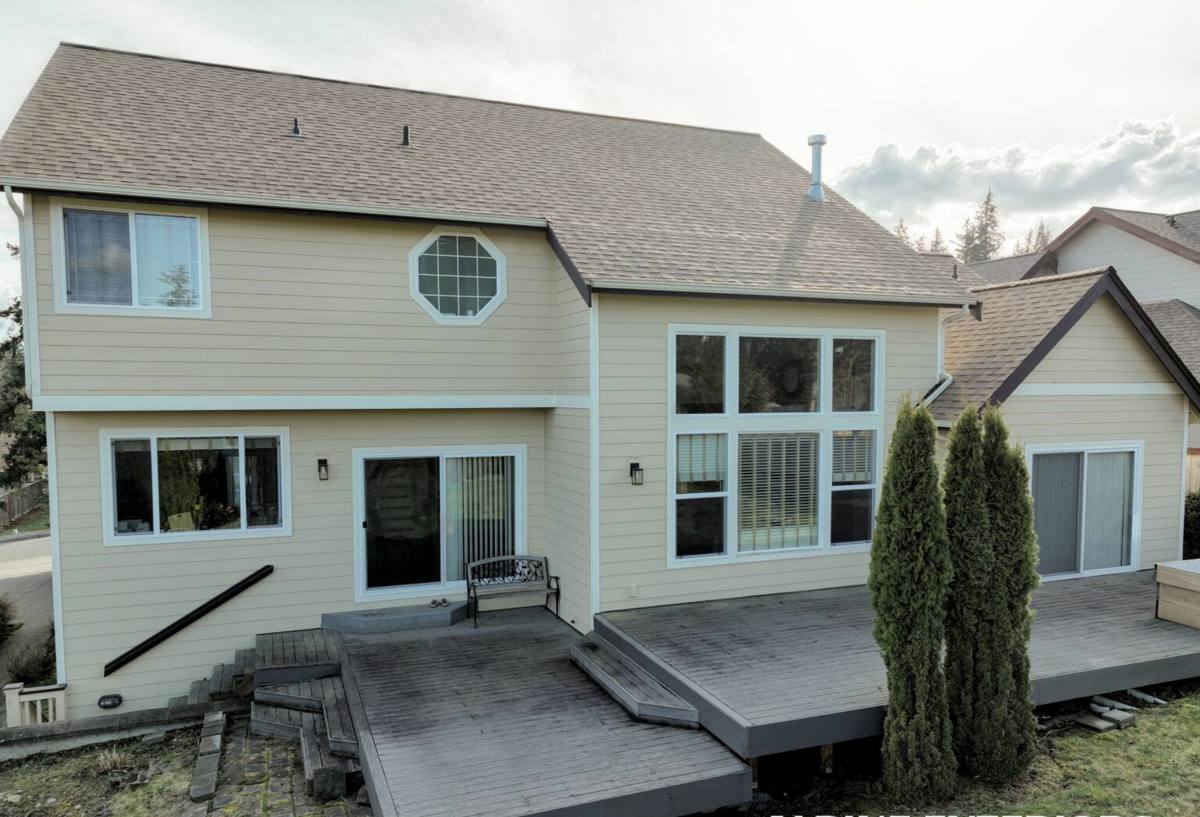
What Whatcom County Weather Does to a Deck
Moisture That Never Fully Dries Out
Bellingham's marine climate means long stretches where the air stays damp even on days it isn't actively raining. Deck boards, especially where they sit close to the ground or under overhangs with poor airflow, can stay wet for days at a time. That constant dampness is what drives rot, not any single big storm. It works into end grain, screw holes, and the underside of boards where finish never gets applied.
Moss, Algae, and Slick Surfaces
Shaded decks, north-facing decks, and anything under tree cover in Birchwood grow moss fast. Beyond being a slip hazard, moss and algae hold moisture against the wood surface around the clock, which accelerates decay well beyond what plain rain exposure would cause on its own.
Salt Air and Fastener Corrosion
Birchwood's proximity to the water means a steady low dose of salt in the air. Over years, that salt exposure corrodes standard steel fasteners, hinges, and structural hardware faster than it would inland. A deck can look structurally sound on the surface while the screws or joist hangers holding it together have quietly weakened underneath.
Freeze-Thaw Cycling
Whatcom County doesn't get brutal winters, but it does get repeated freeze-thaw swings — cold snaps followed by rain and thaw. Water that's worked into a crack or a loose joint expands when it freezes, widening the damage a little more each cycle.
Common Deck Problems We Find in Birchwood
- Soft or spongy decking boards, usually near the house where water pools against siding or a door threshold
- Rot at the ledger board where the deck attaches to the house — often the most serious issue we find, since it affects the whole structure's connection to the home
- Rusted or failing joist hangers and fasteners from long-term salt air exposure
- Loose, wobbly, or leaning railings, frequently from posts that were never properly through-bolted
- Cupped, cracked, or splintering boards from repeated wet-dry cycling
- Moss and algae buildup creating slick, unsafe walking surfaces
- Stair stringers showing rot or movement, especially on decks with limited overhead cover
- Undersized or corroded footings and post bases on older decks not built to current standards
What a Correct Deck Repair Actually Involves
Not every soft board needs a full deck rebuild, but a repair done right has to go past the visible damage. Here's what we check and address on every Birchwood deck repair:
1. Structural Assessment First
Before replacing anything cosmetic, we check the ledger board connection, the joists, the posts, and the footings. This is the part of the deck that keeps people safe, and it's also the part most likely to be hidden from a casual look. A deck that's structurally sound but has a few bad boards is a very different job — and a very different price — than one with a compromised ledger or rotted joists.
2. Address the Water Source
If a deck rotted because water was pooling somewhere, replacing the boards without fixing the drainage or flashing just resets the clock on the same problem. We look at flashing where the deck meets the house, board spacing and slope for water runoff, and whether ventilation underneath the deck is adequate for our climate.
3. Match or Upgrade Materials Appropriately
Depending on the deck's age and the homeowner's goals, repairs might use pressure-treated lumber matched to the existing structure, cedar for a natural look, or composite boards for lower long-term maintenance. We'll walk through the honest trade-offs of each rather than pushing whatever's easiest for us to install.
4. Fasteners and Hardware Rated for Coastal Exposure
Given the salt air common to Birchwood, we use corrosion-resistant fasteners and structural connectors rated for exterior and coastal use, not standard interior-grade hardware that will rust prematurely.
5. Rail and Guard Safety
Loose railings are one of the most common safety complaints we hear about, and one of the most commonly under-fixed. A proper repair means posts that are solidly anchored to the framing, not just toe-screwed to a rim joist, and rail height and baluster spacing that meet current building code.
Repair vs. Replacement: How We Help You Decide
Homeowners in Birchwood often call us unsure whether their deck needs a repair or a full rebuild. There's no single rule, but these factors matter most:
| Factor | Leans Toward Repair | Leans Toward Replacement |
|---|---|---|
| Ledger board condition | Solid, no rot at house connection | Rotted or improperly flashed ledger |
| Framing (joists/beams) | Sound, isolated soft spots only | Widespread rot or undersized for current code |
| Age of structure | Under 15-20 years, built to reasonable standard | Older deck built before current safety codes |
| Extent of surface damage | Scattered boards, mostly cosmetic | Majority of decking failing |
| Footings and posts | Adequate size, no movement or heaving | Undersized, shifting, or improperly set |
Most of the decks we look at in Birchwood fall somewhere in between — solid bones with specific problem areas. That's the best-case scenario for a repair, since it lets a homeowner extend the deck's life without the cost of a full rebuild.
Our Deck Repair Process
- On-site inspection: We walk the deck, check the ledger, get underneath where possible, and test railings and stair stringers for movement.
- Honest scope and estimate: We tell you what actually needs fixing now versus what to keep an eye on, and give you a clear written estimate before any work starts.
- Source the right materials: Whether that's matching existing decking, sourcing coastal-rated hardware, or discussing composite options, we don't default to whatever's fastest.
- Repair the structure first: Ledger, joists, posts, and footings get addressed before any cosmetic work, since everything else depends on a sound frame.
- Replace and finish: Damaged boards, railings, and stairs get replaced and properly fastened, with attention to spacing and slope for drainage.
- Final walkthrough: We check rail stability, board fastening, and overall finish with you before we consider the job done.
Maintenance That Extends the Life of a Birchwood Deck
A good repair is only half the equation — how a deck is maintained afterward determines how long that repair holds up in our climate. A few habits make a real difference here:
- Clean moss and algae off the surface at least once a year, ideally before the wet season sets in
- Keep gutters and downspouts clear so runoff isn't dumping extra water onto or under the deck
- Re-seal or re-stain wood decking on a schedule appropriate to the product, since Bellingham's moisture shortens the effective life of most finishes compared to drier regions
- Check railings for looseness once a year, particularly after freeze-thaw season
- Keep planters and anything else that traps moisture off direct wood contact with the deck surface
- Trim back vegetation that shades the deck and keeps it from drying out between rains
Why Hire a Crew That Already Works in Birchwood
Deck repair looks similar on paper everywhere, but the failure patterns we've described — ledger rot from constant marine moisture, corroded hardware from salt air, moss buildup on shaded decks — are specific to this part of Whatcom County. A crew that repairs decks in drier inland climates isn't necessarily thinking about coastal-rated fasteners or the drainage details that matter most here. We work in Birchwood and the greater Bellingham area regularly, so we're not guessing at how a deck will hold up against another wet Pacific Northwest winter — we've seen how the last several have treated decks just like yours.
We also don't push unnecessary full rebuilds when a targeted repair will genuinely do the job, and we won't downplay a compromised ledger or rotted footing just to keep a quote small. Our goal is a deck that's safe and solid for years, not a patch job that looks fine until the next rainy season finds the spot we missed.
Get a Free, No-Pressure Estimate
If your Birchwood deck has soft boards, a wobbly railing, or you're just not sure whether it needs a repair or a rebuild, we're happy to take a look. Fill out the form below for a free estimate — no pressure, no obligation, just an honest read on what your deck actually needs.