 Bellingham
 Deck Repair Built for Blaine's Coastal Climate
A deck in Blaine takes a different kind of beating than one further inland. Sitting near the water in northern Whatcom County means salt-laden air moving through the fasteners and hardware almost year-round, long stretches of driving rain off the Sound, and a moss season that can run from fall through spring. None of that is unusual for this part of Washington, but it does mean a deck built or repaired without those conditions in mind tends to fail early — usually at the connections and joints first, long before the visible boards look bad.
We work on decks throughout the Bellingham area, including Blaine, and the repairs we get called out for follow a pattern. It's rarely one dramatic failure. It's small, climate-driven problems that get ignored until they add up: a soft spot near the house, a railing post that flexes, fasteners bleeding rust through the decking. This page walks through what actually causes that wear, what a correct repair looks like, and how we approach the job.
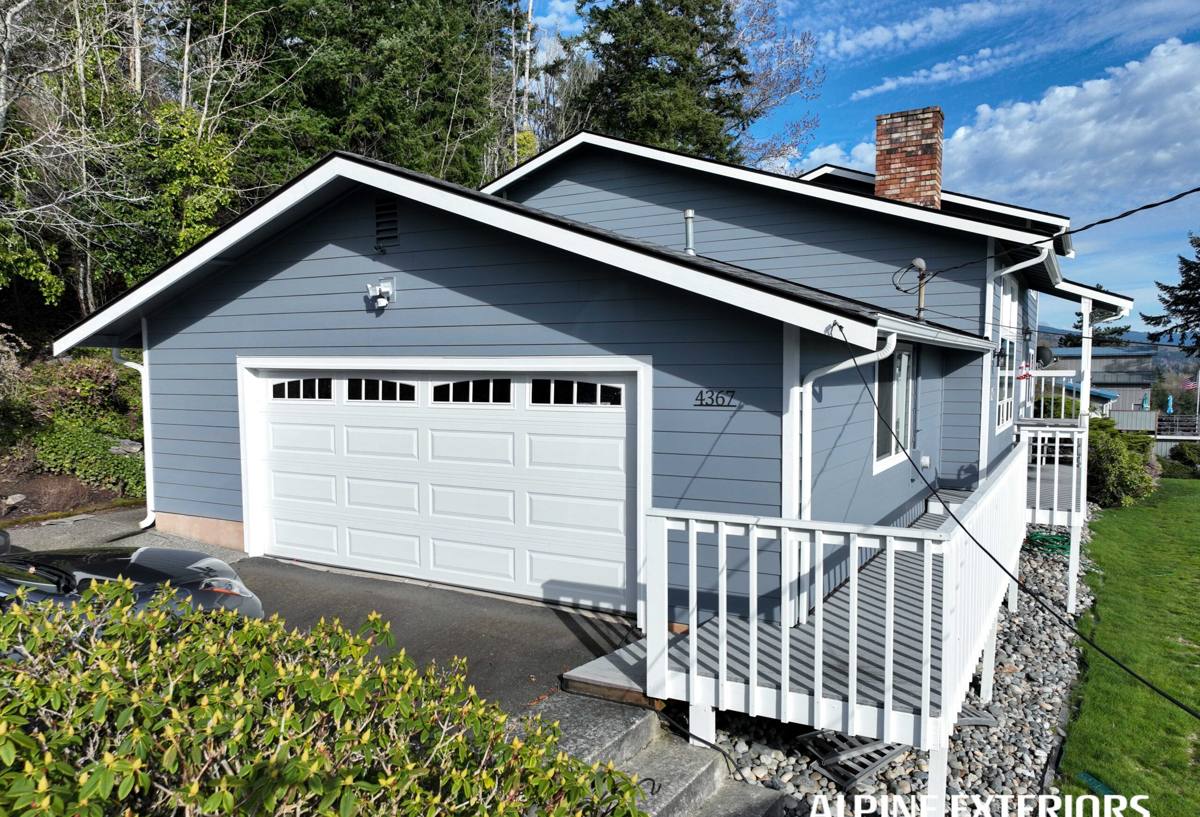
What Salt Air, Rain, and Moss Actually Do to a Deck
Salt Air and Metal Fasteners
Airborne salt from the Sound accelerates corrosion on any metal it touches — nails, screws, joist hangers, bolts, and post bases. Corroded fasteners lose holding strength quietly. A joist hanger can look intact from below while the nails inside it have rusted enough that they no longer carry the load they're supposed to. This is one of the most common structural issues we find on decks in this area, and it's almost invisible until someone is actually up under the deck checking each connection by hand.
Driving Rain and Moisture Intrusion
Rain that comes in sideways off the water finds its way into places a straight-down rain never would — behind ledger boards, into end grain on stair stringers, around post bases where the original build didn't flash or seal properly. Once moisture gets trapped against wood, especially where airflow is poor, rot starts. It's almost always worse where the deck meets the house, at the ledger board connection, because that's the joint doing the most structural work and the one most exposed to backsplash and wind-driven rain.
Moss and Prolonged Dampness
Whatcom County's long wet season keeps deck surfaces damp for weeks at a stretch, and shaded or north-facing decks grow moss readily. Moss itself isn't a structural problem, but it holds moisture against the decking surface far longer than bare wood would dry on its own, and it turns boards slick and dangerous underfoot. Left alone through a few wet seasons, moss-covered boards can start to soften and cup even if the framing underneath is still sound.
Warning Signs It's Time for a Repair
- Decking boards that feel spongy, springy, or noticeably softer in one spot than the rest of the deck
- Rust streaks bleeding out from screw heads or nail holes onto the board surface
- A railing post or guard that wiggles more than it should when pushed
- Visible gaps, cracks, or separation where the deck meets the house (the ledger board area)
- Stair stringers that flex, creak, or show splitting at the notched cuts
- Persistent moss or dark staining that keeps coming back within weeks of cleaning
- Fasteners that have backed out, or ones you can turn by hand without a driver
- Any part of the deck that feels different underfoot than it did a year or two ago
Any one of these on its own might be minor. Several together, especially near the house connection or around posts, usually means the repair needs to start below the surface, not just at the boards.
What a Proper Deck Repair Actually Involves
A repair that only replaces the boards you can see is a cosmetic fix, not a structural one. Doing it right means checking the whole load path, not just the surface people walk on.
Structural Inspection First
We check the ledger board attachment, joists, joist hangers, beam, posts, and footings before deciding what actually needs to be replaced. In a lot of cases the decking looks worse than it is, while the real problem is hidden underneath at a connection point.
Fastener and Hardware Condition
Given how hard salt air is on metal here, we look closely at every hanger, bolt, and screw we can access — not just the ones that are obviously rusted. Corrosion often starts on the hidden side of a connection first.
Moisture Path, Not Just Moisture Damage
If we find rot, we trace it back to why water got in — missing flashing, a gap at the ledger, end grain left exposed — and fix that source. Replacing rotted wood without correcting the moisture path just buys a few more years before the same repair is needed again.
Code-Correct Connections
Ledger attachment, joist hanger nailing patterns, and guard/railing requirements all have specific code requirements. A repair is a good opportunity to bring older, under-built connections up to current standards, especially on decks built before local codes tightened around ledger attachment and guard strength.
Repair or Replace? What Actually Drives the Decision
Homeowners often ask whether it's worth repairing a deck or better to replace the whole thing. The honest answer depends on how far the damage has spread and what's underneath.
| Factor | Favors Repair | Favors Replacement |
|---|---|---|
| Framing condition | Joists, beam, and posts are solid when probed | Soft or rotted framing found at multiple points |
| Ledger connection | Attached correctly, flashed, no ongoing leak | Missing flashing, chronic moisture, or undersized fasteners |
| Age of structure | Newer build with isolated damage | Original deck is decades old and near end of service life |
| Extent of decking wear | Damage limited to a section or a few boards | Most boards are cupped, soft, or moss-stained throughout |
| Code compliance | Close to current requirements already | Guard height, spacing, or ledger attachment well below current code |
Cost is a real factor too, but it should follow the structural finding, not the other way around. We'd rather tell a homeowner a full rebuild is the better long-term value than patch a deck that's going to need the same repair again in three years.
Our Deck Repair Process
- On-site inspection. We get underneath the deck, check every accessible connection, probe suspect boards, and look at how water has been moving through the structure.
- Written scope and options. You get a clear explanation of what's actually wrong, what needs to happen, and — where there's a genuine choice — what the trade-offs are between a targeted repair and a larger rebuild.
- Material selection. We choose fasteners, hardware, and decking material suited to a coastal, high-moisture environment rather than whatever's cheapest at the yard.
- The repair itself. Framing and connections get fixed first, moisture sources get corrected, then decking and railings go back on correctly fastened and properly flashed.
- Final check. We walk the deck with you, point out what was done and why, and flag anything worth watching going forward.
Materials We Use and Why
In a salt-air environment, hardware choice matters as much as the wood or composite decking itself. We favor stainless steel or high-grade corrosion-resistant fasteners and hangers at connection points, even where a standard galvanized fastener might pass inspection, because the added cost up front is small compared to redoing a repair in a few years when standard hardware corrodes early. For decking material, both quality pressure-treated wood and composite boards have a place — wood costs less initially but needs more consistent upkeep against moss and moisture, while composite costs more but shrugs off moss staining and moisture absorption with far less maintenance. We'll talk through which fits your deck, your budget, and how much upkeep you want to do.
Why a Crew That Already Works Blaine Matters
Deck problems caused by salt air, rain, and moss look different than the deck problems a crew working inland every day is used to diagnosing. A contractor who regularly works decks around Bellingham and up into Whatcom County toward Blaine has already seen how these specific conditions show up — where corrosion starts first, which connections fail early near the water, how long moss really takes to become a structural issue versus just a cleaning problem. That familiarity means less guesswork and a repair that's sized correctly to the actual local exposure, instead of a generic fix.
It also means a faster, more direct relationship. You're not waiting on a crew driving in from out of the area, and you're working with people who'll stand behind the work because they're still local when you call with a question two years later.
Keeping Your Deck in Good Shape After the Repair
A repaired deck still needs seasonal attention in this climate. Clearing moss and debris before the wet season sets in, keeping gutters and downspouts clear so runoff isn't dumping onto or near the deck, and doing a quick visual check of fasteners and railings once a year go a long way toward making a repair last. None of that requires a professional visit every time — just consistency during the months when moisture is working hardest against the structure.
If you're noticing soft spots, rust stains, or a deck that just doesn't feel as solid as it used to, it's worth having it looked at before the next wet season adds to the damage. We offer free, no-pressure estimates for deck repair in Blaine and the surrounding area — just fill out the form below and we'll take a look.