 Bellingham
 Edgemoor Roofs Work Harder Than Most People Realize
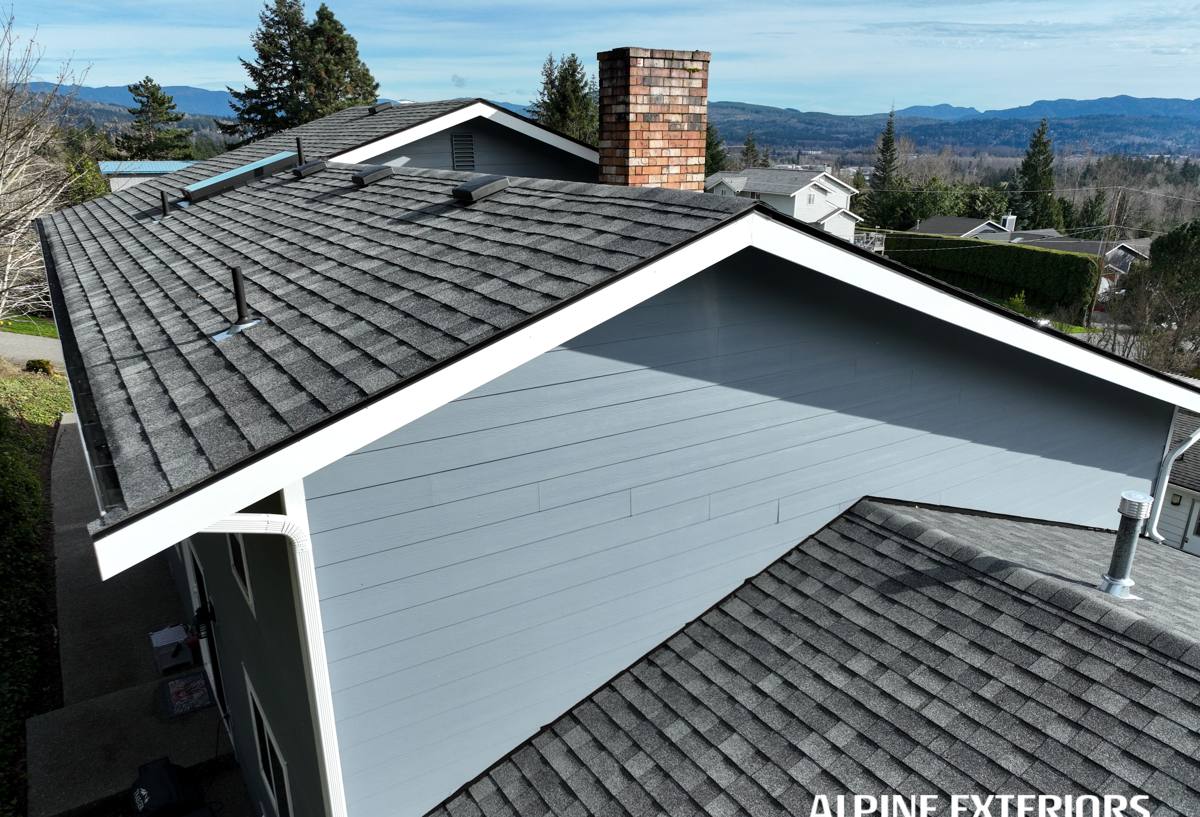
Edgemoor sits close to the water, under a heavy tree canopy, on lots that see more shade and more moisture than most inland Bellingham neighborhoods. That combination is tough on a roof. Salt-tinged air off Bellingham Bay accelerates corrosion on fasteners and flashing, the tree cover keeps roof surfaces damp and shaded long after a storm has passed, and Whatcom County's wet season stretches for months at a time. A roof that would hold up fine in a drier, more open part of the county can wear out early here if it wasn't built for these specific conditions.
This page covers what a proper new roof installation looks like for an Edgemoor home — what the climate demands, what correct installation actually involves, and how our process works from first look to final walkthrough.
What the Local Climate Does to a Roof
Salt Air
Homes closer to the bay deal with airborne salt that settles on roofing materials and metal components. Over years, this speeds up corrosion on exposed fasteners, flashing, and any lower-grade metal. It's not dramatic — it's slow, steady wear that shows up as rust streaks, pitted metal, and fasteners that back out or fail early.
Driving Rain
Bellingham doesn't just get a lot of rain — a good share of it comes in sideways during winter storms. Wind-driven rain finds weaknesses that a straight-down rainstorm never would: it pushes water up under shingle tabs, through poorly lapped flashing, and into any gap around penetrations like vents and chimneys. A roof built for a drier climate, or installed with shortcuts, tends to leak first at these pressure points.
Moss Season
Between the shade from mature trees and the long stretch of damp weather, moss and algae growth is close to a year-round concern in Edgemoor. Moss holds moisture against the roof surface, lifts shingle edges as it grows, and works its way into seams. Left unchecked, it shortens the life of even a well-built roof.
Signs an Edgemoor Roof Needs Replacement, Not Another Repair
- Granule loss showing up in gutters or downspouts, or bald patches on shingles
- Curling, cracking, or cupping shingles, especially on shaded, north-facing slopes
- Moss or algae growth that keeps returning within a season or two of cleaning
- Soft or spongy spots underfoot, or visible sagging along the roofline
- Daylight visible through the attic decking, or damp insulation after storms
- Repeated leaks around the same penetration or valley despite past repairs
- A roof approaching or past 20–25 years old, especially with prior storm damage
One or two of these on their own might mean a targeted repair is enough. Several at once, or a roof already at the end of its expected life, usually means repair costs start to outpace the value of just doing it right with a full replacement.
Choosing a Roofing Material for This Climate
Every material has trade-offs. For a wooded, coastal-influenced lot like the ones common in Edgemoor, moisture resistance and moss resistance matter as much as looks and price.
| Material | How It Handles This Climate | Trade-Offs to Know |
|---|---|---|
| Architectural asphalt shingle | Good moisture and moss resistance with algae-resistant granules; solid mid-range performer | Needs correct ventilation and underlayment to hit its full lifespan here |
| Standing seam metal | Sheds water and moss buildup well due to steep, smooth panels; long service life | Higher upfront cost; fasteners and flashing detailing must be done right near salt air |
| Composite/synthetic shingle | Resists moisture absorption and moss better than wood; consistent appearance over time | Product quality varies widely by brand — we're selective about what we install |
| Cedar shake | Traditional look that fits older Edgemoor homes | Highest moisture and moss maintenance burden in a shaded, wet setting; shortest lifespan without diligent upkeep |
We'll walk through these options honestly during your estimate, including how each one is likely to perform specifically on your lot's sun exposure, tree cover, and slope.
What a Correct New Roof Installation Actually Involves
A new roof is only as good as what's underneath the visible surface. Here's what shouldn't be skipped, especially in a climate like this one:
Full Tear-Off and Deck Inspection
Layering new shingles over old ones traps moisture and hides problems. We remove the old roofing down to the deck, then inspect the sheathing for soft spots, rot, or water staining — common in older Edgemoor homes with a history of moss buildup or slow leaks. Any damaged decking gets replaced before anything new goes down.
Ice-and-Water Barrier and Underlayment
Given how much wind-driven rain this area sees, we pay close attention to underlayment coverage — not just the field of the roof, but eaves, valleys, and anywhere water tends to back up or get pushed sideways.
Flashing at Every Penetration
Chimneys, vent pipes, skylights, and wall-to-roof transitions are where most leaks actually start. Correctly stepped and sealed flashing here matters more than the shingle brand on top of it.
Attic Ventilation
Balanced intake and exhaust ventilation keeps the roof deck dry from underneath, which matters as much as keeping rain out from above. Poor ventilation traps moisture, encourages rot, and shortens the life of any roofing material — especially under a shaded tree canopy where the roof surface already stays damp longer.
Moss-Resistant Details
Where it fits the home and material, we'll discuss options like zinc or copper strips at the ridge, which help suppress moss regrowth over time without chemical treatments.
Our Process, Start to Finish
- Free on-site inspection — we look at your current roof, attic ventilation, and any problem areas specific to your lot's shade and drainage
- Honest recommendation — repair vs. replace, material options, and a clear scope of work in writing
- Scheduling around Whatcom County weather — we plan installation windows with realistic weather margins, since a rushed job in the rain is how corners get cut
- Tear-off and deck inspection — old roofing removed, deck checked and repaired as needed
- Installation — underlayment, flashing, ventilation, and roofing material installed to manufacturer spec
- Cleanup and walkthrough — site cleared of debris and nails, and we go over the finished roof with you before calling the job done
What Drives the Cost of a New Roof
| Factor | Why It Matters |
|---|---|
| Roof size and pitch | Steeper, larger roofs take more material and labor time |
| Material choice | Asphalt, metal, and composite carry different material and installation costs |
| Deck condition | Rotted or soft sheathing found during tear-off adds repair cost, but skipping it isn't an option |
| Roof complexity | Valleys, dormers, chimneys, and multiple penetrations all add labor and flashing work |
| Access and tree cover | Wooded lots common in Edgemoor sometimes require extra care or equipment around landscaping |
| Ventilation upgrades | Correcting inadequate attic ventilation adds some cost but protects the investment |
Exact pricing depends on what we find during inspection. We'd rather give you a real number after seeing the roof than a rough guess that changes once we're up there.
Why It Matters to Hire a Crew That Already Works in Edgemoor
A roofer who's worked in Edgemoor and similar Bellingham neighborhoods already knows what to look for: how tree cover affects a specific slope's moss growth, where wind-driven rain from the bay tends to find weak points, and which details matter most for a home's exposure and age. That local familiarity shows up in fewer surprises during the job and a roof that's actually built for the conditions it has to survive — not a generic install that happens to be located here.
It also matters for something simpler: being reachable after the job is done. A crew that works this area regularly is easy to reach if a question comes up after a storm, not a name from an out-of-town crew that's hard to track down a year later.
After Installation: Protecting Your Investment
A correctly installed roof still benefits from basic upkeep, especially given the moss and moisture this climate produces:
- Clear gutters and downspouts at least twice a year, more often under heavy tree cover
- Have moss growth addressed early rather than left to spread across a full slope
- Keep overhanging branches trimmed back to reduce shade, debris, and abrasion on the roof surface
- Schedule a periodic visual inspection after major storms, particularly ones with high wind
- Address any small leak or flashing issue promptly — small problems in this climate don't stay small for long
Get a Straight Answer About Your Roof
If your Edgemoor home's roof is showing its age, or you just want an honest read on how much life it has left, we're happy to take a look. The estimate is free, there's no pressure attached to it, and you'll get a clear explanation of what we find and what your real options are. Use the form below to get started.