 Bellingham
 A storm doesn't treat every roof in Whatcom County the same way, and Fairhaven gets a particular version of it. Sitting close to Bellingham Bay puts the neighborhood's roofs in the direct path of wind coming off open water, and that wind arrives carrying rain that doesn't fall straight down so much as get pushed sideways into laps, valleys, and flashing seams. Add in an older housing stock, hillside lots, and a mature tree canopy that drops limbs in a windstorm, and storm damage repair here needs a different level of attention than a generic patch job. This page covers what actually happens to a Fairhaven roof during a storm, what a correct repair involves, and how our process works from the first call to the final walk-through.
What Counts as Storm Damage on a Roof
Storm damage isn't limited to the dramatic cases, a tree limb through the decking or shingles peeled back in a sheet. Far more often it's quieter: a handful of shingles lifted or cracked at the tabs, flashing worked loose at a valley or chimney, or a seal broken just enough that wind-driven rain finds a path in during the next storm rather than the one that caused it. The distinction matters because storm damage is typically what insurance covers, while ordinary wear from age and weathering usually isn't. Telling the two apart accurately, and documenting it honestly, is part of doing this job right.
How Storms Actually Damage a Fairhaven Roof
Wind Off the Water
Fairhaven's position near Bellingham Bay means it takes wind with less to slow it down than a roof further inland would face. Sustained wind and gusts during a winter storm can lift shingle edges, work fasteners loose over repeated events, and eventually tear off a section outright once an edge has been flexed enough times. Roof edges, ridges, and the corners of the roof plane take the brunt of this, which is exactly where we look first after a windstorm.
Wind-Driven Rain
Rain that's being pushed by wind behaves differently than rain falling straight down. It finds its way under shingle tabs, into valleys, and behind flashing at chimneys and roof-to-wall transitions from angles a roof built to a bare minimum standard wasn't necessarily detailed to resist. This is why a storm can produce a leak that shows up somewhere other than the spot with the visible damage. Water gets in at one point and travels along the deck before it finds a way through the ceiling below.
Falling Limbs and Debris
Fairhaven's older residential blocks include a lot of mature tree cover, which is part of what gives the neighborhood its character and also part of what puts roofs at risk during a windstorm. A falling limb doesn't have to be large to crack shingles, dent flashing, or puncture the roof deck, and impact damage in a shaded, debris-prone area often goes unnoticed longer than damage in a spot the homeowner can see clearly from the yard.
Freeze and Occasional Snow Load
Whatcom County doesn't see heavy snow every winter, but Fairhaven does get occasional freezing weather and wet snow events, and a roof that's already been stressed by wind and moisture over the year handles that added load worse than a roof in good condition. Ice damming along eaves, though less common here than in colder climates, can still back water up under shingles when it does happen.
Signs Your Fairhaven Roof May Have Storm Damage
Some storm damage is obvious right away. A lot of it isn't, and the less obvious kind is often what causes the bigger problem months later. After any significant wind or rain event, it's worth checking for:
- Shingles that are cracked, curled, creased, or missing entirely, even in a small isolated area
- Granules collecting in gutters or at downspout outlets in noticeably larger amounts than usual
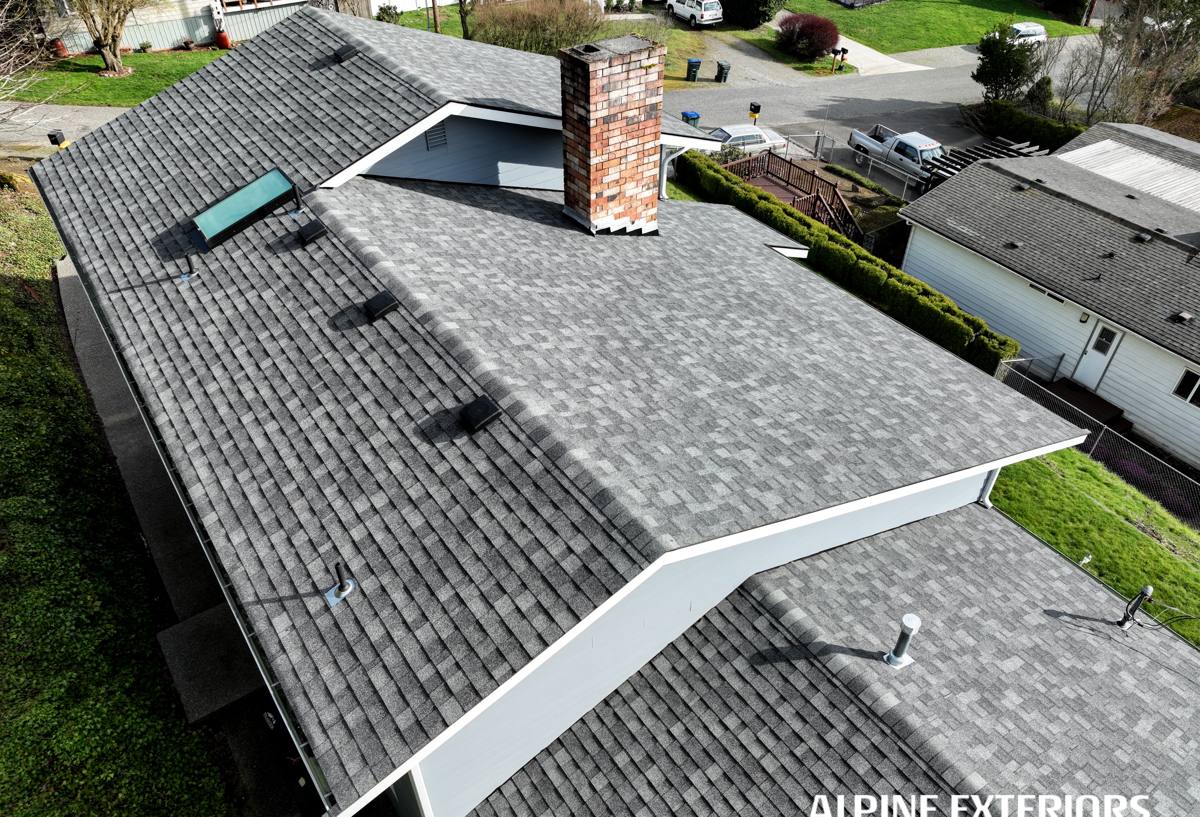
- Bent, lifted, or displaced flashing around chimneys, vents, or skylights
- Water stains on interior ceilings or upper walls that appeared after a storm
- Visible dents or impact marks from fallen branches or debris
- Soft spots underfoot when walking the roof, which can indicate deck damage beneath the surface
- Debris, moss clumps, or standing water pooling in valleys or behind roof penetrations
- Gutters pulled loose or sagging away from the fascia after heavy wind
What a Correct Storm Damage Repair Actually Involves
Emergency Stabilization First
When there's an active leak or exposed decking, the first job is stopping further water intrusion, not scheduling the full repair for next week. Tarping an exposed section or securing loose material buys time to do the actual repair correctly instead of rushing it while more rain is on the way.
A Full Assessment, Not Just the Obvious Spot
Because wind-driven rain can travel along the deck before it shows up as an interior leak, we don't stop at the visible damage. We check the whole roof plane, flashing points, and attic or decking where accessible, since storm damage that isn't fully assessed has a way of reappearing as a second leak a few storms later.
Matching Materials and Blending Repairs
Fairhaven's mix of older and newer roofs means a repair often has to match shingles or panels that may no longer be in current production, or that have weathered and faded differently than they did when new. A repair that stands out sharply from the surrounding roof isn't just a cosmetic issue, it can also mean a poorly integrated seam where water can eventually get in. We do our best to blend repairs into the existing roof rather than treating the patch as a separate project bolted onto it.
Flashing and Underlayment: Where Storm Leaks Really Start
Most storm leaks trace back to flashing or underlayment rather than the shingles themselves. Chimney flashing, valley metal, and roof-to-wall transitions are where we spend the most time on a storm repair, because replacing a few shingles over compromised flashing just guarantees the same leak comes back in the next storm.
Repair or Replace? Making the Right Call
Not every storm-damaged roof needs to come off. The right call depends on how isolated the damage is and how much life the rest of the roof has left in it.
| Situation | Usual Approach | Why |
|---|---|---|
| Isolated wind or impact damage on a roof under 10–15 years old | Targeted repair | The surrounding roof still has useful life, and a clean repair can be blended in effectively |
| Storm damage on a roof already near the end of its service life | Full or partial replacement | Repairing an aging roof often just delays a replacement that's coming due anyway |
| Repeated leaks at the same flashing point after prior patch repairs | Flashing and underlayment rebuild in that area | Recurring leaks usually mean the original detail was never right, not that the patch failed |
| Widespread granule loss and shingle damage across most of the roof | Full replacement | Storm stress on an already-weathered roof tends to be spread across the whole surface, not one section |
We'll give you a straight answer about which category your roof falls into, based on what we actually find during the inspection rather than a standard script.
Working With Insurance on a Storm Claim
Documentation Matters More Than Speed
A storm damage claim is stronger when the damage is documented clearly and honestly, with photos and a written scope that describes what's actually there. We provide that documentation as part of the assessment, which gives you something concrete to bring to your insurer rather than a verbal description of what happened.
What We Can and Can't Promise
We're not your insurance company, and we can't guarantee what a claim will or won't cover, that decision belongs to your insurer and your policy's terms. What we can do is give you an honest, accurate picture of the damage and the repair it requires, so you're working from real information rather than guesswork when you talk to your adjuster.
Our Storm Damage Repair Process
- Initial call and, when needed, emergency tarping. If there's an active leak, we prioritize stopping water intrusion before anything else.
- On-site inspection. We walk the roof, check flashing points, and look for damage beyond the obvious spot.
- Written scope and photos. You get a clear, honest description of what's damaged and what the repair involves, useful whether or not you're filing a claim.
- Material sourcing and matching. We source shingles or roofing material to match the existing roof as closely as possible.
- Repair work. Damaged sections are repaired or replaced, with flashing and underlayment addressed as part of the same job, not skipped to save time.
- Final walk-through. We review the completed repair with you and explain what was done and why.
Cost Factors for Storm Damage Repair in Fairhaven
| Factor | What It Affects | Why It Matters Here |
|---|---|---|
| Extent of damage | Repair vs. replacement scope | Isolated wind damage costs far less to address than widespread damage across an aging roof |
| Roof age and material | Whether matching materials are still available | Fairhaven's older housing stock sometimes has roofing that's no longer in current production |
| Flashing and underlayment condition | Whether the repair addresses root cause or just the surface | Storm leaks usually start at flashing, not the shingle field itself |
| Access and slope | Labor time and safety setup | Hillside lots and mature tree cover common in Fairhaven can add staging time |
| Hidden deck damage | Cost discovered after tear-off of the damaged area | Wind-driven rain that's been getting in for a while can rot decking before it's visible from outside |
We inspect before we quote, since two roofs with the same square footage can have very different repair scopes depending on what a storm actually did to them.
Why a Local Whatcom County Crew Matters After a Storm
After a major windstorm, it's common to see roofing crews from outside the area canvassing neighborhoods for storm repair work. Some of that work is fine, but a crew that doesn't normally work this stretch of Whatcom County doesn't have the same baseline understanding of how wind off Bellingham Bay, wind-driven rain, and this area's older housing stock interact. A local crew is also still here months later if a repair needs a follow-up look, rather than having moved on to the next storm in a different region entirely.
Fairhaven's hillside terrain, mature tree canopy, and mix of older and newer roofs mean a storm repair here benefits from someone who already knows what to expect from the neighborhood, not just from roofing in general.
If a recent storm left your Fairhaven roof with visible damage, a leak, or you're just not sure what you're looking at, we're glad to take a look and give you a straight answer. Reach out using the form below to schedule a free, no-pressure estimate.