 Bellingham
 James Hardie Siding for Sunnyland Homes
Sunnyland is one of Bellingham's established residential neighborhoods, and like most of the city's older pockets, it's built up in layers — homes from different decades sitting side by side under a mature tree canopy, many of them now due for their second or third siding job since original construction. That mix matters when you're planning a re-side. A house built decades ago wasn't necessarily sided with today's weather realities in mind, and whatever went up the last time around has had years to show whether it was installed correctly or not.
We install James Hardie fiber cement siding exclusively, and for Sunnyland specifically, that choice comes down to what the neighborhood's exposure actually does to a wall over time. Salt-tinged air moving in off Bellingham Bay, rain that comes in sideways more often than straight down, and a moss season that can run most of the year on shaded, tree-covered walls — that combination is hard on siding, hard on fasteners, and unforgiving of shortcuts. This page covers what Sunnyland homes specifically need from their siding, what a correct James Hardie install involves, and how we approach a project in this neighborhood.
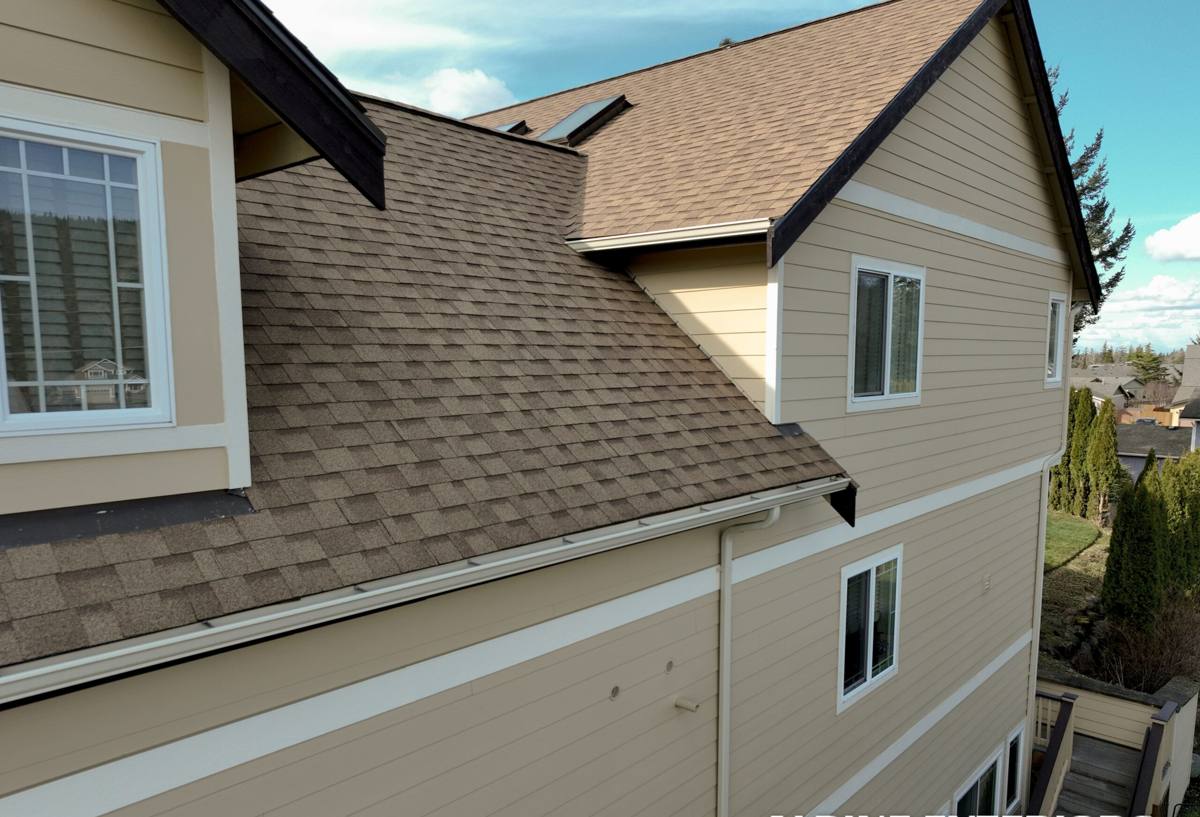
What Sunnyland's Climate Asks of a James Hardie Install
Salt Air and Slow Corrosion
Bellingham's proximity to the bay means a steady, low-grade dose of salt-laden moisture moves through neighborhoods across the city, Sunnyland included, even on days that don't feel particularly stormy. That kind of exposure doesn't damage a wall overnight. It works on the small stuff — fastener heads, flashing edges, any spot where a lesser finish is left to fend for itself — and the damage tends to surface years later as staining, corrosion streaks, or a finish that's failed well before it should have.
Wind-Driven Rain
Rain in this part of Whatcom County rarely falls straight down. Wind pushes it sideways and upward under eaves, into lap joints, and against trim in ways a purely vertical rainfall assumption doesn't account for. A siding system that would perform fine in a calmer climate can still let water in here, specifically because the water is arriving at angles the installation wasn't detailed to handle.
A Long Moss and Mildew Season
Sunnyland's mature tree cover is part of what gives the neighborhood its character, and it's also a factor in how long moisture sits on shaded walls. Mild temperatures combined with consistent dampness add up to a moss and mildew season that can stretch across most of the calendar year on north-facing or heavily shaded siding. Any material with even slight porosity, or one that holds water against the substrate instead of shedding it, becomes a growth surface over time — and it usually shows up first in the areas you check least often.
Why We Only Install James Hardie in This Neighborhood
We don't offer a lineup of siding brands at different price points. We install James Hardie fiber cement, and the reason is straightforward: given what salt air, wind-driven rain, and a long wet season do to a wall over ten, twenty, and thirty years, we'd rather stand behind one system we trust completely than offer a cheaper option that quietly shifts maintenance risk onto the homeowner later.
| Material | Behavior in Sunnyland's Climate | Maintenance Burden | Realistic Lifespan |
|---|---|---|---|
| James Hardie fiber cement | Non-combustible, dimensionally stable, doesn't swell or warp with moisture cycling | Low; factory finish resists moss and fading | 30+ years with correct install |
| LP SmartSide (engineered wood) | More sensitive to moisture at cut edges and fastener holes in a wet marine climate | Moderate; edge sealing needs regular upkeep | 15-25 years, climate-dependent |
| Vinyl | Can warp in sun exposure, crack in cold snaps, trap moisture if flashing is off | Low visible upkeep, but hidden issues are hard to catch | 20-30 years, variable |
| Cedar or primed spruce | Absorbs moisture readily without a consistent sealing or painting schedule | High; recurring repainting or resealing | 15-25 years with consistent upkeep |
James Hardie's fiber cement core is engineered to resist the moisture cycling that causes wood-based products to swell, cup, and eventually fail at seams and fastener points. The HZ5 formulation, built for regions with sustained moisture exposure, fits this part of Whatcom County better than a generic national spec would. Combined with the factory-applied ColorPlus finish, which is cured under controlled conditions rather than brushed on at the job site, it holds up to exactly the kind of slow, cumulative wear Sunnyland's climate produces.
LP SmartSide, vinyl, Cemplank, Allura, primed spruce, and cedar are all legitimate products, and other contractors install them competently. We simply made a professional call that in a climate this consistently wet and salt-exposed, one trusted system serves our customers better than a menu of cheaper alternatives.
What a Correct James Hardie Install Actually Involves
The finished look of a Hardie install is simple, but a correct job has a lot going on behind the surface that determines whether it performs for thirty years or starts showing problems in five:
- House wrap or weather-resistive barrier installed and properly lapped before any siding goes up
- A drainage plane or rainscreen gap behind the siding so incidental moisture can dry out instead of sitting against the wall sheathing
- Corrosion-resistant fasteners set at the manufacturer's specified spacing and depth, not just enough to hold the board up
- Proper lap and reveal on horizontal siding, or correctly detailed seams on panel products, so water sheds rather than pools
- Flashing correctly installed and lapped at windows, doors, corners, and the base of the wall, where most real-world leaks actually start
- Field-cut edges primed before installation, since the factory ColorPlus finish only covers the parts of the board that weren't cut on site
- Clearance maintained between siding and grade, decks, and roof lines so the material isn't sitting in standing water or snow load
Skip any one of these and the wall can still look right for a year or two. The problems that come from cutting corners — moss establishing at seams, soft trim, paint or caulk failure around openings — take a wet season or two to show up, which is exactly why they're easy for a rushed install to get away with until the homeowner is the one paying for the repair.
James Hardie Product Lines That Fit Sunnyland Homes
HardiePlank Lap Siding
The most common choice for the mix of home styles found in Sunnyland, from older bungalows to newer infill construction. It gives a traditional horizontal lap look while providing the moisture resistance and stability that older wood or engineered-wood siding on these homes often lacks.
HardiePanel and Board & Batten
For homes going for a more vertical, modern, or farmhouse look, Hardie's panel products deliver that style without the maintenance trade-offs of engineered wood or the moisture sensitivity of cedar board and batten.
ColorPlus Finish Options
Hardie's factory-applied finish comes in a range of colors backed by its own finish warranty, separate from the product warranty. For a neighborhood with as much tree cover as Sunnyland, that factory-cured finish matters — it resists the color loss and moisture intrusion that field-applied paint tends to show first on shaded elevations.
Our Process for a Sunnyland Project
Walkthrough and Assessment
We start by looking at your specific walls: which ones take direct weather, which are shaded by trees and slower to dry, and whether the existing wall assembly has moisture issues that need addressing before new siding goes up. New siding over a wall with hidden rot just buries the same problem.
Planning Before Install Day
We work out fastening pattern, flashing details, and how the siding will meet windows, trim, and rooflines before crews start cutting material. Sorting this out on paper first avoids the kind of field improvisation that tends to be where corners get cut on a rushed job.
Installation to Manufacturer Spec
Every fastener, gap, and flashing lap follows James Hardie's published installation requirements for this climate zone, not a generic national standard. That's part of what keeps the manufacturer's warranty valid and what keeps the wall performing correctly for decades rather than years.
Final Walkthrough
We walk the finished job with you, cover what little maintenance James Hardie actually requires, and make sure you know what a properly installed wall looks like if you ever want to check it yourself down the road.
Why Hire a Crew That Already Works Sunnyland
A crew that's worked this neighborhood through multiple wet seasons already knows which elevations need extra attention because of shade and tree cover, how much drainage clearance actually matters in a climate this damp versus what a generic install guide assumes, and which older Sunnyland homes tend to have wall assemblies that need a closer look before new siding goes on. That judgment doesn't show up on a spec sheet or a bid line item, but it's the difference between a wall that still looks and performs the same in fifteen years and one that's showing seam staining or trim rot by year five.
Cost Factors for a James Hardie Project in Sunnyland
James Hardie siding typically costs more up front than vinyl or engineered wood, and less over the life of the material once you account for maintenance and replacement cycles. A few things move the price on a specific Sunnyland home:
| Factor | Why It Matters |
|---|---|
| Wall height and complexity | More stories, dormers, and roof transitions mean more cuts and flashing details |
| Existing wall condition | Rot or moisture damage found during tear-off needs repair before new siding goes up |
| Siding profile chosen | Lap, panel, and board and batten differ in material and labor per square foot |
| Trim and window count | More openings mean more flashing and finish detail around each one |
| Tree cover and site access | Mature landscaping common in this neighborhood can affect staging and cleanup |
We'll walk your specific home rather than quote off square footage alone. Two houses with similar footprints can land at very different numbers depending on how many of these factors come into play.
If you're weighing a siding replacement for a home in Sunnyland, we're happy to take a look at your specific walls, talk through what your exposure and tree cover mean for the job, and put together a straightforward, no-pressure estimate. There's a form below — reach out and we'll set up a time to come by.