 Bellingham
 Deck Repair Built for Lynden's Weather
Lynden sits in the Nooksack lowlands of Whatcom County, and that means decks here take a different kind of beating than decks in drier parts of the state. Long stretches of fall and winter rain soak into wood and never fully dry between storms. Add in the region's slow-moving marine air, extended moss season, and the freeze-thaw swings that come with a river valley, and you've got conditions that go after every weak point in a deck's structure. We repair decks in Lynden regularly, and the damage we see follows a pattern: it starts small, hides in places homeowners don't check, and gets expensive fast if it's ignored.
This page covers what deck repair actually involves for homes in this area — what to look for, what a proper repair requires, and how to tell a real fix from a patch job that will fail again in a year or two.
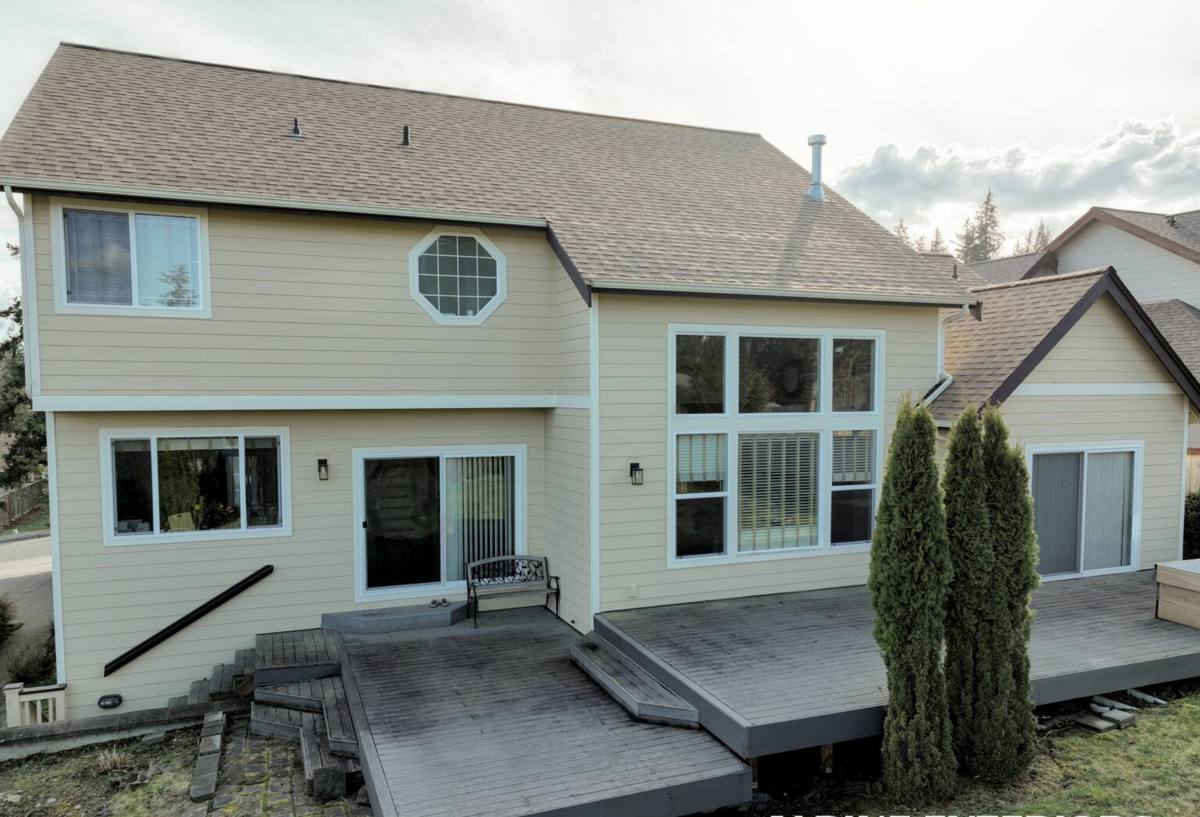
Why Decks Fail Faster Here Than People Expect
Most deck damage isn't caused by one dramatic event. It's caused by moisture that has nowhere to go, sitting against wood and fasteners month after month. In Lynden, a few local factors make that worse:
- Extended wet season: Whatcom County gets long stretches of steady, low-intensity rain rather than short heavy downpours. That means wood stays damp for days at a time instead of getting wet and drying out quickly.
- Moss and organic buildup: Shaded decks, north-facing decks, and any deck under trees collect moss and debris that trap moisture directly against the boards and framing below.
- Ground-level and low-clearance decks: Homes with decks close to grade or with poor airflow underneath dry out much more slowly after rain, which accelerates rot at the ledger board, posts, and joists.
- Freeze-thaw cycling: Even modest winter cold snaps in the valley can freeze moisture that's already worked into cracked wood or fastener holes, which widens the damage each time it thaws.
None of this means a deck is doomed — it means a deck needs to be built and maintained with drainage, ventilation, and material choices that account for how wet this region actually stays.
Common Deck Problems We Find in Lynden
Ledger Board and Attachment Point Rot
The ledger board — where the deck attaches to the house — is the single most important structural connection on most decks, and it's also the most common place we find hidden rot. Flashing that was installed poorly, or missing altogether, lets water run behind the ledger and soak into both the deck framing and the house's rim joist. This is a structural issue, not a cosmetic one, and it's one reason we always inspect the ledger connection closely rather than just looking at visible boards.
Post and Footing Deterioration
Deck posts that sit in or near standing water, or that were set without proper post bases keeping wood off concrete, rot from the bottom up. By the time this shows on the surface, the post has often lost meaningful load-bearing strength.
Joist and Beam Damage
Framing lumber under the decking is out of sight, which means damage here often goes unnoticed until boards start to feel spongy or the deck develops a noticeable sag. Moss and debris caught between boards accelerates this by holding moisture directly on top of the joists.
Fastener Failure
Older decks built with standard (non-coated) fasteners in a wet climate like this one corrode over time. Corroded nails and screws lose holding strength, which shows up as loose boards, squeaking, or railings that have started to wiggle.
Surface Board Cupping, Splitting, and Moss Staining
Decking boards that stay damp too long cup, split along the grain, and grow moss or algae film that makes the surface slick and unsafe underfoot — especially on stairs.
Railing and Stair Stability
Railings and stairs take direct structural stress every time someone uses them, and loose connections here are a safety issue, not just a maintenance one.
What a Proper Deck Repair Involves
A correct repair starts with a real inspection, not a guess based on what's visible from the yard. We check the ledger connection and flashing, get under the deck to look at posts, footings, and joists, and test boards and railings by hand for movement and softness. From there, repair work generally falls into a few categories:
- Structural repair: replacing rotted framing members, sistering damaged joists, resetting or replacing failing posts, and correcting ledger flashing so water sheds away from the house instead of into it.
- Fastener and hardware upgrades: swapping corroded fasteners and undersized hardware for corrosion-resistant, code-appropriate connectors — this alone extends the life of an otherwise sound deck significantly.
- Surface board replacement: replacing individual cupped, split, or rotted boards rather than the whole deck when the framing underneath is still sound.
- Drainage and ventilation correction: improving airflow underneath low-clearance decks and addressing grading or gaps between boards so water actually moves off the structure instead of pooling.
- Railing and stair reinforcement: re-securing or replacing railing posts and stair stringers to meet current safety standards, not just the original build standard.
The goal of any repair we do is to fix the actual cause of the damage, not just replace the board someone can see. Replacing a rotted deck board over a rotted joist doesn't solve anything — it just hides the problem until it shows up again.
Repair vs. Rebuild: How We Make That Call
Not every deck problem calls for full replacement, and not every deck is worth repairing indefinitely. The honest answer depends on where the damage is and how much of it there is.
| Situation | Usually Repairable | Usually Needs Rebuild |
|---|---|---|
| Surface board damage only, framing sound | Yes | |
| Isolated joist or post rot | Yes — sister or replace affected members | |
| Ledger board rot from long-term flashing failure | Sometimes, if caught early | Yes, if rot has spread into the house rim joist |
| Widespread rot across multiple framing members | Yes | |
| Original construction lacked proper footings or spacing | Yes — repair won't fix an undersized structure | |
| Cosmetic wear, graying, minor moss staining | Yes — cleaning and refinishing, not structural repair |
We'll tell you plainly which category your deck falls into. There's no advantage to us in talking a homeowner into a full rebuild when a targeted repair will hold up for years, and no advantage in patching a deck that has real structural problems.
Material Choices for Repairs in a Wet Climate
What we use to repair a deck matters as much as the repair itself, especially in a climate that stays damp this much of the year.
Pressure-Treated Framing Lumber
For structural repairs — joists, beams, posts — pressure-treated lumber rated for ground contact where applicable is the standard. It resists rot far better than untreated lumber and is the baseline for any framing work we do.
Corrosion-Resistant Fasteners and Hardware
Any repair involving pressure-treated lumber needs fasteners and connectors rated for contact with modern treated wood chemicals, which are more corrosive to standard metal than older treatments were. Using the wrong hardware here is a common shortcut that causes fastener failure within a few years.
Decking Material for Replacement Boards
When individual boards need replacing, we'll walk through the honest trade-offs between wood and composite decking for your situation — cost, appearance, and long-term maintenance — rather than pushing one option. Composite handles constant moisture with less upkeep, but it's a bigger investment and needs to be installed with proper spacing for drainage and expansion; wood is more affordable to repair piecemeal but needs regular sealing to hold up through the wet season.
Our Repair Process
- On-site inspection: we check the ledger connection, get underneath the deck to examine posts, footings, and joists, and test boards and railings by hand.
- Straight assessment: we explain what's actually wrong, what caused it, and whether it's a repair or a rebuild situation — in plain terms, not a sales pitch.
- Written scope and estimate: a clear breakdown of what work is included before anything starts.
- Repair work: structural fixes first, then surface and cosmetic work, using materials suited to this climate.
- Final check: we walk the deck with you when it's done so you can see and feel that it's solid.
Signs It's Time to Call for a Deck Inspection
- Boards that feel soft, spongy, or spring back slowly underfoot
- Visible gaps, cracking, or separation where the deck meets the house
- Railings or posts that move or wobble when pushed
- Persistent moss, algae, or dark staining that keeps coming back after cleaning
- Rust streaks around fasteners or visibly corroded screws and nails
- A noticeable sag anywhere in the deck surface
- Stairs that feel less solid than they used to
- Standing water underneath the deck that doesn't drain after a day or two
Any one of these on its own doesn't mean the whole deck is failing, but it's worth having someone look before the next wet season sets in. Deck problems in this climate rarely get better on their own — the moisture that caused the damage doesn't stop coming.
Why a Local Crew Matters for Deck Repair
Deck repair done right requires knowing how a structure has actually behaved through real Whatcom County weather, not just how it looks on a dry afternoon. A crew that works Lynden and the surrounding area regularly has already seen how local sun exposure, tree cover, and rain patterns affect decks in this specific area — which ledger flashing details tend to fail first, which framing choices hold up, and which repairs are worth doing versus which are a temporary patch. That local pattern recognition is hard to substitute for, and it's the difference between a repair that lasts and one that needs redoing in a few years.
If you're noticing any of the issues above, or it's just been a while since your deck had a real inspection, we're happy to take a look. Reach out for a free, no-pressure estimate using the form below — we'll give you a straight answer about what your deck needs and what it doesn't.