 Bellingham
 Decks in Lynden Take a Different Kind of Beating
Lynden sits far enough inland from Bellingham Bay that people sometimes assume their deck is spared the coastal wear that hits homes closer to the water. It isn't, not entirely. Moist marine air moves up the Nooksack valley, and Whatcom County's long, gray stretch of fall-through-spring rain does the rest. Add a moss season that can run six months or more in shaded yards, and a deck here is working against moisture almost year-round, not just during the rainy months everyone expects.
The result is predictable: fastener corrosion, soft spots around ledger boards, joists that stay damp long after a storm has passed, and surface boards that cup or crack because they never fully dry out between rain events. None of this means Lynden is a bad place for a deck. It means a deck built or replaced here needs details that a fair-weather build in a drier climate can skip.
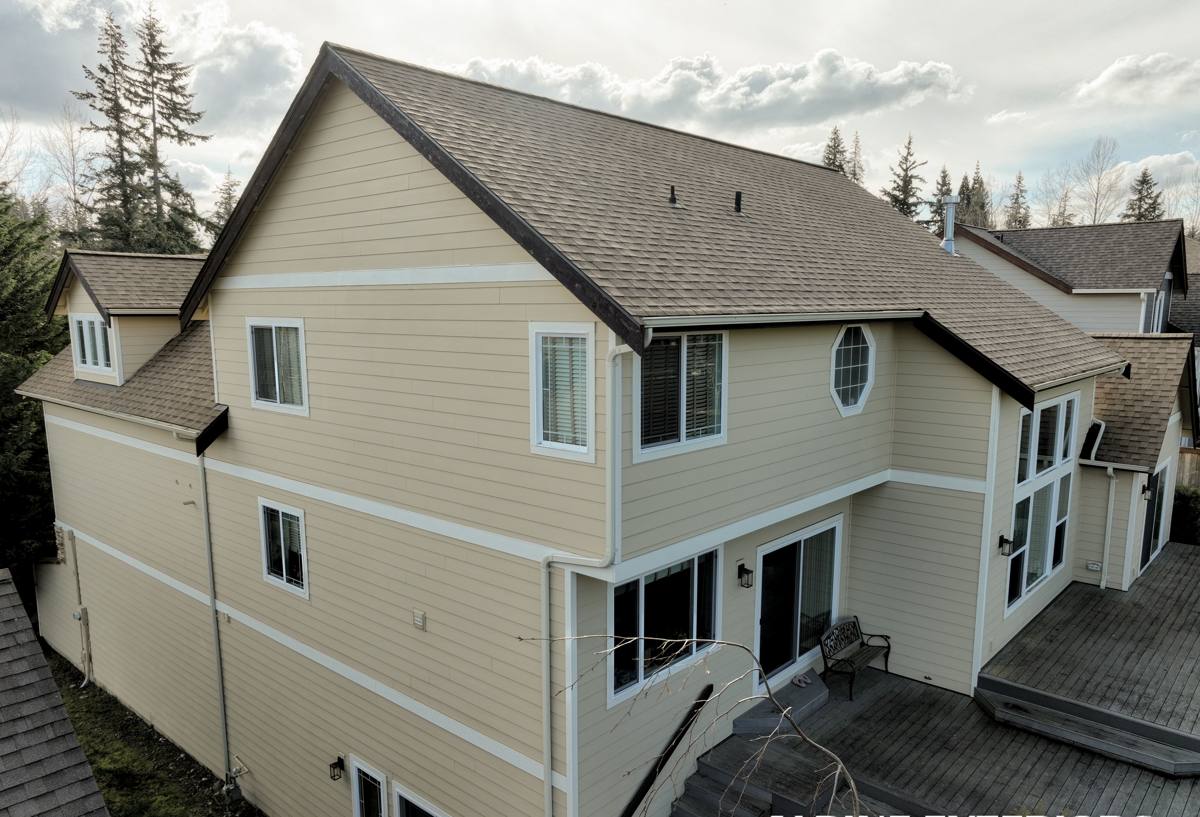
Repair or Replace? Reading the Real Signs
Not every tired-looking deck needs a full tear-off. But in this climate, cosmetic problems often point to structural ones underneath, and it's worth knowing the difference before spending money on the wrong fix.
- Boards that flex, bounce, or feel spongy underfoot, especially near the house
- Rust streaks around fasteners or visible corrosion on structural hardware
- Soft or discolored wood at the ledger board where the deck meets the house
- Posts or footings that have shifted, settled, or show rot at the base
- Persistent moss or algae growth on the deck surface that returns within weeks of cleaning
- A railing that wobbles when pushed — often a sign of post rot, not just a loose bolt
- A deck older than 15-20 years built with untreated or minimally treated lumber
If what you're seeing is limited to a few surface boards and the frame underneath is sound, repair can make sense. Once the ledger connection, footings, or multiple joists are compromised, patching individual boards is a short-term fix on a structure that's already failing underneath.
Choosing Materials That Actually Hold Up Here
Every decking material sold today will look good on the showroom sample. What matters is how it performs through a Whatcom County winter, year after year, without babying. Here's how the common options compare for this climate specifically.
| Material | Moisture Behavior | Moss/Mildew Resistance | Maintenance | Typical Lifespan |
|---|---|---|---|---|
| Pressure-treated pine | Absorbs and releases moisture readily; prone to cupping if not sealed regularly | Low — needs regular cleaning and sealing to resist growth | Annual cleaning, re-sealing every 1-2 years | 10-15 years with upkeep |
| Cedar | Naturally moisture-resistant, but surface needs protection over time | Moderate — natural oils help, fade without maintenance | Periodic cleaning, occasional oil/stain | 15-20 years with upkeep |
| Composite decking | Doesn't absorb water into the board itself; drainage and airflow underneath still matter | Moderate to high depending on product; surface texture affects grip and grime buildup | Periodic washing; no sealing or staining | 25-30+ years |
| PVC/cellular decking | Fully moisture-resistant board; framing underneath still needs to be treated and ventilated | High — non-organic surface resists moss and mildew | Occasional washing | 25-30+ years |
There's no universally "correct" choice here — it's a trade-off between upfront cost, how much upkeep you're willing to do, and how the deck will be used. What we won't do is install a decking product over a frame that isn't built to handle the moisture load this climate puts on it, regardless of what's on top. A composite deck over a poorly flashed, poorly ventilated frame will still rot from the substructure up.
Fasteners and Hardware Matter As Much As the Boards
A huge share of deck failures we see aren't the decking material at all — they're the fasteners. Standard galvanized screws and joist hangers corrode faster than most homeowners expect in a humid, marine-influenced climate. We use stainless steel or coated hardware rated for ground contact and moisture exposure on every replacement, because replacing a deck only to have the fasteners fail in eight years defeats the purpose.
What a Correct Deck Replacement Actually Involves
A deck replacement isn't just pulling up old boards and screwing down new ones. Done right, it addresses the parts of the structure you can't see from the surface — the parts most likely to fail first in this climate.
The Ledger Connection
Where the deck attaches to the house is the single most common failure point in this region. Proper flashing at the ledger board keeps water from tracking behind the siding and into the house framing — a problem that can go unnoticed for years until it's caused real damage. We flash this connection correctly every time, not just when it's convenient.
Footings and Posts
Footings need to sit below frost depth and bear on undisturbed, stable soil — something that matters on the varied ground conditions you find around Lynden's mix of rural and residential lots. Posts should be rated for ground contact and set with proper drainage so water doesn't pool at the base.
Joists and Framing
Joist tape or another moisture barrier on top of the joists prevents water from sitting on the wood under the decking boards — a detail that matters far more in a climate with this much sustained damp than in a drier region. Spacing and blocking need to match the decking material chosen, since composite and PVC products often have different span requirements than solid wood.
Drainage and Airflow Underneath
A deck built low to the ground with poor airflow underneath will stay damp longer after every rain, which accelerates rot and feeds moss and mildew growth. Grading, gaps, and skirting design all affect how quickly the space underneath dries out.
Our Deck Replacement Process
Every deck we replace goes through the same sequence, adjusted for the specific structure and site conditions:
- On-site evaluation — we check the ledger, footings, posts, and joists in person before quoting anything, not just the visible surface boards.
- Material and layout discussion — we walk through the trade-offs in the table above based on your budget, maintenance preference, and how the deck gets used.
- Permitting — we handle the permit process where required so the work is documented and inspected correctly.
- Demolition — full removal of the old deck surface and, where needed, the substructure, with attention to protecting the house exterior during teardown.
- Structural rebuild — footings, posts, ledger flashing, and joists brought up to current standards for this climate, not just matched to what was there before.
- Decking installation — surface material installed with correct spacing, fastening, and edge treatment for expansion and drainage.
- Final walkthrough — we go over the finished deck with you, including what maintenance (if any) the material requires going forward.
Permits and Local Considerations
Most deck replacements that involve structural changes — new footings, a raised deck, or a change in size — require a permit through Whatcom County or the applicable local jurisdiction, depending on where the property sits relative to Bellingham and Lynden's boundaries. We handle that process as part of the job rather than leaving it for the homeowner to sort out, and we build to the structural requirements that apply here, including footing depth and guardrail specifications for anything above grade.
What Deck Replacement Costs Depend On
We won't quote a number without seeing the job, but the main factors that move a deck replacement's cost up or down are consistent from project to project:
| Factor | Why It Matters |
|---|---|
| Deck size and shape | Square footage and the number of angles, stairs, or level changes drive labor time |
| Decking material | Pressure-treated lumber costs less upfront; composite and PVC cost more but need less upkeep |
| Substructure condition | If footings and framing are sound, only the surface needs replacing; if not, more of the budget goes underneath |
| Height and railing requirements | Raised decks need more substantial framing and code-compliant guardrails |
| Site access | Tight lots or decks with limited equipment access can add labor time |
As a rough starting point, a straightforward pressure-treated replacement on an existing footprint tends to sit at the lower end of typical residential deck project costs, while composite or PVC decking with a larger footprint or structural rework runs higher. An on-site look is the only way to get a real number.
Why Local Experience on This Specific Job Matters
A deck replacement crew that already works in and around Lynden has seen how the local moisture pattern actually plays out on real houses — which ledger connections fail first, which yards hold moss longest, which lots have soil that needs extra attention at the footings. That's not something you get from a general contractor working from a manual written for a different climate. We build every deck replacement to hold up specifically against the salt air, driving rain, and extended moss season that define a Whatcom County winter, not against generic weather.
Keeping a New Deck in Good Shape
Whatever material you choose, a little seasonal attention goes a long way in this climate:
- Sweep leaves and debris off the surface regularly in fall — trapped organic matter holds moisture and feeds moss
- Rinse or wash the deck surface at least once or twice a year to keep moss and mildew from establishing
- Check that gaps between boards stay clear so water can drain instead of pooling
- Inspect the ledger flashing and railing connections annually for any sign of movement or moisture
- Re-seal wood decking on the schedule the product calls for — don't wait until it looks obviously weathered
- Keep gutters and downspouts near the deck clear so runoff isn't dumping directly onto or under it
If your deck is showing its age or you're just not sure whether it's a repair or a replacement situation, we're glad to take a look. Reach out through the form below for a free, no-pressure estimate — we'll give you a straight answer either way.