 Bellingham
 Roof Repair Built for Puget's Marine Climate
Homes in the Puget area of Bellingham sit close enough to the water that salt air becomes a daily fact of life for a roof, not an occasional nuisance. Add Whatcom County's long stretch of driving rain each fall and winter, plus a moss season that can run eight months or more in shaded, north-facing sections, and you have a roofing environment that punishes shortcuts. A repair that would hold up fine in a drier inland climate can fail here in a single wet season if it doesn't account for how this specific area behaves.
We work on roofs throughout Bellingham and Whatcom County, and the Puget area presents its own recurring pattern: moss and moisture issues on shaded slopes, wind-driven rain finding its way under flashing and shingle edges, and salt-laden air accelerating corrosion on fasteners, flashing, and any exposed metal. A roof repair here needs to solve the actual problem, not just patch the symptom.
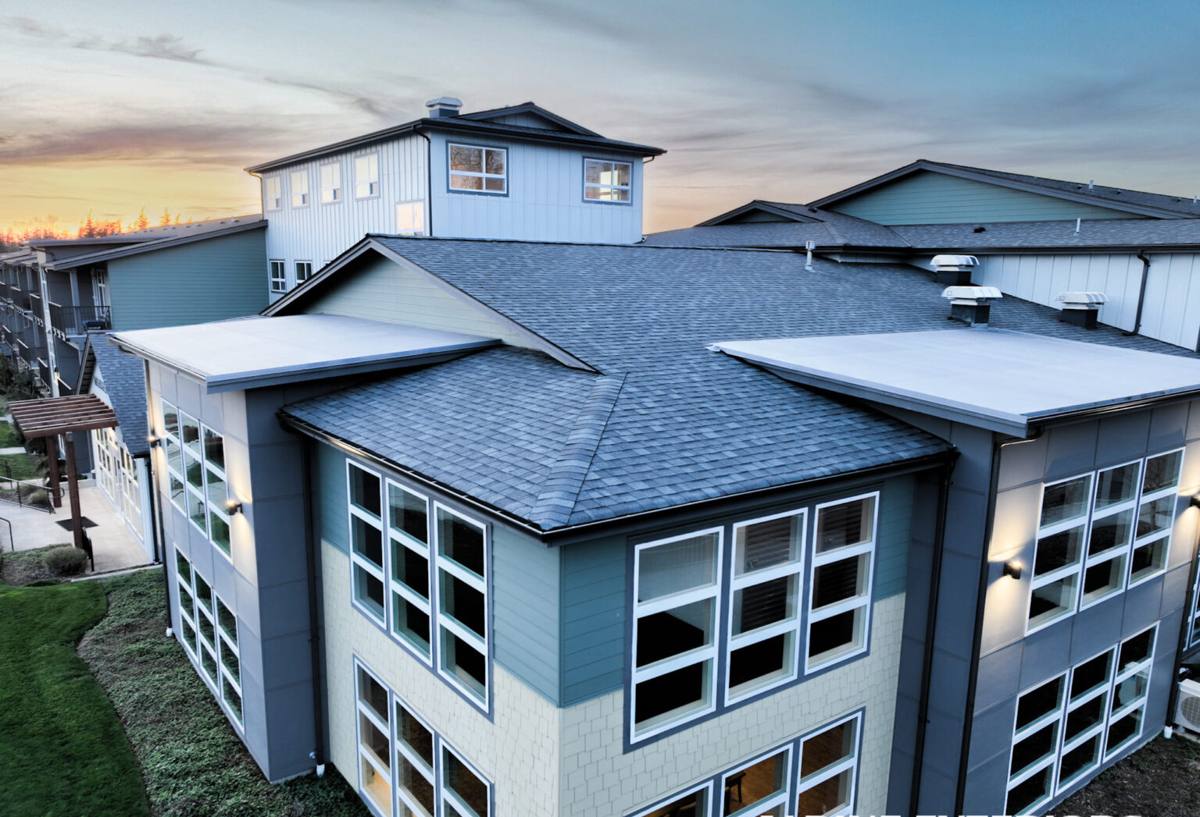
What Puget Homes Actually Need From a Roof Repair
Every roof repair call starts with a specific complaint — a stain on a ceiling, a missing shingle after a windstorm, moss creeping across the north slope. But the underlying causes in this area tend to cluster around a few recurring issues:
Moss and Organic Growth
Bellingham's moisture and mild temperatures are close to ideal conditions for moss, and Puget's tree cover and shaded slopes make it worse in specific spots. Moss isn't just cosmetic — as it grows, it lifts shingle edges and holds water against the roof surface long after the rain has stopped. That trapped moisture is what eventually works its way under the shingle and into the roof deck. A repair on a moss-affected roof has to remove the growth correctly, address the trapped moisture, and evaluate whether the shingles underneath were already compromised before painting over the problem.
Wind-Driven and Salt-Laden Rain
Straight-down rain is easy for a roof to shed. Driving rain, pushed sideways by wind off the water, is a different problem — it can find its way under shingle tabs, around flashing, and into any gap that a calmer climate would never expose. Combined with the salt content in the air near Puget, this accelerates corrosion on nail heads, flashing seams, and any metal roof components, which in turn creates new leak points faster than they would develop inland.
Flashing and Penetration Failures
Chimneys, vent pipes, skylights, and roof-to-wall transitions are where most leaks actually originate, far more often than the open field of shingles. Flashing is metal, and metal exposed to salt air and constant wetting corrodes and loosens faster here than in a dry inland climate. A repair that only replaces a few shingles near a leak but ignores worn flashing underneath is treating a symptom, not the cause.
How We Diagnose a Roof Problem in Puget
An honest repair starts with an honest diagnosis. We don't quote a fix over the phone based on a homeowner's description alone, because the visible symptom (a stain, a drip, a missing shingle) rarely tells the whole story about where water is actually entering.
- Exterior inspection — we walk the roof surface and check flashing, valleys, penetrations, moss coverage, and the condition of the shingles or roofing material itself.
- Interior check — where accessible, we look at the attic or roof deck from below to trace water staining back to its actual entry point, which is often several feet from where the stain appears on the ceiling.
- Moisture assessment — on moss-affected sections, we check whether the roof deck underneath has already absorbed moisture, since that changes the scope of the repair.
- Honest scoping — we tell you plainly whether this is a targeted repair, a larger section replacement, or a sign the roof is nearing the end of its service life. We're not going to sell a homeowner a patch when the underlying roof is failing, and we're not going to push a full replacement when a proper repair will hold.
What a Correct Roof Repair Involves
A roof repair done right in this climate goes beyond swapping out damaged shingles. Depending on what the inspection finds, a proper repair typically includes:
- Removing moss and organic debris without damaging the shingle surface underneath
- Replacing or resealing flashing around chimneys, vents, and roof-to-wall transitions
- Checking and replacing corroded fasteners, particularly on older roofs closer to the water
- Verifying underlayment condition in the repair area, not just the visible shingle layer
- Confirming attic ventilation is adequate, since poor ventilation traps moisture and accelerates the exact problems driving rain and moss cause
- Matching replacement materials as closely as possible so the repair doesn't stand out or create a new weak seam
Skipping any of these steps to save time on a single visit is usually how a "repaired" roof ends up leaking again the following winter.
Repair vs. Replacement: How We Help You Decide
Not every roof problem calls for a full replacement, and not every leak can be solved with a small patch. The table below outlines the general factors we weigh when advising a Puget homeowner on which direction makes sense.
| Factor | Favors Repair | Favors Replacement |
|---|---|---|
| Age of roof | Roof is within its expected service life | Roof is near or past its expected lifespan |
| Extent of damage | Isolated to one section, flashing, or penetration | Widespread across multiple slopes |
| Moss/moisture history | Surface growth only, deck is dry underneath | Moisture has reached and softened the roof deck |
| Material availability | Matching shingles or materials are still available | Original material is discontinued or badly weathered by comparison |
| Underlying structure | Decking and framing are sound | Decking shows rot or repeated past patch work |
We'll walk through where your roof falls on these factors before recommending a direction — the goal is the right call for your roof and your budget, not the largest invoice.
Timing Repairs Around Bellingham's Weather
Whatcom County's wet season runs roughly from fall through spring, and that's exactly when leaks tend to announce themselves — which is also the worst time to be doing exterior repair work in ideal conditions. We plan around weather windows to get repairs done safely and correctly, and for non-emergency issues, late spring and summer are the better window for anything involving flashing replacement, deck repair, or larger sections of shingle work, since materials and sealants cure properly in dry conditions. For active leaks during the wet months, we prioritize stopping water intrusion first and completing the full repair as soon as conditions allow.
A Homeowner's Roof Repair Checklist
Between professional inspections, there are a few things Puget homeowners can watch for that often signal a repair is due:
- Moss visible on shaded or north-facing roof slopes
- Granules collecting in gutters or at the base of downspouts
- Shingles that appear curled, lifted, or missing after a windstorm
- Water stains on ceilings, especially near chimneys or where two rooflines meet
- Rust streaking near flashing or metal roof components
- Daylight visible through the roof deck from inside the attic
- Sagging sections anywhere on the roofline
Catching any of these early is almost always cheaper than waiting for a ceiling stain to force the issue.
Why a Crew That Knows Puget's Roofs Matters
A roof repair crew that mostly works drier, inland climates can miss what matters here — how far driving rain actually pushes under a shingle edge, how fast salt air corrodes an unprotected fastener, or how much moisture a season of moss growth has already trapped against the deck. We work roofs throughout Bellingham and Whatcom County regularly enough to recognize these patterns immediately instead of treating each one as a surprise. That familiarity shows up in fewer callbacks and repairs that are scoped correctly the first time.
We also believe in giving straight answers. If a section of your roof is beyond a reasonable repair, we'll say so and explain why. If a repair will genuinely hold for years to come, we'll do that instead of upselling a replacement you don't need yet.
Get a Straightforward Roof Repair Estimate
If you're dealing with a leak, visible moss, storm damage, or just want an honest look at where your roof stands, we're happy to come take a look. The estimate is free, there's no pressure, and you'll get a clear explanation of what we find and what it would take to fix it — use the form below to get started.