 Bellingham
 Storm Damage Roof Repair, Built for Silver Beach Conditions
Silver Beach sits in one of the more tree-dense, moisture-heavy pockets of Bellingham, and that combination shows up on roofs in specific ways. When a windstorm rolls through Whatcom County, homes here don't just lose a few shingles in the open — they take hits from falling limbs, wind-driven rain that gets pushed sideways under flashing, and standing moss mats that trap water long after the storm has passed. Storm damage roof repair in this neighborhood isn't a generic patch job. It has to account for tree cover, slope, and the slow-motion damage that moss and lichen do between storms.
This page covers what storm damage actually looks like on a Silver Beach roof, how a proper repair is done, and why local experience matters more here than in a lot of other parts of town.
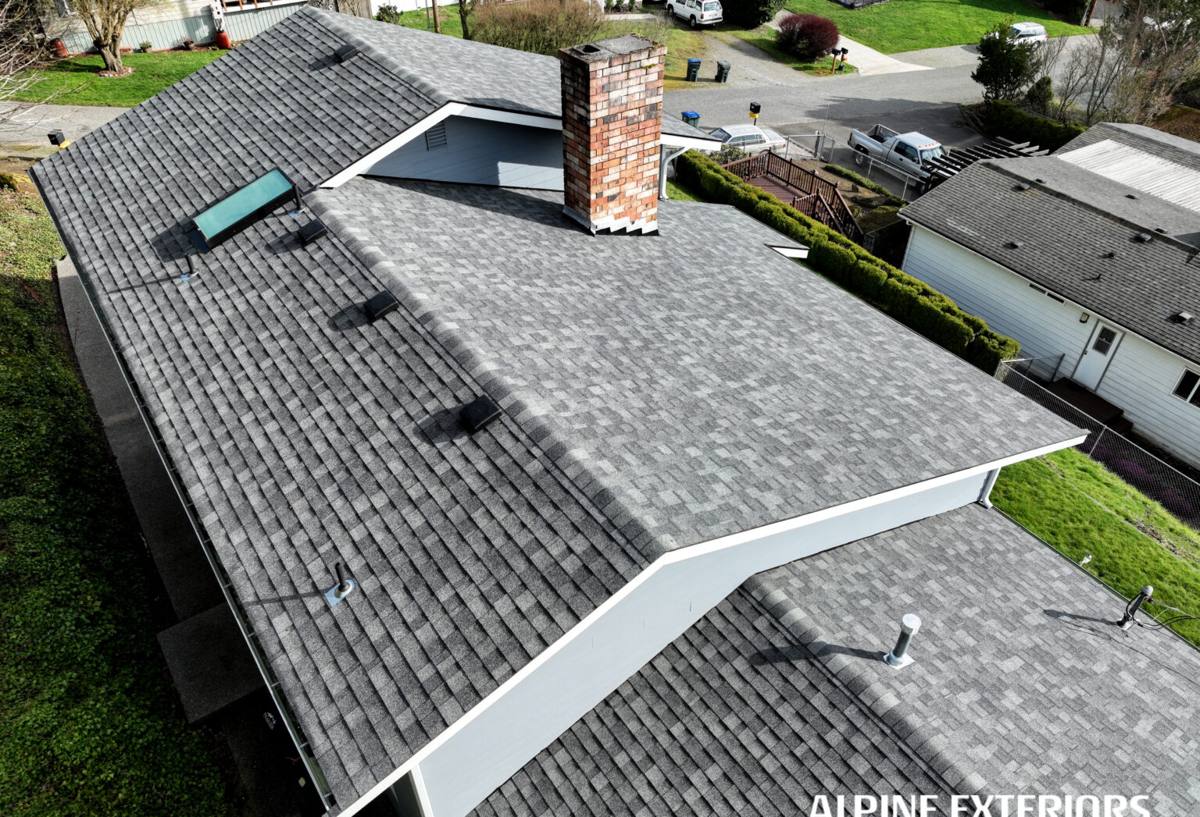
Why Silver Beach Roofs Take a Different Kind of Beating
A few things stack up in this part of Bellingham that make storm damage more likely and harder to spot without a trained eye:
- Tree canopy overhead. Mature conifers and deciduous trees around many Silver Beach properties mean storms bring falling branches, needle and leaf buildup in valleys, and shade that keeps roof surfaces damp for days after rain stops.
- Salt-tinged marine air. Like much of the Puget Sound / Whatcom County coastline, the air here carries salt and moisture that slowly corrodes exposed fasteners, flashing, and metal roof edges — a storm that loosens a nail or lifts a flashing edge gives that corrosion a faster path to do damage.
- Driving, wind-pushed rain. Bellingham storms often come with sustained wind that drives rain sideways rather than straight down. That means water finds its way under shingle tabs, around chimney flashing, and into vents that would stay dry in a calmer rain.
- A long moss season. Cool, damp shade for much of the year means moss and algae get a real head start. A storm that lifts or cracks shingles gives moss roots — which already hold moisture against the roof deck — an opening to work faster.
None of these factors are unique to Silver Beach alone, but the way they combine — heavy tree cover plus lake-adjacent humidity plus coastal wind exposure — is a pattern we see repeat on this side of town more than in drier, more open parts of the city.
What Actually Counts as Storm Damage
Homeowners often assume storm damage means a hole in the roof or shingles scattered across the yard. Most of what we find after a Whatcom County windstorm is quieter than that. Common storm-related issues on Silver Beach roofs include:
Wind and impact damage
- Shingles creased, cracked, or lifted at the tab (often invisible from the ground)
- Flashing bent or pulled loose around chimneys, skylights, and roof-to-wall junctions
- Branch strikes that puncture, gouge, or crack the roofing surface without leaving an obvious hole
- Fasteners backed out or sheared by wind uplift, leaving shingles loose but still in place
Water intrusion damage
- Wind-driven rain forced under shingle edges or around vent boots
- Ice or debris-clogged valleys backing water up under the roofing material
- Gutter and downspout failures that overload roof edges and fascia during heavy rain
- Slow leaks that only become visible weeks later as a ceiling stain or musty attic smell
That gap between when damage happens and when it becomes visible is the real risk. A roof that looks fine from the driveway can have lifted shingles or compromised flashing that lets water into the deck for months before anyone notices from inside the house.
Repair vs. Replace: How We Make the Call
Not every storm-damaged roof needs a full replacement, and we don't default to recommending one. The right call depends on the roof's age, how widespread the damage is, and what condition the underlying deck and roofing material are in.
| Factor | Leans toward repair | Leans toward replacement |
|---|---|---|
| Roof age | Under 10-12 years, in otherwise good shape | Nearing or past its expected service life |
| Damage extent | Localized — a section, a slope, a flashing point | Scattered across multiple slopes or the whole roof |
| Moss/algae condition | Surface growth, deck still sound underneath | Moss roots have held moisture long enough to soften the deck |
| Matching material | Discontinued shingle line still has close matches available | Material is old enough that patches will visibly mismatch |
| Insurance scope | Adjuster and inspection agree on a repair-level claim | Damage assessment supports a full replacement claim |
We walk the roof, document what we find with photos, and give you a straight answer — including telling you when a smaller repair is the honest recommendation, even if a replacement would be a bigger job for us.
How Our Storm Damage Repair Process Works
1. Inspection and documentation
We get on the roof (not just a look from the ground) and check every slope, valley, flashing point, and vent penetration. We photograph anything relevant to a possible insurance claim, including damage that isn't obvious yet but is likely to cause problems.
2. Temporary protection, if needed
If there's active water intrusion or an open area exposed to the weather, we get it covered and protected first. Waiting on paperwork or scheduling shouldn't mean more water gets into your attic or ceiling in the meantime.
3. Written scope and estimate
You get a clear, written breakdown of what's damaged, what needs to be repaired or replaced, and roughly what it will cost. We flag anything we're not sure about rather than guessing.
4. The repair itself
Damaged shingles, underlayment, and flashing are removed and replaced — not just patched over. Fasteners are set to spec, flashing is properly lapped and sealed, and any moss or debris that contributed to the damage is cleared from the repair area.
5. Final check
We walk the finished repair with you, confirm the area sheds water correctly, and point out anything else on the roof worth keeping an eye on, even if it's not part of this repair.
Materials and Methods We Use for Storm Repairs
Storm repair work uses the same standards as new roofing — there's no shortcut version. That means:
- Matching shingle type, weight, and where possible, color lot, so repairs blend rather than stand out
- Ice-and-water shield or synthetic underlayment at repaired valleys and flashing points, not just the original felt
- Metal flashing formed and lapped correctly at chimneys, walls, and skylights rather than relying on sealant alone to do the work
- Corrosion-resistant fasteners appropriate for a marine-air environment, since standard fasteners degrade faster this close to the water
Sealant and caulk have a place in roofing, but we use them to finish a properly flashed detail, not to substitute for one. A repair held together mostly by sealant will fail again in the next storm.
Insurance and Documentation: What to Know
Most homeowner policies cover sudden storm damage — wind, falling limbs, wind-driven rain intrusion — but coverage details and deductibles vary by policy. A few things that make the claims process smoother:
- Photograph visible damage as soon as it's safe to do so, before any cleanup
- Get a written inspection report from a roofer, not just a verbal opinion, before you talk to your adjuster
- Keep receipts for any emergency tarping or temporary repairs — those are usually reimbursable
- Ask your adjuster to walk the roof with your contractor present when possible, so both sides are looking at the same damage
We're glad to provide the documentation and estimate an adjuster needs, and to be present for that inspection if it's helpful. We don't handle the claim itself — that's between you and your insurer — but we won't leave you guessing about what the roof actually needs.
After the Storm: A Practical Checklist
- Do a visual check from the ground first — don't get on a wet or storm-damaged roof yourself
- Look inside the attic and along ceilings for new stains, damp spots, or musty smells
- Clear obvious debris (small branches, leaves) from gutters and downspouts if it's safe to reach from a ladder
- Note the date and time of the storm and any damage you can see, for insurance purposes
- Call for an inspection promptly — delayed water intrusion is the biggest cause of damage that grows worse over time
- Avoid "storm chaser" contractors going door-to-door right after severe weather; verify licensing and local presence before signing anything
Why a Crew That Already Works Silver Beach Matters
Storm damage repair isn't just about roofing technique — it's about knowing what's normal for a given neighborhood versus what's a red flag. A crew that regularly works Silver Beach knows how tree cover in this area tends to concentrate debris and moss on certain roof orientations, how the local wind pattern off the water tends to hit certain slopes harder in a storm, and what flashing details tend to be original versus previously repaired on homes of a certain age here. That local pattern recognition means a faster, more accurate inspection and fewer surprises once work is underway.
It also means shorter response times when storm damage needs to be assessed quickly, and a crew that's still around months or years later if a repair needs a warranty check or the next storm brings new damage.
Get a Free, No-Pressure Estimate
If a recent storm has you wondering whether your Silver Beach roof needs attention — or you just want a second opinion before a claim goes further — we're happy to take a look. The estimate is free, there's no pressure to move forward, and you'll get a straight answer about what your roof actually needs. Use the form below to get started.