 Bellingham
 Roofing on South Hill Isn't the Same Job as Roofing Downtown
South Hill sits up above the flats of Bellingham, and that elevation and tree cover change what a roof has to deal with. Homes here catch more wind off Bellingham Bay, sit under more overhanging fir and cedar canopy than houses closer to the water, and hold onto shade longer through the wet months. That combination — salt-tinged air, driving rain off the Sound, and a moss season that can run from October into May — is hard on any roofing material, but it's especially hard on asphalt shingles that weren't installed with this specific exposure in mind.
We've worked on enough South Hill roofs to know the failure patterns are consistent: moss wedging under shingle tabs on the north-facing slopes, granule loss on roofs that never get direct sun to dry out, and valley flashing that was fine for a drier climate but wasn't detailed for Whatcom County's rain volume. This page is about what a correctly installed and maintained asphalt shingle roof actually needs to hold up on South Hill specifically — not a generic roofing overview.
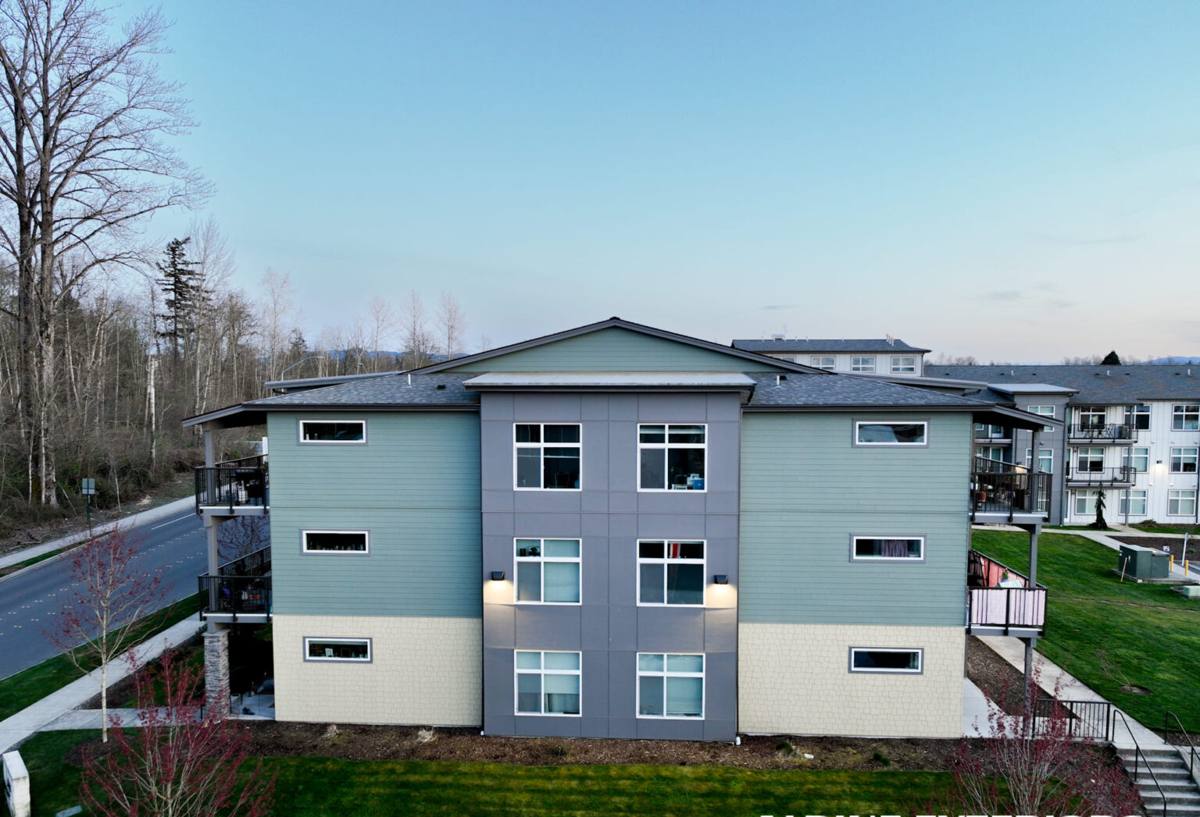
What Whatcom County's Climate Does to Asphalt Shingles
Moisture That Doesn't Leave
Bellingham gets a lot of its annual rainfall as long, low-intensity soaking events rather than short downpours. On a shaded South Hill lot, that means shingles can stay damp for days at a stretch. Asphalt shingles are designed to shed water fast and dry out between storms — when they don't get that drying window, moss and algae get a foothold, and moisture starts working into fastener holes and under tab edges instead of running off.
Moss Isn't Cosmetic — It's Structural Risk Over Time
Moss doesn't just look bad. As it grows, it lifts shingle edges, holds water directly against the mat, and roots into the granule surface, which accelerates the granule loss that protects the asphalt from UV and weather. A moss-covered roof also sheds water unevenly, which increases the chance of it backing up under shingles during a heavy rain event rather than draining cleanly.
Salt Air and Wind
South Hill isn't waterfront, but it's still within range of salt-laden air moving in off Bellingham Bay, especially on south and west-facing exposures. Salt air accelerates the corrosion of exposed metal fasteners, flashing, and vent components faster than it degrades the shingles themselves — which is why fastener and flashing quality matters as much as the shingle brand you choose.
What a Correct Asphalt Shingle Job Looks Like Here
A shingle roof that's going to hold up on South Hill needs a few things done right that a lower-priced or rushed install often skips:
Underlayment That Handles Extended Wet Periods
We use synthetic underlayment rated for extended UV and moisture exposure, with self-adhered ice-and-water membrane at eaves, valleys, and any roof-to-wall transitions — the spots where wind-driven rain is most likely to find a way in before the shingles alone can stop it.
Ventilation Sized for Shade
A roof under heavy tree cover needs balanced intake and exhaust ventilation even more than a sunny roof does, because it isn't getting help drying out from solar heat. Poor attic ventilation on a shaded South Hill home shows up as premature shingle curling and, in bad cases, sheathing rot from the underside — a problem that starts in the attic, not on the roof surface.
Flashing Details, Not Just Shingle Brand
Most leaks we get called out for on South Hill aren't shingle failures — they're flashing failures at chimneys, skylights, dormers, and valleys. Correct step flashing, counterflashing, and valley metal (or a properly woven/cut valley, done to spec) matter more to long-term dryness than which shingle line goes down.
Fastening for Wind Exposure
South Hill's elevation means more wind exposure than sheltered lower neighborhoods. We fasten to the manufacturer's high-wind nailing pattern rather than the minimum standard pattern, and we don't rely on staples.
Comparing Your Realistic Options
Asphalt shingles come in a few tiers, and the right one depends on your roof's exposure, budget, and how long you plan to stay in the home. Here's how they generally compare for a South Hill property:
| Shingle Type | Typical Lifespan Here | Moss/Algae Resistance | Best Fit |
|---|---|---|---|
| 3-tab (economy) | 15-20 years | Lower — no algae-resistant granules on older lines | Budget-driven projects, rentals, short-term ownership |
| Architectural / dimensional | 25-30 years | Moderate to good with algae-resistant (AR) granules | Most South Hill homes — best balance of cost and durability |
| Premium / designer | 30+ years | Good, with copper- or zinc-infused AR granules | Heavily shaded lots, steep-slope or high-visibility roofs |
For most South Hill homes under partial tree cover, we recommend at minimum an architectural shingle with algae-resistant granules. The upcharge over 3-tab is modest, and the moss/algae resistance is the single feature that matters most given the local shade and moisture pattern.
Repair, Recover, or Full Replacement?
Not every roof problem means a full tear-off. We assess based on age, deck condition, and how localized the damage is:
- Spot repair — appropriate for isolated flashing leaks, a handful of wind-damaged shingles, or a single failed vent boot, on a roof that's otherwise sound and not near the end of its service life.
- Moss and debris treatment — for roofs with buildup but no structural or deck damage yet; includes careful mechanical removal (never aggressive pressure washing, which strips granules) and a preventive treatment application.
- Full replacement — warranted when shingles are past their expected service life, when there's granule loss across large areas, when the deck has soft spots from long-term moisture intrusion, or when repeated repairs are chasing the same underlying flashing or ventilation problem.
We'll tell you honestly which category your roof falls into. We don't sell full replacements to homeowners who only need a repair, and we won't recommend a repair on a roof that's actually at the point of needing full replacement — patching an old roof past its service life usually just delays a bigger bill.
Our Process on South Hill Jobs
1. On-Site Assessment
We walk the roof (weather permitting) and check the attic from the inside — deck condition, ventilation, insulation contact, and any signs of past moisture intrusion tell us more than the shingle surface alone.
2. Written Scope and Straight Answer on Cost
You get a clear scope of what's being done and why, broken into what's necessary now versus what can wait, along with an honest cost range before any work starts.
3. Protecting the Property During the Job
Given how many South Hill lots have mature landscaping and tight setbacks, we take care with tarping, magnetic nail sweeps, and debris containment so the job doesn't leave a mess in your yard or your neighbor's.
4. Final Walkthrough
We walk the finished roof and attic with you, point out what was done, and make sure you know what routine maintenance (if any) it needs going forward.
Maintenance That Actually Extends Roof Life Here
A well-installed shingle roof on South Hill still needs periodic attention because of the shade and moisture load. A simple homeowner checklist:
- Have gutters and downspouts cleared at least twice a year — clogged gutters back water up under the eave edge, which is a common cause of soffit and fascia rot.
- Watch for moss starting on north-facing slopes and shaded valleys; catching it early means a light treatment instead of a full removal.
- Keep overhanging branches trimmed back from the roofline to reduce shade, debris buildup, and physical abrasion on the shingle surface.
- After any significant windstorm, do a visual check (or have us check) for lifted or missing shingles before the next rain event finds the gap.
- Don't ignore small interior water stains near ceilings or top-floor walls — they're almost always cheaper to fix as a flashing repair than as a full replacement six months later.
Why a Crew That Already Works This Neighborhood Matters
Roofing crews that mostly work drier, sunnier parts of the country — or even drier parts of Washington east of the mountains — don't always price in Whatcom County's moss season or design flashing details for this much sustained rain. We work South Hill roofs regularly enough to know which slopes on a given lot layout tend to hold moisture, where flashing tends to get overlooked on older additions, and what ventilation setup actually performs under heavy tree cover rather than just meeting code minimum. That local pattern recognition is what keeps a shingle roof performing for its full expected lifespan instead of needing early intervention.
Get a Straight Answer on Your Roof
If you're dealing with visible moss, granule loss, a leak you can't pin down, or you just want an honest read on how much life is left in your current roof, we're glad to take a look. Reach out for a free, no-pressure estimate — we'll tell you what your roof actually needs, not just what's easiest to sell.