 Bellingham
 Siding Installation Built for Sunnyland's Climate
Sunnyland sits inland enough from Bellingham Bay to feel like a quiet, tree-covered neighborhood, but it's still close enough to the water that salt-laden air reaches the siding on every home here. Add Whatcom County's driving rain off the Pacific and a moss season that can stretch from fall through spring, and you have three separate stresses working on your home's exterior at the same time: corrosion, moisture intrusion, and organic growth that traps both. Most siding products are engineered for one or two of these conditions. Very few are engineered for all three at once, which is exactly why siding installation in this neighborhood needs to be treated differently than a generic re-side job.
We install siding across Bellingham and Whatcom County, and Sunnyland is one of the neighborhoods we're in regularly enough to know its patterns: which slopes hold moss longest, which streets catch the worst of the wind-driven rain, and which older homes are due for a full re-side rather than a patch job. This page walks through what correct siding installation actually involves here, why we install only James Hardie fiber cement, and what our process looks like from first estimate to final walkthrough.
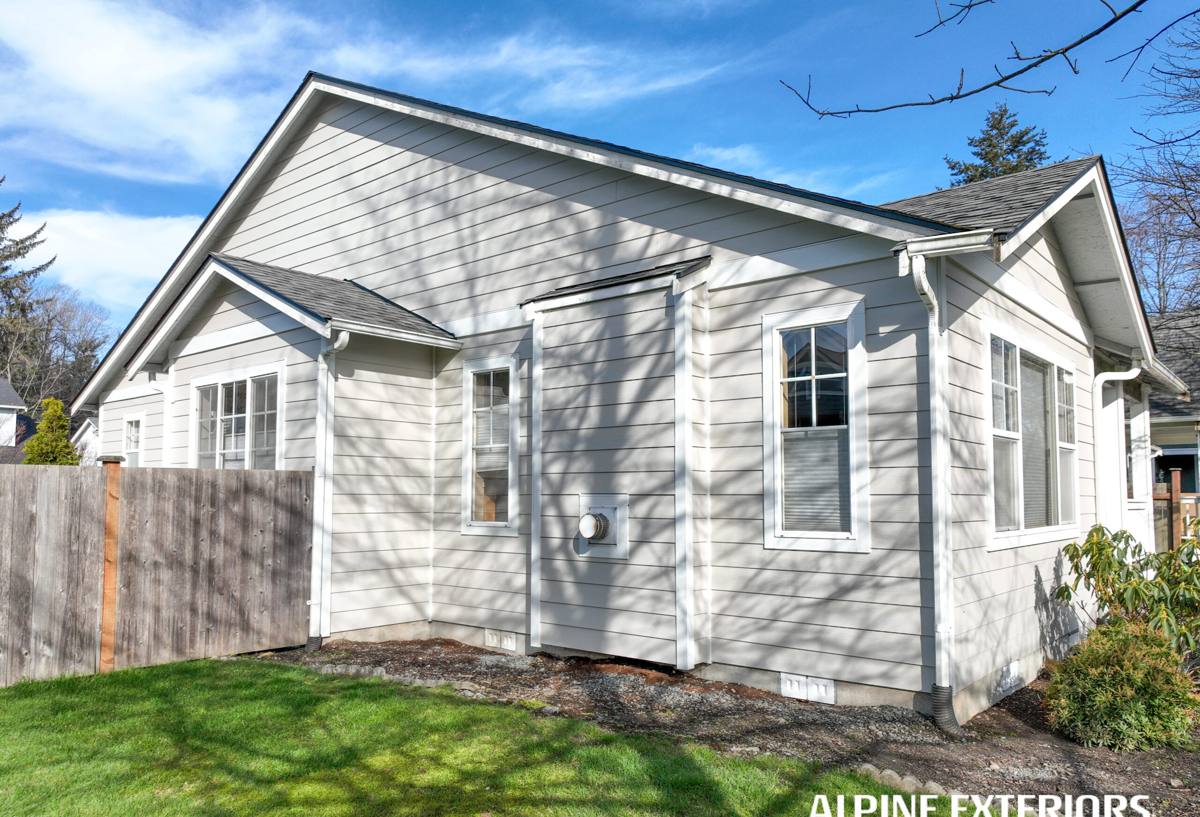
What Bellingham's Climate Actually Does to Siding
Salt Air and Corrosion
Homes near any Puget Sound-adjacent community deal with airborne salt that settles on exterior surfaces and accelerates corrosion of exposed fasteners, trim edges, and lower-grade metal flashing. Over years, this shows up as rust bleed streaking down siding panels, corroded nail heads, and premature failure of hardware that wasn't rated for coastal exposure. It's a slow problem, which is exactly why it gets ignored until it's expensive.
Driving Rain
Bellingham's weather doesn't just rain — it rains sideways for stretches of the fall and winter, driven by wind off the Strait of Georgia and the Sound. That means water is pushed up and under laps, into seams, and against vertical trim in ways that vertical, calm rainfall never tests. Siding systems and installation details that work fine in drier climates can fail here specifically because the water pressure and direction are different.
Moss and Sustained Moisture
Whatcom County's long, mild, wet season is close to ideal growing conditions for moss, and moss doesn't just sit on siding — it holds moisture against the surface for months at a time. On wood-based products, that sustained dampness is what triggers rot. On any siding, trapped moisture behind moss growth on trim, butt joints, and horizontal ledges accelerates whatever deterioration process the material is already prone to.
Why James Hardie Fiber Cement Is the Right Answer Here
We install James Hardie fiber cement siding exclusively, and Sunnyland's climate is a big part of why. Fiber cement is a non-combustible cement, sand, and cellulose fiber composite — it doesn't have the wood content that gives rot fungus something to feed on, and it isn't a petroleum-based product that can become brittle or warp under UV and temperature swings the way vinyl can. For a neighborhood dealing with salt exposure, sustained rain, and moss simultaneously, that combination matters more than it does in a drier climate.
Hardie also builds region-specific product lines through its HZ5 engineering, designed for climates with freeze-thaw cycling and sustained moisture exposure — which describes Whatcom County reasonably well. The factory-applied ColorPlus finish is baked on and warranted separately from the substrate, which matters here specifically because repainting siding on a two-story Sunnyland home surrounded by mature trees is not a job most homeowners want to repeat every several years.
What We Don't Install, and Why
We don't install vinyl, LP SmartSide, or primed wood siding products like cedar or spruce. Vinyl expands and contracts significantly with temperature swings and can crack in impact or crease in wind — not ideal for a windy, rain-driven climate. Wood-based and engineered wood products carry inherent moisture sensitivity at cut edges and fastener penetrations, which is a harder standard to hold up to in a place where siding stays damp for months at a stretch. These aren't bad products in every application — they're products we've made a professional decision not to stand behind on homes we install, given what this specific climate does to a house over twenty or thirty years.
What Correct Siding Installation Actually Involves
The material is only half the equation. A huge share of siding failures we get called out to inspect — on any brand — trace back to installation shortcuts, not product defects. Correct installation in a climate like Bellingham's means:
- A drainable water-resistive barrier (house wrap) installed shingle-style, lapped correctly at every seam
- A rainscreen gap or furring strategy that lets bulk water drain and the wall assembly dry, rather than trapping moisture against the sheathing
- Corrosion-resistant, manufacturer-approved fasteners driven to the correct depth and spacing — not just "close enough"
- Properly flashed and kicked-out window heads, door heads, and any roof-to-wall transitions so water is directed away from seams
- Correct minimum clearance between the bottom of the siding and grade, decks, and roof lines, so splash-back and standing moisture don't sit against the bottom course
- Factory-cut and properly caulked or gapped joints per Hardie's published installation instructions, not generic carpentry judgment
Skipping any one of these doesn't usually cause an obvious problem in year one. It shows up in year eight or ten as bubbling paint, soft trim, or moisture damage at a corner nobody thought to check. Siding is a system — the board is only as good as the water management behind it.
Our Installation Process
1. On-Site Assessment
We walk the exterior with you, check the condition of existing siding and trim, look for moisture damage or moss buildup at vulnerable points, and talk through what we're seeing before anyone talks about product.
2. Tear-Off and Sheathing Inspection
Old siding comes off and we inspect the sheathing and water barrier underneath. This is the point where hidden rot or past water intrusion gets found — and it needs to be addressed before new siding goes on top of it, not covered up.
3. Water-Resistive Barrier and Rainscreen
We install a new drainable house wrap and rainscreen system correctly lapped and sealed, giving the wall assembly a real path to shed and dry water rather than trap it.
4. Flashing and Trim Details
Window heads, doors, and any deck or roof intersections get flashed and detailed before siding panels go on — these transition points are where the vast majority of long-term leaks originate.
5. Hardie Panel Installation
Panels are installed to James Hardie's published specifications for fastener type, spacing, and clearance — not shortcuts, not field improvisation.
6. Final Walkthrough
We go around the house with you, point out what was done at the details that matter, and answer whatever questions come up before we consider the job finished.
Cost Factors for Sunnyland Siding Projects
Every home is different, and we don't quote real numbers without seeing the house, but these are the factors that consistently move the price of a siding installation project up or down:
| Factor | Why It Matters |
|---|---|
| Home size and number of stories | More square footage and taller walls mean more material, more labor hours, and more staging/lift equipment |
| Condition of existing sheathing | Rot discovered during tear-off requires repair before new siding goes on — this is the most common source of a mid-project cost change |
| Trim and architectural detail | Homes with more corners, dormers, and window trim take longer to flash and finish correctly |
| Product line and finish | Different Hardie panel styles and ColorPlus color options carry different material costs |
| Site access | Mature trees, tight lots, and sloped yards common in Sunnyland can affect staging and equipment needs |
| Tear-off and disposal | Removing and hauling away old siding versus building on a bare wall changes labor scope |
Signs a Sunnyland Home Needs New Siding, Not a Patch
Not every siding issue means a full re-side. But in this climate, a few signs reliably mean patching won't hold:
- Moss or algae growth that returns within a season of being cleaned off, especially on north-facing or shaded walls
- Soft or spongy trim boards, particularly around window and door casings
- Paint that's bubbling or peeling in sheets rather than just fading
- Visible gaps, warping, or buckling in panels, especially near butt joints
- Rust streaking below fastener heads or metal trim
- Interior signs — musty smell, staining, or soft drywall — near exterior walls
Why a Crew That Already Works Sunnyland Matters
Siding installation isn't just a product decision — it's a site-specific decision. A crew that already works this neighborhood knows which streets catch the worst wind-driven rain, which lots hold shade and moisture longer into the season, and how Whatcom County's permitting and inspection process typically runs for exterior work. That familiarity shortens the guesswork on your project and reduces the odds of a detail getting missed because it wasn't obvious from a single site visit.
It also means we've seen how our own past installations in this area are holding up. That feedback loop — checking in on work we did in nearby neighborhoods years later — is part of why we install the way we do and why we've standardized on one product system rather than offering whatever's cheapest to move that month.
After Installation: Keeping Siding Performing
Correctly installed fiber cement siding is genuinely low-maintenance, but "low-maintenance" isn't "no-maintenance" in this climate. A short annual routine goes a long way:
- Rinse siding with a garden hose once or twice a year to clear salt residue and organic buildup — avoid high-pressure washing directly at seams
- Trim back vegetation and tree limbs that keep a wall shaded and damp longer than the rest of the house
- Check caulking at trim joints and penetrations annually and have gaps resealed before a wet season sets in
- Address gutter overflow or downspout issues promptly — misdirected water is one of the most common causes of localized siding damage we find
If your Sunnyland home's siding is showing its age or you're planning ahead of a renovation, we're happy to take a look and give you an honest read on what it needs — no pressure, no obligation. Reach out through the form below to schedule a free estimate.