 Bellingham
 Windows Built for a Marine Climate, Not Just Installed
Homes in the Puget area near Bellingham deal with a specific combination of stresses that inland Washington homes rarely see all at once: salt-laden air off the water, wind-driven rain that hits windows sideways instead of straight down, and a moss and mildew season that can stretch for most of the year. Windows here aren't just glass and frame holding back weather — they're a seal system that has to perform in wet, salty, low-sun conditions for a decade or more without babysitting.
A window that's fine in a dry climate can fail early here if it wasn't specified, flashed, and sealed with this kind of exposure in mind. That's the difference between a window replacement that looks good on install day and one that's still tight and dry five winters later.
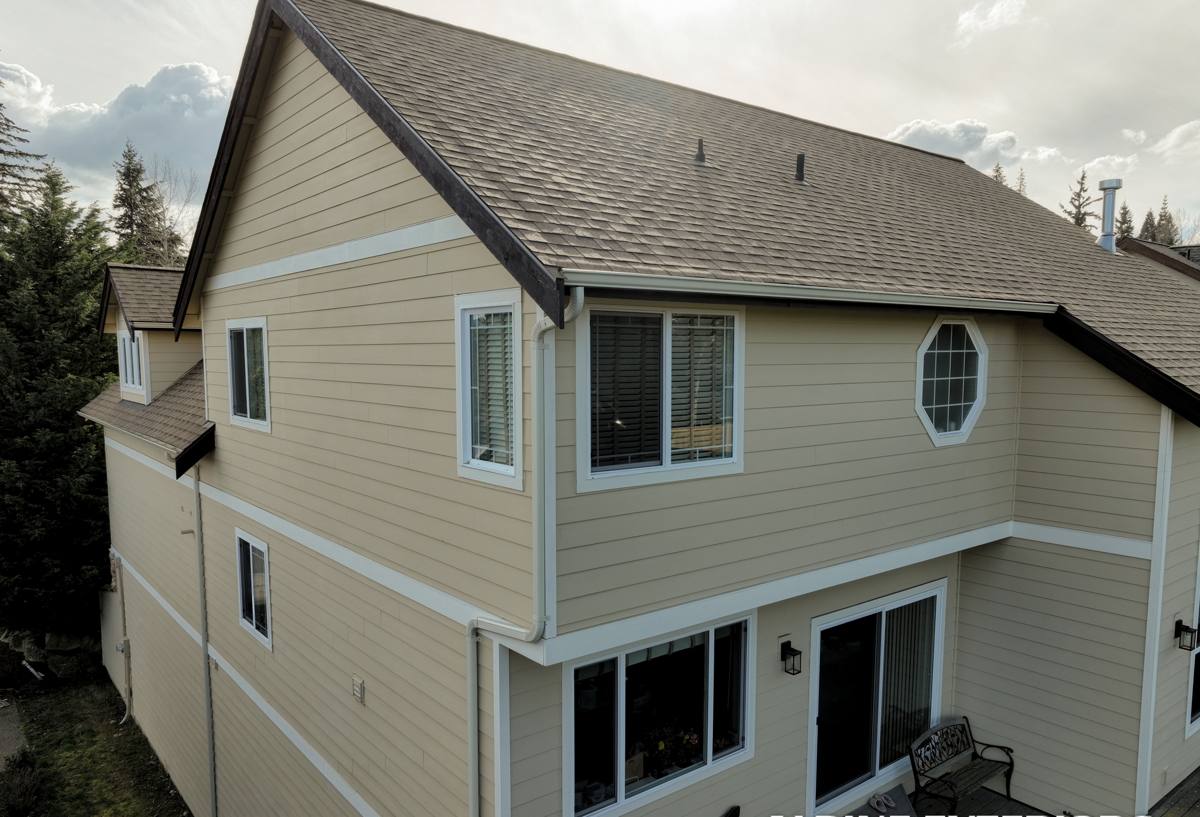
What Whatcom County Weather Actually Does to a Window
Salt Air and Metal Fatigue
Proximity to Puget Sound means airborne salt settles on everything, including window hardware, screen frames, and any exposed fasteners. Over years, that accelerates corrosion on lower-grade hardware and can pit unprotected aluminum. It's a slow problem, which is exactly why it gets ignored until a lock or hinge seizes up or a frame starts to streak with rust-colored staining.
Driving Rain and Wind Pressure
Storms off the water don't just fall on a house, they push against it. Wind-driven rain finds any gap in flashing or sealant and drives water sideways and upward, not just down. A window that's only sealed for gravity-fed rain — common with older installs or corner-cutting installers — will eventually leak around the frame even if the glass unit itself is fine.
Moss, Algae, and Prolonged Dampness
Whatcom County's long wet season means anything that stays damp — sills, bottom tracks, exterior trim — grows moss and algae if it can't dry out between rains. That's less about the window unit itself and more about how it's flashed and trimmed into the wall. Poor drainage detailing traps moisture right where wood trim and sill pans are most vulnerable to rot.
Signs a Puget-Area Home Needs Window Replacement, Not Just Repair
- Condensation or fogging between the glass panes (a failed seal on the insulated glass unit — this can't be fixed, only replaced)
- Persistent moisture, staining, or soft wood at the sill or bottom corners of the frame
- Drafts you can feel with a hand near the frame edge on a windy day, even with the window latched
- Windows that are difficult to open, close, or lock — often a sign the frame has racked or swollen
- Visible daylight or gaps around the frame from outside
- Rising heating bills without another clear explanation
- Exterior paint or trim failing repeatedly in the same spots around a window, even after repainting
If you're only seeing one or two of these and the frame is otherwise sound, a repair or reseal may be enough. Once moisture has reached the framing or the seal has failed inside the glass, replacement is the honest recommendation — patching those problems doesn't hold up in this climate.
What a Correct Window Replacement Job Actually Involves
The window unit itself is maybe half the job. The other half is what happens in the wall opening before and after it goes in, and that's where most of the long-term performance in a wet climate is decided.
Full Removal and Opening Inspection
We remove the old window and check the rough opening for hidden rot, soft sheathing, or prior water damage before anything new goes in. Installing a new window over a compromised opening just hides the problem behind new trim.
Flashing and Drainage Detailing
Proper flashing — sill pan, side flashing, and head flashing integrated with the house's water-resistive barrier — is what actually stops wind-driven rain from getting behind the window. This is the step most likely to get rushed on a fast, cheap install, and it's the step that matters most in a marine climate.
Sealing and Insulation
Low-expansion foam or backer rod and sealant around the frame perimeter, sized correctly for the gap, keeps out both air and bulk water without trapping moisture inside the wall cavity.
Interior and Exterior Finish
Trim, caulking, and paint or stain get finished to match the home, with attention to sealing joints that will be exposed to driving rain — not just cosmetic caulk lines.
Choosing the Right Frame Material for This Climate
There's no single "best" window material — the right choice depends on your home's exposure, your budget, and how much upkeep you want to take on. Here's how the common options hold up specifically against salt air, wind-driven rain, and a long damp season.
| Frame Material | Moisture & Salt Air Performance | Maintenance | Typical Trade-Off |
|---|---|---|---|
| Vinyl | Won't rust or rot; handles salt air well | Low — occasional cleaning | Limited color options; can look less premium on older homes |
| Fiberglass | Excellent — very stable, resists moisture and corrosion | Low | Higher upfront cost than vinyl |
| Wood-Clad | Good if cladding stays intact; interior wood needs protection from interior moisture | Moderate to high — exposed wood needs monitoring | Best natural look, but more sensitive to installation quality |
| Aluminum | Prone to pitting and corrosion in salt air over time unless marine-grade and well-finished | Moderate — watch hardware and finish | Slim sightlines, but not our first recommendation this close to the water |
For most Puget-area homes, we steer clients toward vinyl or fiberglass because they hold up with the least fuss in salty, wet conditions. If a home's style calls for a wood-clad look, we'll still install it — it just comes with a maintenance conversation up front so there are no surprises later.
Glass Package Matters Too
Beyond the frame, double-pane glass with a low-E coating and argon gas fill is the standard we install for this region — it cuts heat loss during our cold, wet winters and reduces glare and UV fade during summer without needing a specialty tint.
Our Window Replacement Process
- On-site assessment. We look at each window's exposure, condition, and the home's overall drainage — north-facing and water-facing windows often need more attention than sheltered ones.
- Honest recommendation. We'll tell you plainly which windows need replacement now, which can wait, and which just need a repair or reseal.
- Clear, written estimate. Material, labor, and scope spelled out — no vague allowances.
- Removal and opening check. Old units come out carefully, and we inspect the framing before anything new is installed.
- Installation with proper flashing and sealing. This is where we don't cut corners, because it's the part you won't see once trim goes back on.
- Finish work and walkthrough. Trim, paint or caulk match, and a final check that every window opens, closes, and locks the way it should.
Why a Crew That Already Works Puget-Area Homes Matters
A window installer who mostly works drier, inland areas can do fine work and still get burned by a detail that only matters here — like underestimating how far wind-driven rain travels up a wall, or not accounting for how slow things dry out during our wet stretch. A crew that regularly works Bellingham and the surrounding Whatcom County waterfront communities has already made the adjustments: heavier emphasis on flashing, material choices that shrug off salt air, and scheduling that accounts for how weather-dependent this kind of exterior work is here.
It also means we're a known, findable local business if a question comes up two or five years after the install — not a crew that only shows up for one job and moves on.
Maintenance That Actually Extends the Life of New Windows
- Rinse salt residue off frames and hardware a few times a year, especially after storms
- Clear moss and debris from sills and tracks before it holds moisture against the frame
- Check and refresh exterior caulk lines every couple of years — sealant is a wear item, not a one-time step
- Operate locks and hardware periodically so they don't seize from disuse combined with damp air
- Watch for early signs of trim or paint failure right at the window edge, and address it before it spreads
None of this is complicated, but skipping it is how even a well-installed window ends up with an early, avoidable problem in this climate.
A Straightforward Look at Cost Factors
Every home is different, but the main variables that move window replacement pricing are consistent. We won't quote a number without seeing the job, but this is what typically drives cost up or down:
| Factor | Effect on Cost |
|---|---|
| Number of windows and their sizes | Larger and more numerous openings increase material and labor |
| Frame material chosen | Vinyl is typically most affordable; fiberglass and wood-clad cost more upfront |
| Condition of the existing opening | Hidden rot or damage found during removal adds repair scope |
| Access and height | Second-story or hard-to-reach windows take more time and equipment |
| Glass package upgrades | Impact-rated or specialty glazing adds cost over standard low-E units |
If you're weighing whether it's time to replace windows on a Puget-area home, we're happy to take a look and give you a straight answer — no pressure, no upsell script. Fill out the form below for a free estimate and we'll walk the property, explain what we see, and give you a clear, written quote for what your home actually needs.