 Bellingham
 Roof Replacement in York: Built for What Whatcom County Actually Throws at a Roof
York sits close enough to Bellingham Bay that salt-laden air is a real factor in how a roof ages here, and close enough to mature tree cover that shade, needles, and moisture sit on the roof deck longer than they would out in the open. Add the Pacific Northwest's long wet season — months of driving rain broken up by just enough dry, mild weather to let moss take hold — and you get a climate that is genuinely harder on a roof than most manufacturers' warranty testing accounts for. A roof replacement done right in this neighborhood isn't just about swapping old shingles for new ones. It's about building an assembly that can shed constant moisture, resist salt-air corrosion on metal components, and stay ahead of moss and organic growth for the long haul.
We work on homes throughout York and the surrounding Bellingham area regularly, and the roofs we replace here tend to fail for a consistent set of reasons: underlayment that was never rated for sustained wet exposure, ventilation that couldn't keep pace with condensation, flashing that corroded faster than the shingles wore out, and moss that was allowed to sit and hold moisture against the roof deck for years. A correct replacement addresses all of that, not just the visible shingle layer.
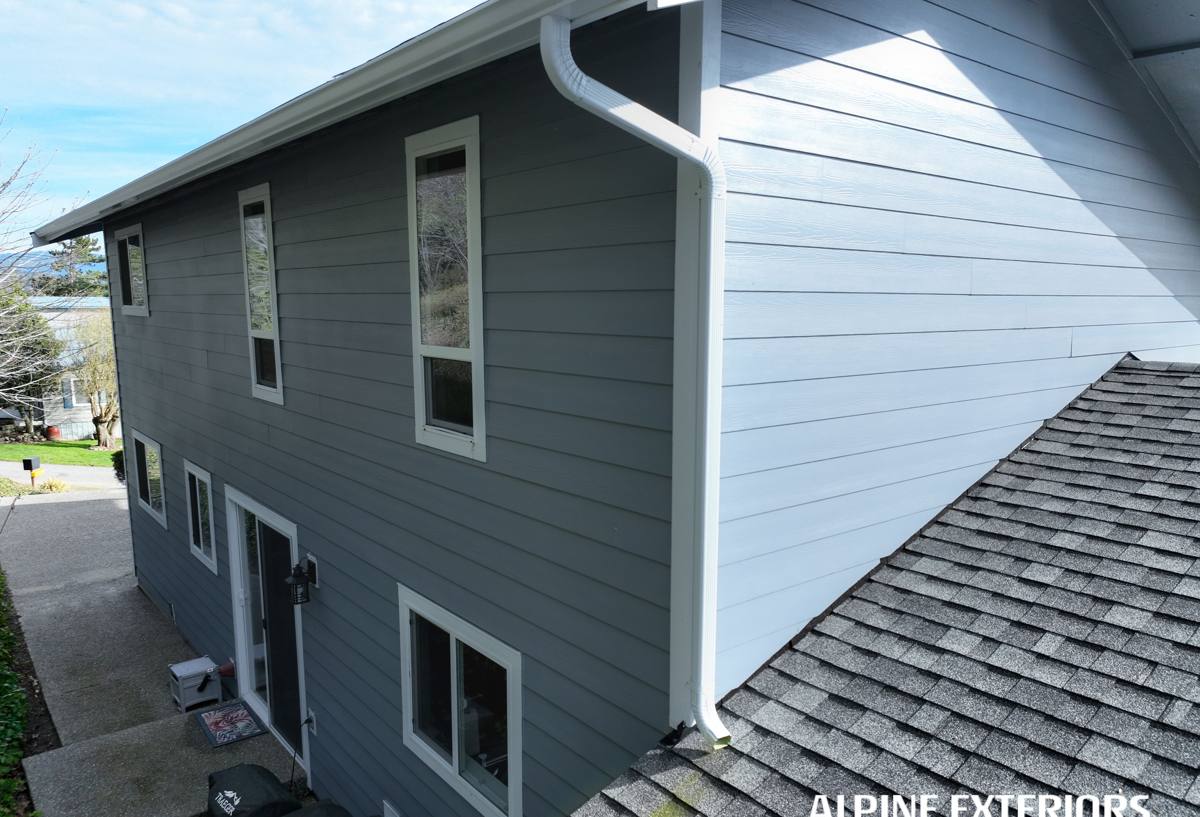
Signs a York Home Needs Replacement, Not Another Repair
Most homeowners call us after a leak, but by the time water is coming through the ceiling, the roof has usually been failing for a while. Catching the signs earlier saves money and avoids interior damage.
- Granules collecting in gutters or at downspout outlets — a sign the shingle surface is wearing thin
- Shingles that are cupping, curling at the edges, or visibly bald in patches
- Moss or dark algae streaking that keeps coming back within a season of cleaning
- Soft or spongy spots when walked on, which usually means the decking underneath has taken on moisture damage
- Daylight visible through the attic roof boards, or damp insulation near the roofline
- Flashing around chimneys, vents, or skylights that's rusted, lifted, or separating from the surface it seals
- A roof approaching or past 20–25 years old, even if it looks fine from the ground
One or two of these on their own might mean a targeted repair is enough. Several at once, or any sign of decking damage, usually means repair costs start to approach replacement costs without buying you much extra life out of the roof.
What a Correct Roof Replacement Actually Involves
A roof replacement is only as good as what's underneath the shingles. In a wet, moss-prone climate like this one, cutting corners on the parts nobody sees is exactly where roofs fail early.
Full Tear-Off, Not Overlay
We remove the existing roofing down to the deck rather than layering new shingles over old. Overlaying traps moisture, hides deck damage, and voids most manufacturer warranties. It also adds weight the structure wasn't necessarily designed to carry long-term.
Deck Inspection and Repair
Once the old roofing is off, we inspect every section of decking for soft spots, delamination, or rot — common where moss or debris has held moisture against the wood for extended periods. Damaged sections get replaced before anything new goes down; this step is not optional if the underlayment is going to hold up.
Moisture-Rated Underlayment
Standard felt underlayment is a minimum-code product, not a good match for a climate with this much sustained rain. We use synthetic or high-quality underlayment rated for extended wet exposure, with self-adhered ice-and-water membrane at eaves, valleys, and any area prone to water backup.
Flashing Done Right
Flashing failure is one of the most common causes of leaks in older roofs, and it's rarely the shingles' fault. We install new flashing at every chimney, vent pipe, skylight, and roof-to-wall transition rather than reusing old pieces, and we use corrosion-resistant materials given the salt-air exposure this close to the bay.
Ventilation That Matches the Roof
Balanced intake and exhaust ventilation keeps the attic dry and temperature-stable, which protects the decking from the inside and helps prevent the ice-dam and condensation issues that come from trapped moisture. We size ventilation to the specific roof rather than installing a generic amount.
Choosing Materials for York's Climate
There's no single "best" roofing material — the right choice depends on budget, roof pitch, tree cover, and how much long-term maintenance a homeowner wants to take on. Here's how the common options actually perform in this specific climate.
| Material | Moss & Moisture Resistance | Salt-Air Durability | Typical Lifespan | Maintenance |
|---|---|---|---|---|
| Architectural asphalt shingle | Good with zinc/copper strips and clean valleys | Good — minimal exposed metal to corrode | 25–30 years | Periodic moss treatment, gutter cleaning |
| Standing seam metal | Excellent — sheds water and moss has little to hold onto | Depends on coating; coastal-rated finishes needed | 40–50+ years | Low; occasional fastener and seam check |
| Cedar shake | Poor without diligent upkeep — organic material invites moss | Fair | 20–30 years with maintenance | High — regular treatment and cleaning |
| Composite/synthetic shingle | Very good; engineered to resist moisture absorption | Good | 30–50 years | Low to moderate |
For most York homes, we lean toward architectural asphalt with proper moss-inhibiting details or a coastal-rated metal roof when budget and roof style allow it. Cedar shake can still be the right visual match for some homes in this neighborhood, but we're upfront that it carries a real maintenance commitment in a climate this wet — that's a trade-off we explain honestly rather than talk anyone out of or into.
Moss and Ventilation: The Long-Term Health of the Roof
Moss isn't just cosmetic. It holds moisture directly against shingles and decking, works its way under shingle edges as it grows, and accelerates granule loss. In neighborhoods with mature tree cover and shaded roof sections — common in older, established parts of Bellingham — moss pressure is constant, not seasonal.
During replacement, we install zinc or copper strips near the ridge on shingle roofs, which release trace metal ions with every rain and inhibit moss regrowth across the whole roof plane. We also make sure valleys, eaves, and any low-slope transitions are detailed to shed water quickly rather than let it pool or sheet slowly across shaded areas. Combined with correct attic ventilation — which keeps the underside of the deck from adding its own moisture into the mix — this is what actually extends a roof's working life in this climate, far more than any single shingle brand does.
Our Roof Replacement Process
- On-site inspection and estimate — we assess the existing roof, attic ventilation, and any problem areas, and give a clear, itemized estimate before any work is scheduled.
- Material selection — we walk through options and trade-offs based on your roof's pitch, exposure, and budget, without steering toward whatever's easiest for us to install.
- Permitting — we pull the required permits through the City of Bellingham or Whatcom County, depending on the property's location, so the work is inspected and documented.
- Tear-off and deck repair — full removal of old roofing, deck inspection, and replacement of any damaged sheathing.
- Underlayment, flashing, and ventilation installation — the parts that determine how the roof performs in wet weather, done before a single new shingle goes on.
- New roofing installation — installed to manufacturer specification, which matters for both performance and warranty coverage.
- Site cleanup and final walkthrough — magnetic sweep for stray fasteners, debris removal, and a walkthrough so you can see and understand what was done.
Cost Factors for a York Roof Replacement
Roof replacement costs vary widely based on size, pitch, material, and what the tear-off reveals underneath. Rather than quote a number that won't mean much without seeing the roof, here's what actually drives cost up or down:
| Factor | Effect on Cost |
|---|---|
| Roof pitch and complexity (valleys, dormers, multiple planes) | Steeper and more cut-up roofs take longer to install and use more material |
| Deck condition | Rotted or soft decking found during tear-off adds repair cost not visible in an initial walk-around |
| Material choice | Metal and composite typically cost more upfront than asphalt, less over the roof's lifespan |
| Tree cover and access | Overhanging branches, tight lot lines, or difficult staging can add labor time |
| Ventilation upgrades needed | Older homes often need added intake or exhaust vents to meet current standards |
We give a written, itemized estimate before work starts, and we flag anything we find during tear-off — like deck damage — before doing the repair, not after.
Why Hire a Crew That Already Works in York
A roofing crew that's worked on homes throughout this specific stretch of Bellingham already knows what to expect: the moss pressure from shaded lots, the corrosion risk from bay-adjacent salt air, and how local roof lines and older framing typically hold up over time. That familiarity means fewer surprises during tear-off and a more accurate estimate from the start. It also means we're a known, local crew if a warranty question or a storm-related issue comes up years down the road — not a company that did one job in the area and moved on.
We also know the permitting process through the City of Bellingham and Whatcom County, which keeps the project moving instead of stalling on paperwork. And because we're local, we can respond quickly if unexpected weather interrupts a project mid-tear-off, which matters a lot more here than it would in a drier climate.
What to Expect During the Project
Most residential roof replacements in this size range take one to three days of active work, weather permitting — we don't tear off more roof than we can dry-in before rain is likely, which sometimes means staging the job in sections during unsettled weather. We'll walk you through the schedule up front, including how we handle a weather delay if one comes up, so there are no surprises about timeline once the work begins.
If you're seeing granule loss, persistent moss, soft spots, or you just know your roof is getting up there in age, it's worth getting a straight answer before it turns into an interior leak. We offer a free, no-pressure estimate for York-area homes — use the form below to get one scheduled.