 Bellingham
 Decks Built for How Barkley Actually Lives Outdoors
The Barkley area sits close enough to Bellingham Bay and the surrounding wetlands that its homes get the full range of what Whatcom County weather can throw at an outdoor structure — salt-laden air rolling in off the water, long stretches of driving rain in the fall and winter, and a shoulder season where everything shaded stays damp long enough to grow moss. A deck built without those conditions in mind will look fine for a year or two and then start showing problems: soft spots, green film on the boards, corroding hardware, and rails that feel loose no matter how many times they get tightened. We build decks for this specific area with that reality baked into the plan from the first conversation, not as an afterthought.
A deck in Barkley isn't a generic backyard project. It's an outdoor room that has to survive a marine climate for 20-plus years, and the difference between a deck that does that and one that doesn't usually comes down to a handful of decisions made before a single board goes down.
What Bellingham's Climate Actually Does to a Deck
Salt Air and Metal
Proximity to the bay means a steady low dose of salt in the air, even a few miles inland. Salt accelerates corrosion in anything metal — fasteners, joist hangers, post bases, railing brackets. Standard hot-dip galvanized hardware can hold up for years in a dry inland climate and still corrode noticeably faster here, especially where two dissimilar metals touch or where a fastener head sits exposed to weather. This is the single most common reason we see older Barkley-area decks with rust streaks bleeding down the decking boards.
Driving Rain and Wind-Driven Moisture
Whatcom County rain doesn't always fall straight down. Wind off the water pushes it sideways, which means it finds its way under rail caps, behind ledger boards, and into any gap that wasn't properly flashed or sealed. A deck built to handle rain falling straight down isn't necessarily built to handle rain hitting it at an angle for days at a stretch.
The Long Moss Season
Shaded decks, north-facing decks, and decks under mature trees stay damp for much of the year here, and damp wood in filtered light is exactly what moss and algae need. Beyond looking bad, a moss layer holds moisture against the decking surface, which is one of the fastest ways to shorten the life of both wood and composite boards, and it makes the surface genuinely slick underfoot.
Choosing the Right Decking Material for This Climate
There isn't one universally "right" material — there's a right material for a given budget, sun exposure, and how much upkeep a homeowner actually wants to do. Here's how the common options hold up specifically against salt air, wind-driven rain, and moss:
| Material | Moss/Algae Resistance | Maintenance | Typical Lifespan Here |
|---|---|---|---|
| Pressure-treated wood | Low — needs regular cleaning/sealing | Annual wash, re-seal every 2-3 years | 10-15 years |
| Cedar | Moderate — natural oils help some | Cleaning and re-oiling to maintain color | 12-18 years |
| Capped composite | High — resists moss growth much better | Occasional wash, no sealing | 25-30+ years |
| PVC decking | Highest — non-organic, nothing for moss to feed on | Occasional wash | 25-30+ years |
Wood is a legitimate choice and plenty of Barkley homeowners want the look and cost of real cedar or pressure-treated fir. Our standard is being honest about the trade-off: wood needs consistent upkeep in this climate to stay ahead of moisture and moss, while capped composite and PVC cost more up front but shed water and resist moss growth without annual sealing. We install all of these — the right call depends on how the deck is used, how much shade it sits in, and how much maintenance time the homeowner actually wants to spend.
Hardware Matters As Much As the Decking
Whatever surface material is chosen, we treat fastener and connector selection as its own decision, not an afterthought. In a salt-air, high-rain environment, we use stainless steel or heavy-duty coated fasteners and structural connectors rated for exterior and coastal-adjacent use, particularly anywhere metal is in constant contact with treated lumber, which is itself corrosive to lower-grade hardware.
What a Correctly Built Deck Involves
A deck's long-term performance is decided in the framing stage, before it's ever visible. The parts that matter most in this climate:
- Ledger flashing where the deck attaches to the house — this is the single most common point of hidden rot on decks we've inspected, because a poorly flashed ledger lets wind-driven rain track directly into the house's rim joist.
- Footings sized and set below frost depth and appropriate for Whatcom County soil conditions, so the structure doesn't shift with seasonal ground moisture.
- Joist tape or a moisture barrier on top of every joist, protecting the framing lumber from the water that inevitably sits on a deck surface during our wet months.
- Proper board spacing and airflow underneath so water actually drains and the underside of the deck can dry out between storms instead of staying damp for weeks.
- Corrosion-resistant structural hardware at every connection point — hangers, post bases, and rail brackets — sized for the actual loads, not the minimum.
- Correctly pitched surface (typically a slight slope away from the house) so standing water doesn't pool against the ledger or on the deck boards themselves.
Skip any one of these and the deck can still look complete on install day — the problems just take a season or two of Bellingham weather to show up.
Design Considerations for Barkley-Area Homes
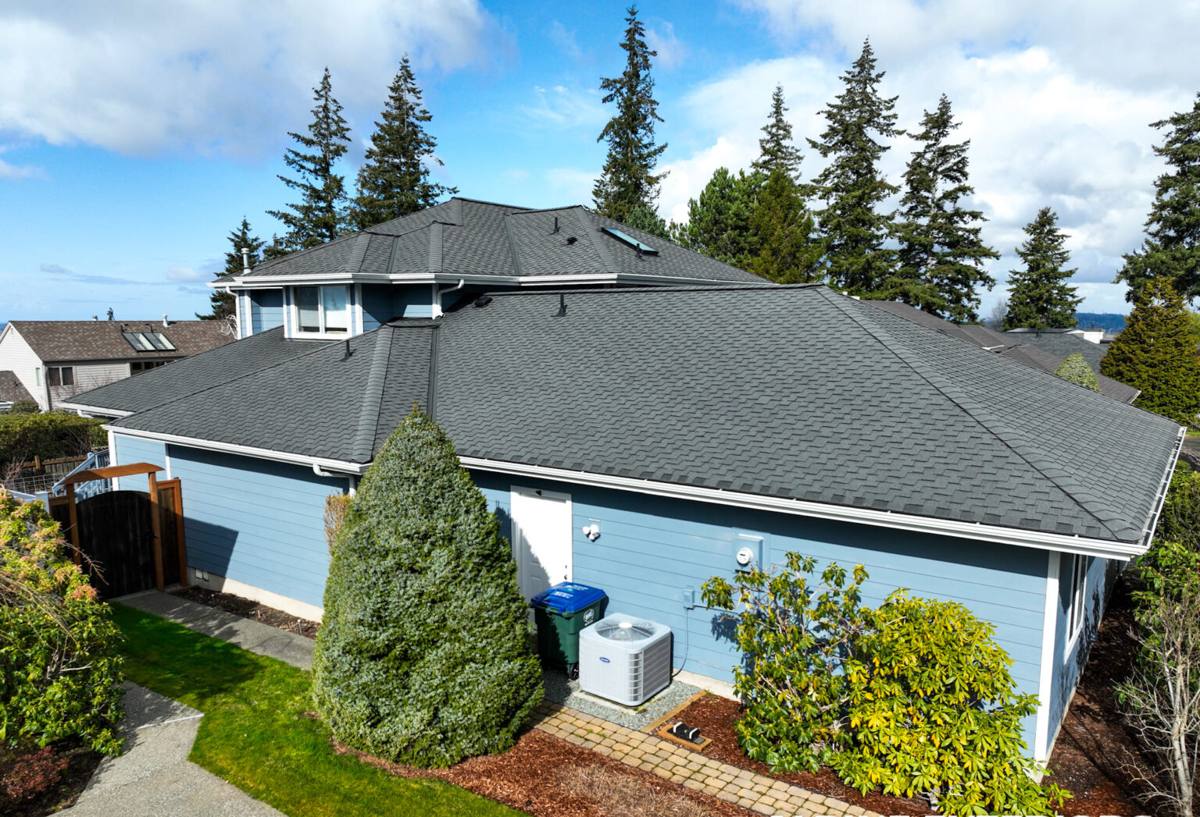
Barkley is a mixed area of newer, master-planned residential construction alongside older Bellingham-style homes, and the decks that fit best tend to respect that context rather than fight it. A few things we weigh on every project here:
Matching the Home's Architecture
Newer construction in and around Barkley often has cleaner, more contemporary lines, which tends to favor simpler rail systems and clean board-and-gap patterns over heavily ornamented traditional railings. Older homes nearby can call for a different look. We design to the house in front of us, not a one-size template.
Sloped and Multi-Level Lots
Whatcom County terrain isn't flat, and a fair number of lots in this part of Bellingham have grade changes between the house and yard. That often means a multi-level deck or one with a connected stair run, which raises the stakes on proper footing depth and structural bracing — a poorly braced multi-level deck will develop noticeable sway over time in a way a single-level deck won't.
Covered vs. Open Decks
Given how much of the year brings rain, a partial or full cover is one of the highest-value additions we discuss with Barkley homeowners — it extends the number of usable days per year significantly and reduces how much direct rain the decking surface takes on, which in turn slows moss buildup.
How We Build a Deck in the Barkley Area
The process is the same discipline every time, adjusted for the specific lot and home:
- On-site assessment of the lot's grade, sun/shade exposure, drainage patterns, and how the deck will tie into the existing structure.
- Material and layout discussion, including an honest rundown of maintenance expectations for whatever decking material is chosen.
- Permitting through the appropriate local jurisdiction before any work begins — deck permits are required for most elevated structures in this area, and skipping that step creates problems at resale.
- Framing with proper ledger flashing, joist protection, and corrosion-resistant hardware suited to a marine climate.
- Decking installation with attention to spacing, fastening method, and drainage.
- Final walkthrough covering how to care for the specific material installed through our wet season.
Living With a Deck Through a Bellingham Moss Season
No deck material here is entirely maintenance-free, but the workload is very different depending on what's installed. A wood deck generally needs an annual wash and periodic re-sealing to keep moisture out and slow moss growth. Composite and PVC decks mainly need an occasional rinse and a soft-bristle brush on shaded areas where algae film tends to form. On any material, the highest-value habit is simple: keep leaves and organic debris from sitting on the boards, especially going into fall, since decomposing debris holds moisture against the surface and is one of the fastest paths to a slick, moss-covered deck by spring.
Why Hire a Crew That Already Works in Barkley
A deck crew that mostly builds inland or in drier climates will often use standard hardware, standard flashing details, and standard maintenance advice — because that's what works where they usually build. Those standards fall short here. Working regularly in Bellingham and Whatcom County means we've already seen how ledger flashing fails under wind-driven rain, which hardware actually holds up to salt air over a decade, and which decking materials handle a shaded, damp lot without turning green by the second winter. That's not a sales pitch — it's the practical value of local experience on a project that has to perform outdoors, year-round, in this specific climate.
If you're planning a new deck or replacing one that's showing its age, we're happy to take a look and put together a straightforward, no-pressure estimate. Use the form below to get started.