 Bellingham
 Birch Bay Sits Right at the Edge of the Weather
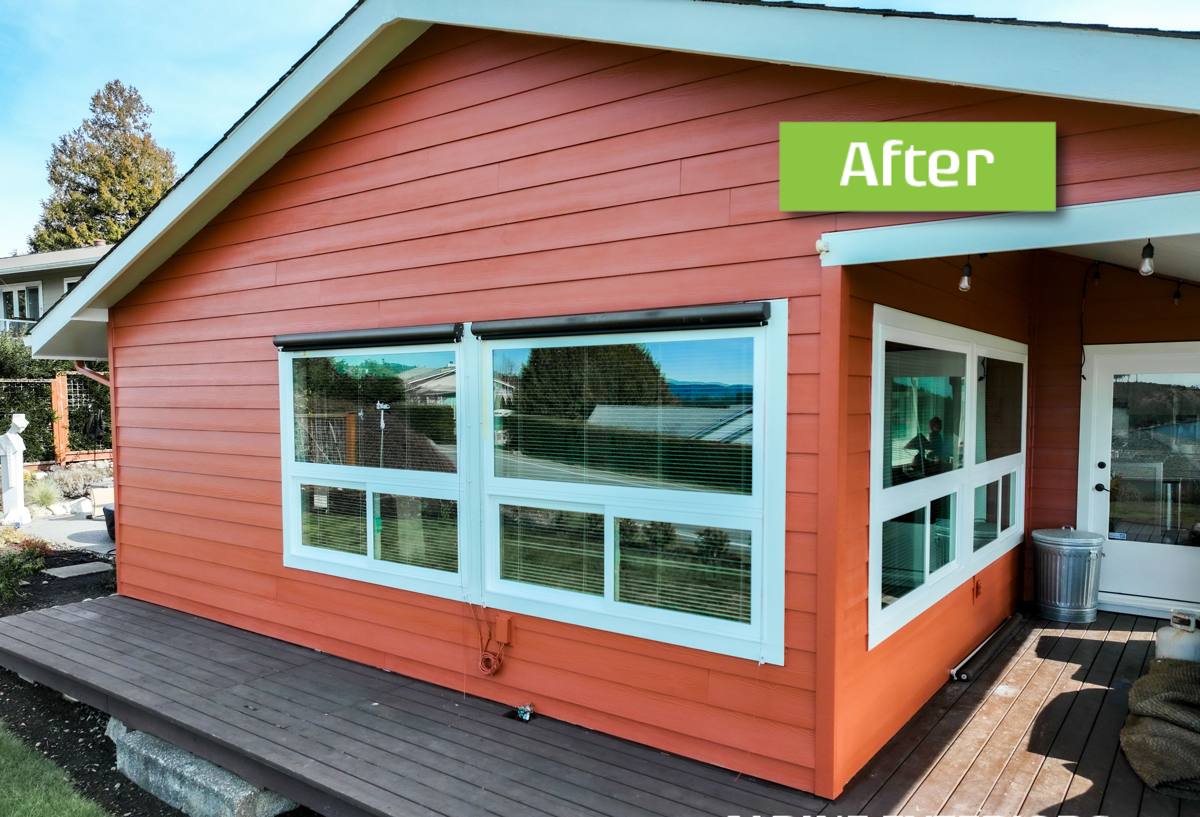
Birch Bay looks out over the water at the northern edge of Whatcom County, and that waterfront position is exactly what makes siding decisions here different from a house a few miles inland in Bellingham. Homes along the bay take the full brunt of onshore wind, salt-laden air, and driving rain coming straight off the water, then spend most of the year sitting under the low, wet, shaded conditions that let moss and algae take hold. Siding on a Birch Bay home isn't decorative — it's the first line of defense against a genuinely tough coastal climate, and it needs to be installed with that climate in mind, not just put up to a generic spec.
What Salt Air, Driving Rain, and Moss Actually Do to a House
Salt air
Airborne salt is corrosive, and it doesn't stay at the water's edge — wind carries it across yards and up exterior walls, where it settles into every seam, fastener, and finish coat. On siding materials that aren't built for it, salt exposure speeds up fastener corrosion and breaks down paint films faster than the same product would fail a few miles inland.
Wind-driven rain
Bay-front lots get rain pushed sideways by onshore wind, not just falling straight down. That means water gets tested against every horizontal joint, window and door flashing, and butt seam on a wall — surfaces that would stay mostly dry on a sheltered inland lot. The siding and the water-resistive barrier behind it have to handle rain that's actively being driven into the wall, not just rain sliding down the face of the house.
Moss and prolonged dampness
Whatcom County's siding "moss season" runs long — realistically October through May in most years — and shaded, north-facing, or tree-covered walls near Birch Bay can stay damp for days between rain events. Moss and algae need exactly that: shade, moisture, and time. Once they get a foothold on a porous or absorbent siding surface, they hold moisture against the wall even longer, and that cycle is what eventually leads to soft spots, trapped rot, and failed caulk joints on materials that can't shed water well.
Why Fiber Cement Is the Right Material for This Environment
Fiber cement is cement, sand, and cellulose fiber pressed and cured into a rigid board. It doesn't rot, it isn't a food source for moss and algae the way wood is, it won't warp or delaminate from repeated wetting and drying, and it's non-combustible. For a bay-front climate that cycles through salt exposure, wind-driven rain, and long damp stretches every single year, that combination of properties matters more here than almost anywhere else in Whatcom County.
Why we only install James Hardie
We install James Hardie fiber cement exclusively — not LP SmartSide, not vinyl, not Cemplank or Allura, not primed spruce or cedar. That's a deliberate standard, not a brand preference for its own sake. Hardie's ColorPlus factory finish is baked on under controlled conditions and backed by its own finish warranty, which matters directly here: a factory finish that resists fading and chipping holds up to salt air and UV far better over time than a finish that depends on field-applied paint or the homeowner staying on top of a repainting schedule. Hardie also engineers its boards by climate zone rather than shipping one product everywhere, which is a real answer to a coastal environment like this one instead of a one-size-fits-all product.
How Fiber Cement Stacks Up Against the Alternatives Here
Every siding material handles a mild, dry climate reasonably well. The real differences show up under the conditions Birch Bay actually gets — salt, wind-driven rain, and months of damp shade.
| Material | Moisture & Rot Resistance | Salt Air Performance | Ongoing Maintenance |
|---|---|---|---|
| James Hardie fiber cement | Does not rot; dimensionally stable wet or dry | Factory finish resists fading and chalking | Occasional wash; no repainting on a fixed schedule |
| Vinyl siding | Won't rot, but panels can warp or crack under wind and impact | Salt haze and UV can dull color over years | Low, but damaged panels are hard to color-match later |
| LP SmartSide (engineered wood) | Wood-based; relies on edge sealing and upkeep to resist moisture | Coating can wear faster under salt exposure | Requires attentive caulk and paint maintenance |
| Cedar or primed spruce | Absorbs moisture; prone to cupping, splitting, and rot over time | Salt accelerates finish breakdown and graying | Regular refinishing or staining required |
None of these alternatives are unusable products in general — they simply carry maintenance and moisture trade-offs that get magnified on a bay-front lot, which is why we standardized on Hardie instead of stocking several different lines.
What a Correct Installation Actually Involves
Fiber cement only performs the way it's supposed to when it goes on correctly. In a coastal, wind-exposed setting like Birch Bay, a few details matter more than they would on a sheltered inland lot:
- A drainage gap behind the siding. A rainscreen or furring gap lets any moisture that gets past the cladding drain and dry out instead of sitting against the sheathing.
- Correct flashing at every penetration. Windows, doors, hose bibs, and vents are where wind-driven rain finds its way in first — each one needs proper head flashing integrated with the water-resistive barrier, not just caulk.
- Manufacturer fastening spacing and embedment. Underdriven or overdriven fasteners, or the wrong spacing, are one of the most common causes of early siding problems, and both are avoidable with a crew that follows Hardie's install spec.
- Sealed factory-cut edges. Any edge cut on site needs to be back-primed or sealed per the manufacturer's instructions, especially on butt joints facing prevailing wind and rain.
- Proper clearance from grade, roofing, and decks. Siding held too close to soil, roof lines, or deck surfaces stays wet longer and is exactly where moss gets its first foothold.
Our Process on a Birch Bay Home
- On-site assessment. We walk the exterior, check the current siding for moisture or moss patterns, and look at wind exposure on each elevation before recommending anything.
- Tear-off and inspection. Once old siding is off, we inspect the sheathing and framing underneath for hidden moisture damage before anything new goes on.
- Water-resistive barrier and drainage plane. We install or verify a continuous weather barrier and drainage gap suited to the wall's exposure.
- Flashing first. Every window, door, and penetration gets flashed before siding goes on, not patched around it afterward.
- Installation to spec. Fastening, spacing, and joint treatment follow James Hardie's published requirements for the product and climate zone.
- Final walk-through. We review the finished exterior with the homeowner and cover basic care before we call the job done.
Maintenance That Actually Matters on a Bay-Front Lot
Fiber cement needs far less upkeep than wood or vinyl, but low maintenance isn't no maintenance in this climate. A short annual routine catches most problems while they're still cheap to fix:
- Rinse siding down once or twice a year to clear salt residue, especially on walls facing the water directly.
- Check caulking at trim, window, and door joints for cracking or separation each fall before the wet season sets in.
- Watch for moss or algae starting on shaded or north-facing walls, and clean it early rather than letting it establish.
- Keep gutters clear and downspouts directed away from the wall so runoff isn't concentrated on one section of siding.
- Trim back vegetation that keeps a wall section shaded and damp longer than the rest of the house.
Why It Matters That We Already Work Birch Bay
Wind exposure, salt drift, and moss pressure aren't the same on every wall of every house — a lot facing open water takes a different beating than one set back and shielded by trees, even within the same neighborhood. A crew that already works this stretch of Whatcom County has seen those differences up close and knows where trouble spots on a bay-front home tend to show up first, instead of treating every job as a generic siding install. That familiarity also means we're not guessing at typical wall assemblies or conditions for this area — we've already done the work here.
If you're weighing siding options for a home in or near Birch Bay, we're glad to take a look and walk you through what your specific walls need. Reach out for a free, no-pressure estimate — someone from our crew will come look at the house in person before recommending anything.