 Bellingham
 Why Decks Wear Out Faster in Birchwood
Birchwood sits close enough to Bellingham Bay and the surrounding waterways that homes here deal with a specific combination of weather most inland decks never see: salt-laden air, long stretches of driving rain off the water, and a moss season that can run from October well into spring. None of these things destroy a deck overnight. What they do is work on it quietly, year after year, until a deck that looked fine from the yard turns out to be soft, corroded, or structurally questionable underneath.
Salt air accelerates corrosion on fasteners, joist hangers, and any exposed metal hardware, even galvanized products, faster than most homeowners expect. Driving rain finds its way into end grain, ledger connections, and any spot where flashing was skipped or installed wrong the first time. And moss doesn't just make boards slippery — it holds moisture against the wood surface for weeks at a stretch, which is exactly the condition that lets rot take hold in Douglas fir, hem-fir, or any softwood framing that isn't properly treated or ventilated underneath.
We work on decks throughout Bellingham, but Birchwood's mix of tree cover, drainage patterns, and proximity to the water means we see certain failure patterns here more consistently than in other parts of Whatcom County. That's the context this page is written from — not generic deck advice, but what actually shows up when we open up decks in this neighborhood.
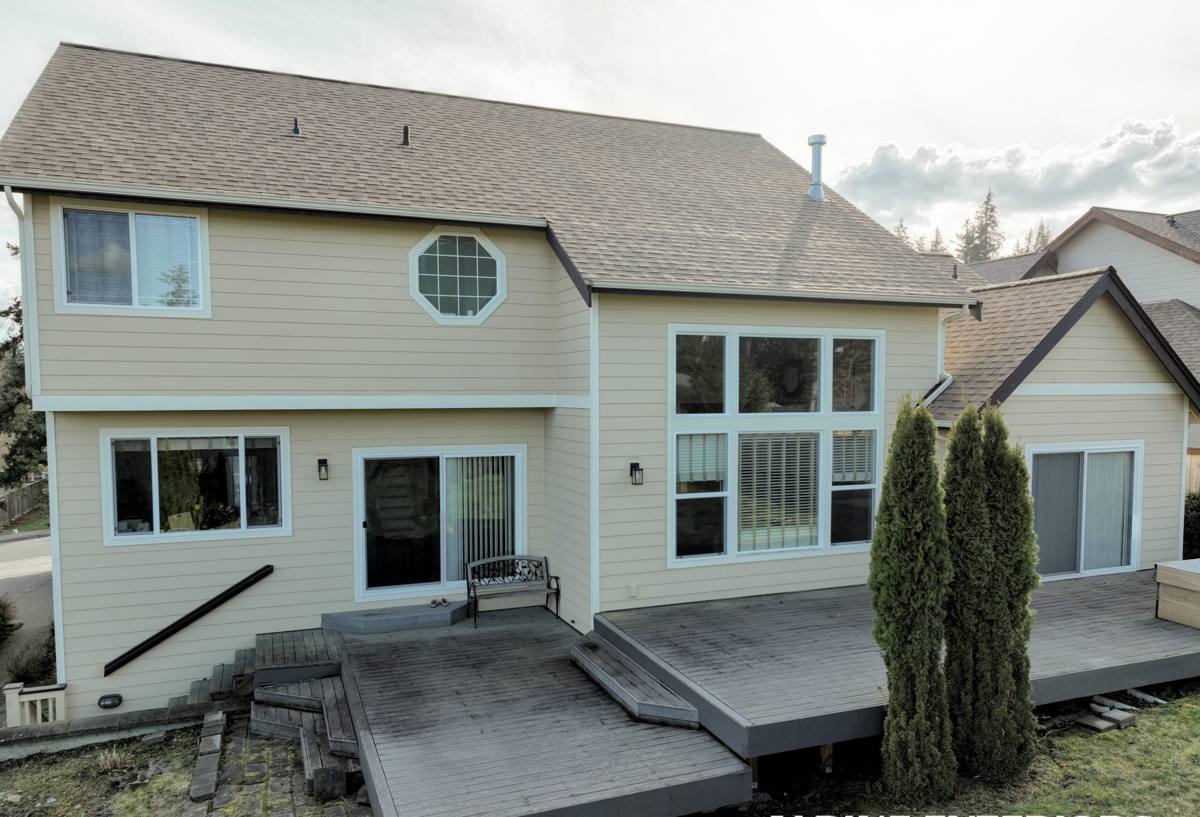
Signs a Birchwood Deck Needs Replacement, Not Repair
Not every tired-looking deck needs to come out. A lot of surface graying, minor board cupping, or a few loose screws is cosmetic and cheap to fix. Replacement becomes the honest recommendation when the problem has moved from the surface into the structure. Here's what we look for during an assessment:
- Soft or spongy spots underfoot, especially near the house or around post locations
- Rust staining or crumbling at joist hangers, post bases, and other metal connectors
- A ledger board (where the deck attaches to the house) that's dark, swollen, or separating from the siding
- Posts or footings that feel loose, or visible movement when you push on the railing
- Moss or algae buildup that returns within weeks of cleaning, especially on shaded sections
- Multiple boards cracking, splitting, or cupping across the whole deck rather than just a few
- A deck built more than 20-25 years ago with no record of the framing being inspected or upgraded since
If a deck shows one or two of these, targeted repair is often the right call and we'll say so. When several show up together, especially structural ones like ledger separation or failing hardware, that's usually the point where repair costs start approaching replacement costs anyway — and replacement gets you a deck built to current standards instead of a patched-up version of the old one.
What a Correct Deck Replacement Actually Involves
It's Not Just New Boards
The single biggest mistake we see in past deck work isn't the decking material — it's what's underneath it. A deck can have brand-new composite boards on top and still be sitting on undersized joists, rusted hangers, or a ledger connection that was never properly flashed. Replacing a deck the right way means addressing the whole structure, not just what's visible from above.
The Core Structural Points
For our climate, a few details matter more than they would in a drier region:
- Ledger flashing: where the deck meets the house needs proper flashing that sheds water away from the wall assembly, not just caulk over a bolt pattern
- Joist hangers and fasteners: corrosion-rated hardware rated for the treated lumber and coastal exposure it'll actually face, not standard interior-grade hardware
- Footings: set to the proper depth and bearing for our soil and frost conditions, not just poured to match whatever was there before
- Ventilation and drainage: enough clearance and slope under and around the deck so water and debris don't sit and hold moisture against framing
- Guardrails and stairs: built to current code height and baluster spacing, which older decks frequently fall short of
None of this is optional if you want the new deck to actually outlast the old one. A deck that fails again in eight years because the same shortcuts got repeated isn't a good use of anyone's money.
Choosing Decking Material for a Bellingham Climate
There's no single "best" decking material — it depends on how much upkeep you want to do and what you're willing to pay upfront versus over time. Here's how the common options actually perform in salt air, rain, and moss conditions:
| Material | How It Handles Our Climate | Maintenance | Relative Cost |
|---|---|---|---|
| Pressure-treated lumber | Good moisture resistance when properly sealed and maintained; can still trap moss if not cleaned | Annual cleaning, periodic sealing | Lowest upfront |
| Cedar | Naturally rot- and insect-resistant, ages well, but greys and can stain from moss/algae without upkeep | Regular cleaning, staining every few years to maintain color | Mid-range |
| Composite/PVC | Excellent moisture and rot resistance; surface can still get slick with algae/moss film if never cleaned | Occasional washing, no sealing or staining needed | Higher upfront |
For Birchwood specifically, where shade and moisture combine, we lean toward recommending composite or well-maintained cedar for decks with significant tree cover, and pressure-treated framing underneath regardless of what decking surface you choose — the framing is where longevity really gets decided.
Our Deck Replacement Process
1. On-Site Assessment
We look at the whole structure, not just the decking — ledger, footings, framing, hardware condition, and drainage — and give you an honest read on whether you need a full replacement, a partial rebuild, or just targeted repair.
2. Design and Material Selection
We walk through material and layout options based on your budget, how the space gets used, and how much upkeep you actually want to sign up for long-term.
3. Permitting
Deck replacement projects often require a permit through the City of Bellingham or Whatcom County depending on your exact location and the scope of work. We handle that process rather than leaving it on you to figure out.
4. Tear-Out and Structural Rebuild
Old decking, framing, and hardware come out down to whatever is actually sound, and we rebuild the structure to current code before a single new board goes down.
5. Decking, Railing, and Finish Work
New decking, railings, stairs, and any fascia or skirting go in, finished to the standard we'd want on our own home.
6. Final Walkthrough
We walk the finished deck with you, point out anything you should know for maintenance, and answer questions before we call the job done.
Permits and Code Considerations Around Bellingham
Deck replacement rules can depend on the size of the deck, its height off the ground, and whether the footprint is changing from what was there before. Rather than guess at your specific situation here, we confirm the exact permit requirements with the local jurisdiction as part of every project — but a few things are consistently true for Whatcom County homes:
- Guardrails are required above a certain height off grade, with minimum height and baluster spacing rules
- Ledger attachment to the house needs to meet current structural and flashing standards, even on a replacement
- Footings need to reach adequate bearing depth, which matters more here given our wet soil conditions
Skipping permits on a deck replacement can create real problems later — at resale, with insurance, or if something ever fails inspection down the line. We build to pass inspection the first time.
Maintaining a New Deck in Our Climate
Whatever material you choose, a few habits go a long way toward getting the full lifespan out of a new deck in Birchwood:
- Sweep off leaves and debris regularly, especially in shaded corners where moss gets a foothold first
- Clean moss and algae film off the surface at least once a year, more often in heavily shaded areas
- Check the ledger connection and any visible hardware annually for early rust or gaps
- Keep gutters and downspouts clear so runoff isn't dumping extra water onto or under the deck
- Reseal or restain wood decking on the schedule appropriate to that product — don't wait until it's already graying and cracking
Why a Local Crew Matters for This Job
A deck replacement is one of those projects where local experience actually changes the outcome, not just the sales pitch. A crew that already works in Birchwood and the surrounding Bellingham area knows how the salt air affects hardware choices, how the rain patterns concentrate water in certain deck orientations, and how aggressively moss will come back if drainage and airflow aren't handled correctly the first time. That's the difference between a deck that needs attention again in a few years and one that holds up for decades.
It also means we're not learning Whatcom County's permitting process on your project — we already know what the City of Bellingham and the county typically require for a deck replacement, which keeps your project from stalling out on paperwork.
If your deck in Birchwood is showing soft spots, rust, persistent moss, or is just old enough that you're not sure what's underneath it anymore, we're happy to take a look. The estimate is free, there's no pressure, and you'll get a straight answer about whether you need a full replacement or something less.