 Bellingham
 Siding Replacement Built for Happy Valley's Climate
Happy Valley sits close enough to Bellingham Bay and the surrounding hills that homes here take a different kind of beating than siding manufacturers assume in their generic installation guides. Salt-laden air drifts in off the water and settles into anything with a seam, a fastener head, or a coating that isn't built to handle it. Driving rain off Puget Sound doesn't fall straight down — it comes in sideways against west- and south-facing walls, forcing water into joints that would stay dry in a calmer climate. And the tree cover that makes this neighborhood shady and pleasant in July also means a long, wet moss season that can run from October through May.
None of that is unusual for Whatcom County. But it does mean siding replacement here isn't a cosmetic project — it's a moisture-management project that happens to also improve curb appeal. A siding job that looks fine going up but wasn't built for this specific mix of salt exposure, wind-driven rain, and shade can start failing within a few years, long before it should.
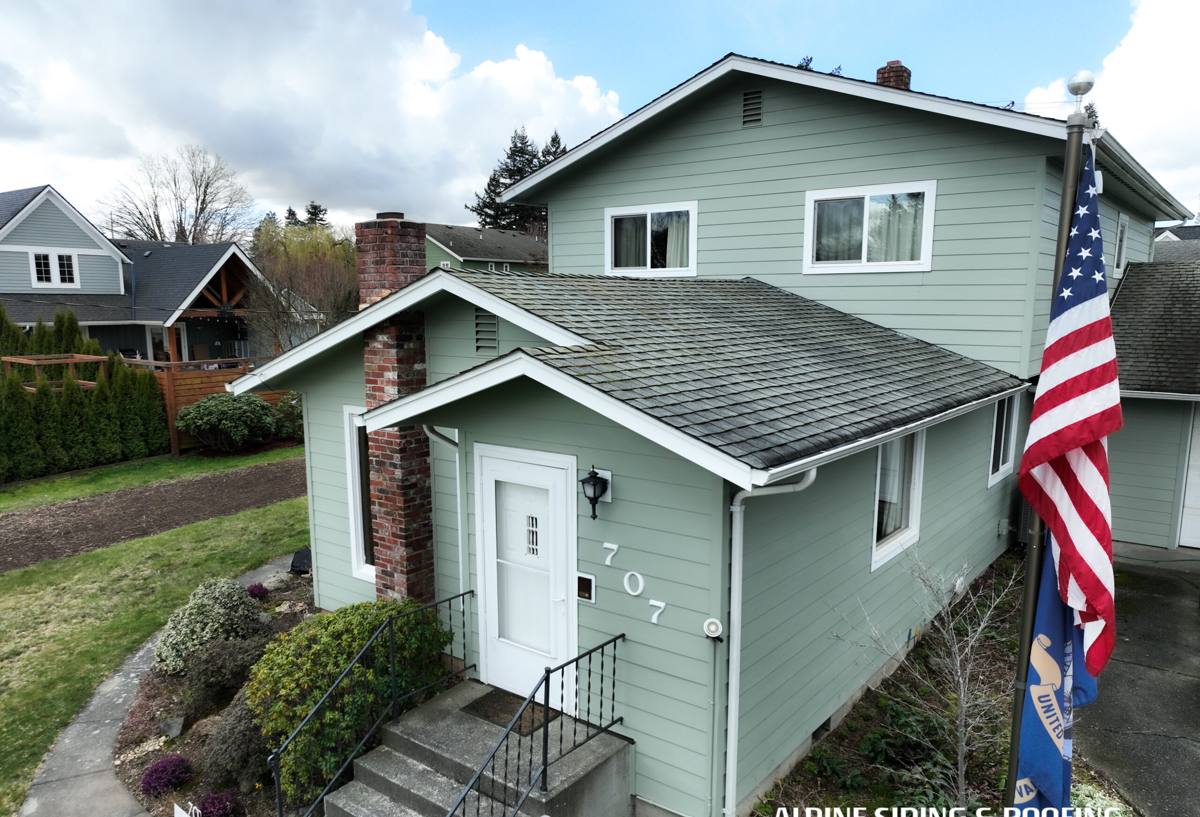
Signs a Happy Valley Home Needs New Siding
Because of the moss, shade, and moisture in this part of Bellingham, siding problems here often show up differently than they would on a home in a drier, sunnier part of the county. Look for these warning signs before they turn into structural repairs:
- Soft or spongy spots when you press on the siding, especially near the bottom courses and around window sills
- Persistent moss or algae growth that comes back within weeks of cleaning
- Paint that's peeling, bubbling, or chalking faster than the manufacturer's repaint cycle would suggest
- Visible warping, cupping, or delamination on wood or composite panels
- Gaps opening up at seams, corners, or trim boards
- A musty smell in rooms along exterior walls, which often points to moisture already inside the wall assembly
- Rising heating bills that suggest the wall system is no longer keeping moisture and air where it belongs
Any one of these on its own might just need a repair. Several at once, especially on the shaded or bay-facing sides of the house, usually means the siding system as a whole has reached the end of its useful life.
Why We Only Install James Hardie Fiber Cement
We made a decision a long time ago to install one siding system and stand behind it completely: James Hardie fiber cement. We don't install vinyl, LP SmartSide, Cemplank, Allura, primed spruce, or bare cedar, and we're upfront about why.
Vinyl is inexpensive and low-maintenance, but it's a plastic product that expands, contracts, and can become brittle over time — and in a climate with driving rain and constant humidity, the seams and J-channels behind it are where water finds its way in. Wood-based and engineered-wood products like LP SmartSide use resin-treated strand board; they hold up reasonably well when perfectly maintained, but they depend on an intact paint film to stay dry, and a long moss season with limited sun exposure is exactly the condition that shortens a wood-based product's life. Other fiber cement brands compete on price but haven't matched Hardie's factory-applied ColorPlus finish or its climate-specific HZ5 formulation, which is engineered for exactly the freeze-thaw and moisture cycling this region sees.
James Hardie fiber cement is non-combustible, dimensionally stable, and its ColorPlus finish is baked on at the factory under conditions no field-applied paint job can replicate. It's not immune to moss and mildew — nothing on a shaded, damp wall is — but it doesn't rot, delaminate, or feed on moisture the way wood-based products can. That's why it's the only product we put our name behind.
What a Correct Siding Replacement Actually Involves
The siding itself only performs as well as what's behind it. In a neighborhood with this much rain and shade, the details most homeowners never see are the ones that determine whether the job lasts fifteen years or fifty.
Moisture Management Behind the Siding
Every wall gets a weather-resistive barrier installed as a continuous plane, lapped correctly from bottom to top so water sheds outward instead of tracking behind the seams. Where the old siding is removed, we inspect the sheathing underneath for soft spots, staining, or existing rot — problems that are invisible until the old siding comes off, and that have to be fixed before anything new goes on.
Flashing and Trim Details
Windows, doors, and any horizontal trim are the most common failure points on any siding job. Proper head flashing, kick-out flashing at roof-wall intersections, and correctly lapped house wrap around every penetration are what keep wind-driven rain from working its way behind the cladding. This is also where a lot of corner-cutting happens on lower-bid jobs, because it's slow, detail-heavy work that doesn't show once the siding is up.
Fastening and Clearances
James Hardie publishes specific fastener patterns, nailing zones, and minimum clearances from grade, roof lines, and decks — all of it engineered around how the product expands and manages moisture at its edges. Installing it outside those specs is the single most common way a Hardie job underperforms, and it's also how a manufacturer's warranty gets voided without the homeowner ever knowing.
Siding Options Compared for a Bellingham Climate
| Factor | James Hardie Fiber Cement | Vinyl | Wood-Based / LP SmartSide |
|---|---|---|---|
| Moisture resistance | Does not rot or absorb water into the substrate | Water-resistant but seams and channels can trap moisture | Depends on intact paint film; prone to swelling if compromised |
| Moss & algae resistance | Won't feed mold growth; cleans up without damaging the material | Resists growth but can look dingy in shaded areas | Organic material can support growth if coating fails |
| Finish durability | Factory-baked ColorPlus finish, typically 15-year finish warranty | Color molded in but can fade or become brittle with UV/salt exposure | Field-applied paint needs recoating on a shorter cycle |
| Fire resistance | Non-combustible | Melts and can contribute to fire spread | Combustible, treated but still wood-based |
| Typical lifespan | 30+ years when installed to spec | 20–30 years, variable with UV exposure | 15–25 years, heavily maintenance-dependent |
Our Siding Replacement Process
1. On-Site Assessment
We walk the exterior with you, checking for the soft spots, moss buildup, and trim issues specific to your home's exposure — a shaded north wall and a rain-facing west wall often tell two different stories.
2. Tear-Off and Substrate Inspection
Old siding comes off in sections so we can inspect the sheathing as we go, rather than discovering hidden rot only after the whole house is exposed. Any damaged sheathing is repaired or replaced before the new weather barrier goes on.
3. Weather Barrier and Flashing Installation
This is the step that determines how the house performs in a storm, not just how it looks in the driveway. Every window, door, and penetration gets flashed and lapped correctly.
4. James Hardie Installation to Manufacturer Spec
Panels or lap siding go on following Hardie's fastening, clearance, and joint-treatment requirements, which is also what keeps the manufacturer's warranty valid.
5. Final Walkthrough
We go over the finished exterior with you, including caulking, trim, and touch-up details, before calling the job complete.
Cost Factors for a Happy Valley Home
Every home is different, so we don't quote pricing without seeing the house, but the biggest cost drivers we see on siding replacement projects in this area are consistent:
- How much of the existing sheathing needs repair once the old siding comes off
- The home's overall square footage and number of stories
- Trim complexity — corner boards, window casings, and architectural detail all add labor
- Access and site conditions, including tree cover, slopes, and how close the home is to neighboring structures
- Panel versus lap siding profile, and any custom color or accent choices
We'll walk through all of this during your estimate so you know exactly what you're paying for and why.
Why a Crew That Already Works in Happy Valley Matters
A siding crew that's worked other homes in this specific part of Bellingham already knows which walls take the worst of the wind-driven rain, how much moss growth to expect under mature tree cover, and how the salt air off the bay tends to accelerate wear on fasteners and trim. That's not something you can fully learn from a spec sheet — it comes from doing the work in this exact microclimate, house after house. It shows up in small decisions: where we add extra flashing attention, how we handle clearances near landscaping that stays damp longer than average, and which details we double-check on shaded elevations. It's the difference between a siding job that meets code and one that's actually built for where it's going.
Get a Free, No-Pressure Estimate
If your Happy Valley home is showing signs of wear, or you're just planning ahead, we're happy to take a look and walk you through what we find — no obligation. Use the form below to request a free estimate and we'll get back to you to schedule a time that works.