 Bellingham
 Why Birchwood Homes Need Siding Built for This Climate
Birchwood is a well-established part of Bellingham, and like most neighborhoods in Whatcom County, its homes spend most of the year damp. That's not a knock on the neighborhood — it's just the reality of living this close to the Salish Sea. Siding here isn't just a cosmetic layer; it's the primary barrier standing between your framing and a climate that rarely lets a house fully dry out. When we talk about "siding replacement" for a Birchwood home, we're really talking about rebuilding that barrier correctly, with materials and methods suited to salt air, driving rain, and the long stretch of gray, moss-friendly months that define a Pacific Northwest winter and spring.
A lot of siding problems we find in this area didn't start as siding problems. They started as small gaps, missed flashing details, or a product that simply wasn't built to handle sustained moisture. By the time a homeowner notices soft trim or a stain creeping up from the bottom of a wall, the damage is usually already into the sheathing. Replacing siding the right way means addressing the whole system, not just swapping old boards for new ones.
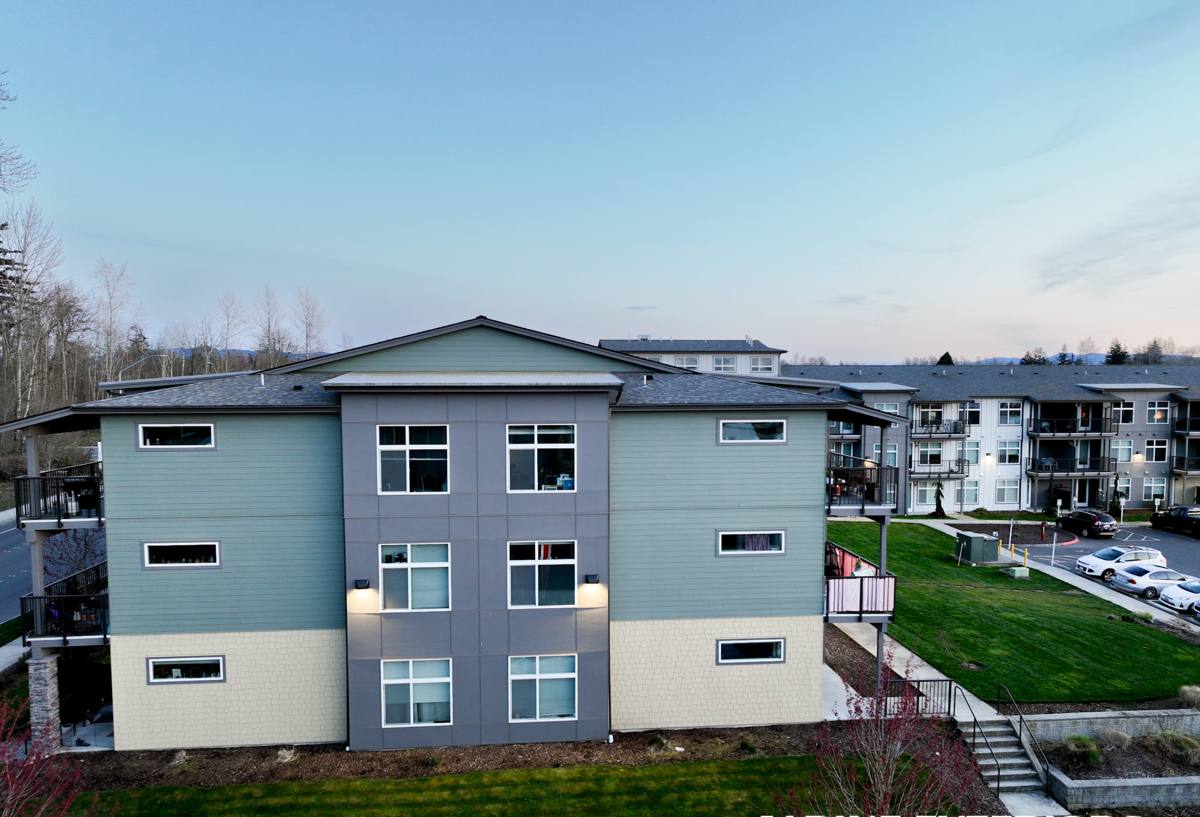
What Salt Air, Rain, and Moss Season Actually Do to Siding
Bellingham's location on Bellingham Bay means homes throughout the area, including Birchwood, are exposed to a mix of moist marine air and salt content that accelerates corrosion on fasteners, trim, and any siding product with a weak factory finish. Combine that with the region's driving rain — wind-blown rain that hits walls at an angle instead of falling straight down — and you get a lot of water pressure-testing every seam, joint, and piece of trim on a house, year after year.
Then there's moss. Whatcom County's moss season isn't a few weeks in fall; it's closer to eight or nine months of conditions that favor moss, algae, and mildew growth on any north-facing or shaded wall. Moss holds moisture against the siding surface far longer than open air would, which is exactly what wood-based and wood-adjacent siding products don't want. Over years, that constant damp-dry cycling is what causes swelling, delamination, and rot in materials that aren't engineered for it.
None of this means Birchwood is a uniquely harsh place to own a home — it's simply a climate that punishes the wrong siding choice and installation shortcuts faster than a drier region would. The fix isn't complicated: choose a material that's proven in wet climates and install it with the water management details done right the first time.
Signs Your Siding Is Telling You It's Time
Most Birchwood homeowners don't wake up one day and decide to replace siding — they notice small things that add up. Here's what we tell people to watch for:
- Visible cracking, warping, or buckling anywhere on the wall surface
- Soft or spongy spots when you press on the siding, especially near the bottom of walls
- Moss or algae staining that comes back within weeks of being cleaned
- Paint that's peeling, bubbling, or needing repainting more often than it used to
- Visible gaps opening up at seams, corners, or around window and door trim
- Siding that looks like it's pulling slightly away from the wall
- A musty smell in rooms along an exterior wall, especially after heavy rain
- Noticeably higher heating bills, which can point to a compromised weather barrier
Any one of these on its own might just need a repair. Several at once, or any sign paired with soft sheathing underneath, usually means it's time to talk about full replacement rather than patching.
What a Correct Siding Replacement Actually Involves
Tear-Off and Inspection
Replacing siding starts with removing the old material entirely, not just capping over it. That step matters because it's the only chance to actually see the wall — the sheathing, the framing, and any water damage that's been hiding underneath. In a climate like Bellingham's, we routinely find rot or staining behind old siding that gave no warning signs from the outside. A proper job stops and addresses that before a single new board goes up.
Water Management Comes First
Siding is the last layer, not the only layer. Underneath it needs to be a correctly lapped water-resistive barrier, properly integrated flashing at every window, door, and roofline intersection, and drainage space where the siding system calls for it. This is the part of the job that's invisible once it's finished — and it's also the part that determines whether the house stays dry for the next 30 years or starts showing problems again in five.
Installing to Manufacturer Spec
Every detail after that — fastener type and spacing, joint treatment, clearances at grade and roof lines, caulking only where it belongs — needs to follow the manufacturer's installation requirements, not shortcuts. This is also what keeps a manufacturer warranty valid. A beautiful-looking siding job that skips these details is a problem waiting for the next wet winter to expose it.
Why We Install Only James Hardie Fiber Cement
We made the decision to install James Hardie fiber cement siding exclusively, and nothing else. Not vinyl, not LP SmartSide, not Cemplank or Allura, not primed spruce or cedar. That's a deliberate standard, not a sales preference, and it's worth explaining honestly.
Vinyl is inexpensive and low-maintenance in the sense that it doesn't need painting, but it's a thin plastic product that can warp in temperature swings, crack on impact in cold weather, and it doesn't hold up to direct pressure washing the way homeowners often want to clean moss off — a real issue given how much of the year Birchwood homes deal with algae and moss growth. Wood-based products like LP SmartSide, primed spruce, and cedar look great when new and can perform well when maintained aggressively, but they're organic materials with an engineered or natural wood core, and wood's whole relationship with sustained moisture is the opposite of what this climate demands. Even with good detailing, these products ask a homeowner to stay on top of caulking, painting, and moisture checks in a way that's easy to fall behind on.
James Hardie fiber cement is cement, sand, and cellulose fiber — it doesn't have an organic wood core to rot, it's non-combustible, and it holds paint and factory finish far longer than wood-based alternatives because it doesn't expand and contract with moisture the same way. Hardie also engineers specific product lines (their HZ5 designation, used broadly in this region) for climates with sustained moisture exposure, which is exactly the profile Whatcom County fits. The ColorPlus factory finish process bakes color onto the board under controlled conditions, which holds up better against UV and salt air than field-applied paint, and it comes with a strong transferable warranty that reflects the manufacturer's confidence in how the product performs over decades — not just years.
We're not saying every other product is worthless. We're saying that after years of doing this work in exactly this climate, Hardie is the one material we're willing to put our name behind for every job.
How Siding Materials Compare in This Climate
| Material | Moisture / Moss Resistance | Maintenance Burden | Fire Resistance | Typical Warranty |
|---|---|---|---|---|
| James Hardie Fiber Cement | Excellent — non-organic core, engineered HZ lines for wet climates | Low — factory finish holds color for years | Non-combustible | Strong, transferable manufacturer warranty |
| Vinyl | Fair — sheds water but traps moss/algae in texture, can warp | Low, but limited cleaning options | Combustible, can melt/deform near heat | Varies widely by manufacturer |
| LP SmartSide / Engineered Wood | Fair to good if maintained; vulnerable at cut edges and seams | Moderate to high — needs regular sealing/paint upkeep | Combustible | Manufacturer-specific, often conditional on maintenance |
| Cedar / Primed Spruce | Poor to fair — natural wood, prone to rot without diligent upkeep | High — regular painting, sealing, and inspection required | Combustible | Typically limited or none from the mill |
This table reflects general product behavior, not a claim that any specific brand fails outright — it's the trade-offs that led us to standardize on one material rather than offer several.
Our Process, From Estimate to Finished Job
For a Birchwood siding replacement, our process starts with an on-site look at the whole exterior — not just the siding that's visibly failing, but trim, flashing, and any areas where water tends to collect. From there we walk you through what we're seeing, what a full tear-off would likely reveal, and give you a straightforward, no-pressure estimate. If you move forward, the job proceeds through tear-off and sheathing inspection, repair of any damaged framing or sheathing we find, correct installation of the water-resistive barrier and flashing, and then the Hardie siding itself installed to manufacturer spec. We walk the finished job with you before we consider it done.
What Affects the Cost of a Birchwood Siding Replacement
Costs vary house to house, but a few factors consistently move the number:
- How much hidden damage is found once old siding comes off — this is the biggest wildcard
- The size and complexity of the home's exterior, including trim, gables, and dormers
- Which James Hardie product line and profile you choose (lap siding, shingle-style, panel systems)
- Whether existing trim, fascia, or soffit needs replacement alongside the siding
- Site access and how the home sits relative to property lines and landscaping
We'd rather give you a realistic range after seeing the house than a number over the phone that doesn't hold up once tear-off starts.
Why Hiring a Crew That Already Works in Birchwood Matters
Siding installation isn't identical everywhere, and a crew that mostly works in drier inland climates can miss details that matter here — drainage gaps, flashing laps oriented for wind-driven rain, fastener choices that resist salt-air corrosion. A crew that regularly works Bellingham and Whatcom County neighborhoods like Birchwood has already seen how homes in this specific setting fail when the water management is wrong, and builds every job to avoid repeating those mistakes. That local pattern recognition is worth as much as the material itself.
If your Birchwood home's siding is showing its age, or you just want an honest read on whether repair or replacement makes more sense, we're happy to take a look. Fill out the form below for a free, no-pressure estimate.