 Bellingham
 Why Blaine Roofs Wear Differently
Blaine sits at the very top of Whatcom County, right on the water, which means the roofs here take a different kind of beating than roofs even a few miles inland. Salt-laden air off the bay accelerates corrosion on exposed metal fasteners, flashing, and vents. Driving rain off the water finds every gap in flashing and underlayment that a calmer climate would never expose. And the long, damp shoulder seasons that stretch from fall through spring give moss and moisture months to work into a roof system that isn't detailed correctly the first time.
None of this means a Blaine roof has to fail early. It means the installation has to account for these conditions from the first layer of underlayment to the last ridge cap, rather than relying on a generic install that might be fine somewhere drier or further from salt water.
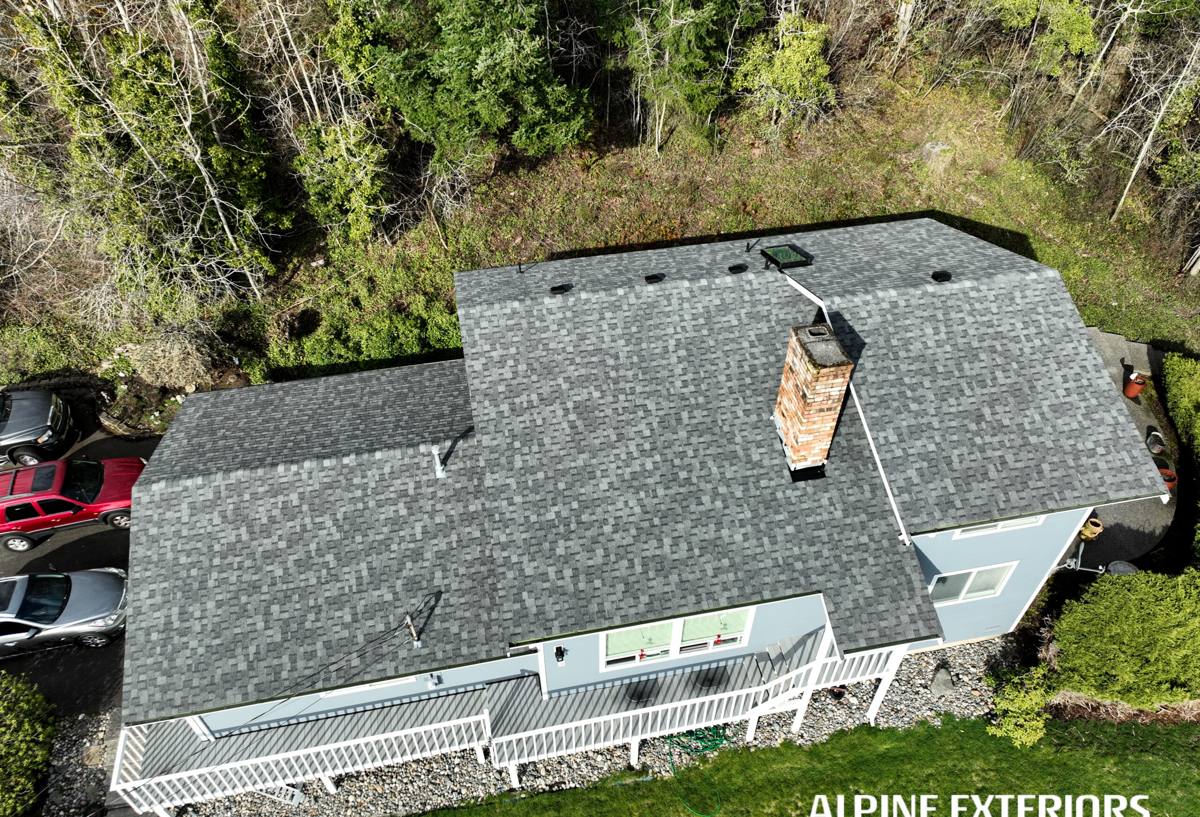
Signs a Blaine Home Needs a New Roof, Not Another Repair
Homeowners often ask us to patch a problem that's actually a sign the whole system is past its useful life. A few honest signals that repair time is over:
- Granule loss heavy enough that you're finding grit in gutters every season, not just after a storm
- Shingles that are cupping, curling, or cracking across multiple slopes, not just one sun-exposed area
- Moss or dark streaking that keeps coming back within a year or two of cleaning, even on north-facing slopes
- Soft spots in the decking you can feel underfoot, or daylight visible through the attic roof boards
- Flashing around chimneys, skylights, or valleys that's been repeatedly patched with sealant instead of properly re-flashed
- A roof approaching or past 20-25 years old for asphalt, especially one that's seen repeated coastal storm exposure
If you're seeing one or two of these, a repair may still make sense. If you're seeing several at once, you're usually better off putting that repair money toward a correctly installed new roof rather than chasing the same leak twice.
What a Correct Installation Actually Involves
Tear-Off and Deck Inspection
We remove the existing roofing down to the deck rather than layering over it. That's the only way to find soft or rotted sheathing, which is common on older Blaine homes where a slow leak has been sitting under the shingles for years without anyone noticing from inside. Any damaged decking gets replaced before anything new goes down — installing new roofing over compromised decking just guarantees a shorter lifespan for the new system.
Underlayment Built for Wind-Driven Rain
Standard felt underlayment is not enough for a home that regularly takes rain sideways off the water. We use synthetic underlayment across the full roof and self-adhered ice-and-water membrane at the vulnerable points — eaves, valleys, and around every penetration — so wind-driven rain that gets under a shingle still can't reach the deck.
Flashing Done Right, Not Just Sealed
Most roof leaks trace back to flashing, not the shingles themselves. Chimneys, skylights, sidewall intersections, and valleys all need properly formed and layered metal flashing, not a bead of caulk covering a shortcut. In a salty coastal environment, we also pay attention to flashing material and fastener choice, since cheap galvanized fasteners corrode faster this close to the bay.
Ventilation That Fights Moss and Moisture
A roof that can't breathe traps moisture underneath it, which feeds moss growth and rots decking from below. Balanced intake and exhaust ventilation keeps the underside of the roof deck dry and closer to outside temperature, which also reduces the ice-damming risk on the colder mornings Whatcom County gets in winter.
Material Options for a Blaine Roof
There's no single "best" roofing material for every home — it depends on your budget, roof pitch, and how long you want to go between maintenance. Here's how the common options actually compare for a coastal Whatcom County property:
| Material | Typical Lifespan | Coastal & Moss Considerations |
|---|---|---|
| Architectural asphalt shingle | 25-30 years | Good value; choose algae-resistant (AR) shingles to slow moss and dark streaking |
| Standing seam metal | 40-50+ years | Sheds moss well due to smooth surface; needs coastal-rated fasteners and coatings to resist salt corrosion |
| Composite/synthetic shingle | 30-50 years | Resists moisture absorption better than wood; higher upfront cost |
| Cedar shake | 20-30 years with upkeep | Attractive but needs regular moss and moisture maintenance in this climate; we're upfront about that maintenance burden before you commit |
Most Blaine homeowners land on a quality architectural asphalt shingle with algae-resistant granules, or standing seam metal if they want to minimize long-term maintenance and don't mind the higher upfront cost. We'll walk through the real trade-offs for your specific roof rather than pushing one product.
How Our Installation Process Works
- On-site assessment — we inspect the existing roof, decking access points, ventilation, and any problem areas you've already noticed, and take measurements for an accurate quote.
- Written estimate — a clear scope of work and price, with material options explained so you're not guessing at what "standard" versus "upgraded" actually means.
- Scheduling around weather — we plan tear-off days around dry weather windows whenever possible, since an open roof deck and a sudden Whatcom County downpour don't mix.
- Tear-off and deck repair — full removal of old roofing, deck inspection, and replacement of any compromised sheathing.
- Underlayment and flashing — ice-and-water membrane at vulnerable points, synthetic underlayment across the field, and properly formed flashing at every penetration and valley.
- Roofing installation — shingles, metal panels, or your chosen material installed to manufacturer spec, with attention to nailing pattern and exposure since improper installation is what voids most manufacturer warranties.
- Ventilation and final details — ridge and soffit ventilation confirmed balanced, gutters and downspouts checked, and a full site cleanup including a magnetic sweep for stray nails.
- Final walkthrough — we go over the finished roof with you before we consider the job done.
Cost Factors for a Blaine Roof Replacement
Every roof is priced individually, but the same handful of factors drive most of the variation we see on Whatcom County homes:
| Factor | Why It Matters |
|---|---|
| Roof size and pitch | Steeper roofs take longer and require more safety setup, which affects labor cost |
| Number of layers to remove | Homes with two layers of old shingles cost more to tear off than a single-layer roof |
| Deck condition | Rotted or soft sheathing found during tear-off needs replacement, which isn't always visible until the old roofing is off |
| Material choice | Standard architectural shingle, premium shingle, and metal all carry different material and labor costs |
| Roof complexity | Valleys, dormers, chimneys, and skylights all add flashing work and time |
| Access | Difficult site access for equipment and material staging can add labor time |
We don't quote a number until we've actually seen your roof — anyone offering a firm price over the phone for a coastal Whatcom County home is guessing.
Why a Crew That Already Works Blaine Matters
A roofing crew that mostly works drier, inland areas doesn't always think about salt exposure on fasteners, the extra care wind-driven rain demands at eaves and valleys, or how aggressively moss establishes itself on north-facing slopes this close to the water. We work throughout Whatcom County and Bellingham, and the detailing decisions on a Blaine roof — fastener choice, underlayment coverage, ventilation balance — reflect what actually holds up here, not a generic checklist.
We're also familiar with local permitting expectations and typical weather windows for scheduling tear-off work, which helps avoid the scramble of an open roof deck caught in an unexpected system moving in off the strait.
Maintaining Your New Roof
A correctly installed roof still benefits from basic upkeep in this climate:
- Clear gutters and downspouts at least twice a year so water isn't backing up under the eaves
- Have moss growth treated before it establishes rather than after it's visibly thick
- Trim back overhanging branches that keep shaded areas of the roof damp longer
- Schedule a quick visual inspection after major windstorms to catch lifted or displaced shingles early
- Keep attic ventilation paths clear of insulation or debris that can block airflow
None of this is intensive, but skipping it is how a well-installed roof loses years off its lifespan unnecessarily.
Warranty and What It Actually Covers
Manufacturer material warranties and workmanship warranties are two different things, and it's worth understanding both before you sign a contract with anyone. Material warranties cover defects in the shingles or metal itself; workmanship warranties cover whether the roof was installed correctly. A roof can fail from bad installation and still be outside the scope of a material warranty. We'll explain exactly what's covered, for how long, and what would void it, so there are no surprises later.
If your Blaine home needs a new roof, or you're not sure whether repair or replacement makes more sense, we're happy to take a look. Use the form below to request a free, no-pressure estimate.